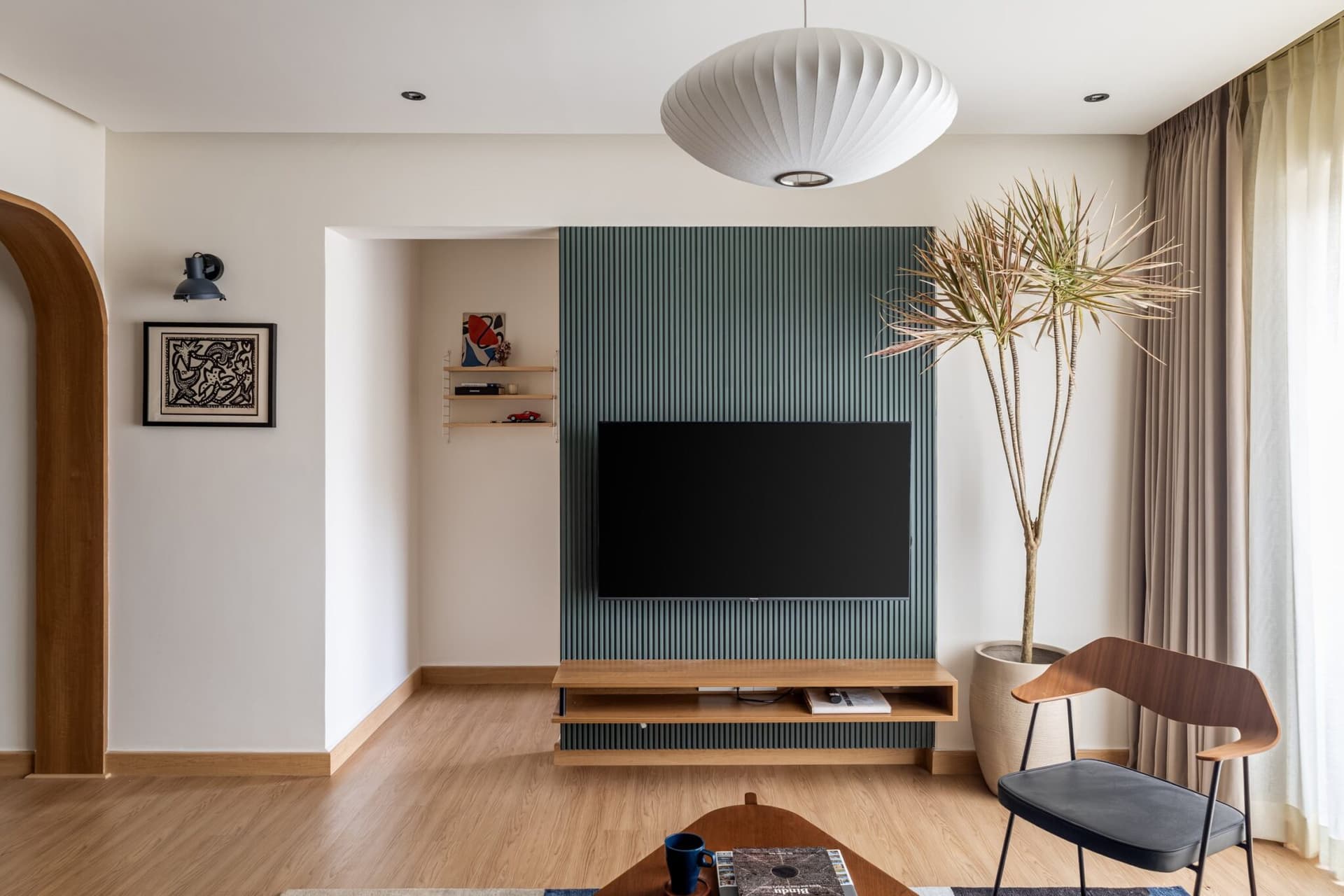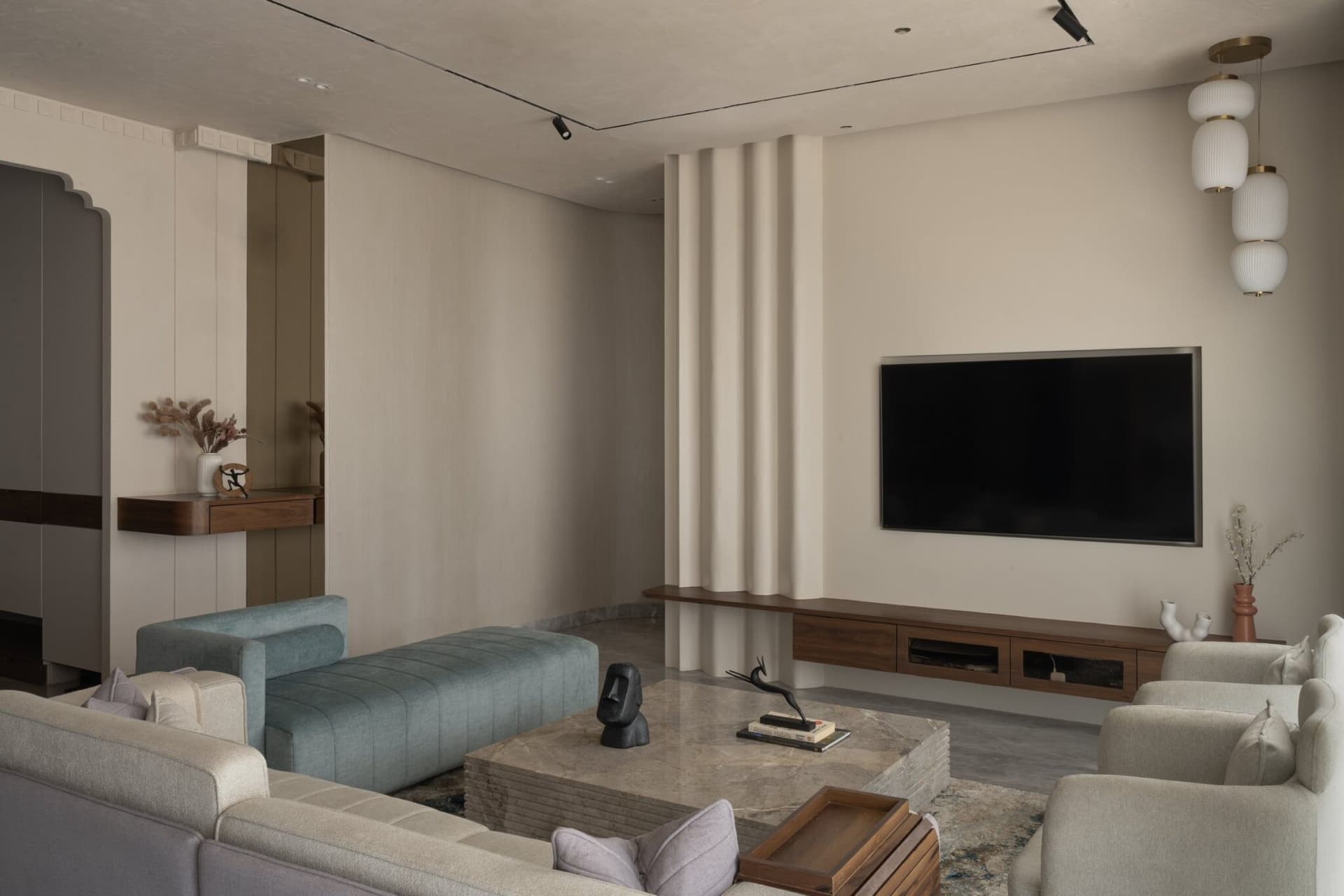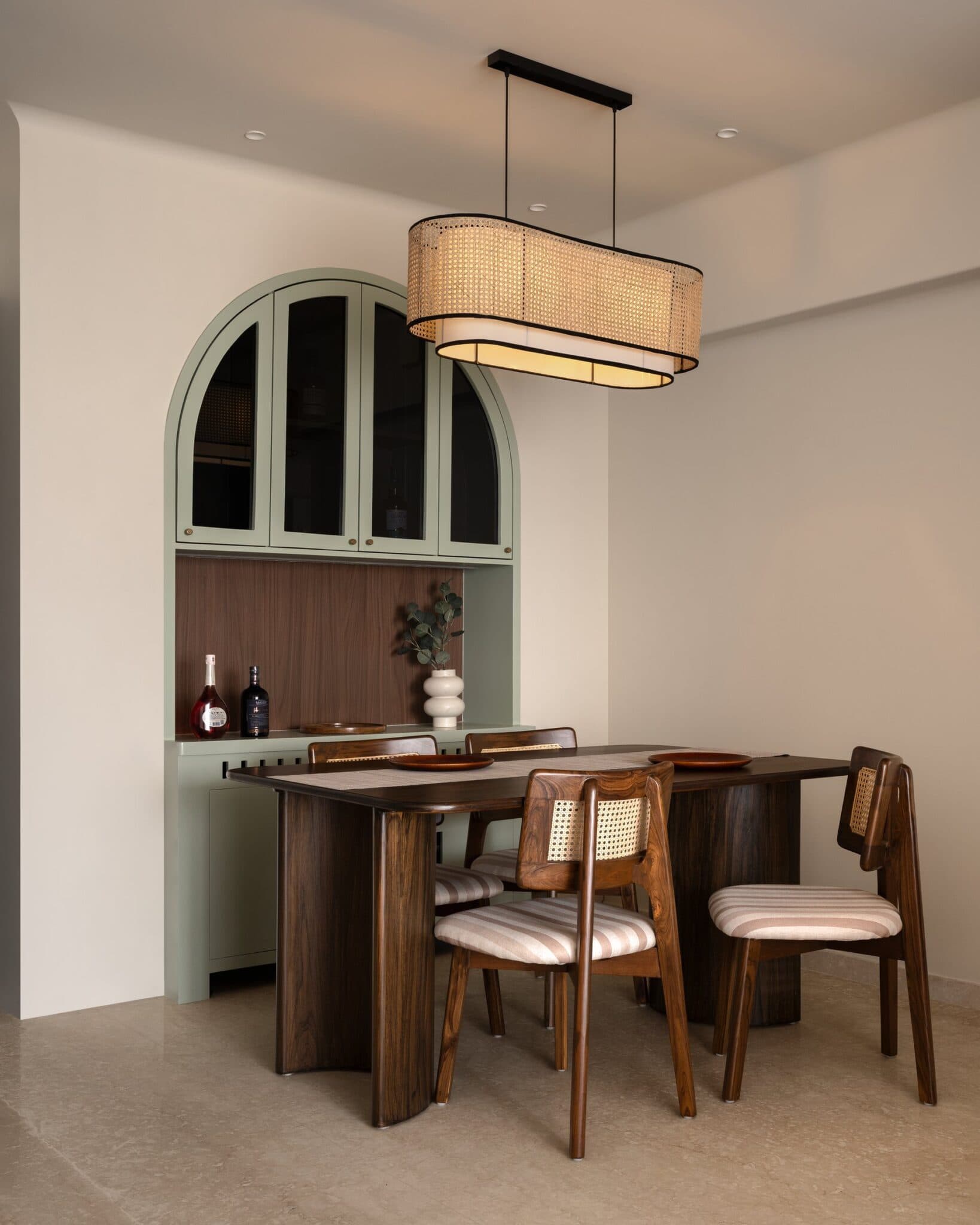
A home does not need to announce itself to leave an impression. The most compelling interiors reveal their character gradually, through carefully considered layers, subtle material shifts, and moments of quiet discovery that reward attention over time.
Located within Sky City, Ahmedabad, Mocha Muse is a 1,200 square foot residence designed by Studio Maroon as a retreat defined by warmth, restraint, and sensory richness. Conceived for clients seeking a calm and enduring living environment, the apartment embraces a design language rooted in balance rather than excess, where every element serves both an aesthetic and functional purpose.
Principal designer Shristy Baid orchestrates the interiors through a nuanced palette of cocoa, cream, taupe, and cappuccino, creating a seamless visual rhythm that flows throughout the home. Natural stone, cane accents, fluted detailing, and tactile textiles are layered with precision, lending depth and character without disrupting the overall sense of calm. The result is an interior that feels composed and intimate, a contemporary sanctuary where materiality, light, and proportion work together to create an atmosphere of understated luxury.
The Threshold
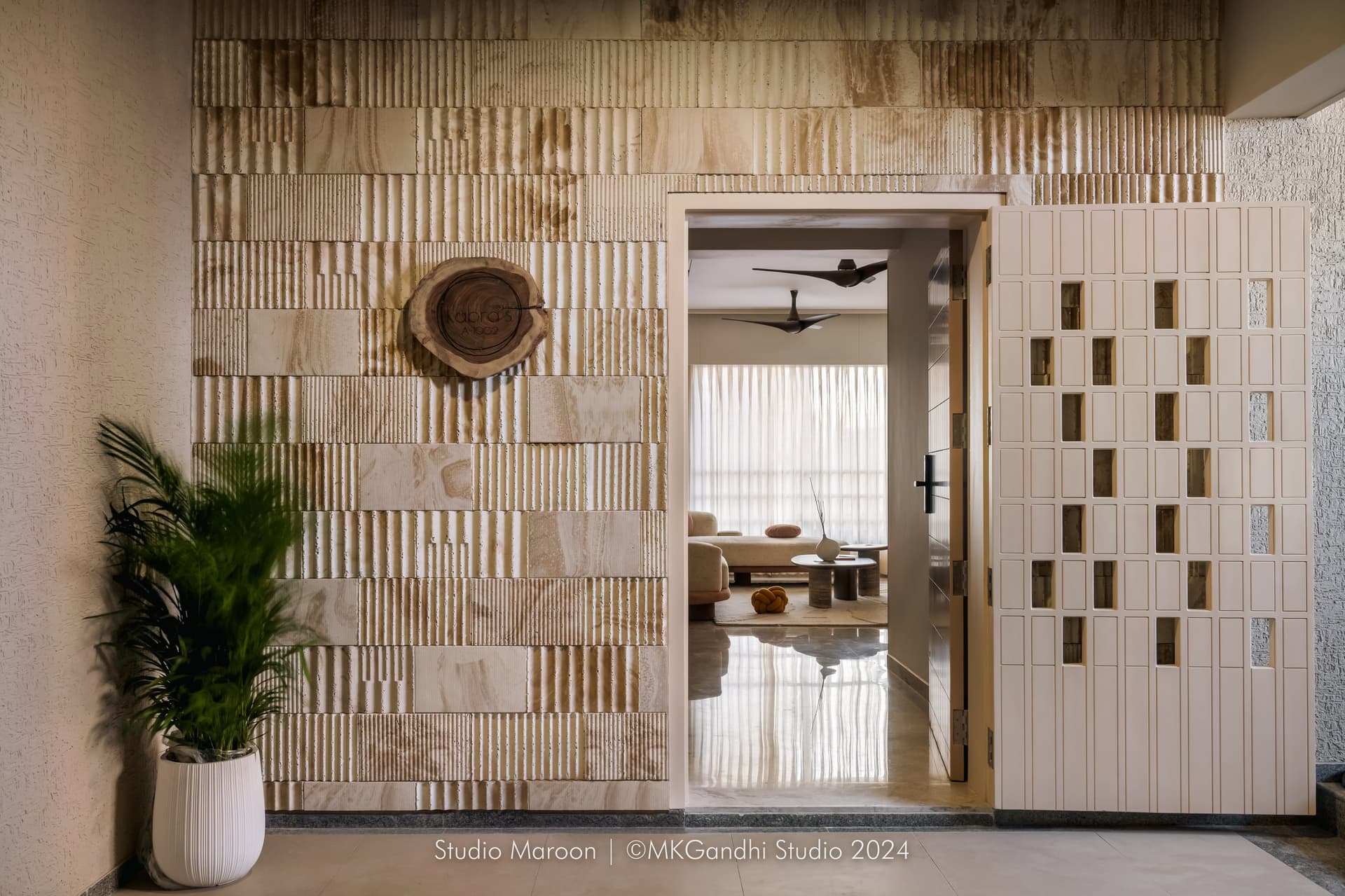
The entry sequence is conceived as a deliberate moment of transition, gently slowing the pace between the public corridor and the private world beyond. A fluted stacked stone wall introduces texture and depth through its shifting play of light and shadow, while a perforated screen door offers a filtered glimpse into the living space, balancing openness with a sense of anticipation.
Rather than functioning merely as a point of arrival, the foyer establishes the home’s underlying rhythm. It is a measured composition of materiality, light, and proportion that creates a subtle sense of ceremony. The gesture is understated yet intentional, demonstrating an understanding that the most welcoming spaces are often those that unfold gradually, allowing the experience of entering a home to feel calm, considered, and deeply personal.
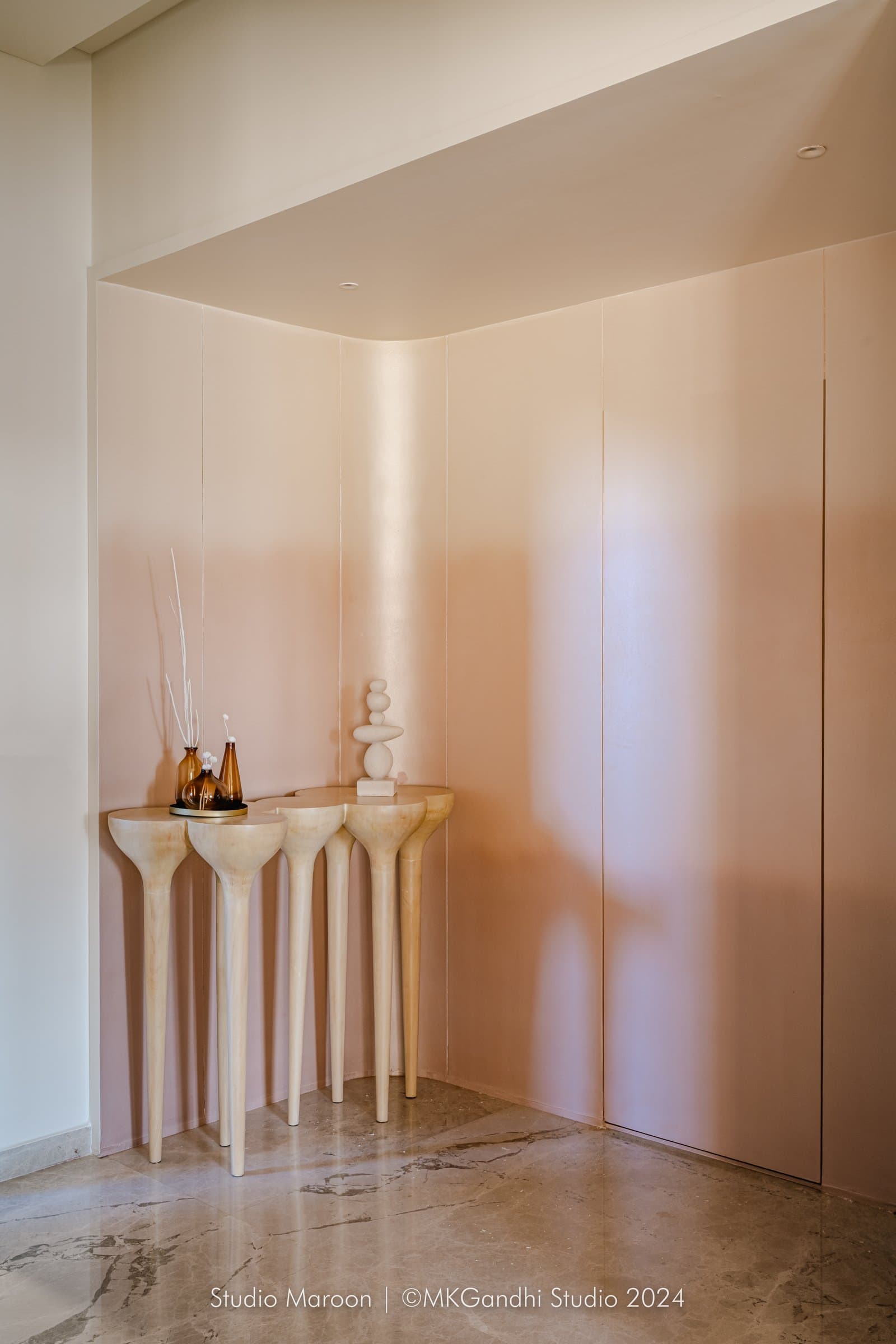
Inside, the vestibule extends the home’s language of understated elegance. A muted blush toned backdrop sets the stage for a sculptural console distinguished by its elongated turned legs and carefully crafted silhouette. More than a functional furnishing, it operates as a piece of spatial sculpture, introducing the home’s appreciation for form, proportion, and material expression from the very first moment.
The composition is restrained yet memorable, demonstrating how a single thoughtfully chosen object can establish character without relying on excess. Here, the emphasis is not on display but on creating an atmosphere, allowing shape, texture, and scale to quietly define the experience of arrival.
The Living Room
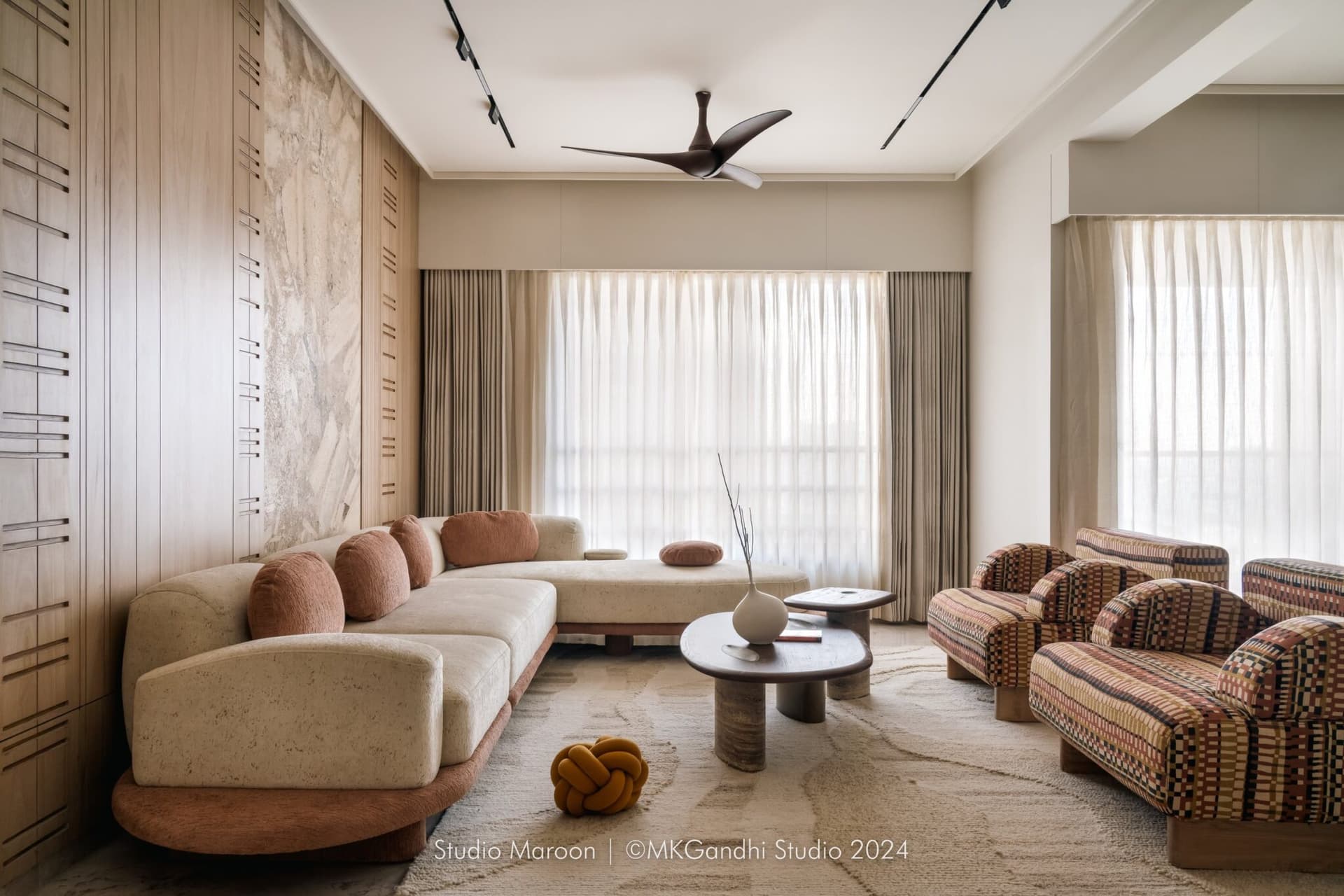
The living room reveals the home’s design philosophy with remarkable clarity. A softly curved sofa in warm travertine tones, grounded by a rich russet base, anchors the space and establishes a sense of comfort and permanence. Behind it, a composition of vertical timber slats and veined natural stone creates a backdrop that is both architectural and tactile, allowing materiality rather than ornament to define the room’s character.
Every curve, surface, and shadow is carefully orchestrated to evoke a sense of restraint, comfort, and quiet luxury. The palette remains measured and cohesive, drawing attention to texture, craftsmanship, and proportion rather than overt visual statements. Natural light further enriches the composition, revealing subtle shifts in tone and depth throughout the day.
Opposite the seating arrangement, a pair of accent chairs upholstered in a woven geometric fabric introduces a controlled moment of pattern. Rather than functioning as decoration, the motif serves as a deliberate counterpoint to the room’s otherwise serene surfaces. It is a thoughtful intervention that demonstrates the designer’s disciplined approach, where every element is considered, and visual complexity emerges through balance rather than excess.
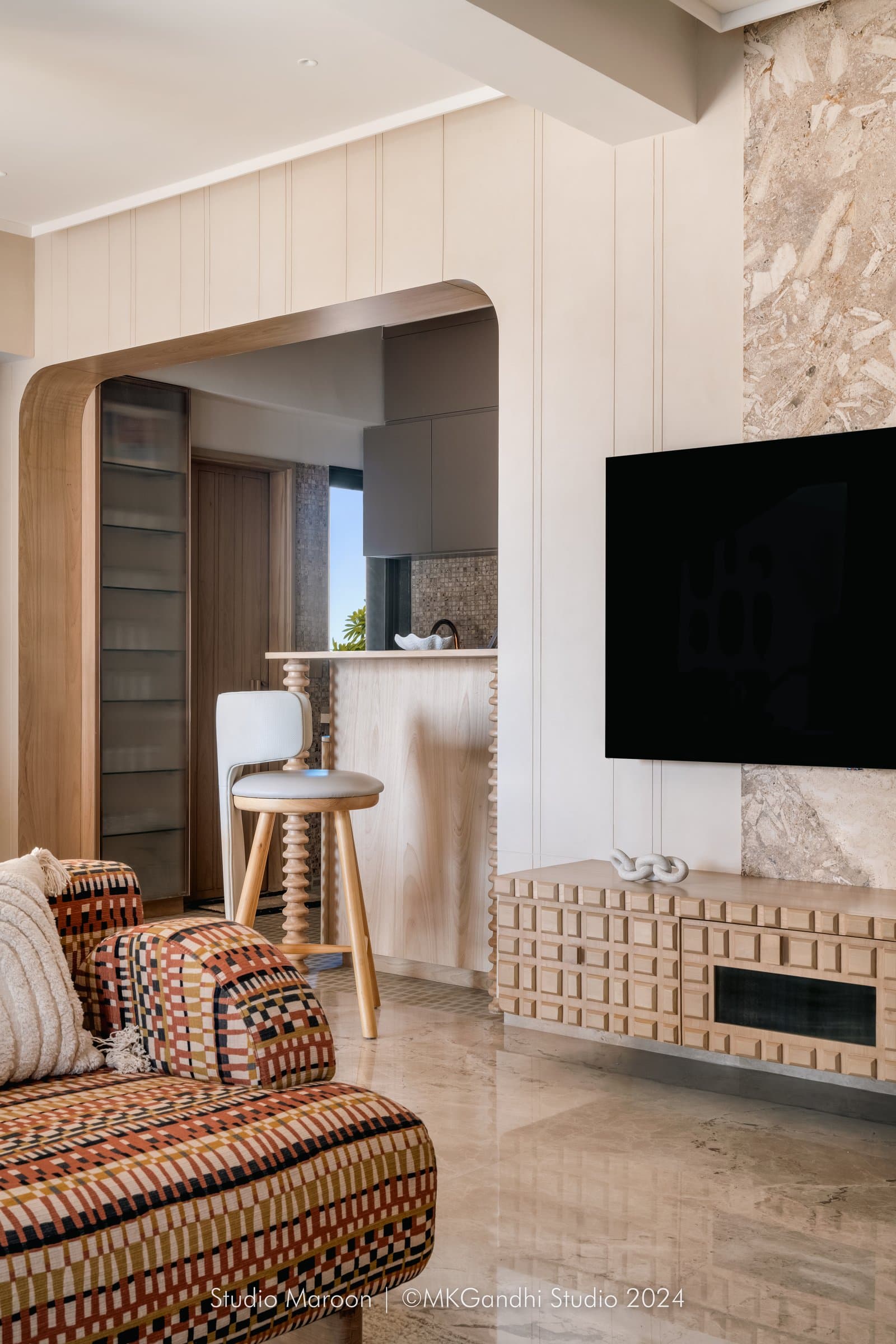
A second perspective of the living room reveals the careful way in which the space extends toward the kitchen beyond, maintaining visual continuity while subtly defining individual zones. A pale timber media console, distinguished by its finely textured grid pattern, grounds the television wall, while an inset panel of richly veined stone introduces depth and material contrast without overwhelming the composition.
The transition between living and culinary spaces is orchestrated through a softly arched opening that frames the kitchen counter and bar seating beyond. Rather than functioning as a decorative gesture, the arch acts as an architectural mediator, easing the shift between zones while preserving openness and connection. Throughout the home, curves are employed not as stylistic flourishes but as tools of spatial organisation, softening sightlines, guiding movement, and lending the interiors a sense of effortless flow.
The Dining and Kitchen
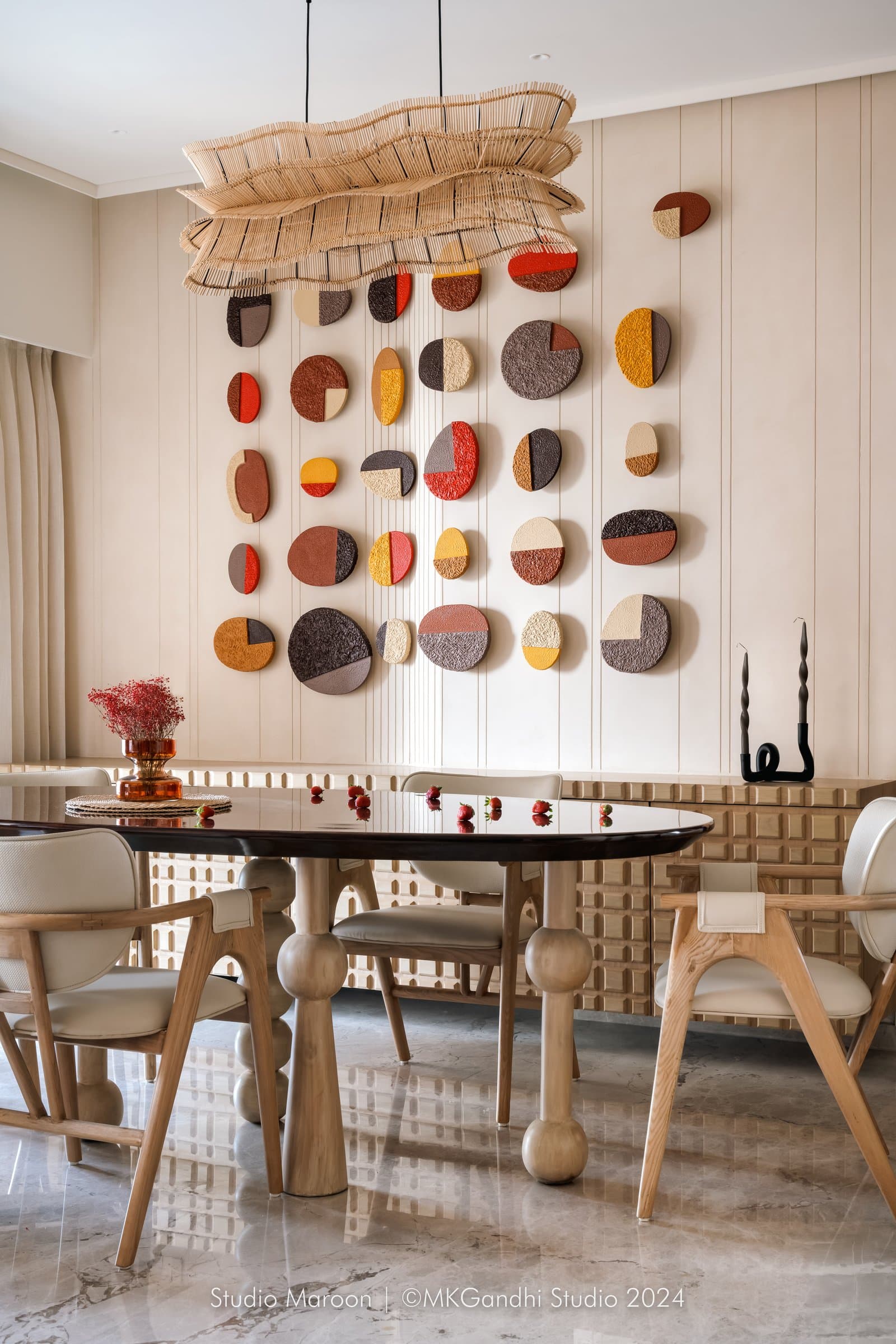
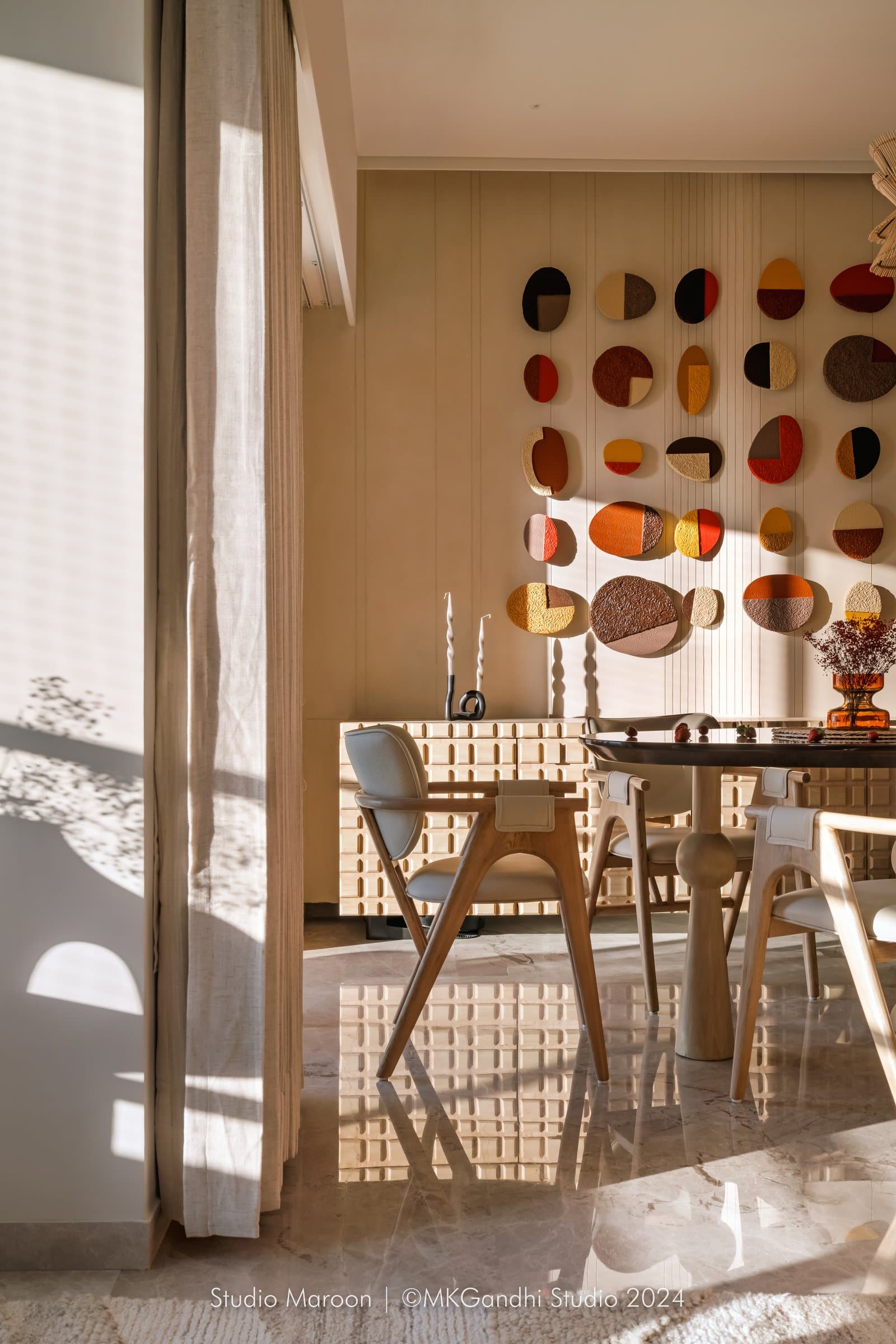
The dining area is anchored by the home’s most expressive composition, a feature wall that transforms colour and texture into a work of art. A curated arrangement of textured discs in shades of cocoa, ochre, rust, and ivory creates a layered focal point above a finely detailed credenza with a grid patterned façade. Together, the elements read as an abstract interpretation of the home’s material and tonal palette, bringing warmth, depth, and visual rhythm to the space.
In contrast, the dining table adopts a quieter presence. Its softly rounded top and sculptural turned legs offer elegance through form rather than ornament, allowing the feature wall to remain the primary focal point. The restraint is intentional and demonstrates a clear understanding of visual hierarchy, where one gesture takes centre stage while the surrounding elements support the composition with confidence and clarity. The result is a dining space that feels balanced, composed, and thoughtfully resolved.
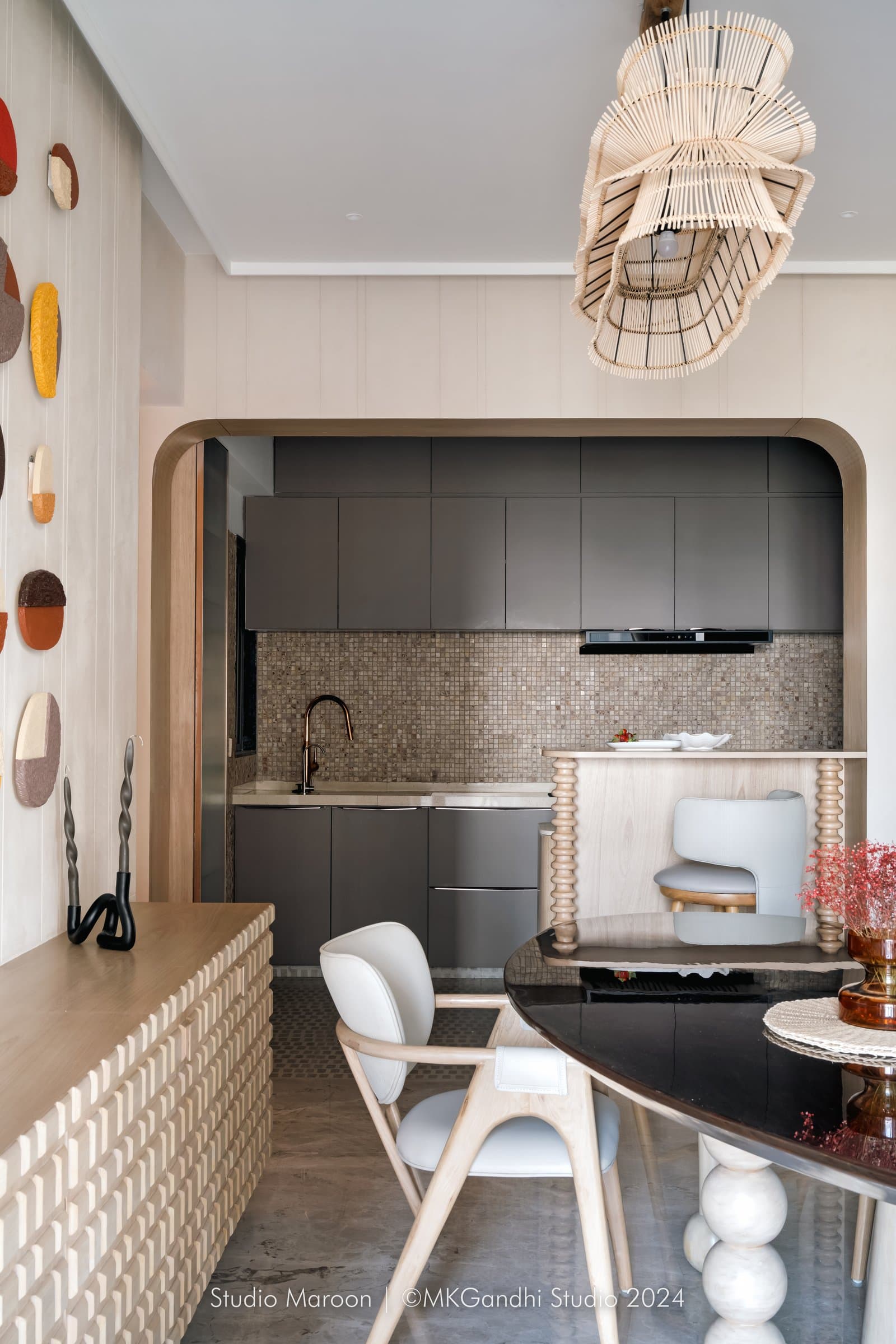
Beyond the dining area, the kitchen unfolds through a softly arched opening that maintains a sense of connection while subtly defining its own identity. Deep-toned cabinetry, a textured mosaic backsplash, and warm metallic accents create a composition that feels refined and grounded. Above the dining table, a handwoven rattan pendant introduces a sculptural presence, its organic form adding softness and character while serving as one of the interior’s few deliberately expressive moments.
The dialogue between the kitchen and dining spaces is built on contrast rather than similarity. The kitchen’s matte graphite palette provides depth and visual weight, while the honey-toned timber furnishings of the dining area introduce warmth and familiarity. This balance between dark and light, restraint and richness, becomes a defining characteristic of the home. Rather than competing for attention, the two spaces strengthen one another, creating a layered atmosphere that feels both sophisticated and deeply inviting.
The Reading Corner
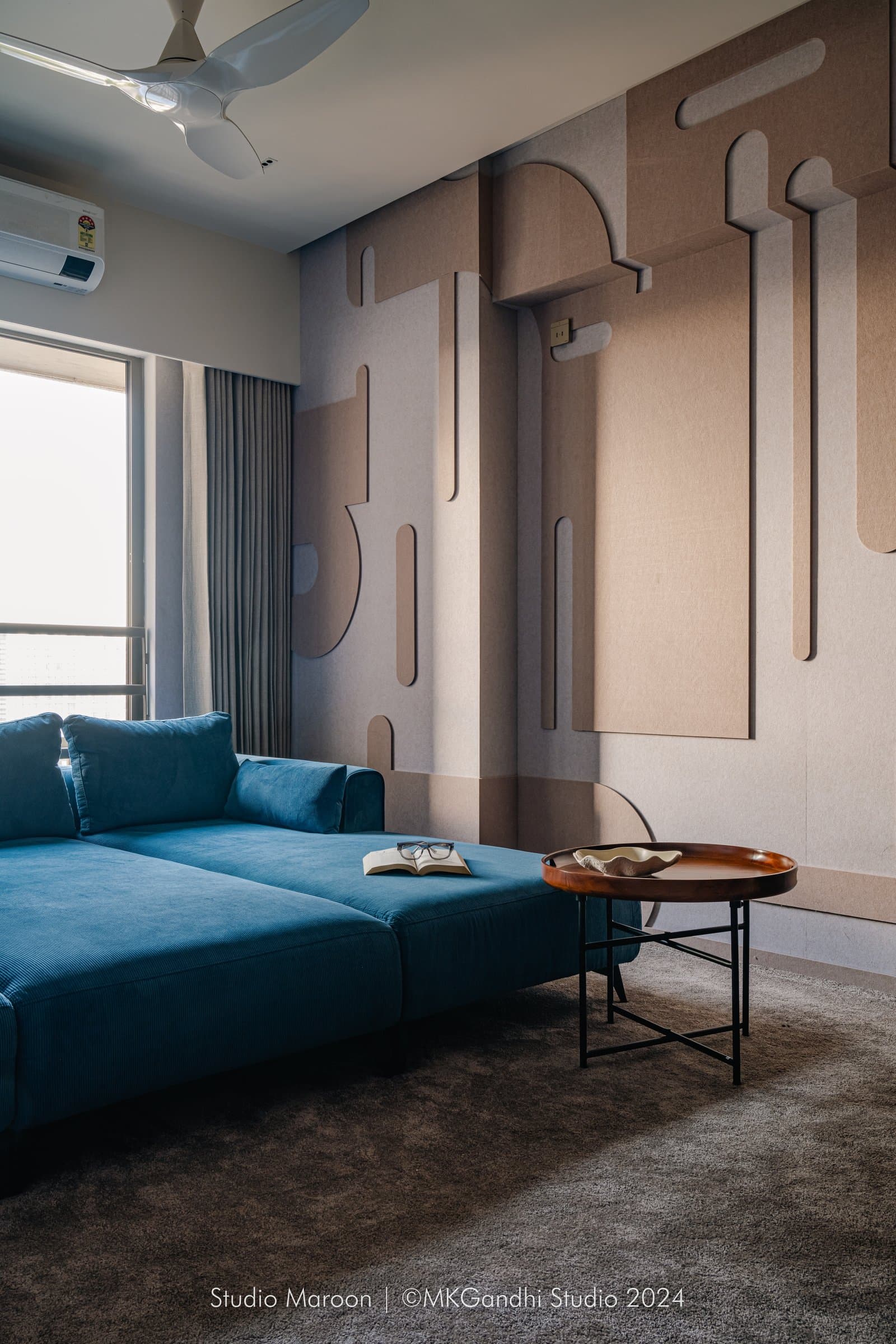
A quieter corner of the home is devoted to rest and reflection, centred around a deep blue corduroy daybed that immediately distinguishes itself from the apartment’s otherwise warm, monochromatic palette. Behind it, a composition of textured acoustic panels unfolds across the wall in an abstract, almost calligraphic arrangement, lending the space a sense of movement and artistic expression while enhancing its intimate atmosphere.
The departure from the home’s signature mocha tones is both deliberate and effective. The rich blue introduces a moment of visual pause, offering contrast without disrupting the overall harmony of the interiors. It functions as a measured counterpoint to the surrounding warmth, creating a space that feels contemplative and distinct within the larger narrative of the home. A compact side table in dark timber and metal completes the setting with quiet confidence, reinforcing the room’s sense of balance, restraint, and ease.
The Master Bedroom
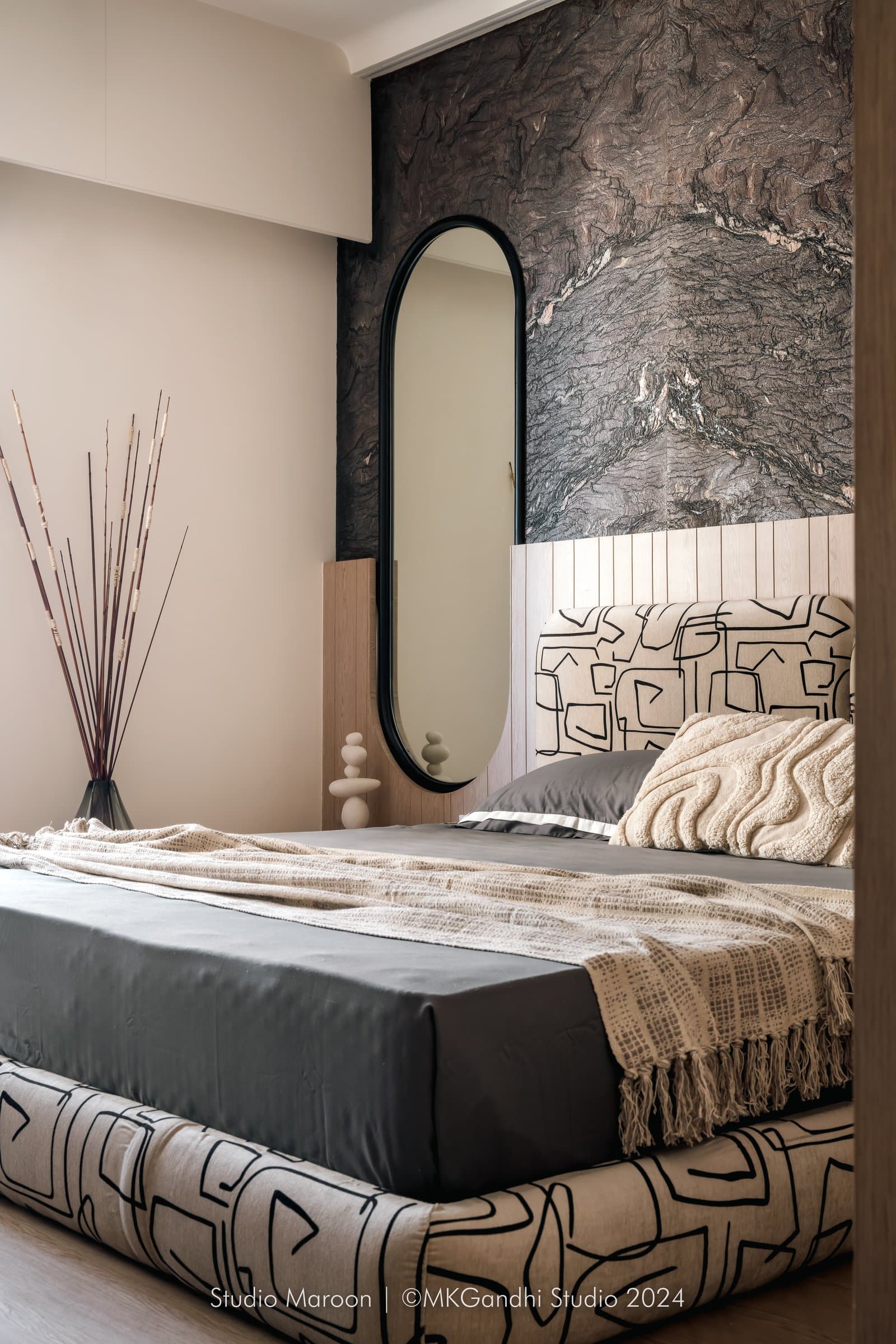
The master bedroom is anchored by a singular architectural gesture, a dramatic wall of richly veined dark stone that introduces depth, texture, and visual intensity to the space. Positioned within this composition, a tall oval mirror framed in slender black metal breaks the solidity of the surface, reflecting light and lending a sense of balance to the otherwise monolithic backdrop. The bed, upholstered in an ivory fabric adorned with delicate hand drawn linework, provides a softer counterpoint while maintaining a strong visual presence of its own.
What makes the composition successful is its understanding of restraint. The surrounding palette and furnishings step back, allowing the feature wall to establish the room’s identity without competition. The dialogue between the expressive veining of the stone and the subtle graphic quality of the upholstery creates a layered relationship between pattern and texture. Though different in scale and intensity, both surfaces share a common visual rhythm, resulting in a bedroom that feels cohesive, sophisticated, and quietly dramatic.
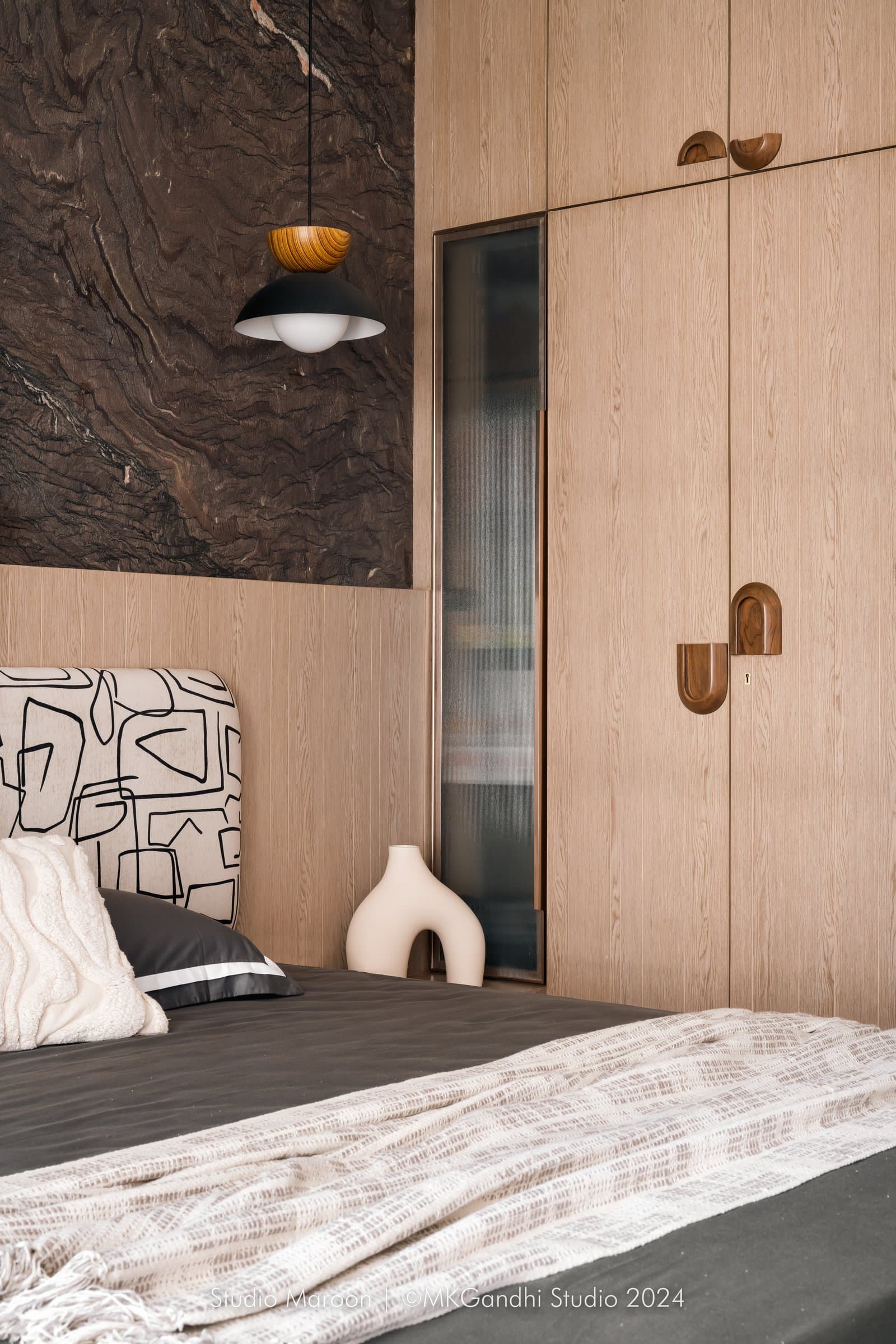
A closer view reveals the joinery logic of the room. Pale wood wardrobes with arched wooden pulls flank the stone wall, their figured grain warming the rich tones of the dark stone above.
The pendant, a black dome capped with a turned wooden finial, is the kind of small decisive object that gives a bedroom its character.
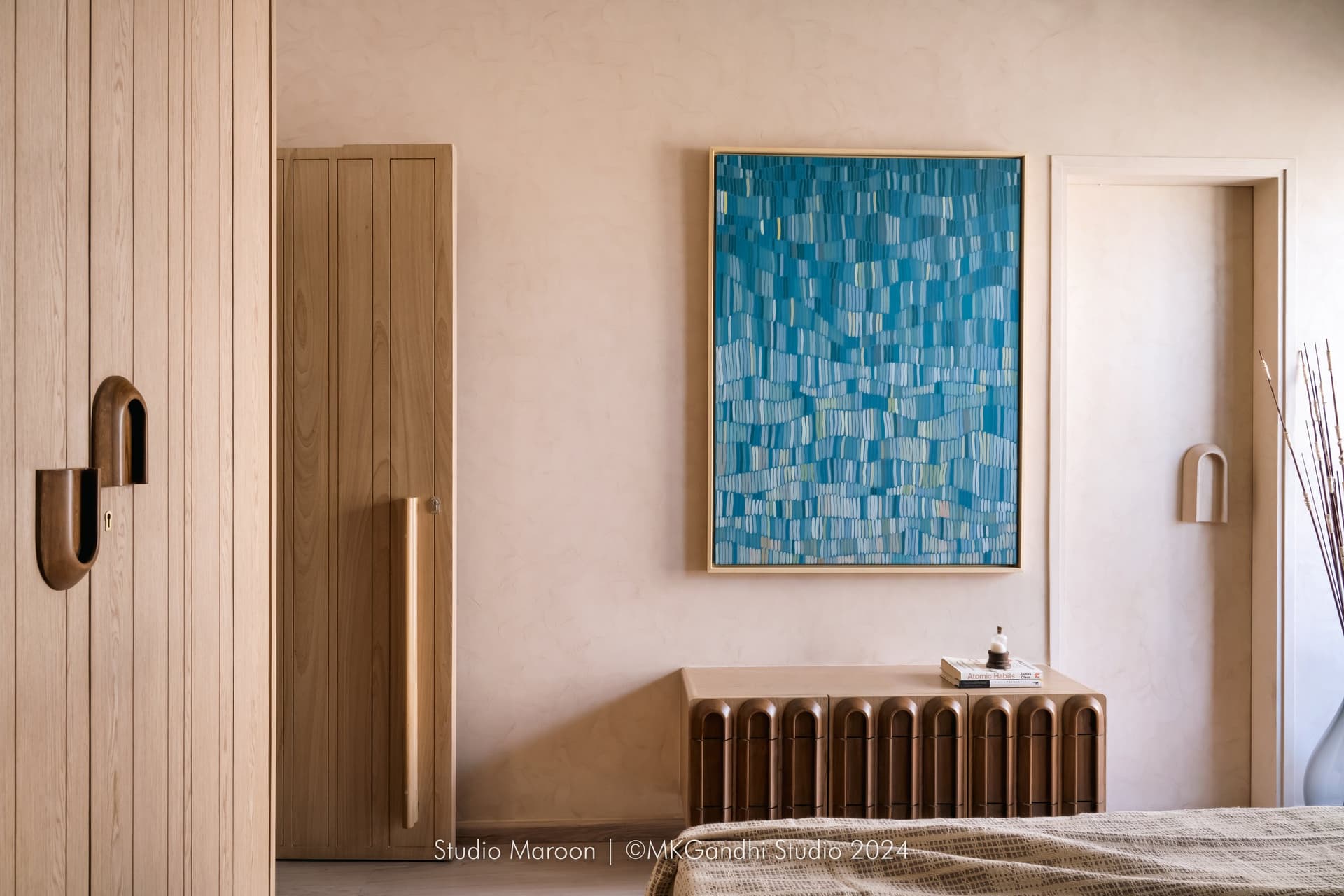
Opposite the bed, the composition shifts toward a softer expression of texture and form. A tactile plaster finish lends depth to the wall, providing a muted backdrop for an abstract artwork rendered in layered shades of oceanic blue. Below, a low credenza detailed with gently arched timber motifs introduces warmth and craftsmanship, grounding the arrangement with a sense of quiet permanence.
The artwork serves a purpose beyond decoration. Its blue tones subtly recall the corduroy daybed found elsewhere in the home, creating a visual connection between spaces that are otherwise defined by distinct moods and functions. It is a restrained but effective gesture, demonstrating how repetition can be used sparingly to establish continuity. Rather than relying on overt motifs, the home builds cohesion through carefully placed echoes of colour, material, and form, allowing each room to retain its individuality while remaining part of a larger, unified narrative.
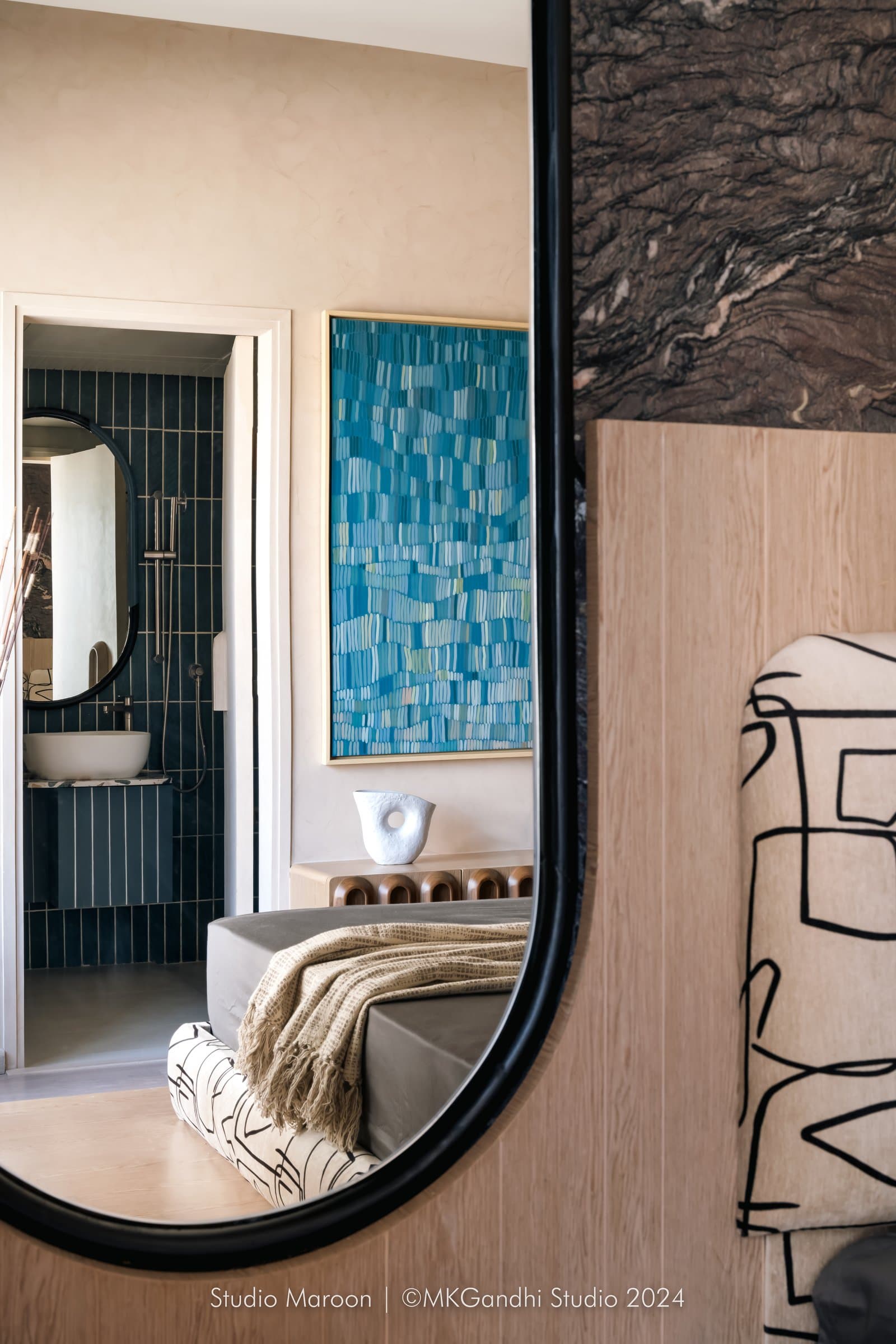
A reflected glimpse through the oval mirror offers a preview of the master bathroom, where the palette shifts subtly yet decisively. Walls clad in slender dark teal tiles introduce a richer, more saturated note, while a sculptural white vessel basin provides a crisp counterpoint against the deeper backdrop. The composition feels both intimate and unexpected, revealing itself gradually rather than all at once.
The Second Bedroom
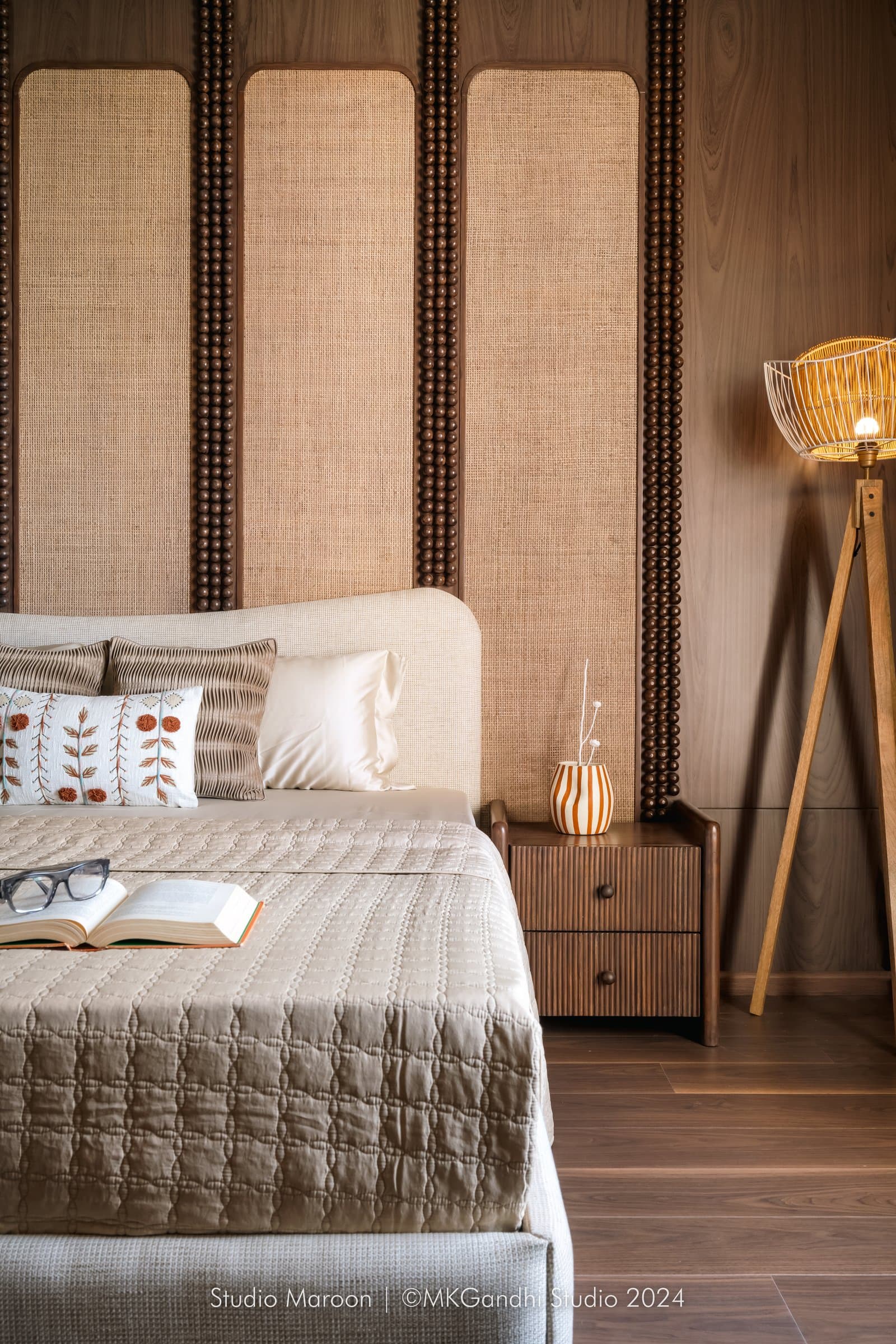
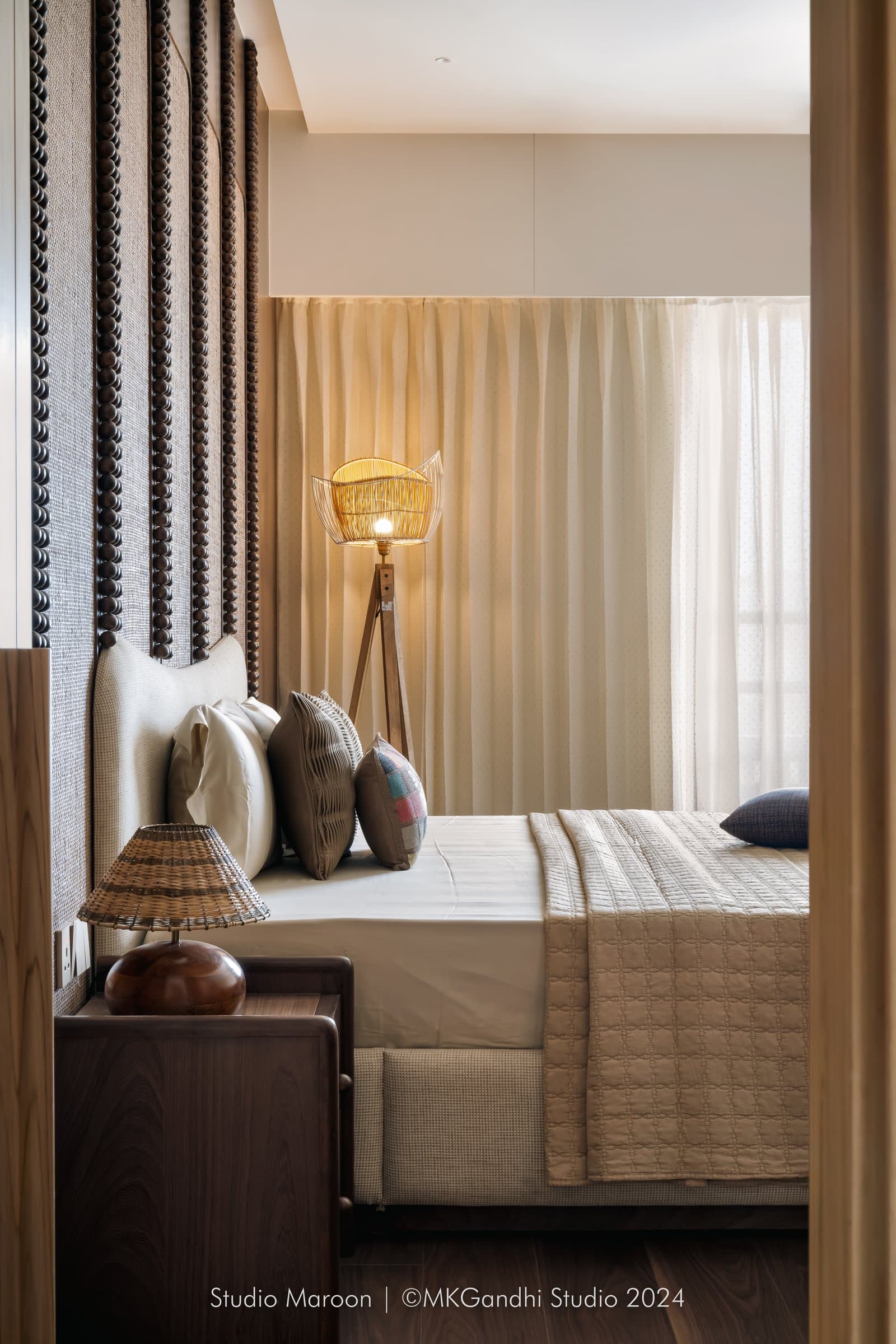
The second bedroom introduces a subtle shift in material expression, drawing on the warmth of cane and dark timber to create a space that feels both grounded and tactile. The headboard wall is articulated through a series of woven cane panels framed by slender bands of turned timber detailing, bringing texture and craftsmanship into the room with a quiet sense of confidence. The composition nods to traditional furniture making techniques, yet its execution remains contemporary and restrained.
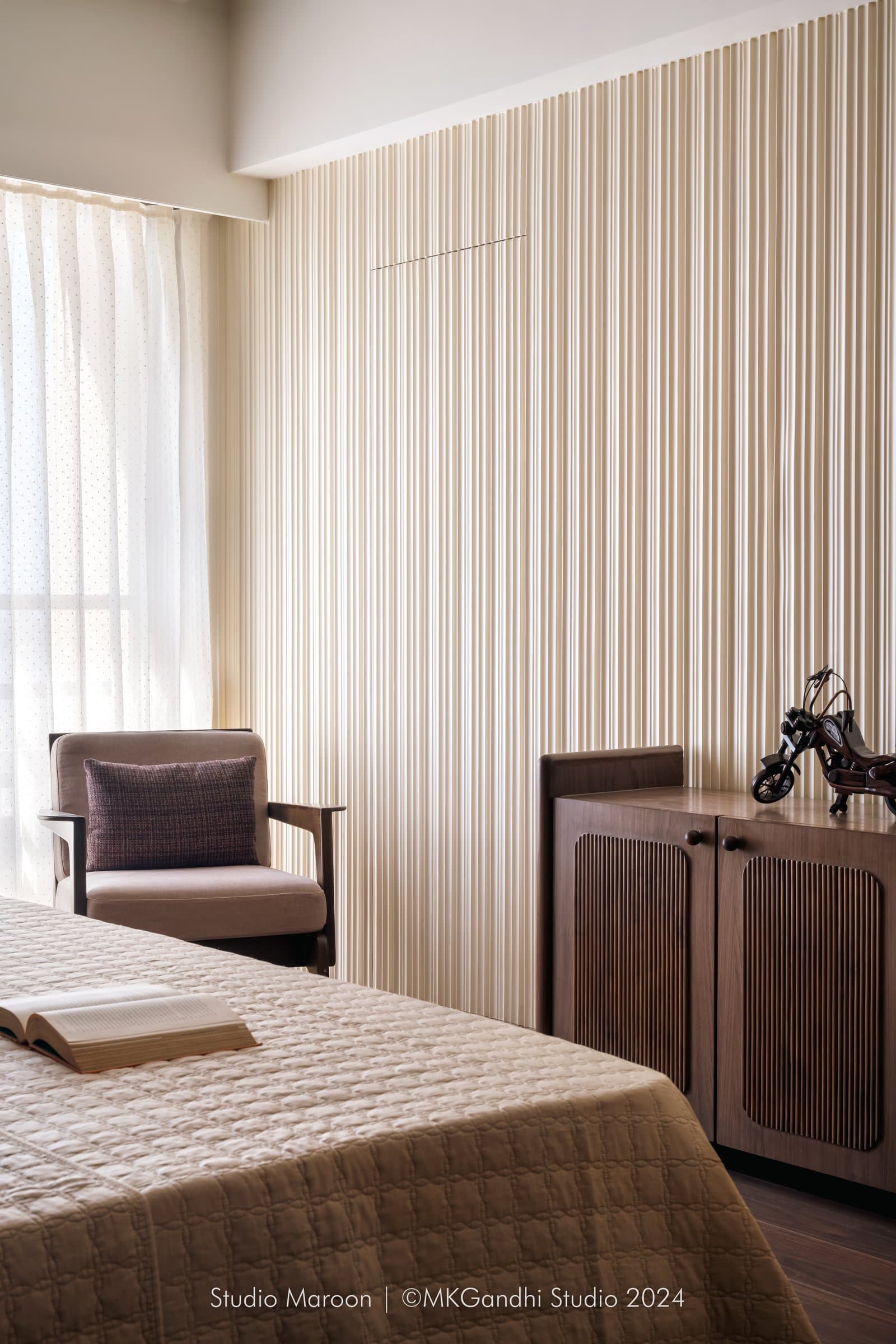
Throughout the room, a recurring language of turned and ribbed forms lends cohesion and character. A fluted bedside table adds texture at a smaller scale, while a sculptural tripod floor lamp introduces an elegant vertical presence. Together, these elements reinforce the room’s appreciation for craftsmanship and materiality, demonstrating how thoughtful detailing can create richness without relying on excess ornamentation.
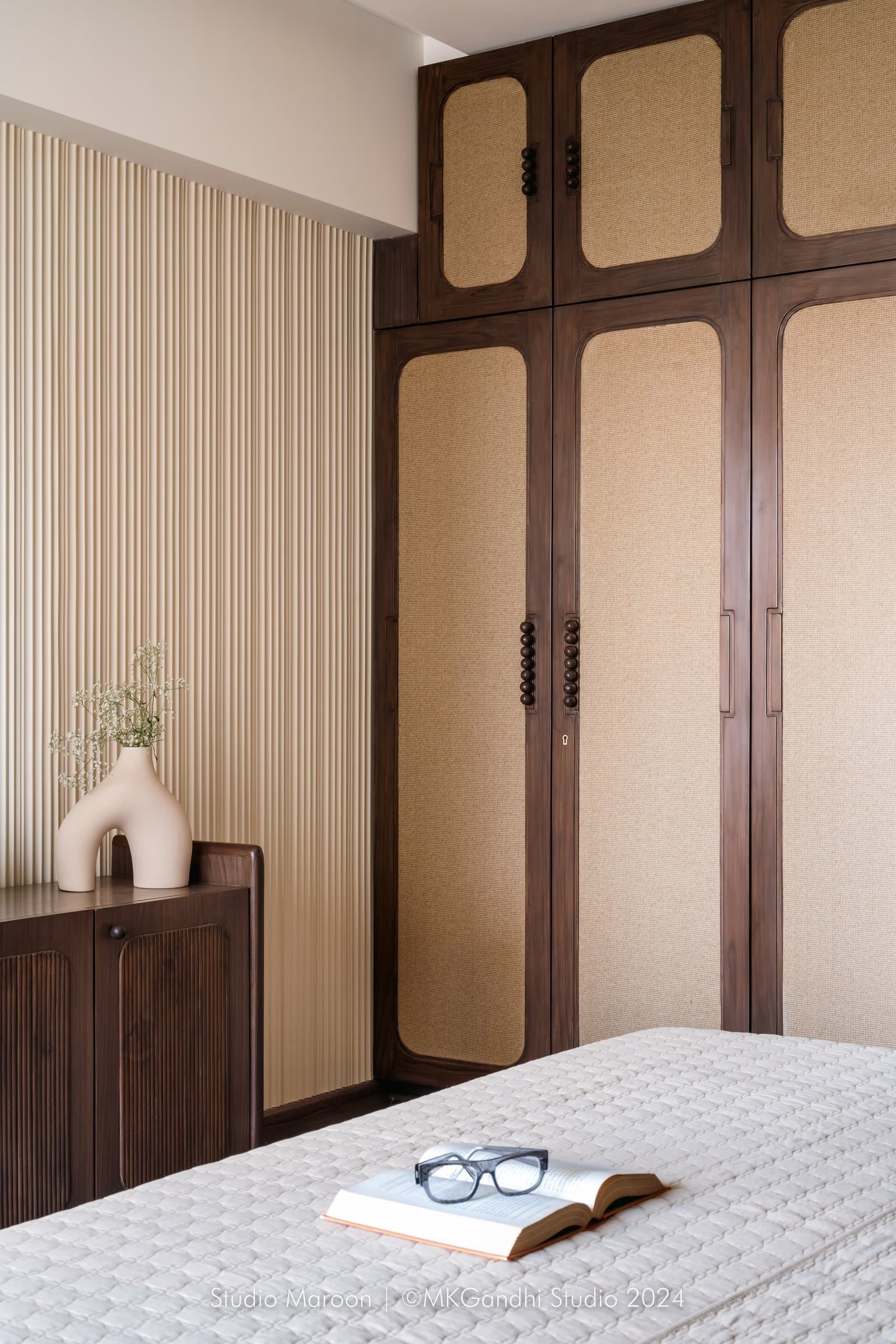
The wardrobe wall is crafted in richly toned timber, its cane inset panels and clustered turned wood handles introducing a layer of texture and artisanal detail. Rather than treating storage as a purely functional element, the design elevates the joinery into an integral part of the room’s visual composition, allowing materiality and craftsmanship to shape the overall atmosphere.
The Bathrooms
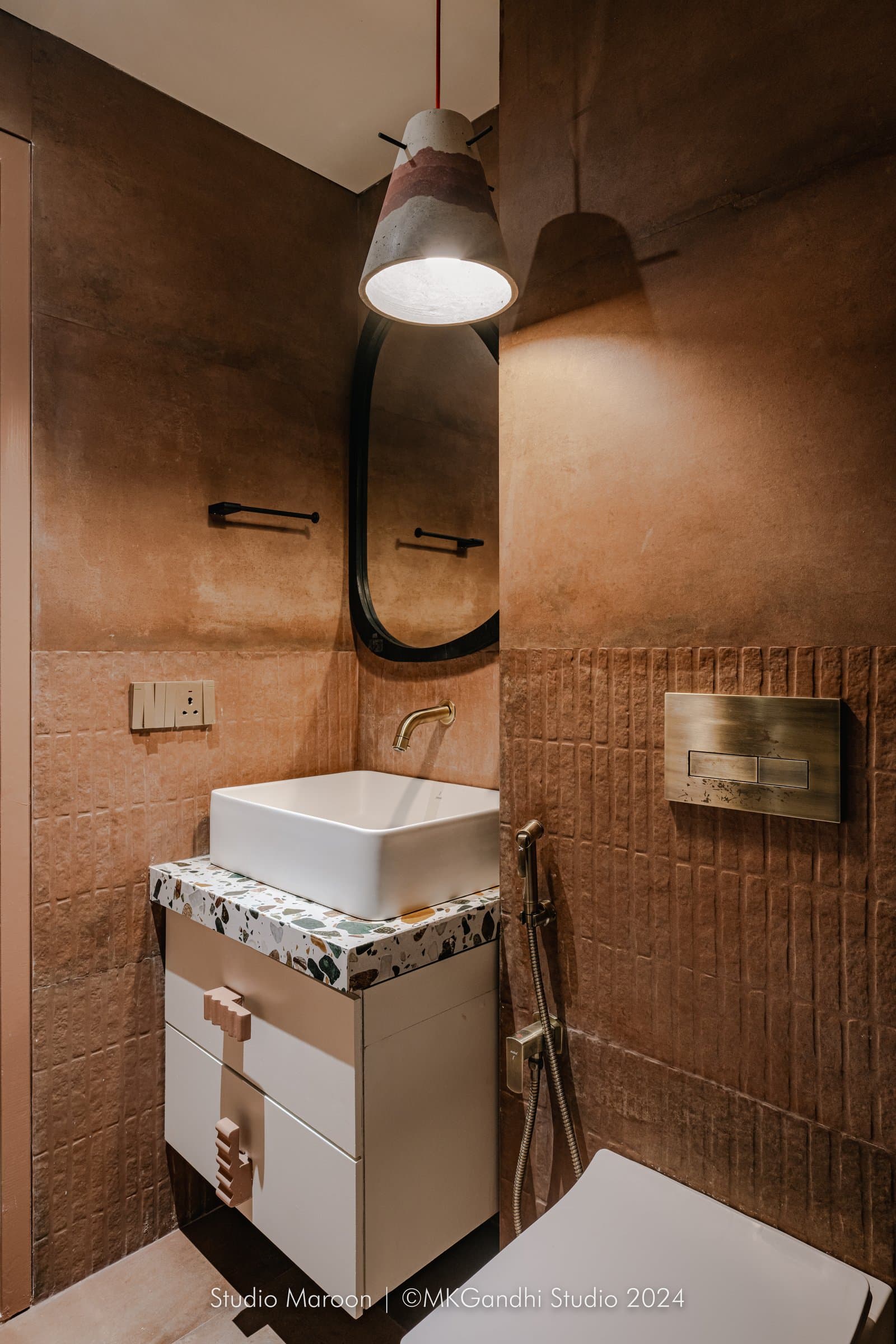
The powder room presents the home’s material and tonal language in its most concentrated form. Warm terracotta toned walls rise above a dado of ribbed brown tiles, creating a layered composition rich in texture and depth. Below, a sculptural vanity crowned with a substantial terrazzo countertop introduces flecks of jade, ochre, and ivory, subtly echoing the colours woven throughout the rest of the residence. The result is a space that feels immersive and richly tactile despite its compact footprint.
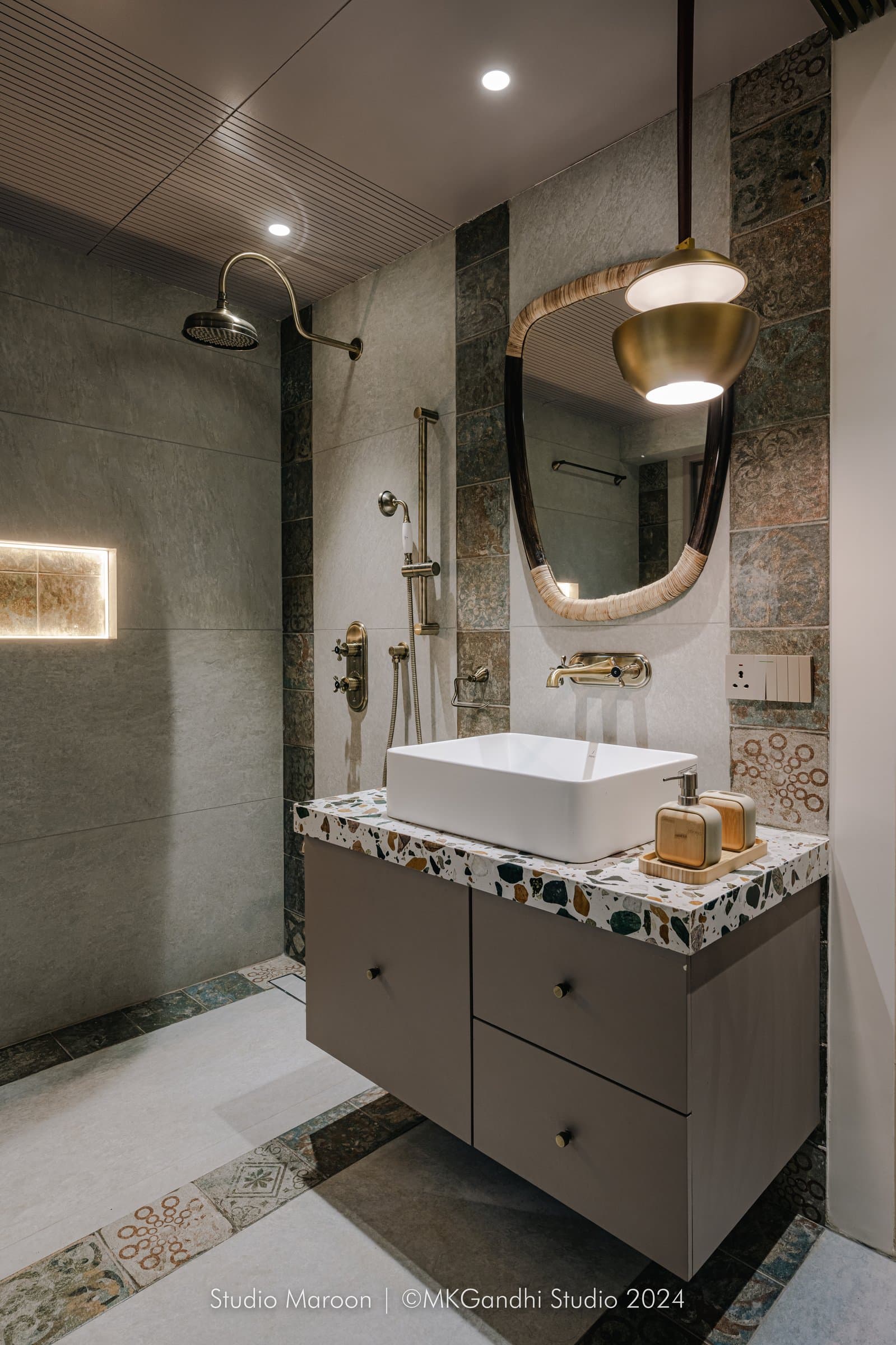
The master bathroom introduces a cooler material palette while maintaining a clear connection to the home’s broader design language. Soft grey surfaces and encaustic inspired patterned tiles establish a calmer, more understated atmosphere, while a wall mounted graphite vanity brings visual lightness and contemporary refinement. Topping the vanity, the same terrazzo surface seen in the powder room reappears, creating a subtle yet effective thread of continuity that links the two spaces through material repetition.
Warmth is carefully reintroduced through detail. Brushed brass fittings lend a gentle richness to the shower area, while a cane wrapped mirror adds texture and a handcrafted quality that echoes materials used elsewhere in the home. These considered interventions prevent the space from feeling overly utilitarian, ensuring that even the most functional rooms participate in the home’s larger narrative of tactility, warmth, and quiet sophistication.
The Designer

Mocha Muse emerges at a time when contemporary Indian residential design is increasingly embracing restraint over spectacle, prioritising atmosphere, materiality, and sensory experience over overt visual statements. Within its 1,200 square foot footprint, Studio Maroon demonstrates how thoughtful design can create richness without excess, using tonal consistency, tactile surfaces, and carefully calibrated contrasts to shape a home that feels both intimate and expansive. The project reflects a broader shift in urban living, where compact residences are no longer viewed as limitations but as opportunities for greater precision and intentionality.
What ultimately distinguishes Mocha Muse is its commitment to creating an experience rather than simply composing a collection of finishes and furnishings. Every material, detail, and spatial transition feels considered in relation to how the home will be lived in day after day. The interiors favour longevity over novelty, allowing craftsmanship, proportion, and atmosphere to take precedence over trend driven gestures. The result is a residence that feels deeply personal and quietly enduring, a home designed not merely to be admired, but to be inhabited, experienced, and appreciated over time.