In a city where the architectural conversation has increasingly tilted toward maximised built area and glazed verticality, a quieter argument keeps surfacing: that a small urban plot, treated with restraint and ecological intelligence, can produce a home more abundant than its square footage suggests. Sharada Nilaya belongs to this conversation. It does not strain to look larger than it is, and it does not apologise for being compact.
Designed by Weaving Space, the principal architects Charishma Kekada and Kowshik, the residence sits on a 1,020 sq. ft. corner plot in a quiet Bengaluru neighbourhood. The home was conceived for a single mother and her daughters, with a brief that asked for three bedrooms, a car park, generous living spaces, room to garden, and a warm, low-maintenance environment to grow old in. The architects responded by treating every square foot as both functional and atmospheric, building a small house that breathes through stone, garden pockets, and a central spine of stairs.
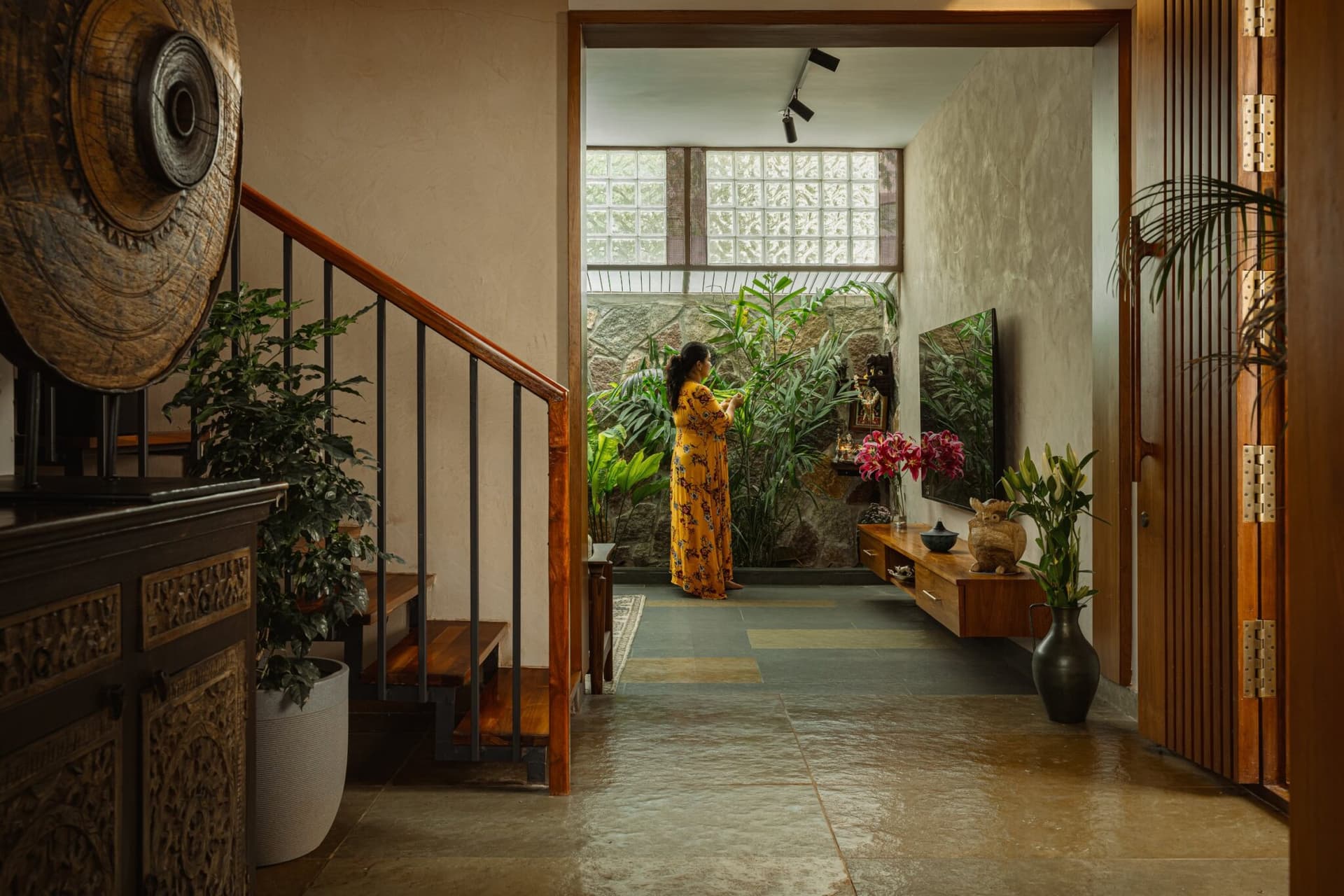
The home reveals itself through a carefully composed sightline. From the entrance, the gaze travels directly towards a planted courtyard, where a rugged rubble masonry wall is softened by daylight filtering through a band of glass blocks above. Along one edge, the staircase ascends quietly through the space, while a carved wooden wheel displayed on a sideboard introduces a layer of memory and craftsmanship. A slender floating console beneath the television and the understated texture of lime-plastered walls complete a composition that feels both grounded and serene.
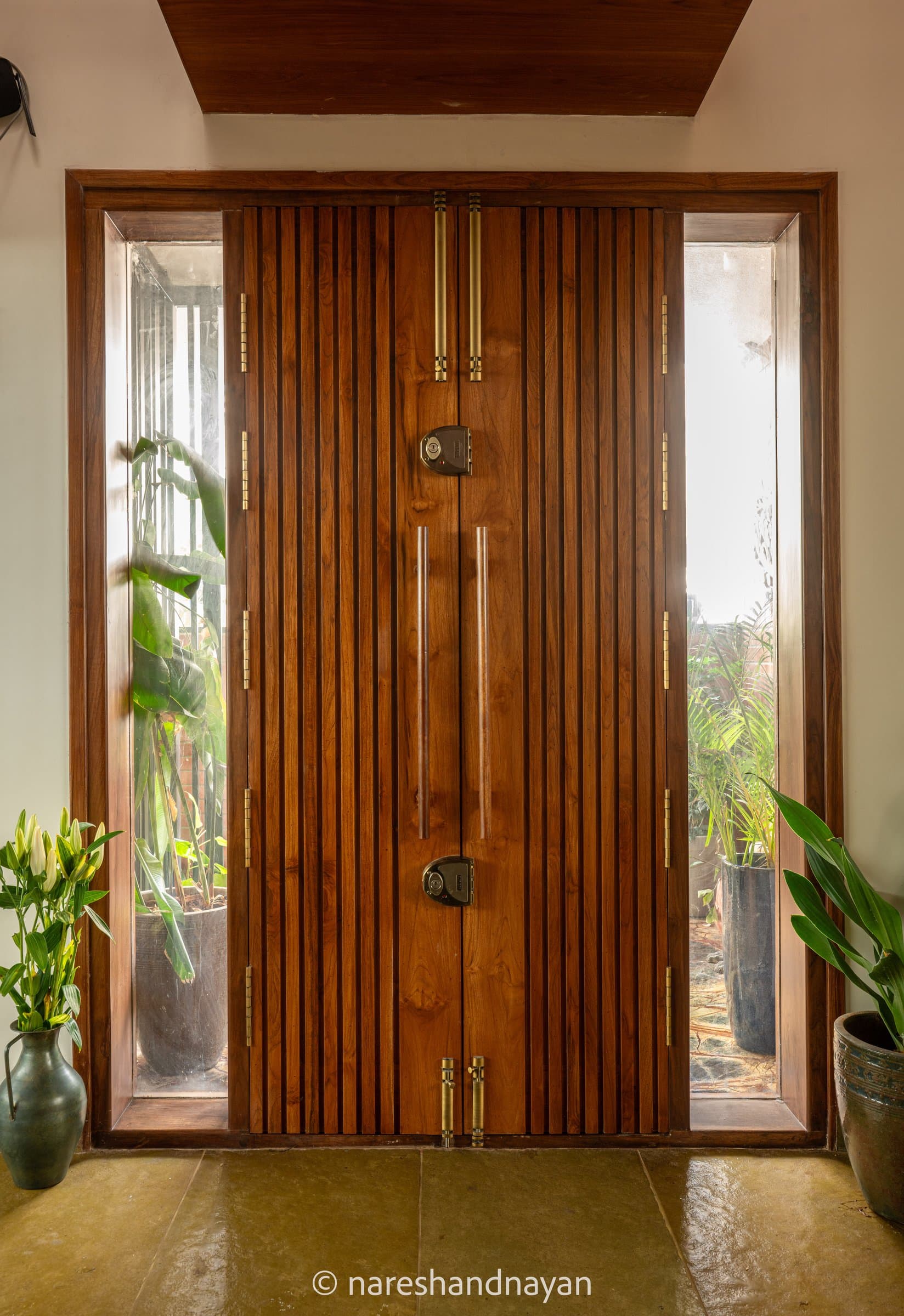
The entrance door introduces the material language of the home before one even steps inside. Crafted from warm hardwood, its vertical slats are set within a clean, flush frame and flanked by glazed side panels that draw natural light deep into the threshold. Solid yet visually light, the door balances presence with restraint. Rather than relying on elaborate detailing, it reflects the studio’s belief in allowing honest materials and thoughtful craftsmanship to create a lasting impression.
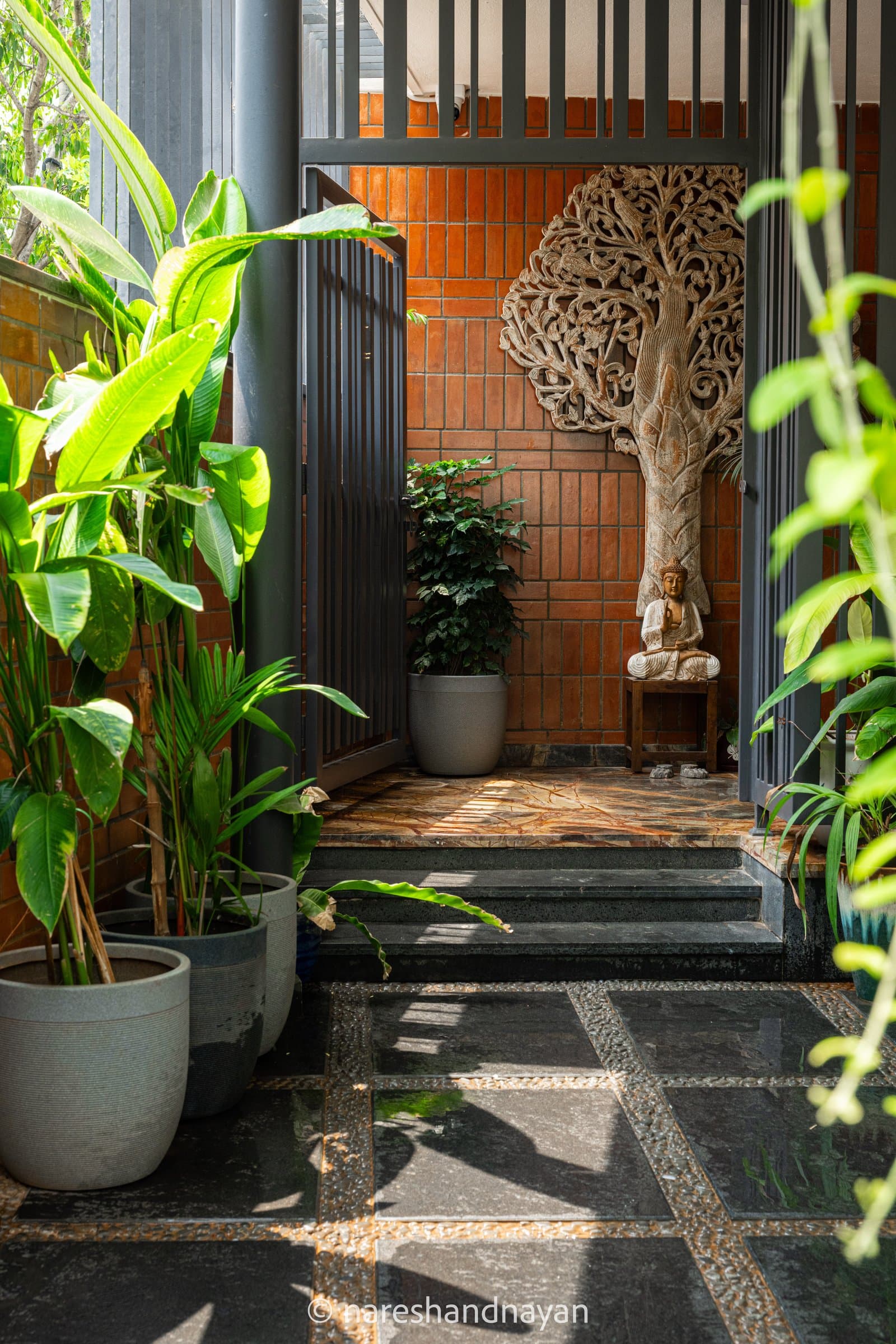
The approach unfolds as a carefully composed sequence of arrival. A short flight of dark stone steps rises to a terracotta-tiled landing, where a carved Tree of Life panel and a seated Buddha create a quiet moment of pause before entry. Lush heliconia and palms soften the edges of the pathway, lending the entrance a sense of calm and enclosure. Underfoot, gridded paving interspersed with planted joints allows rainwater to percolate naturally into the ground, subtly reinforcing the home’s connection to landscape and climate.
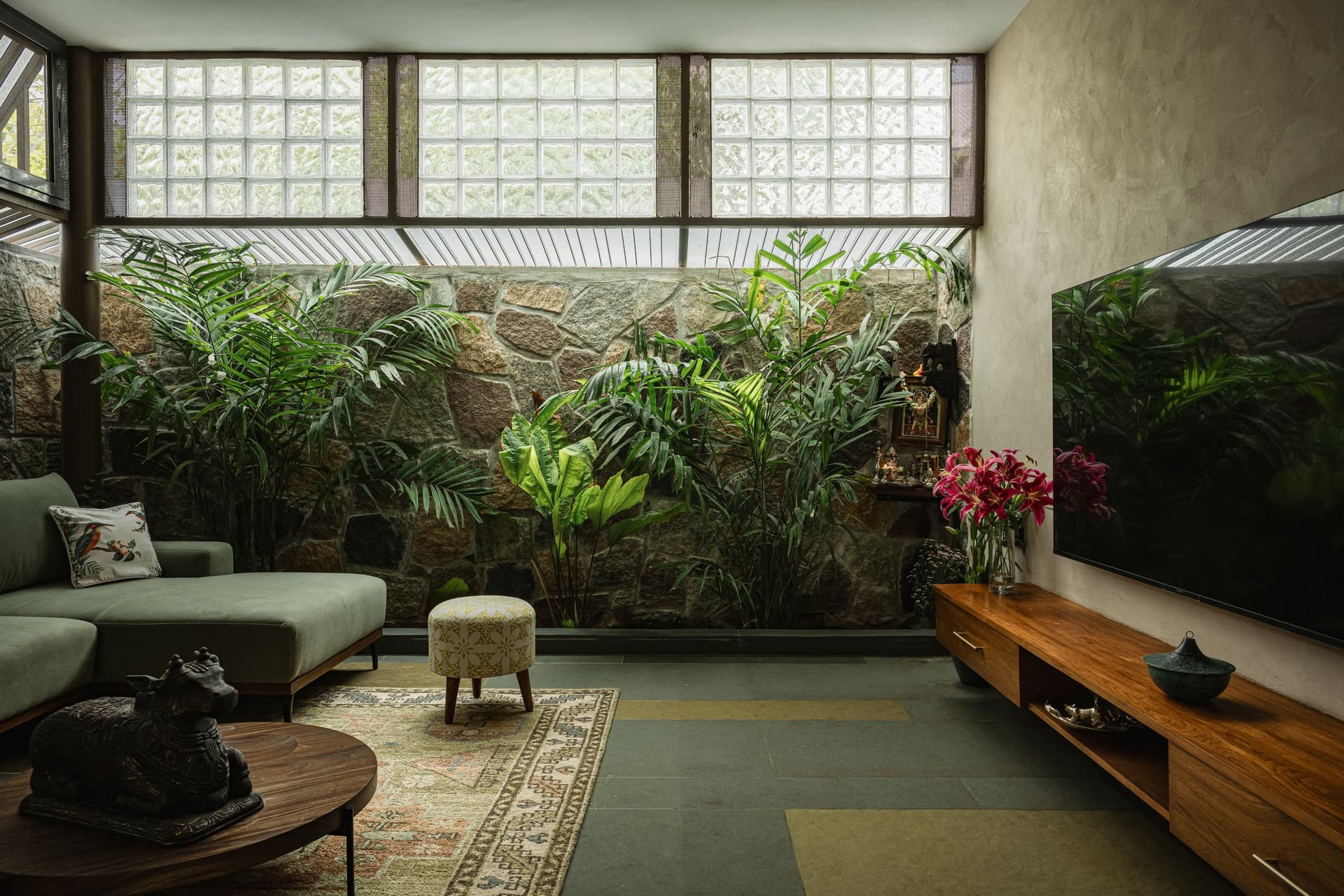
The living room is anchored by a rugged rubble stone wall that serves both as a retaining structure and the space’s defining architectural element. Rather than concealing or refining its texture, the stone is left exposed, celebrating its natural character and material honesty. At its base, dense planting creates the impression of an indoor garden, softening the masonry while strengthening the home’s connection to nature. Above, a clerestory band of glass blocks introduces a gentle wash of daylight, illuminating the stone surface without opening the room directly to the street.
The furnishings are arranged to engage with this interplay of light, texture, and greenery. A low green-upholstered sofa and a compact upholstered stool rest on a patterned dhurrie, creating an intimate and relaxed seating area. Along the opposite wall, a slender timber console provides functional storage while maintaining visual lightness. The television is deliberately understated and mounted lower than convention dictates, ensuring that attention remains focused on the room’s true focal points: the tactile stone wall, the changing daylight, and the landscape it frames.
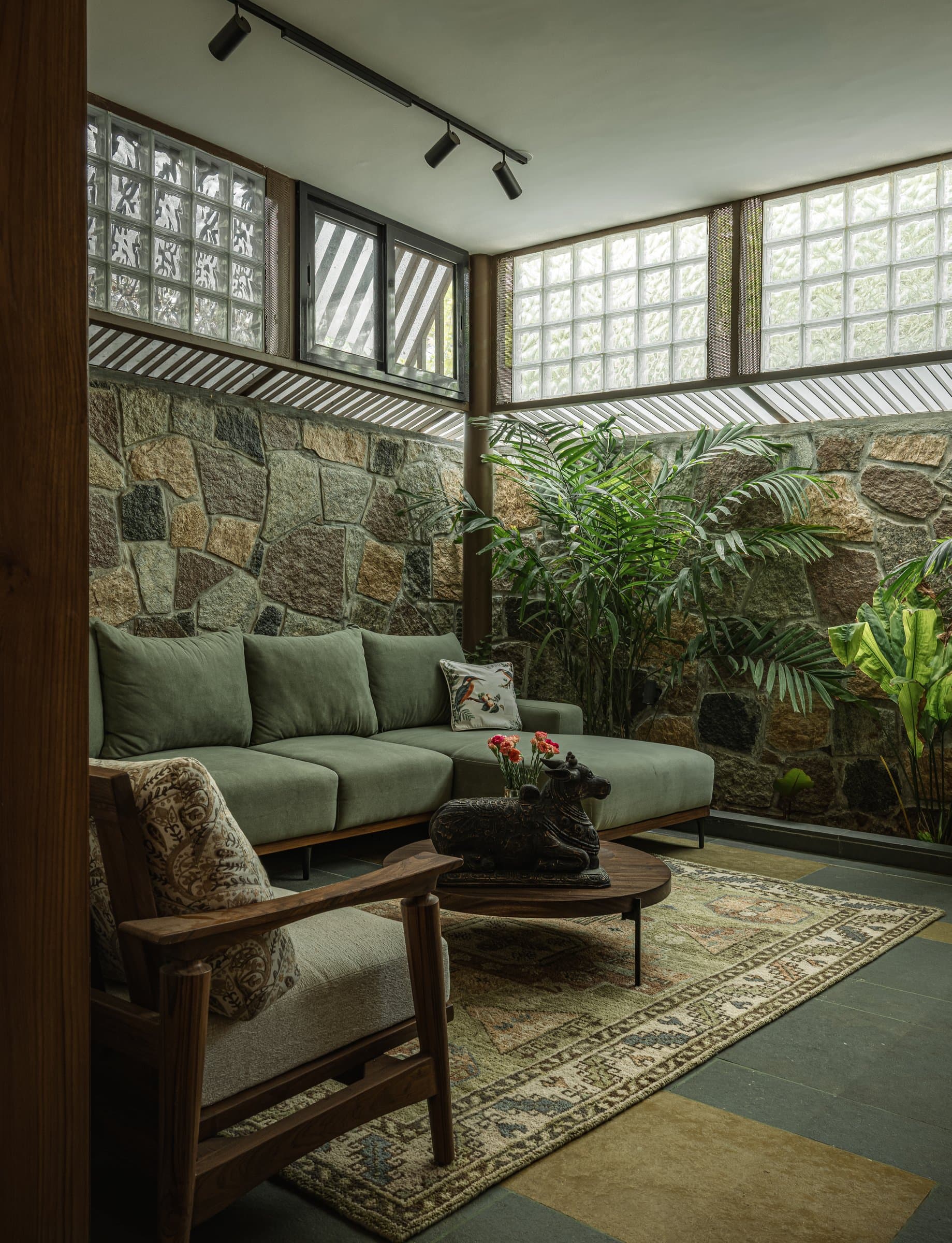
Viewed from a second vantage point, the living room reveals the clarity and discipline of its architectural composition. Stone, glass block, and a perforated metal screen are layered one above the other in a distinct horizontal sequence, creating a façade that is both functional and expressive. This carefully considered sectional arrangement promotes cross-ventilation and daylight penetration while preserving privacy from the street beyond.
Within this restrained envelope, the furniture remains deliberately simple. A solid timber armchair joins the sofa arrangement, introducing warmth and visual weight to the space. Together, the furnishings allow the architecture itself to remain the primary focus, reinforcing a living environment shaped as much by light, air, and materiality as by the objects it contains.
““A home doesn’t need to be bigger to feel abundant, it simply needs to be designed with intention.””
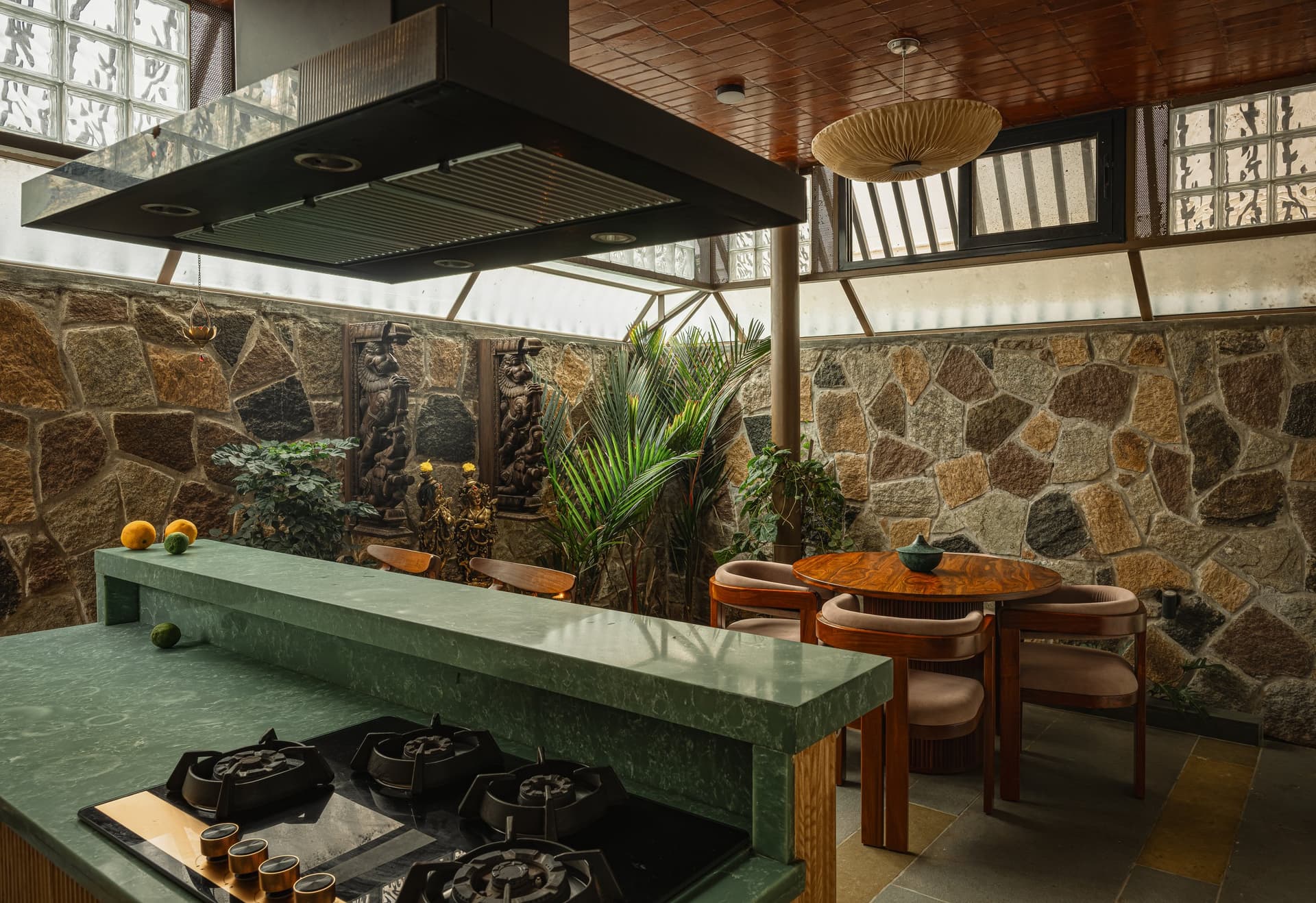
The kitchen and dining areas unfold within a single open volume, linked by a long green stone counter that gently defines their functions without interrupting the flow of space. Above, a terracotta filler-slab ceiling introduces warmth, texture, and a passive cooling strategy that helps moderate indoor temperatures through Bengaluru’s extended summers. The continuity of materials reinforces the sense of cohesion, allowing the home to feel both expansive and grounded.
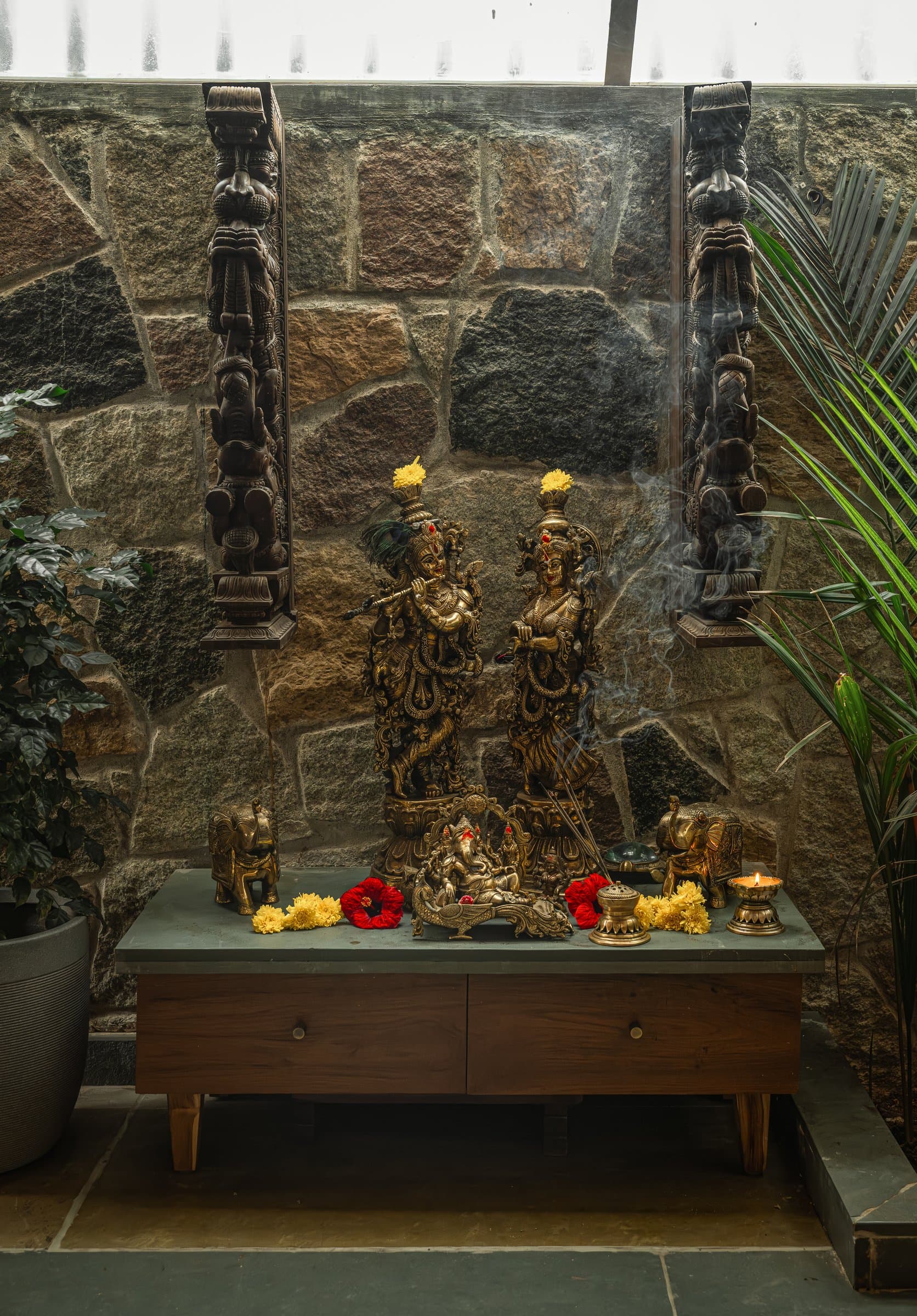
The rubble stone wall extends seamlessly into this zone, maintaining a strong connection with the architecture established elsewhere in the house. Set within it, two carved wooden brackets frame a compact shrine, creating a quiet moment of ritual within everyday life. Nearby, a round timber dining table occupies the corner, surrounded by cane-and-wood tub chairs that lend the space a relaxed, tactile character while encouraging gathering and conversation.
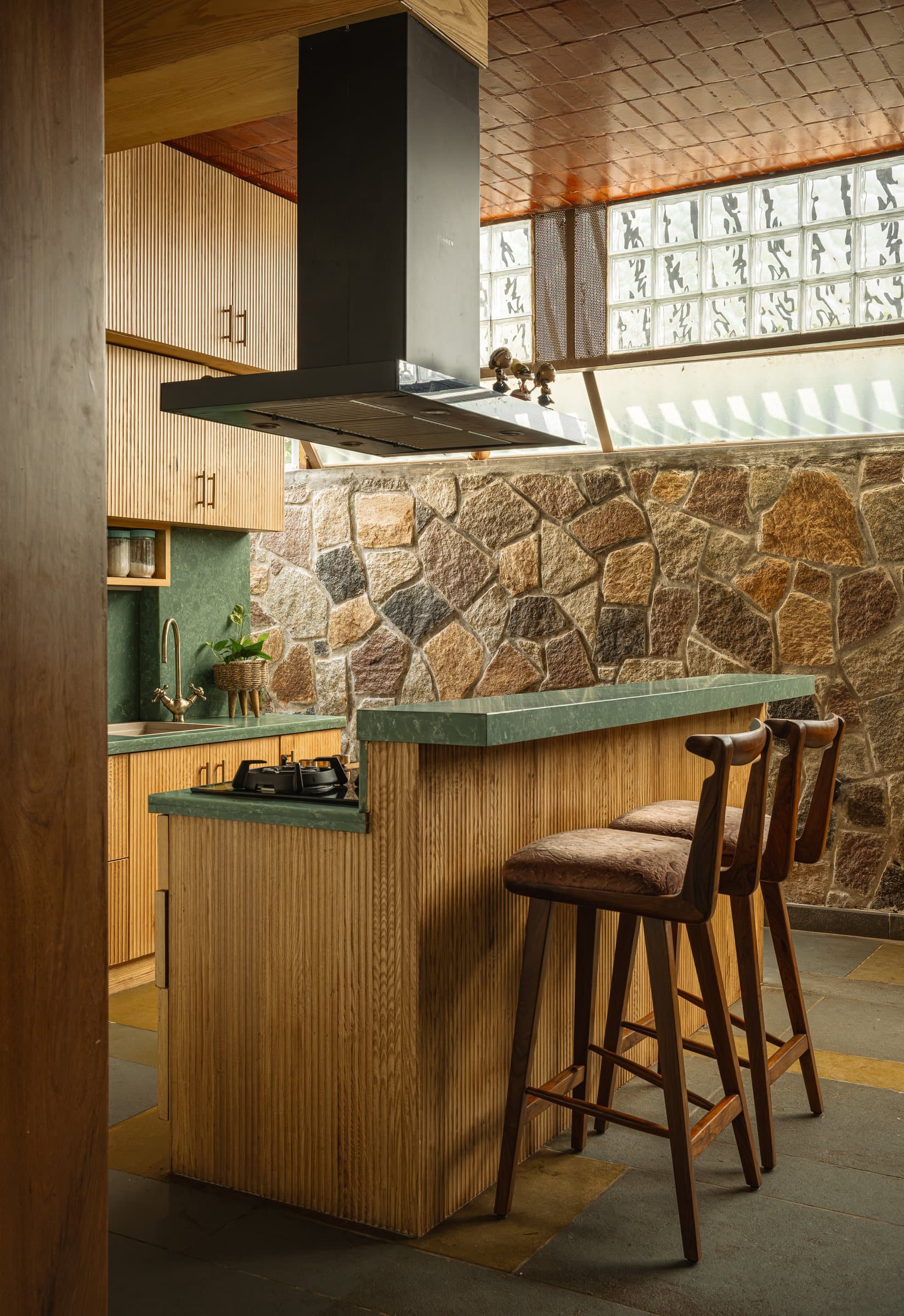
Viewed from the working side, the kitchen reveals a restrained and highly efficient design. Fluted timber cabinetry wraps the space in a simple L-shaped configuration, while the green stone used throughout the home returns as both countertop and a slender backsplash behind the sink. A pair of wooden bar stools nestles neatly beneath the island, transforming it from a purely functional element into an informal gathering point.
The layout is carefully considered to maximise usability within a compact footprint. The hob is positioned along the wall-side counter, allowing the island to remain open for preparation, serving, and conversation. This seemingly modest decision creates a more collaborative kitchen, enabling multiple people to cook comfortably at once while preserving the openness and ease that define the rest of the home.
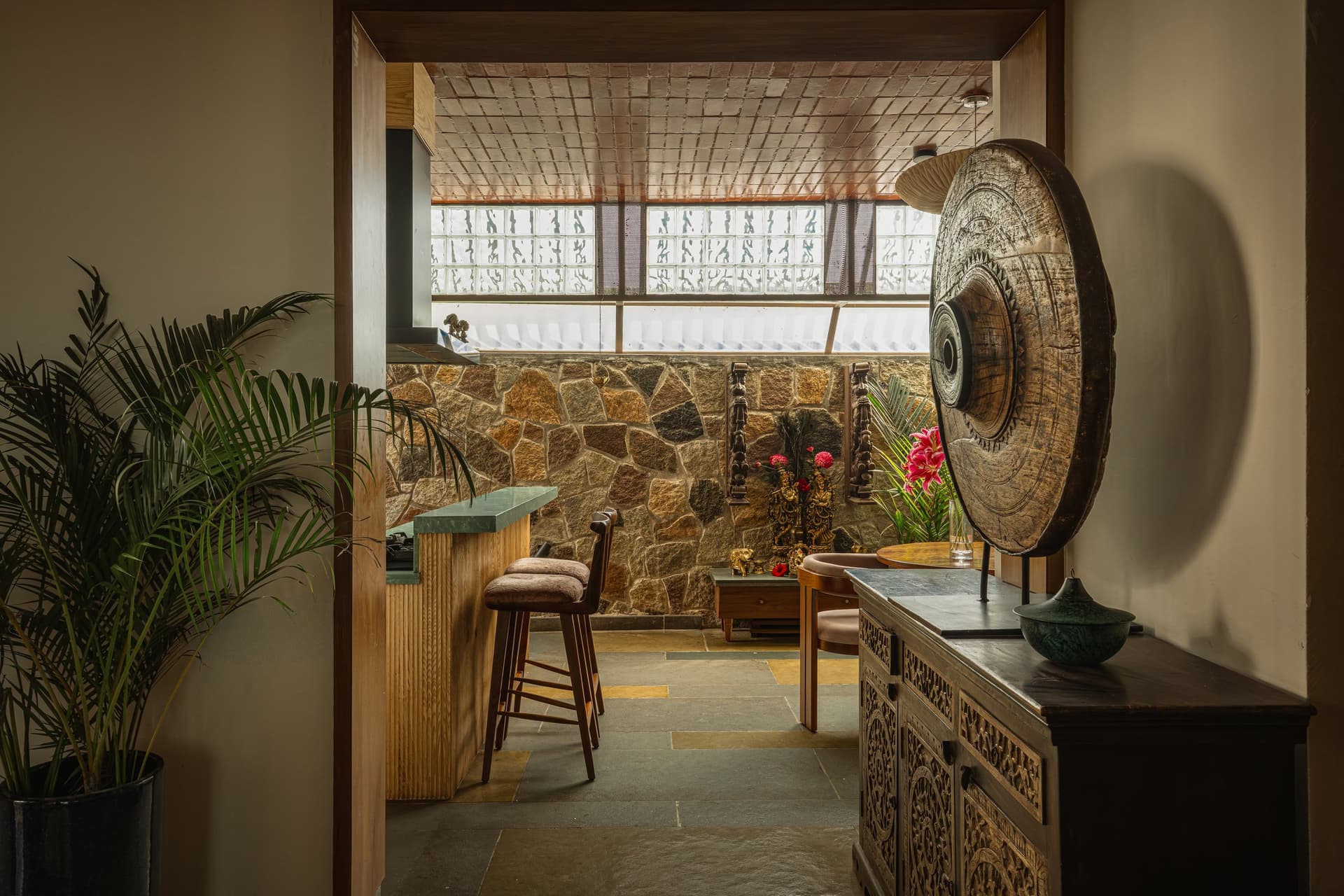
Viewed from the threshold, the kitchen and dining space takes on the character of a sheltered courtyard, where natural materials and filtered light create an atmosphere that feels remarkably close to the outdoors. The exposed rubble stone wall, terracotta filler-slab ceiling, and clerestory band of glass blocks work together to blur the distinction between inside and outside, filling the room with softness, texture, and an ever-changing quality of daylight.
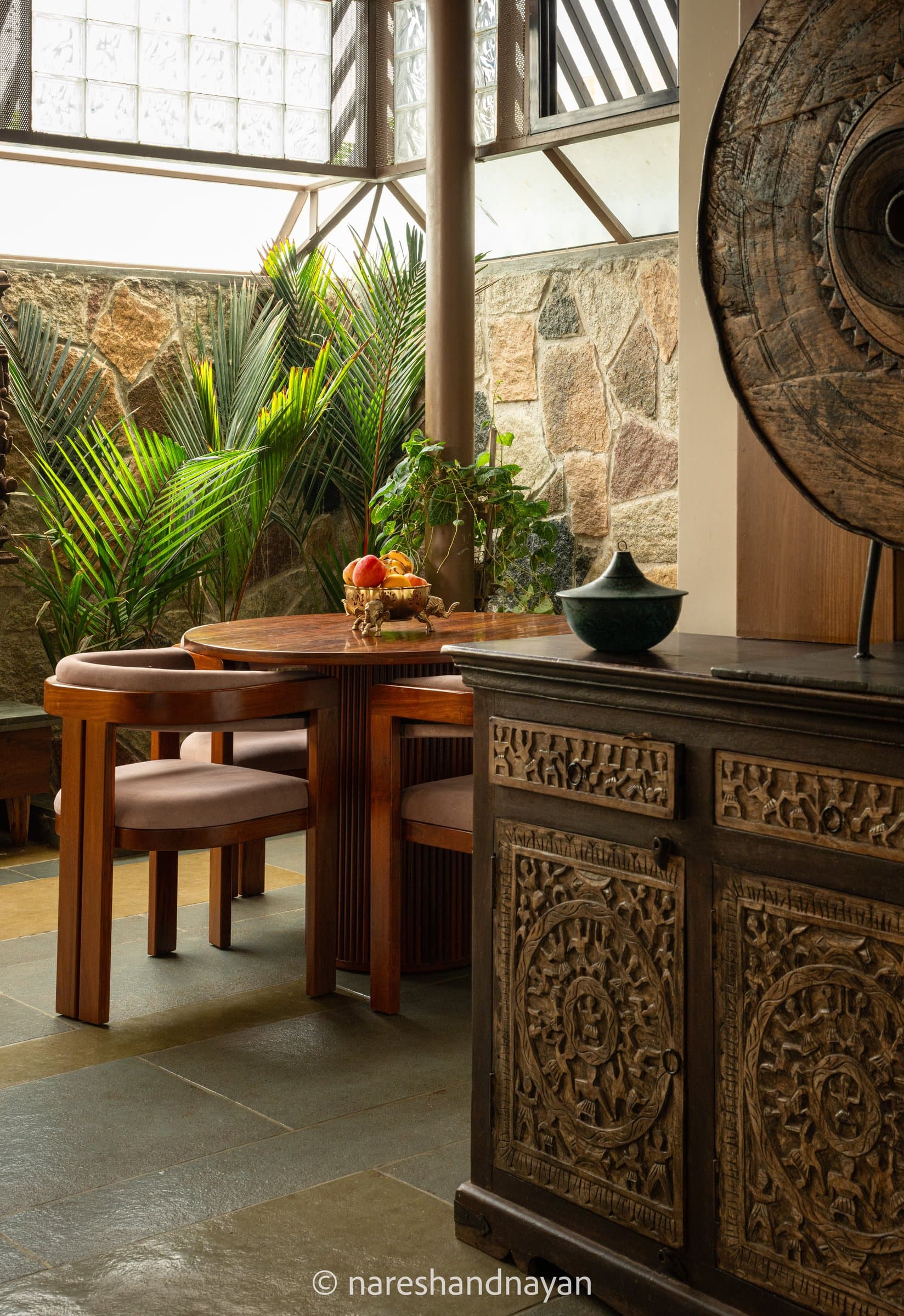
The dining nook captures the home’s most intimate and lived-in moments. A round timber table, low tub chairs, and a simple brass fruit bowl come together in a composition that feels effortless and inviting. Beyond, palm fronds emerge from a planted pocket, softening the edges of the space and reinforcing the home’s close relationship with nature.
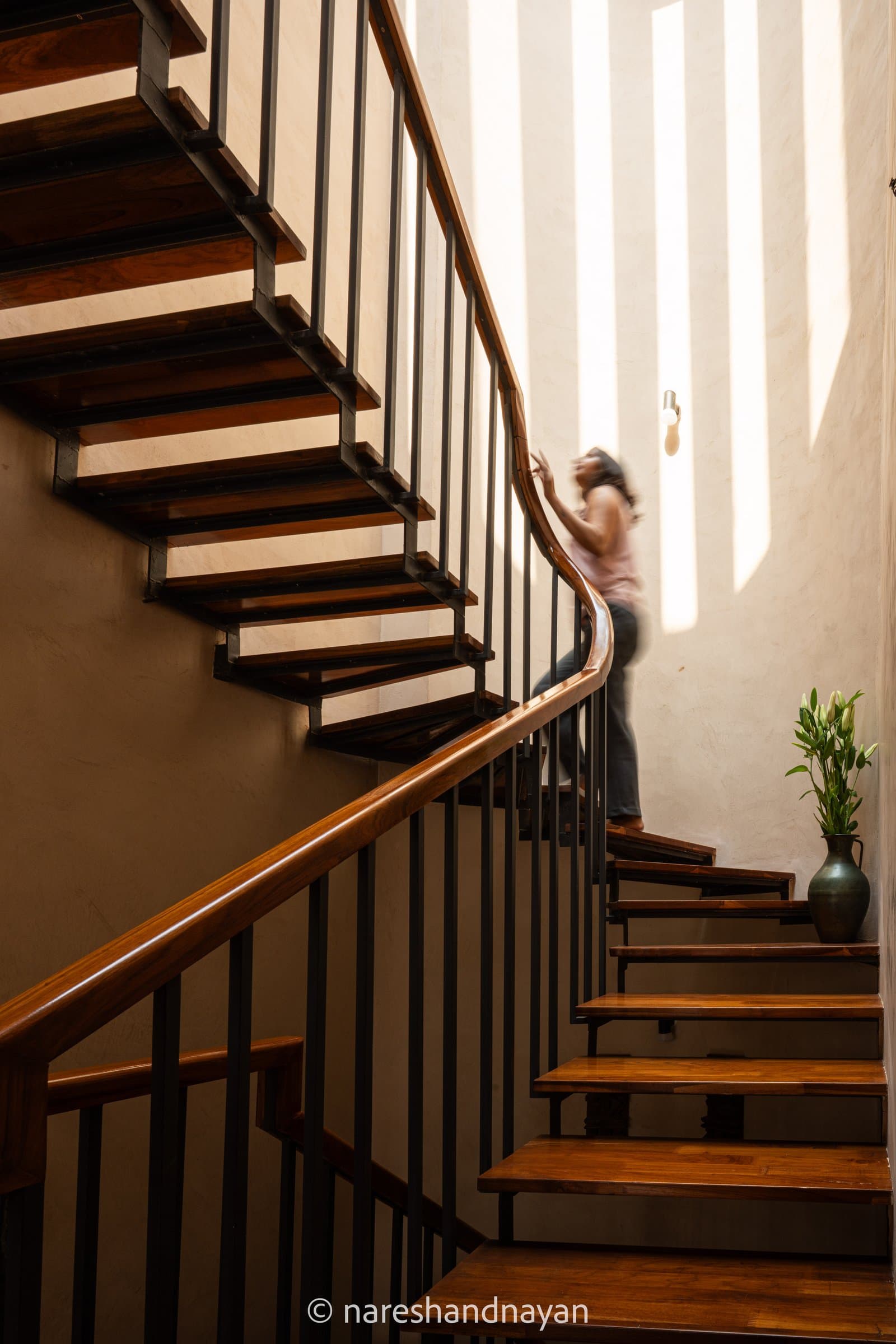
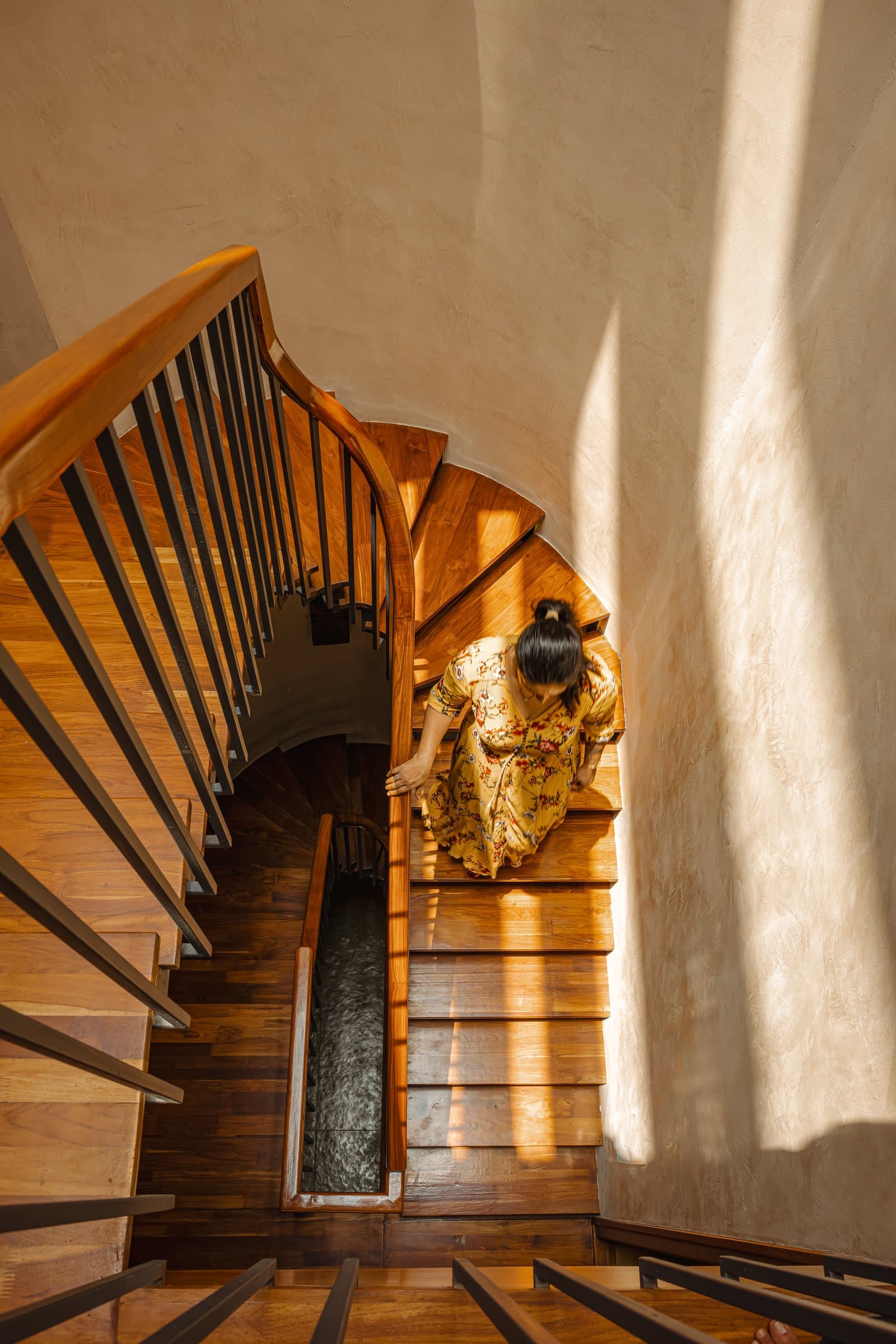
At the centre of the home, the staircase does far more than connect levels. Conceived as a light and permeable element, its open hardwood treads are supported by a slender metal stringer that allows daylight to filter through to the entry below, preserving a sense of openness within the compact footprint. The gently curved teak handrail follows the natural movement of the body, lending warmth and tactility to an otherwise restrained architectural composition.
More than a circulation spine, the staircase becomes an active participant in the daily life of the house. The adjacent lime-plastered wall serves as a canvas for shifting patterns of light cast through a nearby glass block window, creating a subtle play of shadow that changes throughout the day. In this way, the staircase transforms a functional necessity into a spatial experience, marking the passage of time as gracefully as it connects one floor to the next.
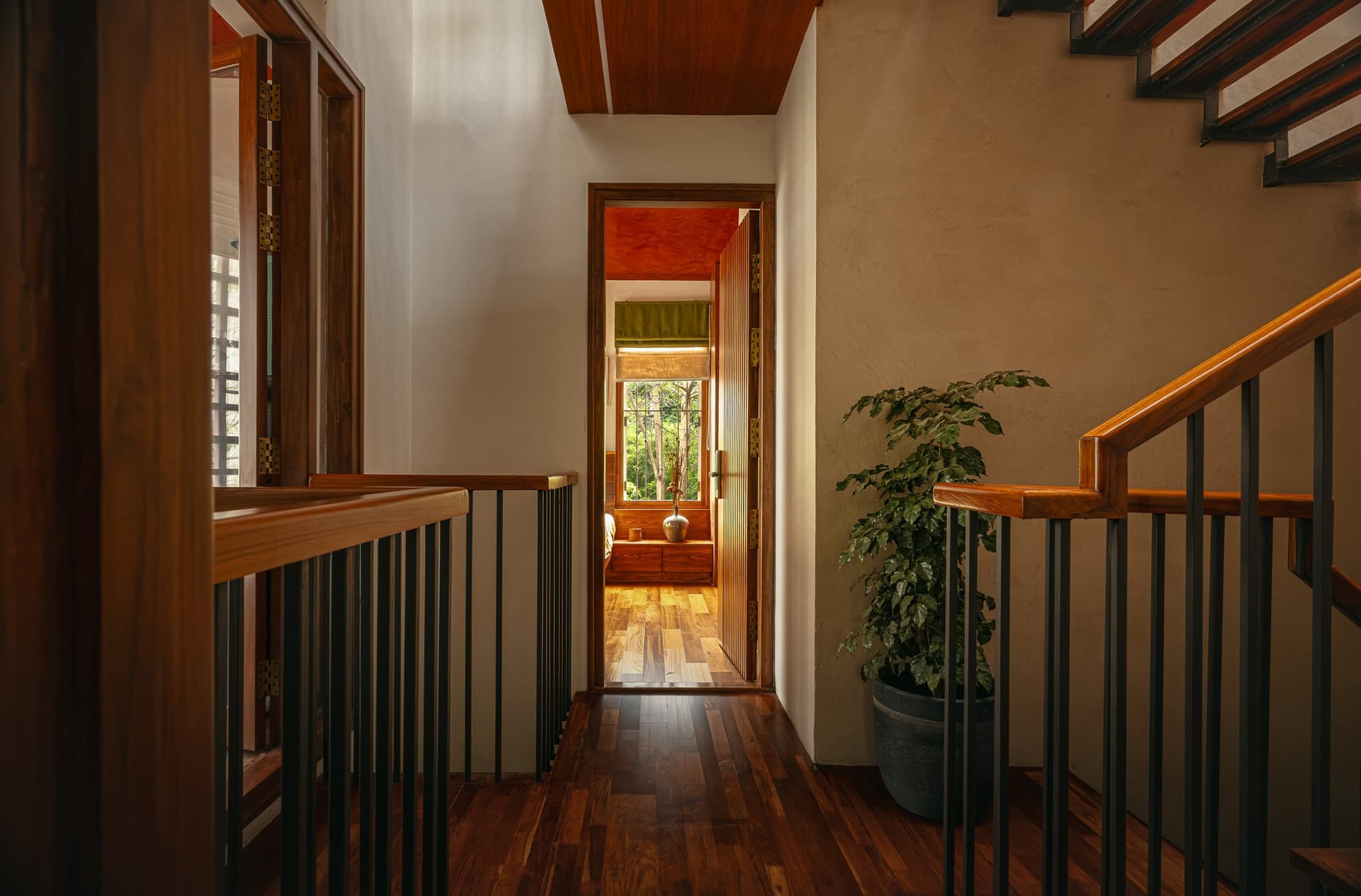
The upper landing offers one of the home’s most serene and contemplative spaces. Modest in scale yet rich in atmosphere, it is framed by a planted pot on one side and the returning teak handrail on the other, creating a gentle transition between movement and rest. At the far end, a slatted hardwood door leads into the bedroom, its warm timber surface illuminated by soft daylight filtering from a window seat beyond.
Wide-plank wooden flooring extends seamlessly across the level, carrying the warmth and material continuity of the floors below upward through the house. Bathed in natural light and free from unnecessary ornamentation, the landing becomes a quiet pause within the daily rhythm of the home, reinforcing the project’s emphasis on simplicity, comfort, and thoughtful spatial experience.
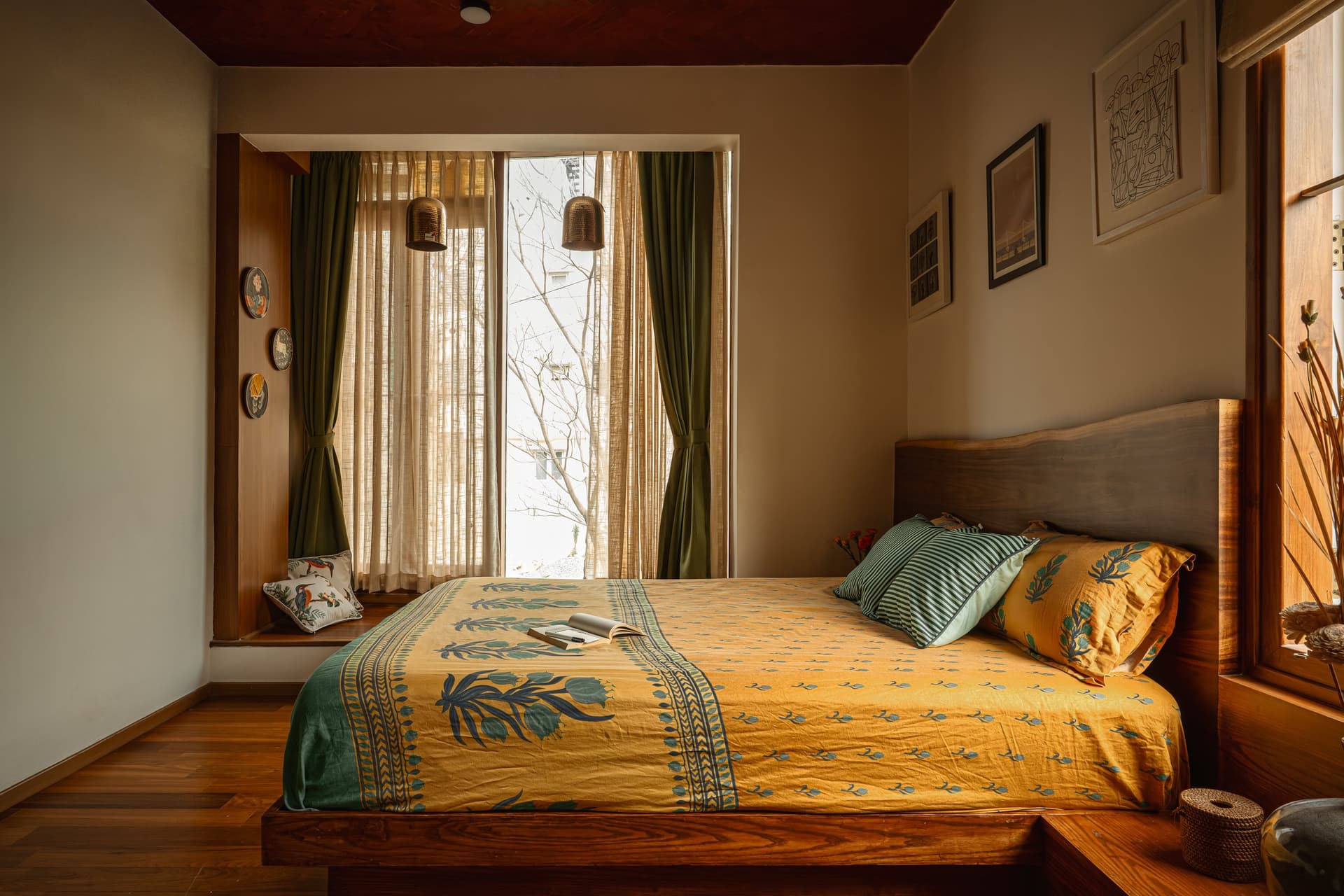
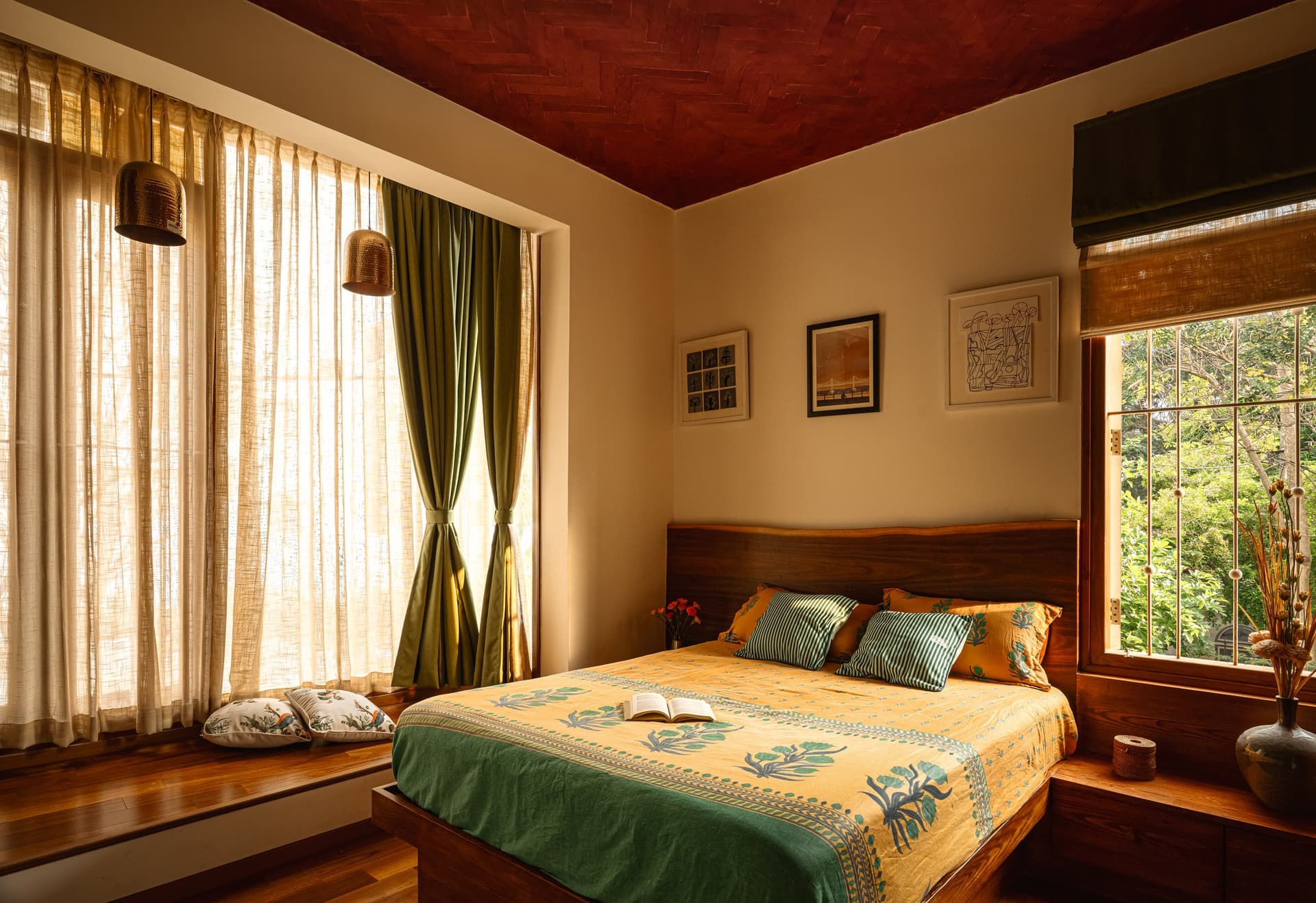
The first bedroom is shaped around a generous window seat that serves as both a reading nook and an informal perch for a child, transforming the window into the room’s defining feature. Framed by sheer drapes and olive-toned cotton curtains, the opening filters daylight softly into the space while maintaining a sense of privacy and calm. Suspended before the glass, a pair of woven rattan pendant lights introduces texture and warmth, subtly marking the transition between the resting area and the view beyond.
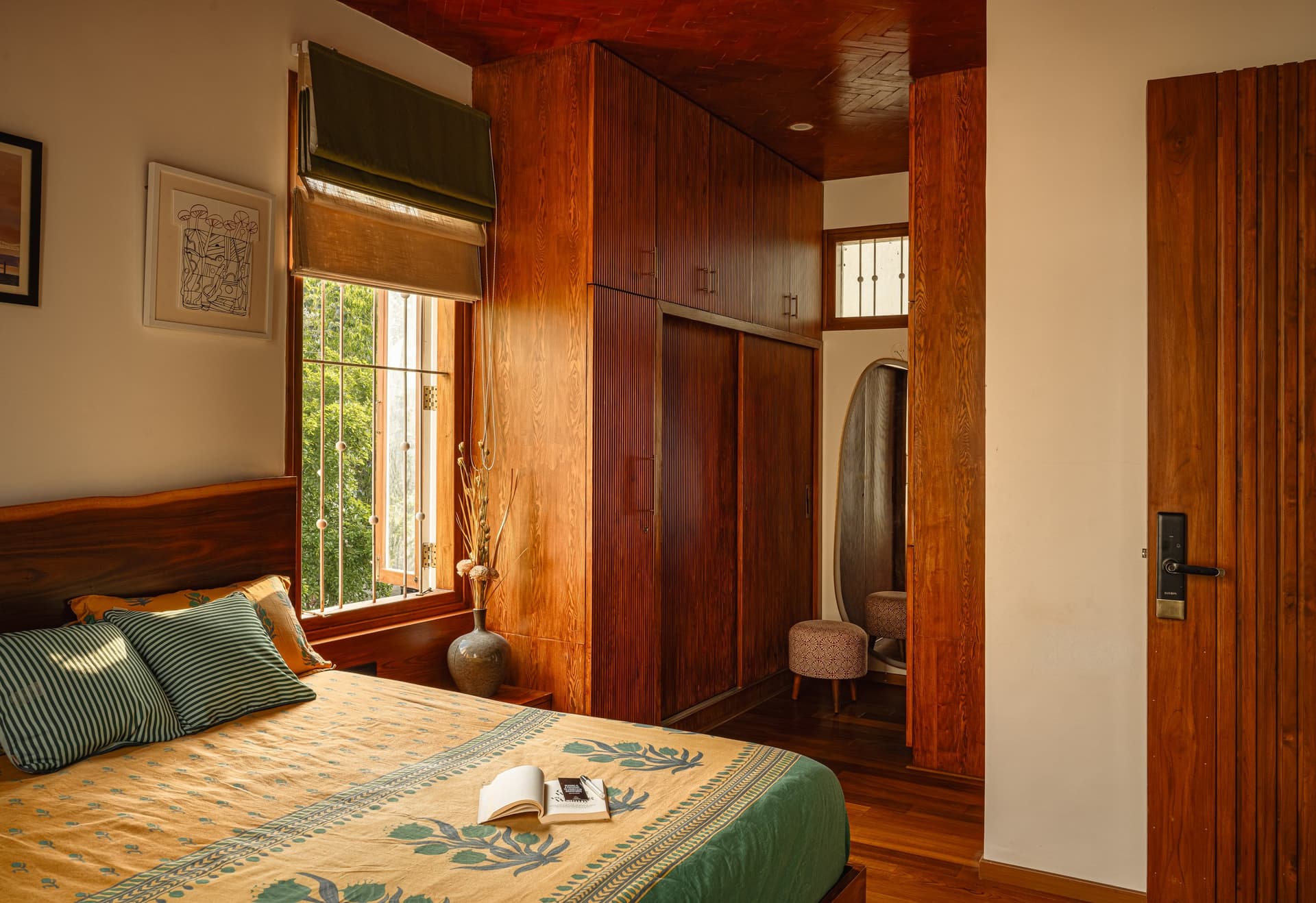
The furnishings remain intentionally understated. A low platform bed crafted from warm hardwood anchors the room without overwhelming it, allowing natural light, material richness, and the changing atmosphere of the window to take precedence. The result is a bedroom that feels quiet, comfortable, and deeply connected to the rhythms of everyday living.
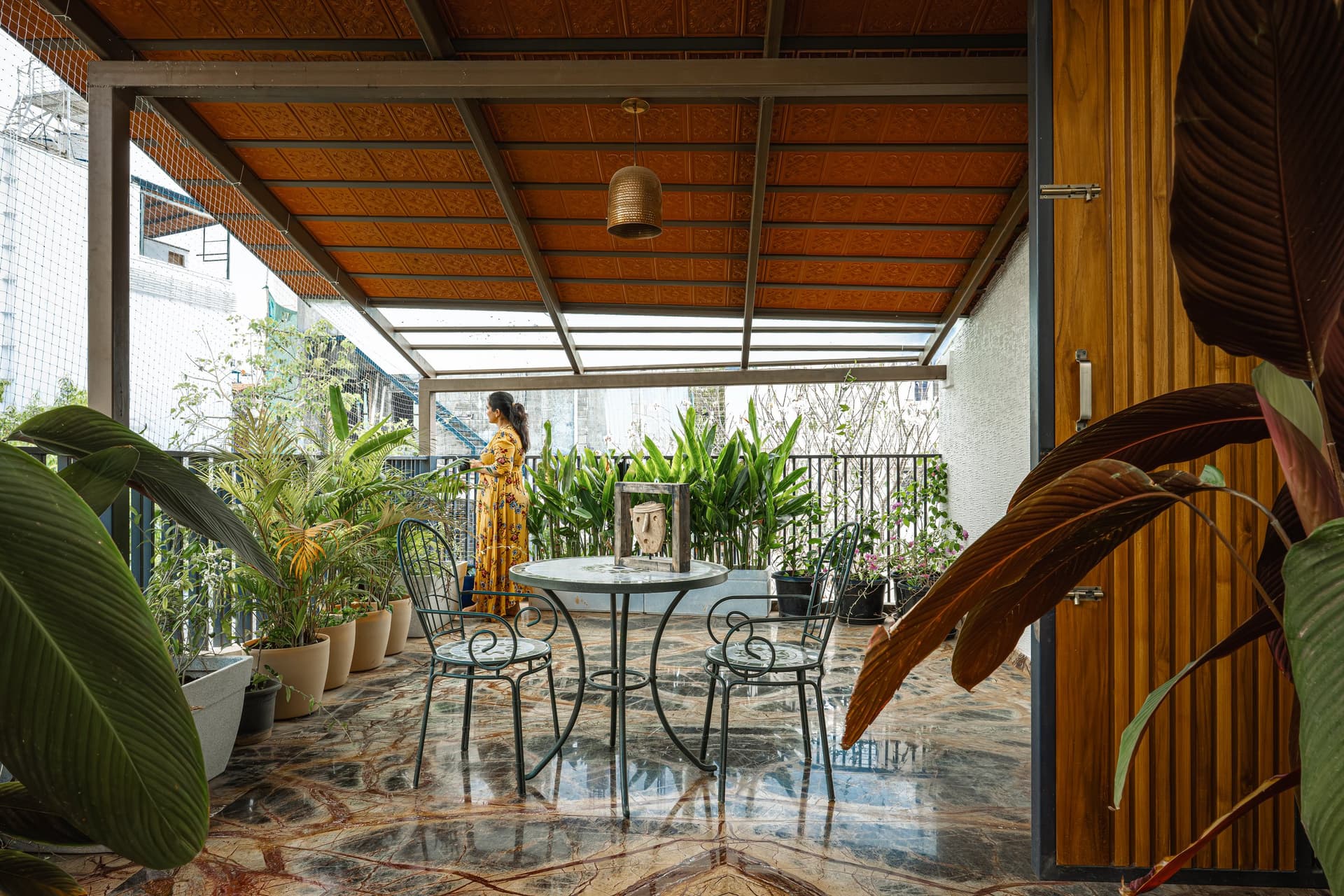
The terrace is conceived as the home’s third living room, extending daily life into the open air while offering the comfort and sense of enclosure usually associated with an interior space. Overhead, a pressed-metal ceiling finished in oxidised orange lends character and shelter, casting a warm glow across the polished stone flooring below. A simple wrought-iron table and chairs create a setting for quiet mornings, shared meals, or evening conversations.
Responding directly to the client’s desire for room to garden, the architects elevated the landscape from an accessory to a destination in its own right. Rather than treating the terrace as a leftover outdoor area, they created a dedicated place where gardening becomes an everyday ritual, sheltered beneath a roof of its own.
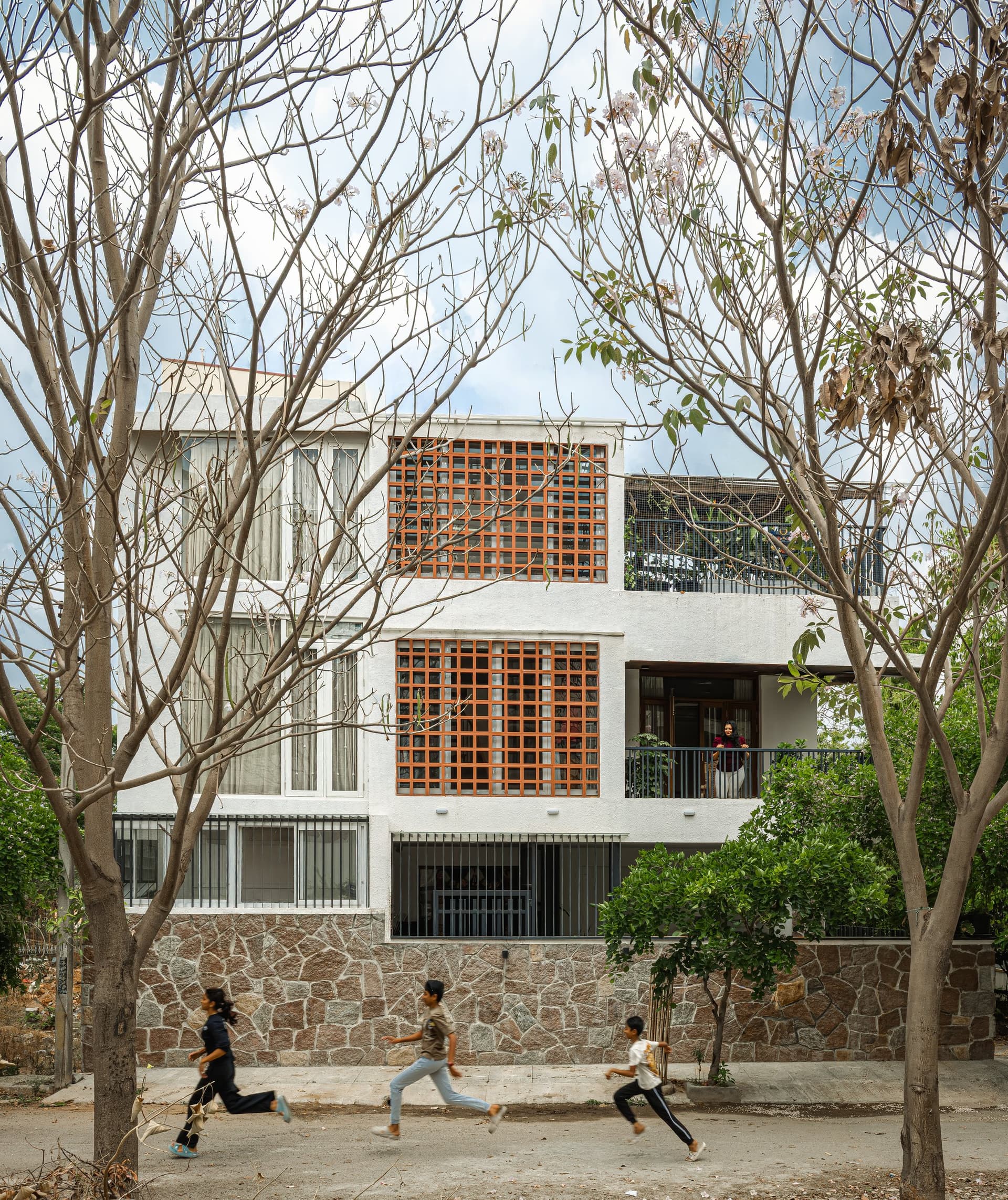
From the street, the home expresses the clarity of its architectural logic. A rugged rubble stone plinth anchors the building to the site, while a crisp white stucco volume rises above it with quiet confidence. Brick jali screens punctuate the façade, filtering light and air into the bedrooms beyond while providing privacy and passive ventilation. There is little here that seeks attention. Instead, the architecture is defined by its honesty, conceived not for a single photograph but for years of occupation, weathering, and everyday use.
What makes Sharada Nilaya particularly compelling is its thoughtful approach to resourcefulness. The material palette is rooted in practicality: locally sourced rubble masonry provides both structure and character, terracotta filler slabs help regulate indoor temperatures, lime plaster ages gracefully with minimal maintenance, and glass blocks introduce daylight without compromising privacy. These are not nostalgic gestures but intelligent responses drawn from a long-standing South Indian building tradition that understands how to create comfort, climate responsiveness, and spatial generosity within a modest footprint.
The home demonstrates that generosity is not measured by size alone. Three bedrooms are carefully accommodated within a compact plan, gardens remain visible from much of the interior, and the kitchen and dining areas form a natural centre for family life. A light-filled staircase links the levels without consuming valuable floor area, reinforcing the efficiency of the design. Throughout the project, restraint emerges not as an aesthetic preference but as an architectural principle, allowing every element to work harder, last longer, and contribute meaningfully to daily life.