IIn a residential landscape often defined by the symmetry of the freestanding bungalow and the predictability of the conventional floor plate, the most compelling houses are those that privilege the section over the plan. They are conceived vertically as much as horizontally, treating stairs, split levels, terraces, and overhangs not merely as functional necessities but as instruments of spatial composition.
Step House, designed by MK’s Atelier in Ahmedabad, is rooted in precisely this approach. Conceived by Ar. Khushbu Shah and Ar. Mehul Solanki across approximately 4,300 sq. ft., the residence unfolds as a carefully orchestrated sequence of stacked volumes, cascading terraces, and interlocking levels that guide movement through the home as a gradual ascent. Rather than relying on singular gestures, the architecture derives its character from the relationship between these layered planes and the shifting perspectives they create.
A restrained material palette reinforces this clarity. Textured stone, expansive glazing, and warm timber define the exterior expression, while the interiors soften the language into a more intimate register. Together, architecture and interiors operate as a continuous composition, balancing openness and enclosure, monumentality and domesticity, within a home shaped as much by vertical experience as by its footprint.
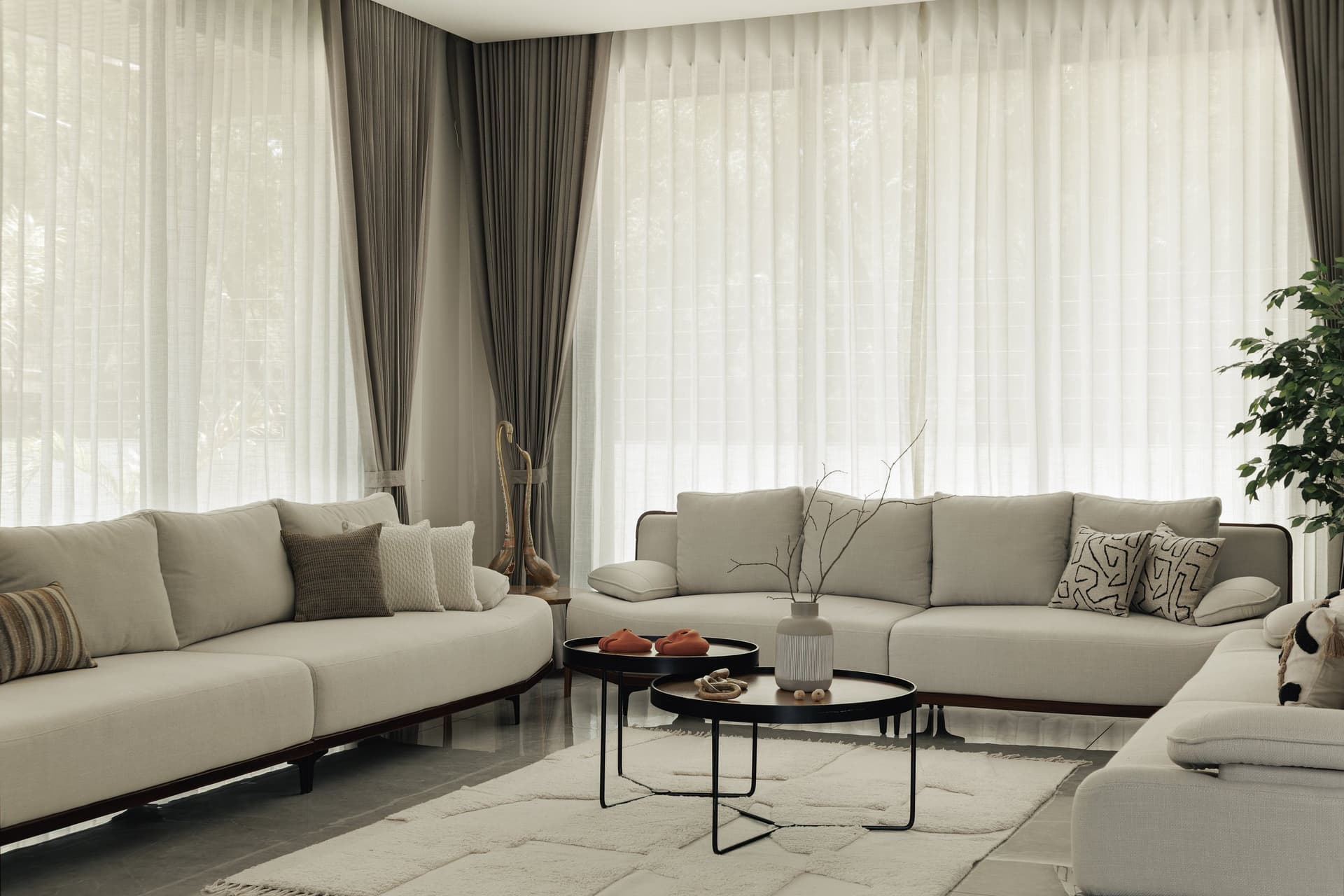
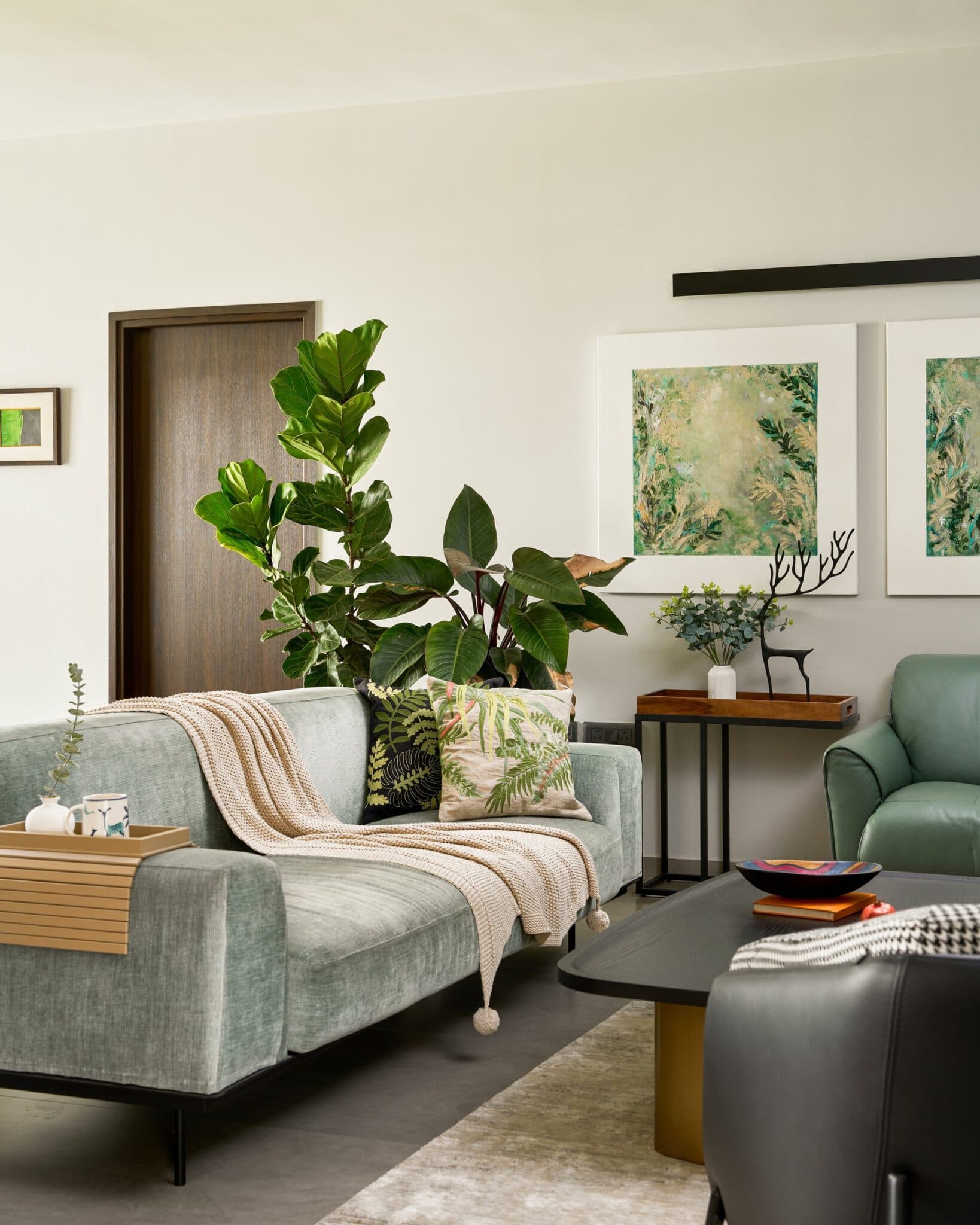
The principal living room is conceived as a study in restraint, where texture and proportion carry more weight than colour. A continuous wall of full-height glazing is filtered through sheer curtains layered with heavier drapes that fall in generous folds to the floor, softening the daylight and lending the room a sense of quiet enclosure. A cluster of oatmeal-toned sofas, elevated on slender timber bases, is arranged around a pair of low black circular tables, establishing an informal centre without disrupting the room’s calm geometry.
The palette remains deliberately subdued, moving through shades of cream, bone, and warm taupe. Rather than relying on contrast, the space builds depth through material variation and subtle shifts in tone. Small accents introduce moments of colour, their presence measured enough to punctuate the composition without disturbing its overall serenity.
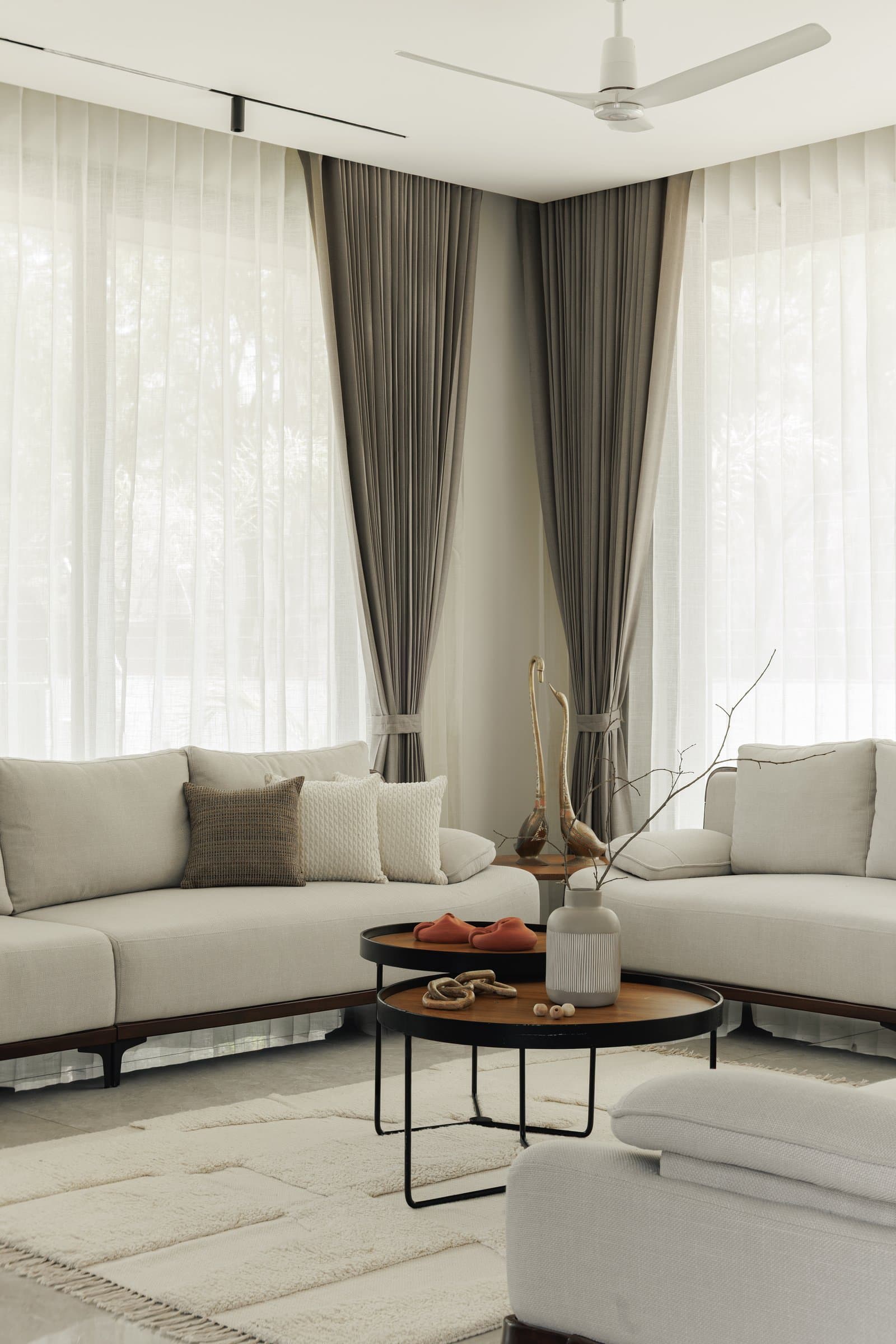
What the living space proposes is that a large social room need not be filled to feel inhabited. The wide rug, the broad coffee tables, and the carefully held negative space around the seating let the architecture itself do most of the work.
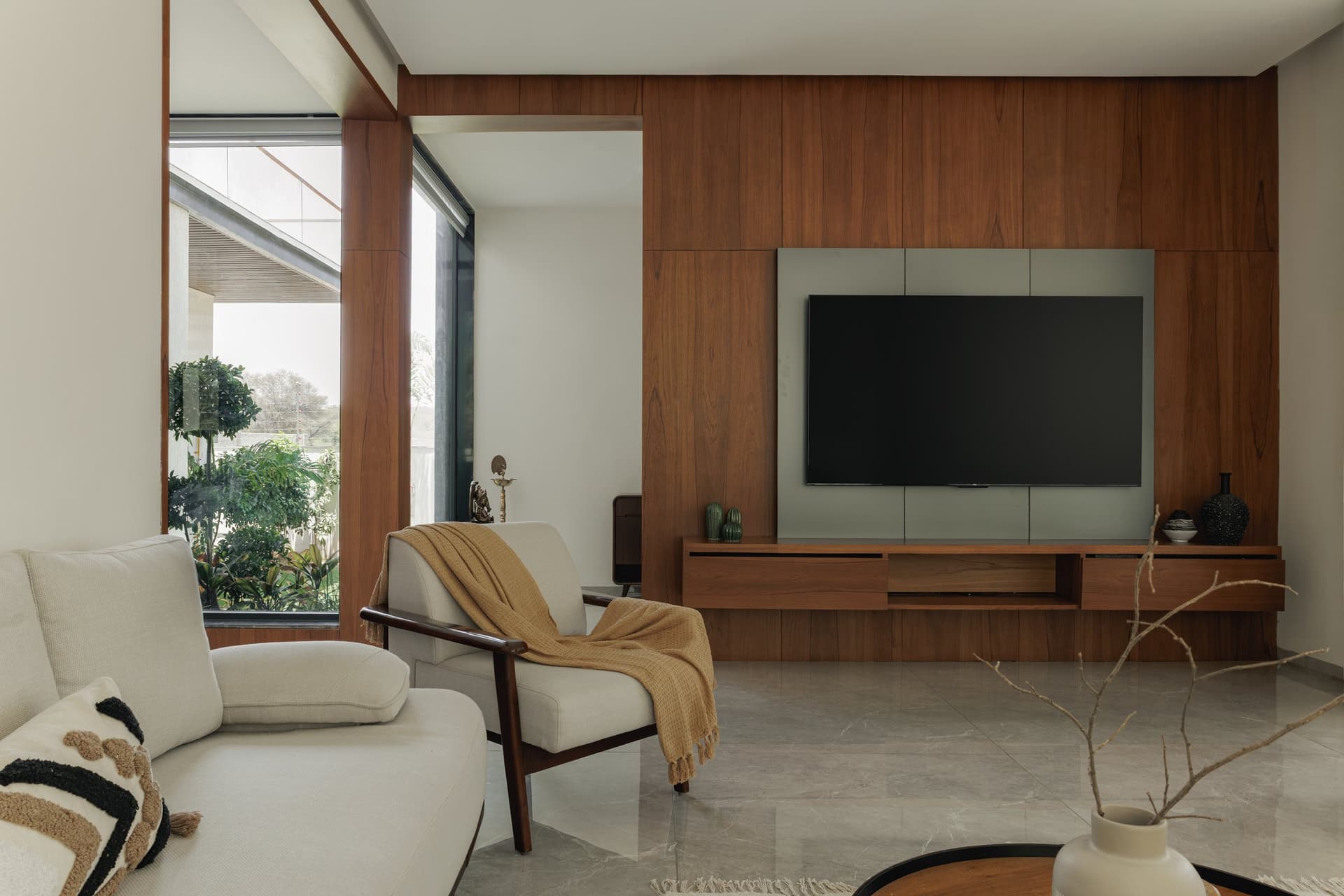
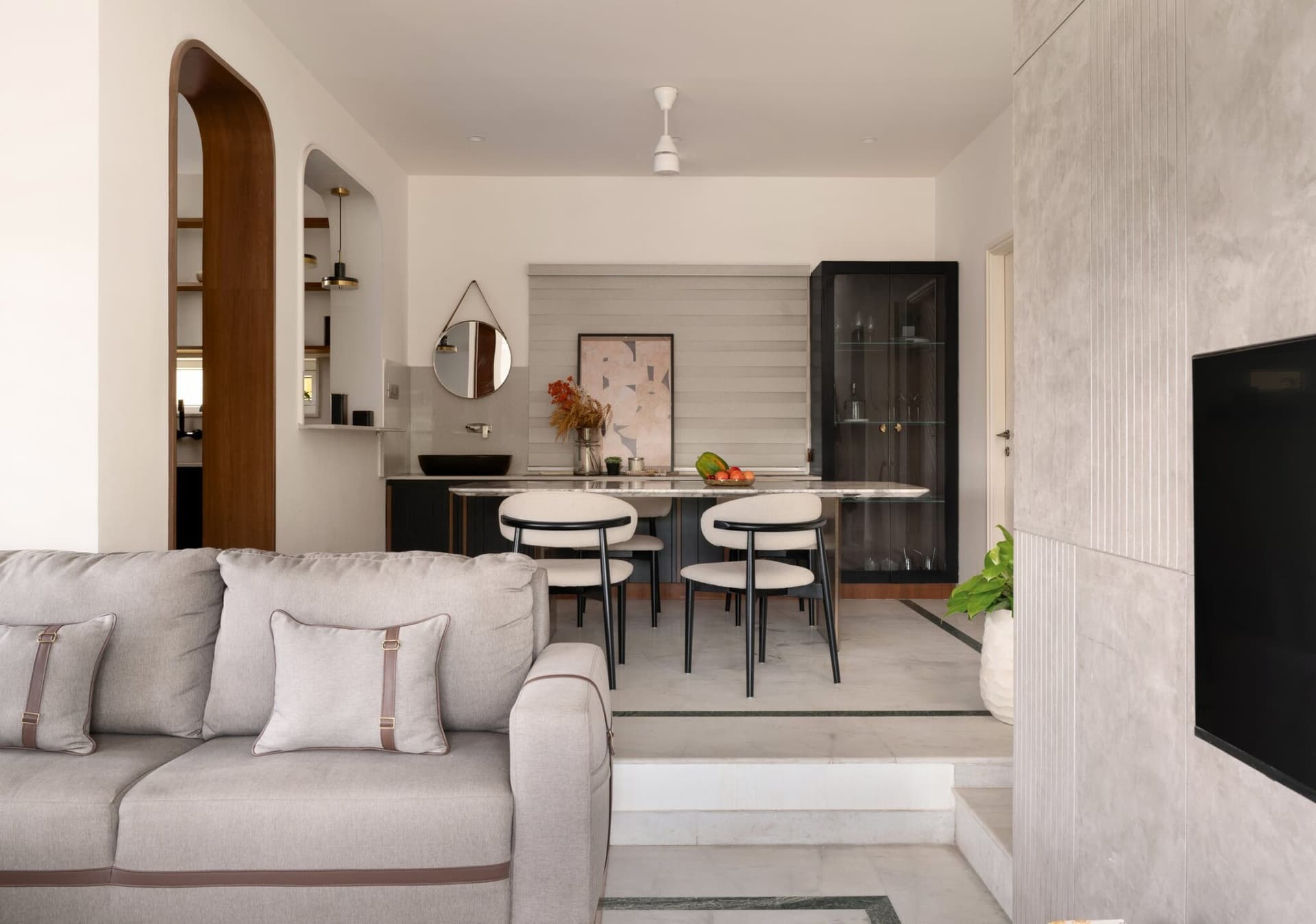
At the far end of the living space, a continuous timber-clad wall establishes a strong architectural anchor. Clad in floor-to-ceiling panels of warm-toned wood, it introduces a sense of solidity and rhythm to an otherwise light-filled room. A full-width floating media console extends beneath the television, its suspended form preserving the visual continuity of the stone flooring and reinforcing the home’s emphasis on clean horizontal lines.
Adjacent to the composition, a tall picture window draws the landscape into the interior. Framing a carefully edited view of the garden and the underside of the cantilevered upper volume, it turns an everyday outlook into a deliberate architectural moment. The contrast between the warmth of the timber, the greenery beyond, and the crisp geometry of the structure lends the space both depth and quiet drama.
““The stepped planning, combined with terraces and balconies, creates a sense of movement and openness throughout the residence.””
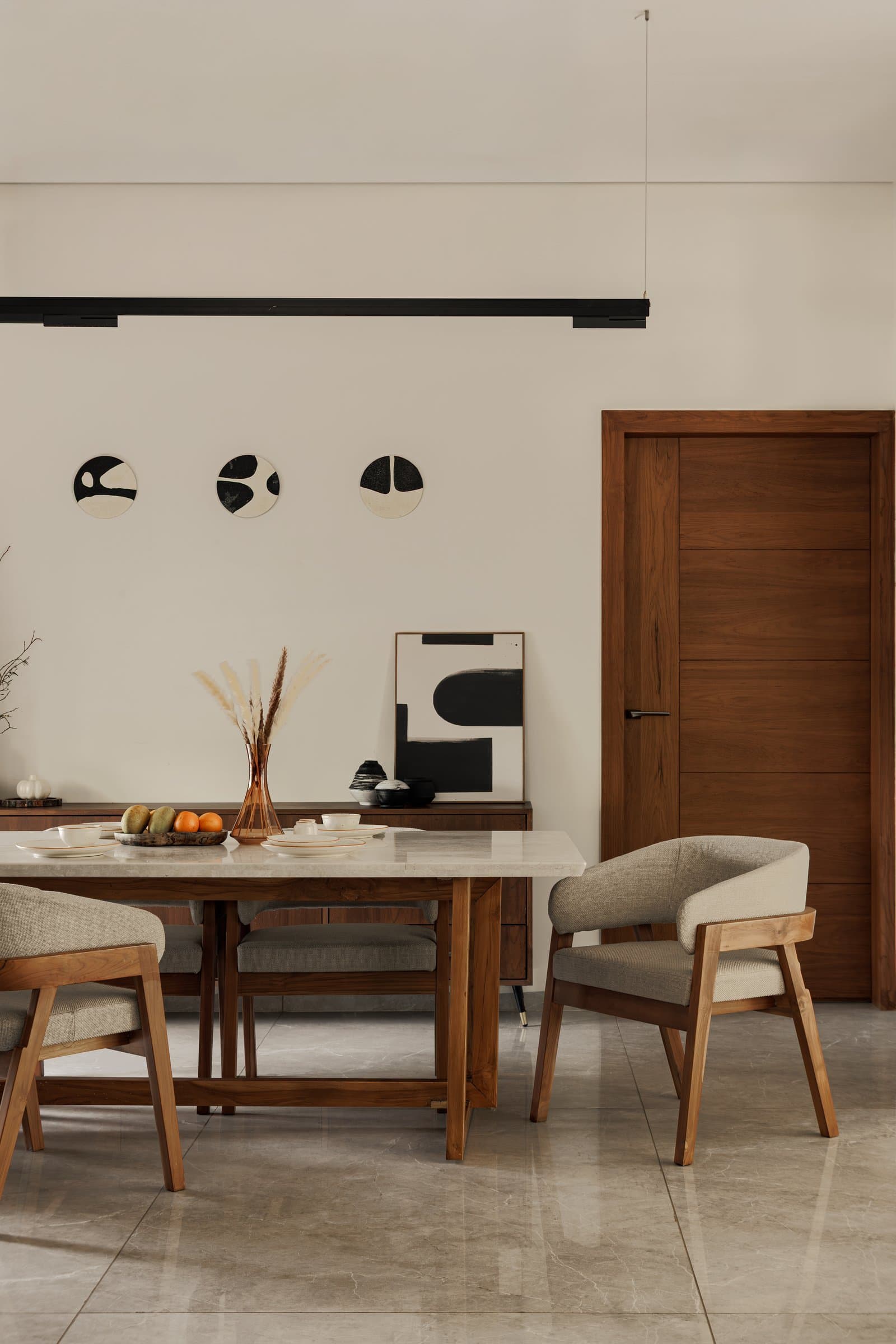
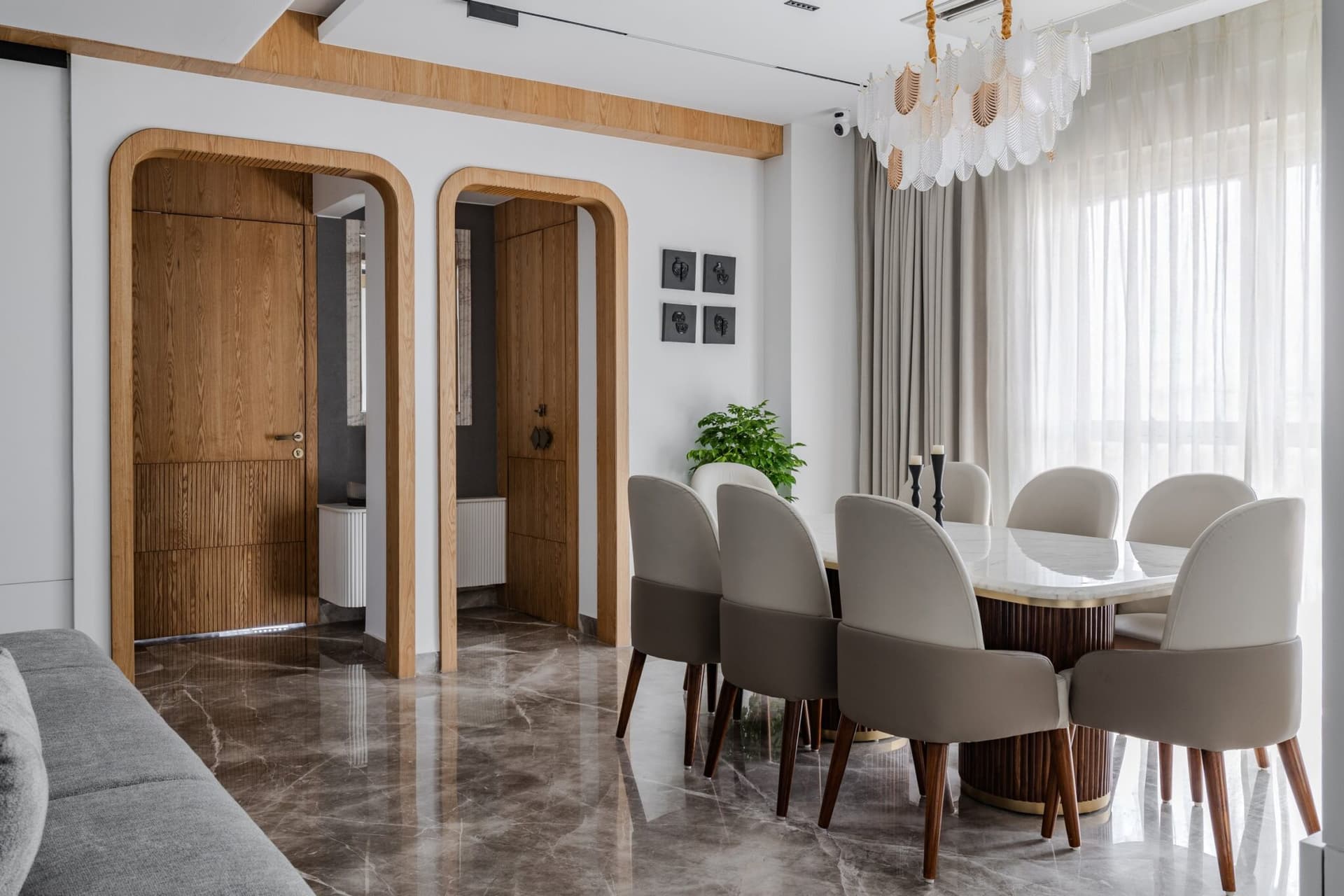
The dining room emerges as one of the home’s most composed spaces, where proportion and materiality take precedence over ornament. A timber dining table crowned with a pale stone top is surrounded by curved back chairs in matching wood and neutral upholstery, creating a palette that feels both warm and understated.
What lends the space its quiet sense of gravitas is its verticality. The wall rises uninterrupted to meet a clean, expansive ceiling plane, drawing attention to the volume of the room rather than its contents. A slender black track light traces a single linear gesture overhead, introducing just enough contrast to define the ceiling without fragmenting it.
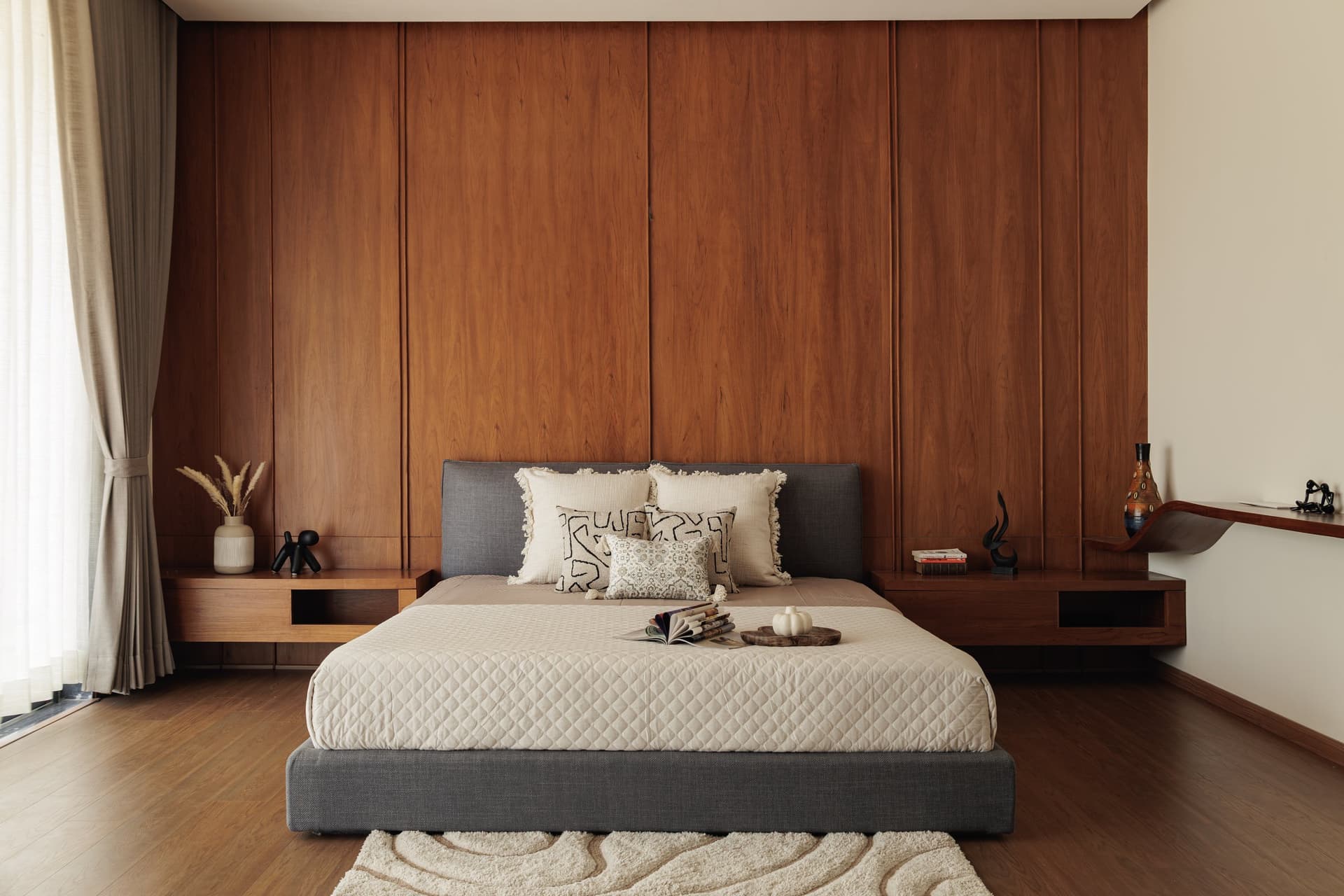
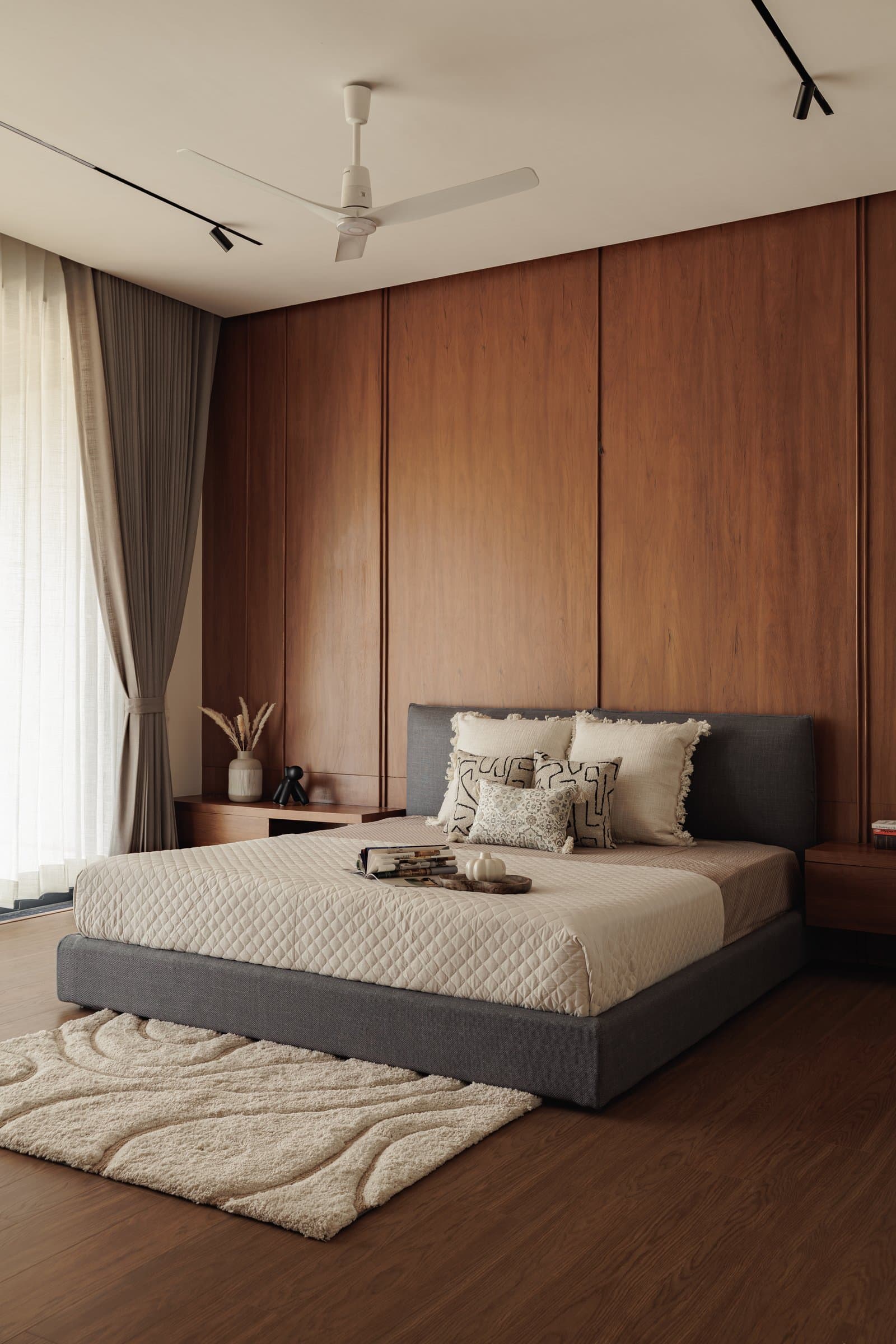
The master bedroom is organised around a monumental timber backdrop that spans the full width and height of the room, lending the space both warmth and architectural presence. Against this surface sits a low grey upholstered bed, its restrained profile allowing the scale and texture of the wall to take precedence. Floating timber side consoles extend seamlessly from either side, reading less as individual bedside tables and more as continuous horizontal ledges that reinforce the room’s calm, linear composition.
At one end, the panelling accommodates a compact writing nook, integrated directly into the wall rather than treated as a separate piece of furniture. This continuity of material and detailing allows multiple functions to coexist within a single architectural gesture. The result is a bedroom that feels composed and deeply considered, where every element appears embedded within the larger framework of the room rather than placed within it.
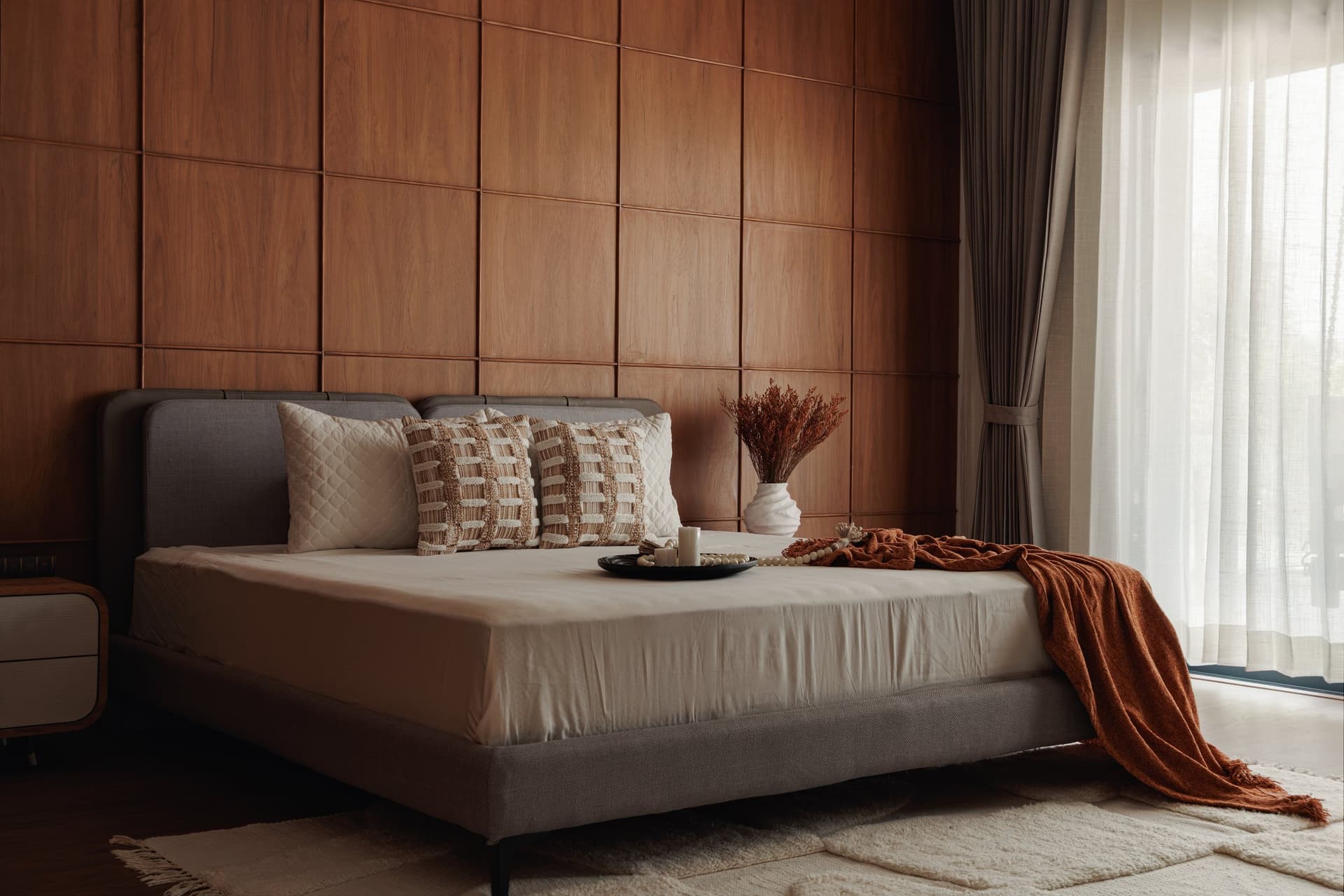
The second bedroom revisits the material language of the master suite while giving it a distinctly different expression. Here, the timber backdrop is articulated as a grid of square panels, each subtly recessed along its edges, creating a surface that reads with the softness and rhythm of a woven textile rather than conventional joinery. The repetition introduces texture and depth without relying on ornament, allowing the wall itself to become the room’s defining feature.
Set against this backdrop, the bed adopts a deliberately restrained palette of soft greys and warm neutrals. Cream linens and an upholstered base reinforce the room’s quiet atmosphere, while a rust-coloured throw introduces a measured note of warmth and contrast. The composition remains intentionally spare, demonstrating how material detail and proportion can generate character without the need for excess decoration.
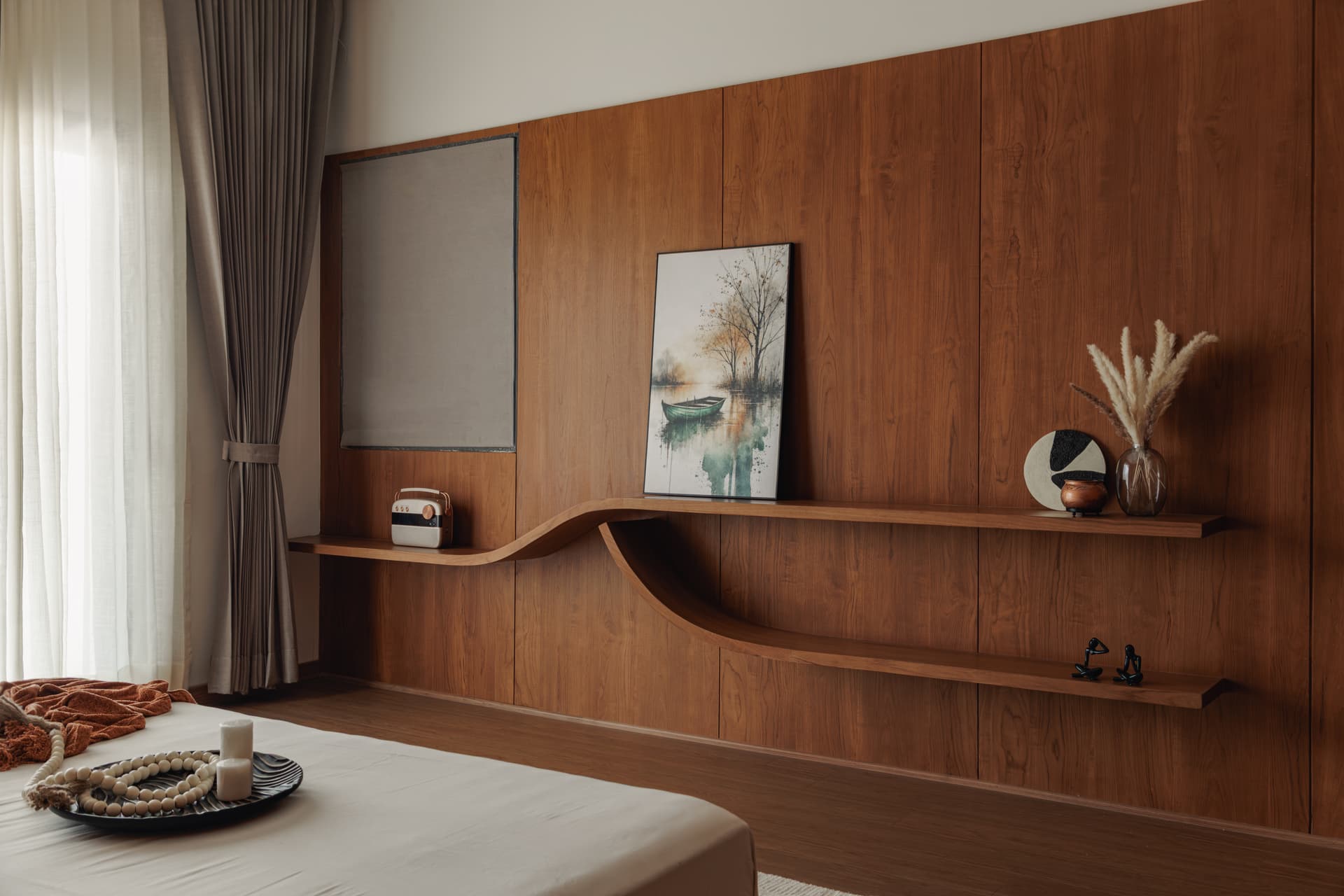
On the opposite side of the same bedroom, the wood wall hosts two long floating shelves whose right ends sweep downward in a single continuous curve before meeting a flatter lower shelf. A framed landscape painting leans against the wall above, a fabric-covered pinboard floats to its left, and small ceramic and metal objects punctuate the rest. The curve is the room’s quietest move and its most considered..
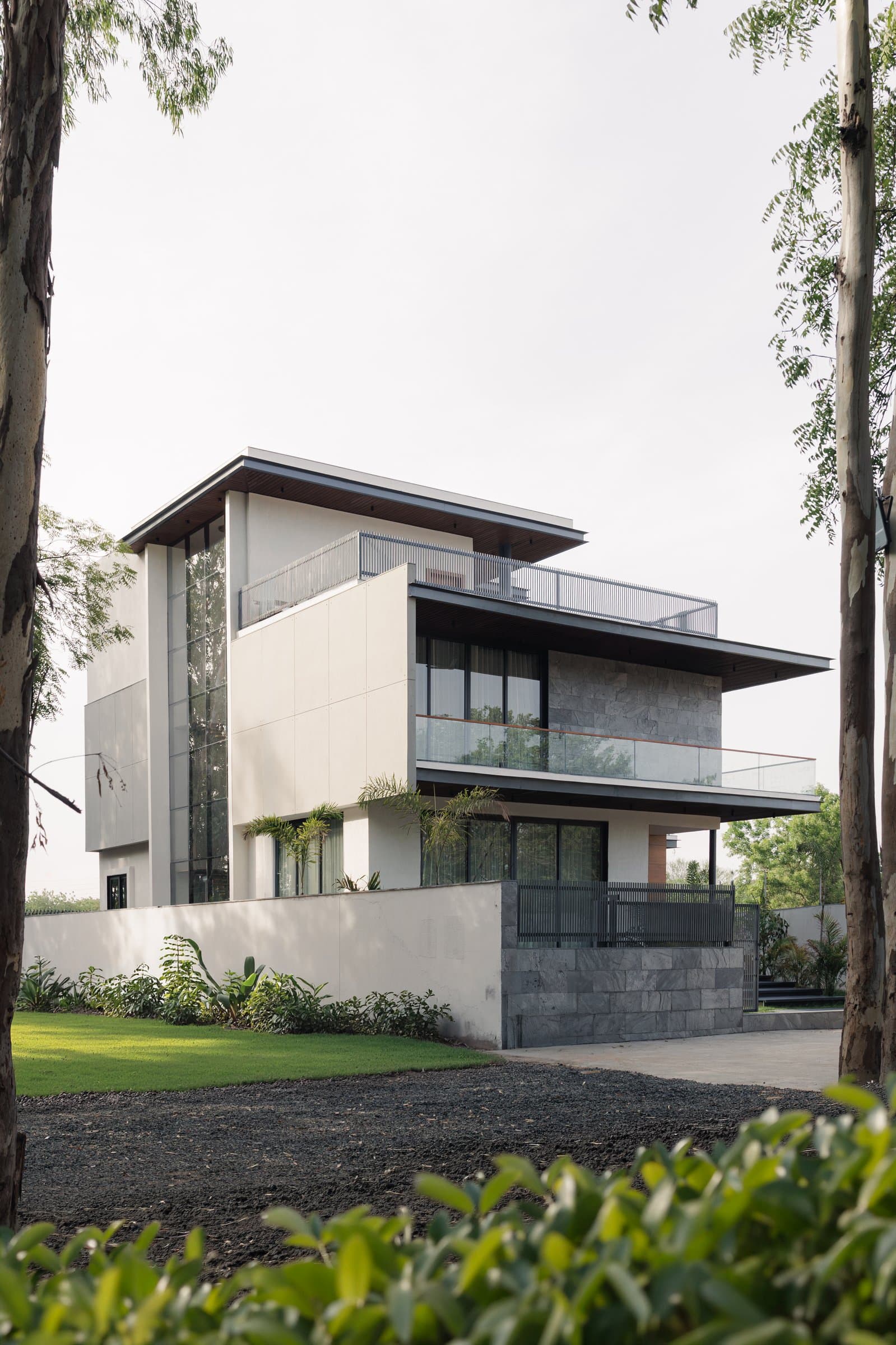
Viewed from the garden, the logic of the house becomes fully apparent. Cantilevered roof planes extend outward to shelter a series of layered balconies, while a tall glazed corner volume rises through multiple levels, revealing the vertical organisation that defines the project. Below, a stone-clad plinth anchors the composition, providing a sense of weight and permanence against the lighter volumes above.
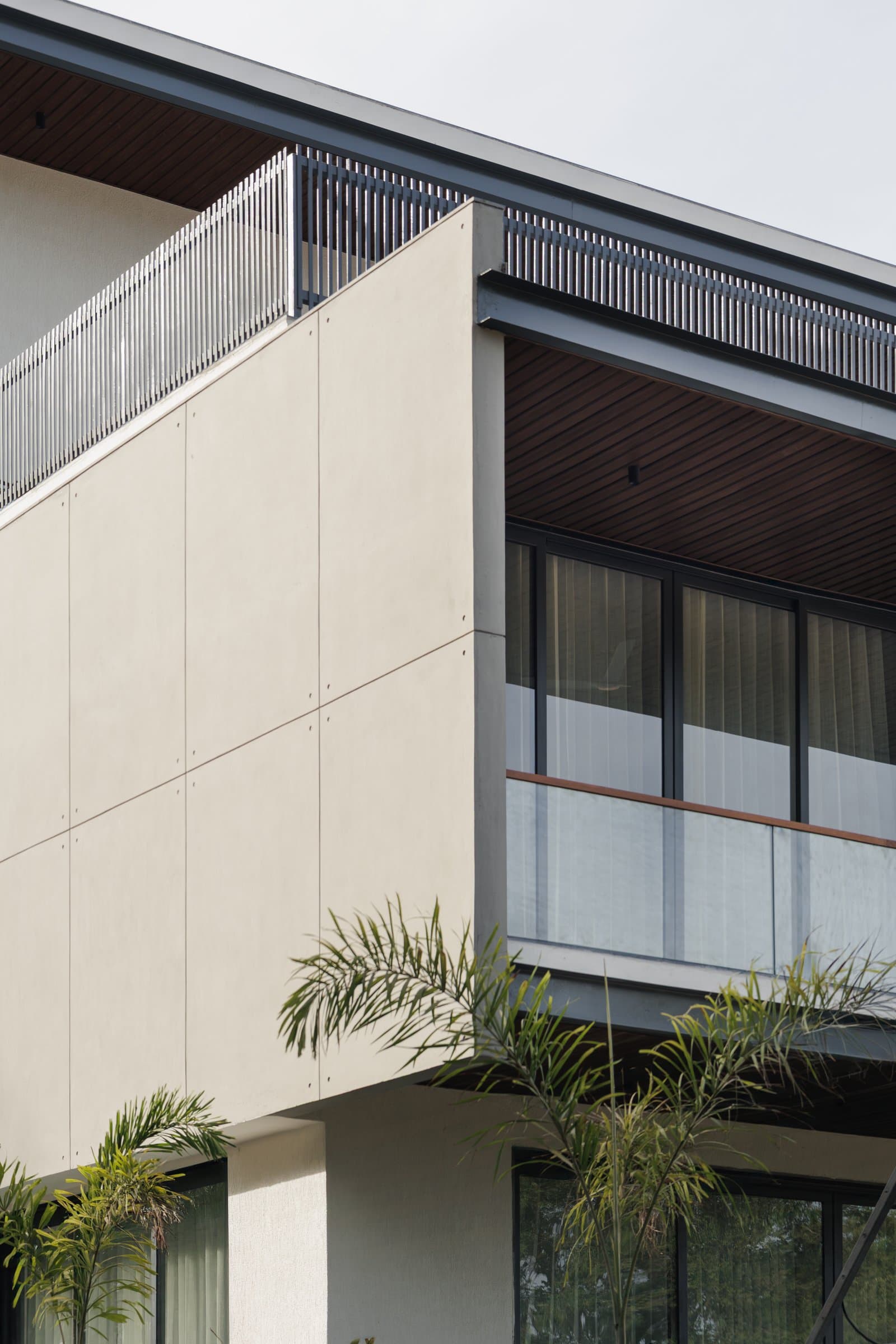
The architecture derives its presence less from formal complexity than from the careful calibration of mass, material, and proportion. Cream-toned stucco surfaces are paired with a robust grey stone base, creating a dialogue between lightness and solidity. Neither overtly traditional nor determinedly contemporary, the house occupies a more measured position, one that finds its identity in balance, clarity, and a quiet confidence in its own architectural language.
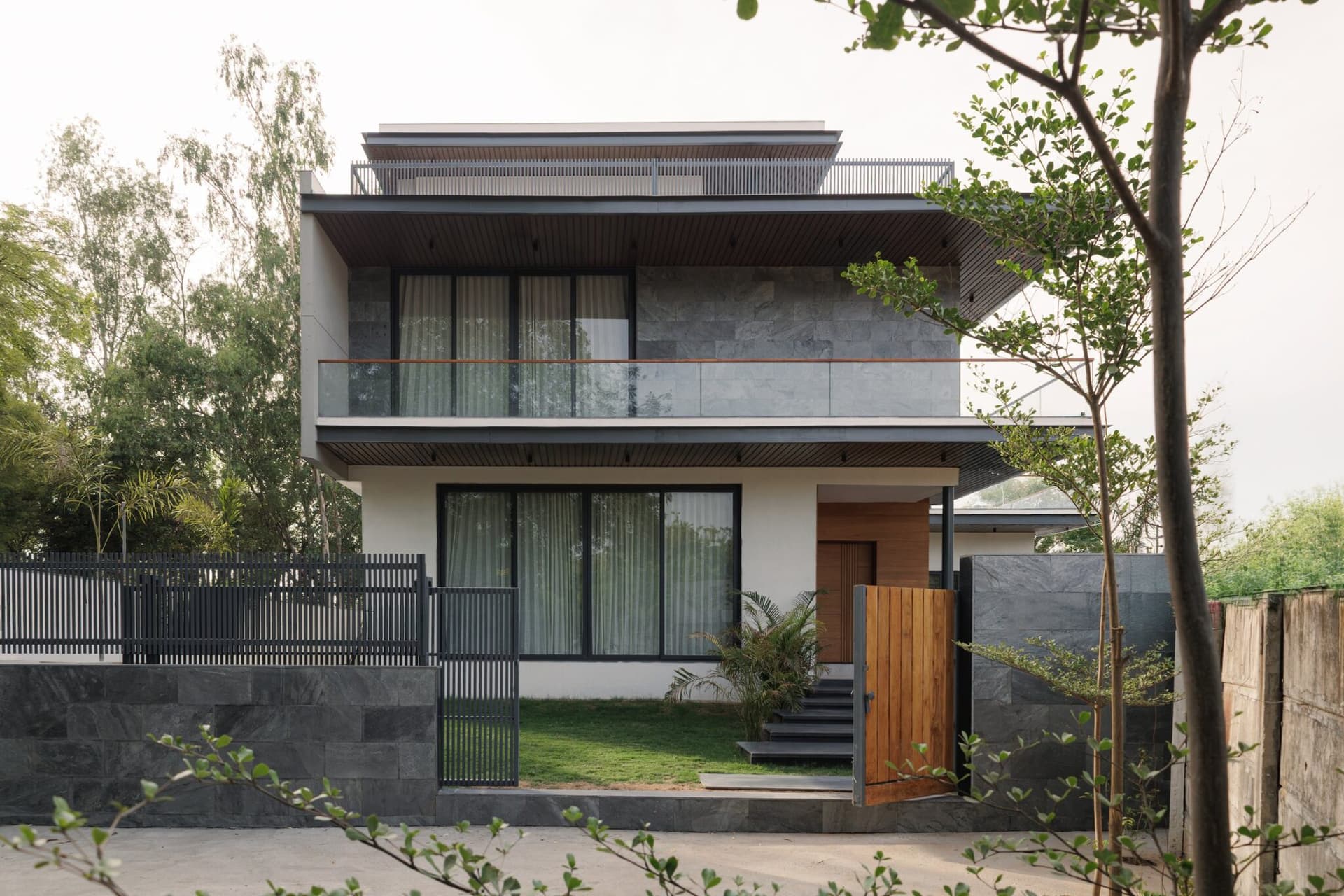
The street elevation adopts a more composed and formal expression, presenting the house as a carefully layered arrangement of planes and materials. A deep horizontal overhang extends across the façade, shading a glass balustraded balcony while reinforcing the building’s strong linear character. Recessed stone-clad volumes are framed by lighter stucco surfaces, creating depth through shadow and material contrast rather than decorative articulation. At ground level, a teak entrance gate is seamlessly integrated within a slatted metal boundary wall, allowing the threshold to read as part of the larger architectural composition. Boundary, plinth, gate, and upper terraces are conceived not as isolated components but as interconnected elements of a single design language. This continuity lends the elevation a sense of cohesion and discipline, where every layer contributes to the overall architectural rhythm.
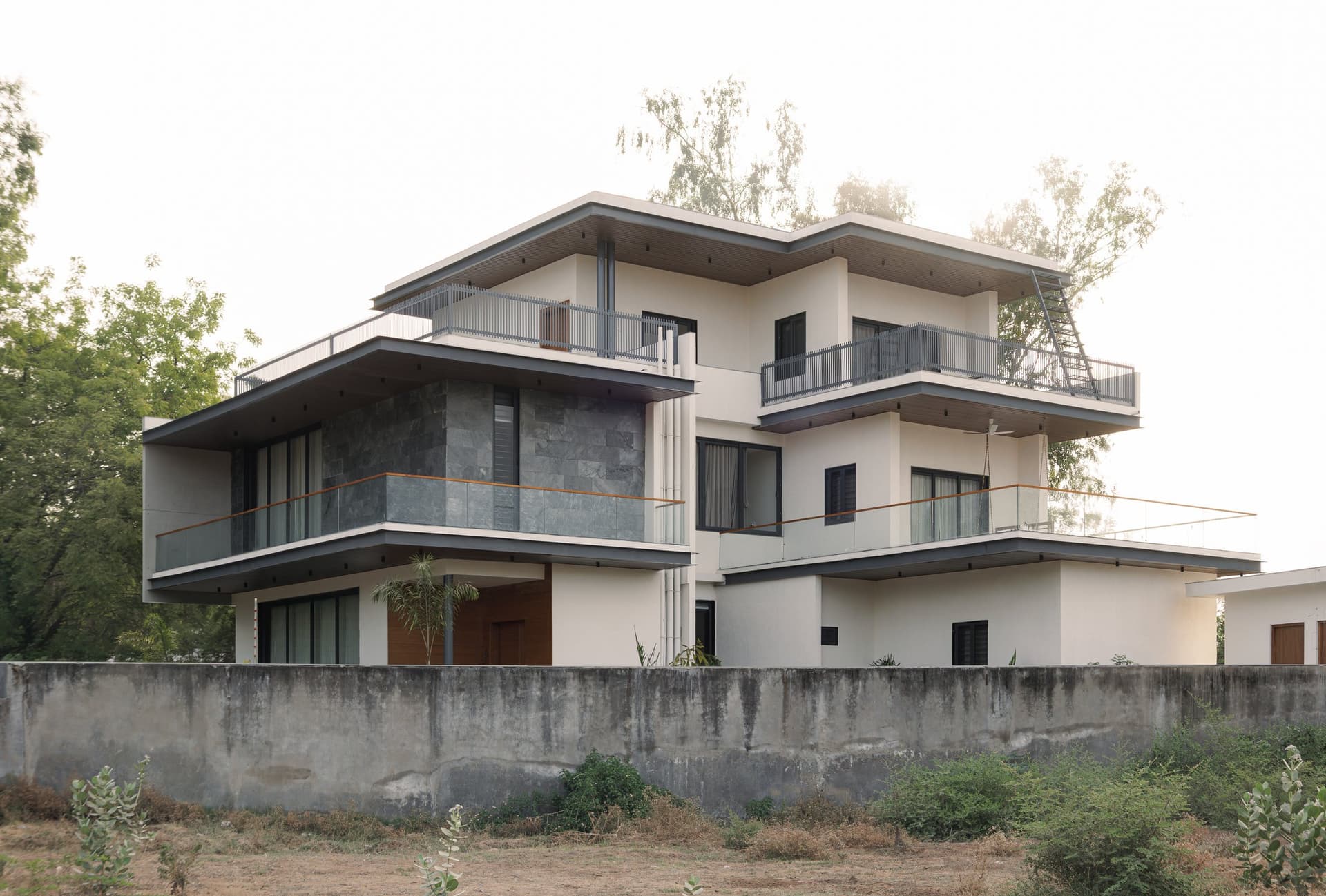
Within Ahmedabad’s residential landscape, Step House aligns with a quieter lineage of contemporary practice, one that privileges proportion, section, and spatial continuity over visual spectacle. Its restraint echoes the city’s modernist inheritance, yet the warmth of its interiors, expressed through timber surfaces, layered textiles, and a muted palette, positions it firmly within the sensibilities of contemporary domestic life. The project avoids nostalgia as much as it avoids trend, finding a balance between architectural rigour and everyday comfort.
What ultimately distinguishes Step House is the consistency of its thinking. From the organisation of levels to the treatment of materials and light, every part of the residence returns to the same central idea: that richness can emerge through clarity, and that calm is often the result of careful subtraction rather than accumulation. Architecture and interiors arrive at this conclusion through different means but with a shared intent, producing a home that feels coherent, measured, and quietly assured.