Inside the Middle East
Inside the Middle East explores the homes, interiors and creative voices shaping design across the region. From Dubai and Abu Dhabi to Riyadh, Doha and beyond, we look at spaces defined not by a single aesthetic, but by the people, places and ideas behind them.
Contemporary residences, thoughtful renovations and emerging studios sit alongside established names, revealing a design landscape that is increasingly individual, globally informed and rooted in its surroundings. This is our ongoing edit of Middle Eastern interiors, architecture and the designers defining what comes next.
@atelierkrass· Photo @farrahathout
Dining@reem_suleimansdesign· Photo @_anyaphotography_
Dining@mb.designstudios· Photo @oculisproject
Kitchen@villanumber9· Photo @dubaiarchitecturephoto
Living@doratokaidesigns· Photo @casamiavisuals
Dining@custom_no.9· Photo @nateleecocks
Bedroom@yf.design.studio· Photo @architectural_photographer_a
Bedroom@harfnoondesignstudio· Photo @_anyaphotography_
Living@harfnoondesignstudio· Photo @_anyaphotography_
Dining@soulroad.co· Photo @casamiavisuals
Bathroom@consoulbylh· Photo @farrahathout
Bedroom@estiloblancointeriors· Photo @dua.photography.studio
Living@polishedinteriorsuae· Photo @uc_photostory
Living@thenichecornertnc· Photo @casamiavisuals
Dining@doubleyouinteriors· Photo @toozestudio
Bedroom@consoulbylh· Photo @farrahathout
Living@goodmooddxb· Photo @_anyaphotography_
Kitchen@studio_vdga· Photo @emaphotographi
Dining@tristanauer· Photo @amaurylaparra
Foyer@thenichecornertnc· Photo @casamiavisuals
Passage@aworkofsubstance· Photo @nateleecocks
Foyer@rashakhattarstudio· Photo @_anyaphotography_
Foyer@designbyroar· Photo @yasser_photography
Other@phylosophyuae· Photo @nourelrefai
Terrace@designbyroar· Photo @yasser_photography
Other@aliaaelesseily· Photo @nourelrefai
Living@harfnoondesignstudio· Photo @_anyaphotography_
Living@skd.studio· Photo @uc_photostory
Passage@cestici_· Photo @uc_photostory
Dining@bohome_design_studio· Photo @_anyaphotography_
Living@ghaythmaatouk· Photo @nateleecocks
Bedroom@avenue222.interiorstudio· Photo @liana.dxb
Dining@linaelk.studio· Photo @casamiavisuals
Living@villanumber9· Photo @dubaiarchitecturephoto
Living@atelierfiveinteriors· Photo @dua.photography.studio
Kitchen@stellaandthestars· Photo @dubaiarchitecturephoto
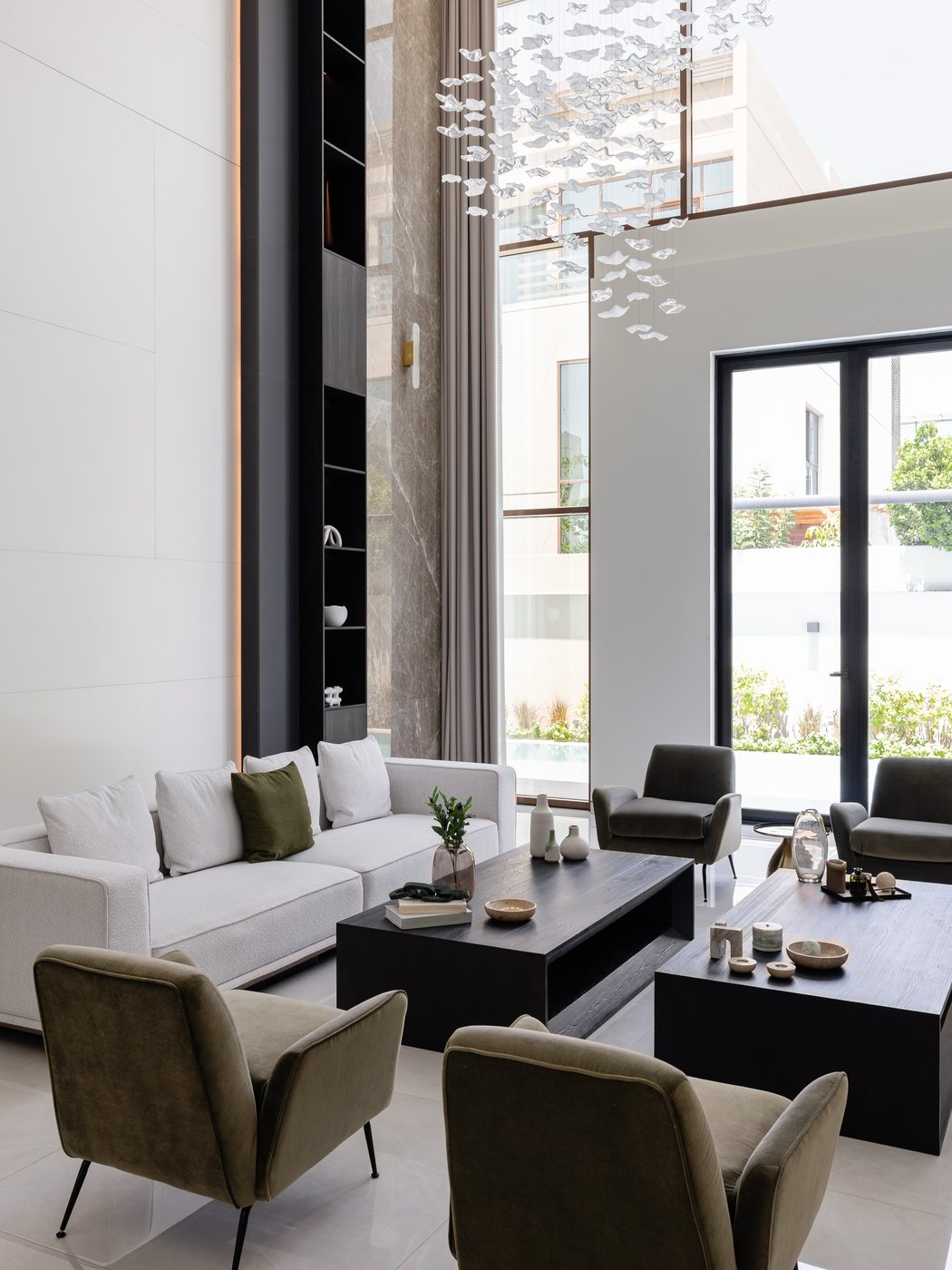
LivingBrowse by City
Questions
What defines contemporary interior design in the Middle East?
Confidence without clutter. Across the homes we have photographed from Dubai to Riyadh to Cairo, the pattern holds: stone and wood grounding rooms of glass, brass used warmly rather than loudly, and minimalism treated as a form of luxury rather than its absence. The plan is organised around hospitality: living and dining rooms carry more design attention here than anywhere else we document.
How do homes in Dubai and the Gulf handle desert light and heat?
By layering it rather than shutting it out. Sheer curtains recur across these homes, hundreds of examples, softening glare while keeping rooms bright, and cove lighting takes over in the evening so interiors glow instead of glare. Deep-set living areas, filtered glazing and shaded terraces do the structural work.
What is a majlis, and how are they designed today?
The majlis is the traditional reception room of Gulf homes, the space built for hosting, and it remains the heart of the contemporary plan. In the homes we document it appears as a generous living room: continuous seating, layered lighting, and materials chosen to signal welcome, from warm wood panelling to brass detail. The form has modernised; the purpose has not moved.
Which materials appear most in Middle Eastern homes now?
Wood is near universal, with stone as the most common ground. Brass recurs constantly as edging, lighting and hardware, and the softening layer is textile: linen and sheer fabric doing as much visual work as anything solid. Marble is present but no longer the default statement, a quieter palette than the region's reputation suggests.
What does luxury interior design in Dubai actually look like?
Less gold than the stereotype, by a wide margin. In the Dubai homes we photograph, luxury reads as restraint executed perfectly: clean contemporary lines, natural stone, controlled light and generous space, with colour and ornament used sparingly and deliberately. The most expensive-looking rooms here are usually the calmest ones.
My work appears here but the credit is wrong or missing.
Email info@homepublication.in with the image and the correct credit and we will fix it. Photographers are credited at image level wherever we hold the credit.
I want my work featured on Home Publication.
Submit it through our Submit page with high-resolution images and a project brief. The editorial team reviews every submission.