Luxury, when it works, never declares itself. It accumulates, in the weight of a curtain, the depth of a marble vein, the way a sconce sits exactly where the eye expects warmth. The most considered homes are not the ones that announce their finishes; they are the ones that let those finishes become the architecture of how a family actually lives.
This three-bedroom villa in the heart of Al Barsha, Dubai, was renovated by Peristylia, the Dubai Design District practice led by Ahmed El Morshedy and Sally Negm, for a client whose sensibility sits at the intersection of UAE sophistication and a quiet, rooted Arabic identity. The brief was layered: refined elegance, a wellbeing-led plan, and a single emotional anchor running through the home in the form of olive trees, each one positioned to remind the family of where they come from even as they live in the city’s most contemporary register.
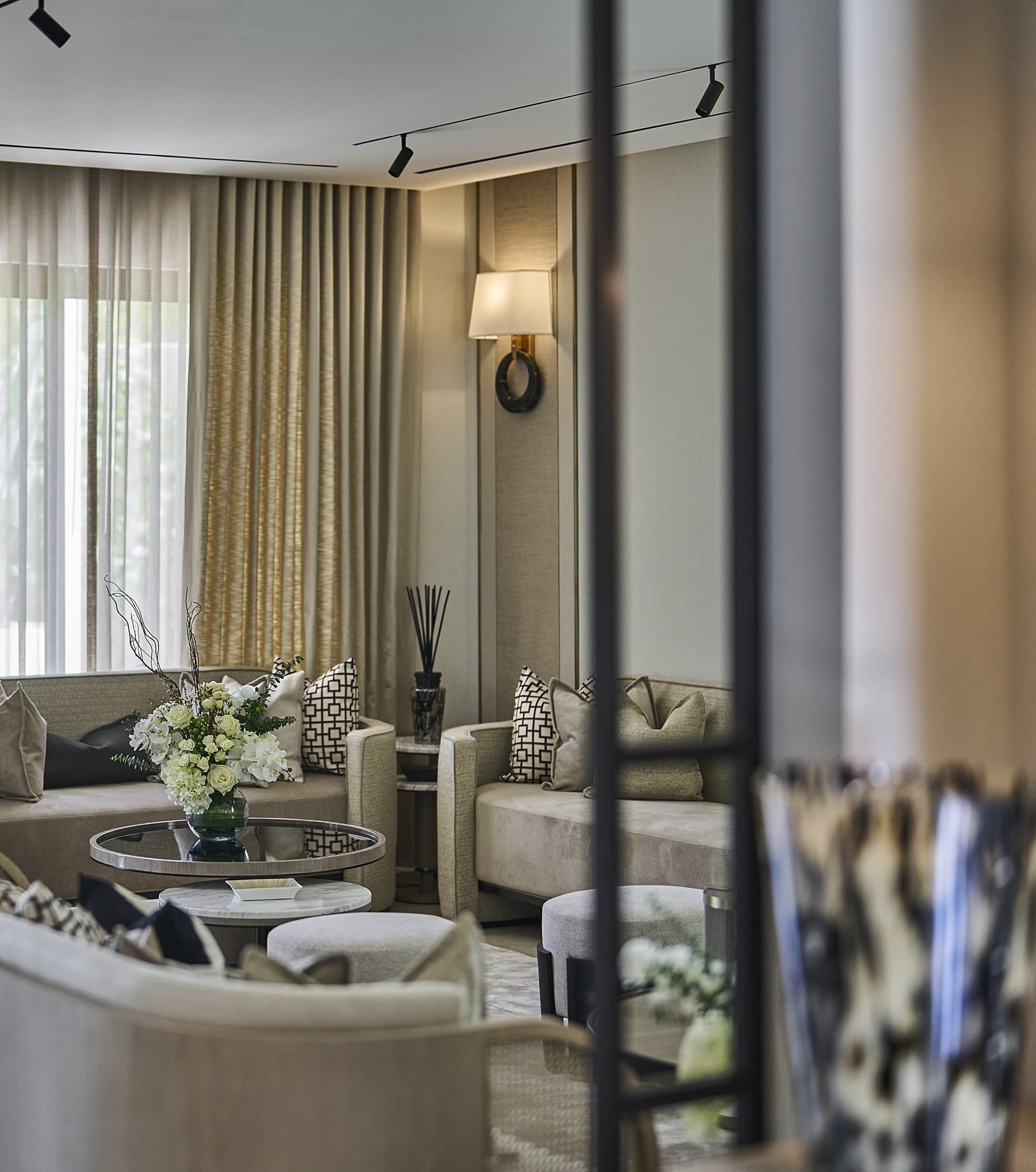
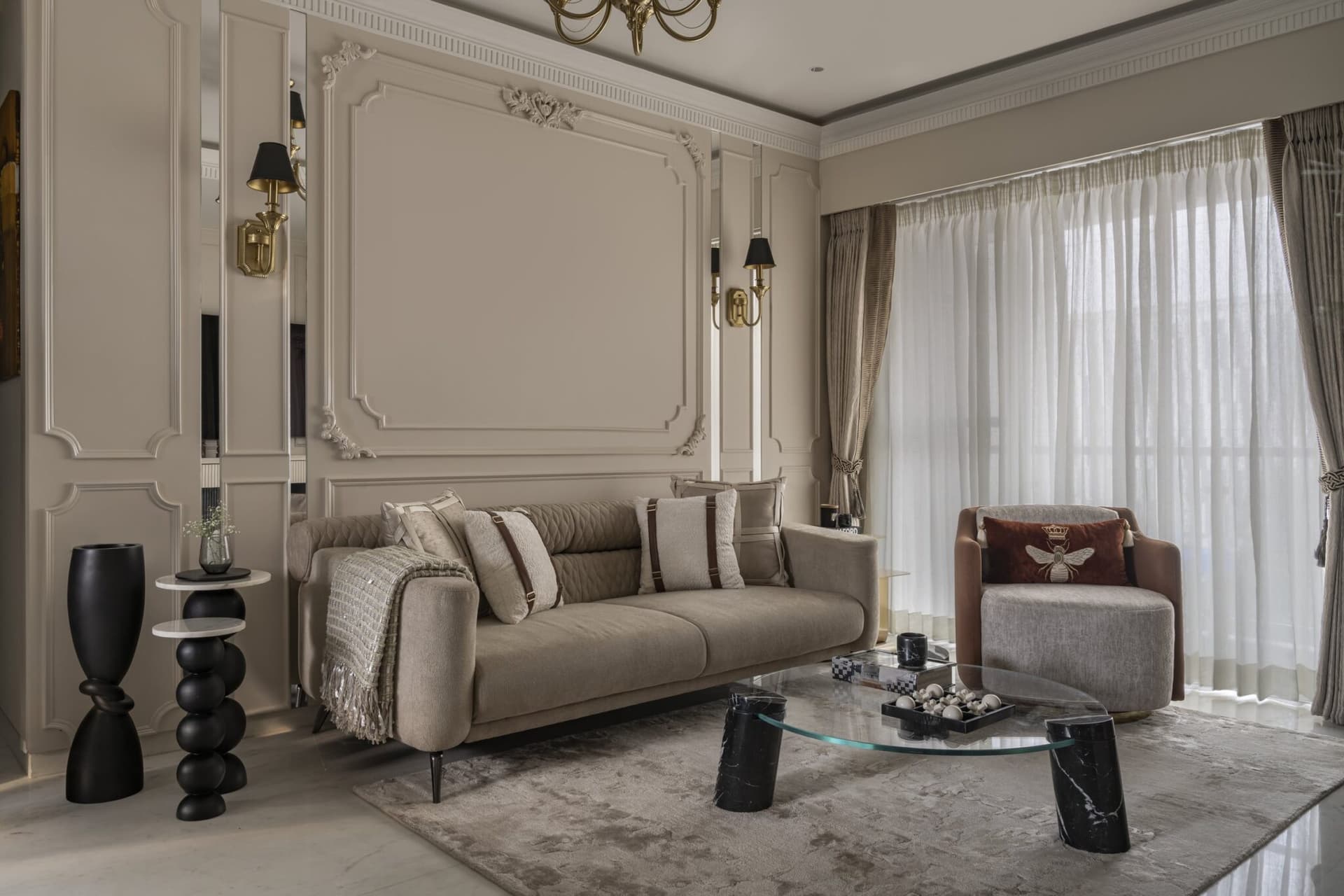
The formal lounge sets the home’s grammar before any other space gets the chance. Layered curtains in a soft, sand-toned weave fall the full height of the wall, while a fabric-shaded sconce with a dark sculptural ring grounds the otherwise pale palette. The room is composed of restraint rather than gesture, every cushion, every pleat, calibrated.
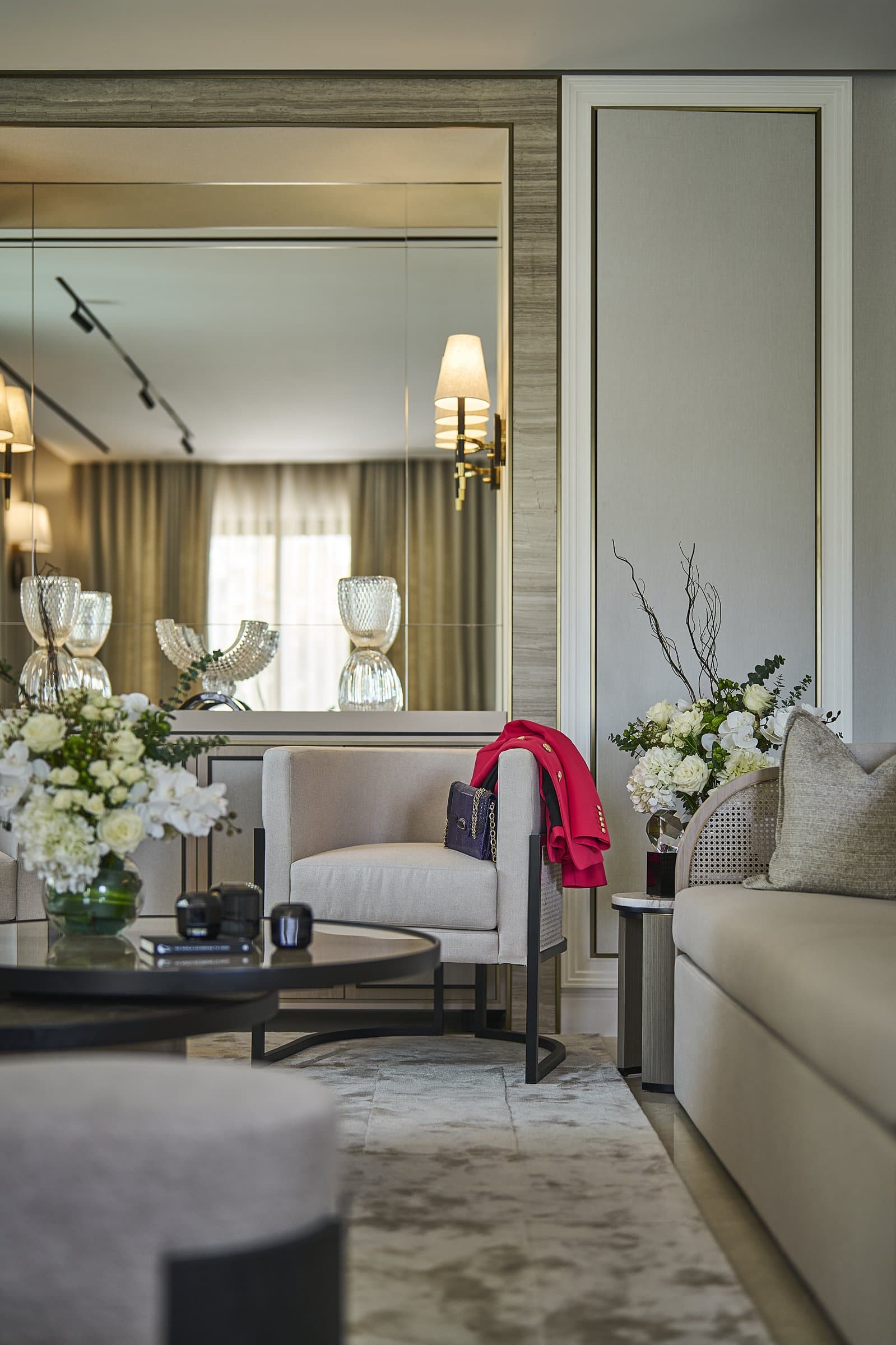
Look closer and the lounge reveals its second register: a wall of mirrored panelling framed in slim brass, a viscose carpet that catches light like brushed silk, a single armchair where a pink jacket and chain-strap bag are tossed with practiced ease. Ethereal chic, as the studio names it, is precisely this, the meeting of a magazine-still composition with the residue of a life actually being lived inside it.
““Marble, outdoor olive trees, solid lining and rich finishes such as polished metals and sumptuous textiles elevate the space, exuding opulence.””
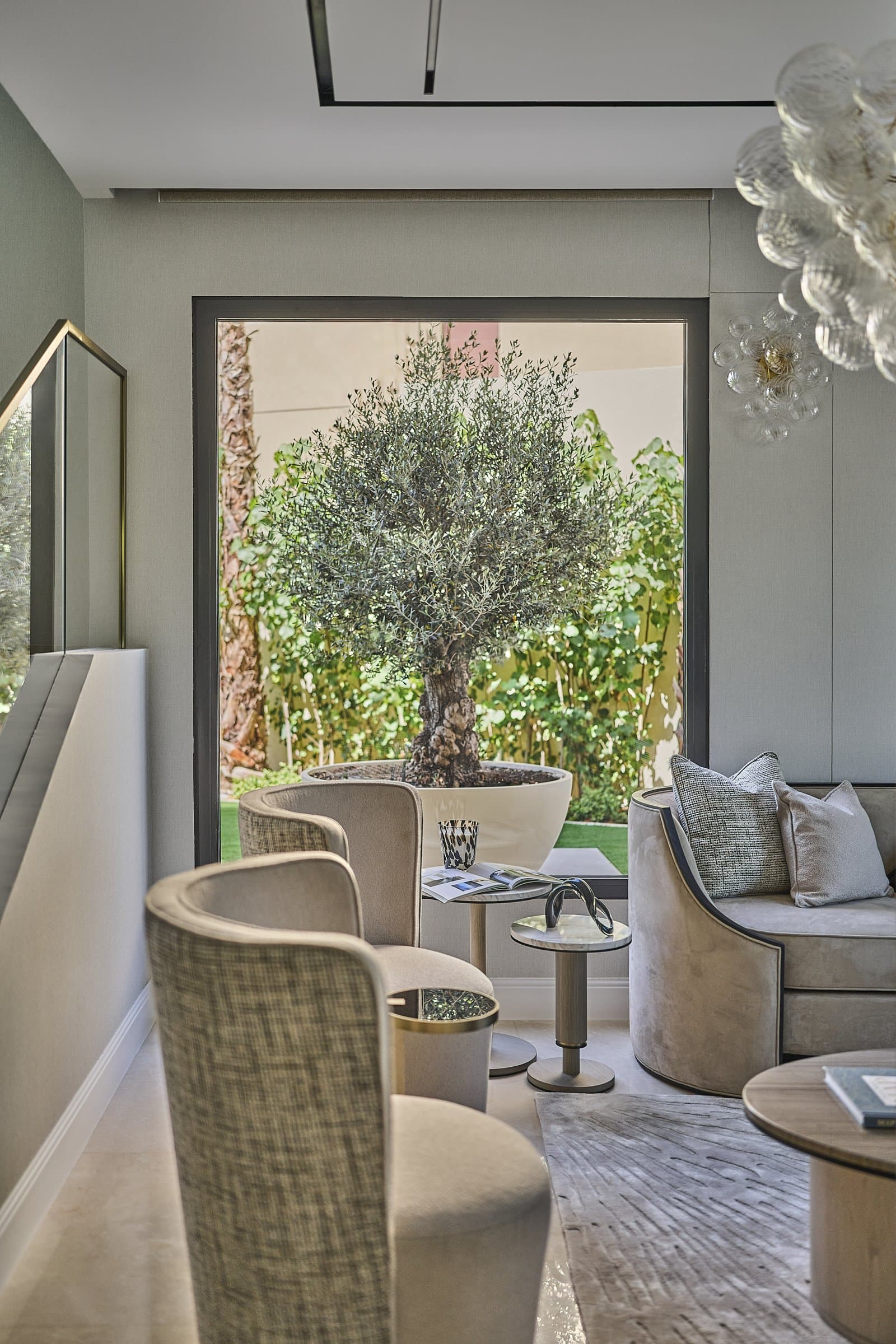
The lounge opens, through a generous picture window, onto the home’s most defining gesture: a mature olive tree planted in a pale ceramic vessel, framed by the architecture as deliberately as a painting. Velvet tub chairs and a low cluster of side tables draw the seating toward the view, so the tree becomes both backdrop and reason.
It is here that the project’s emotional thesis crystallises. The olive is not styling, it is the family’s link to a heritage simplified into a single living form, and the home choreographs itself around it.
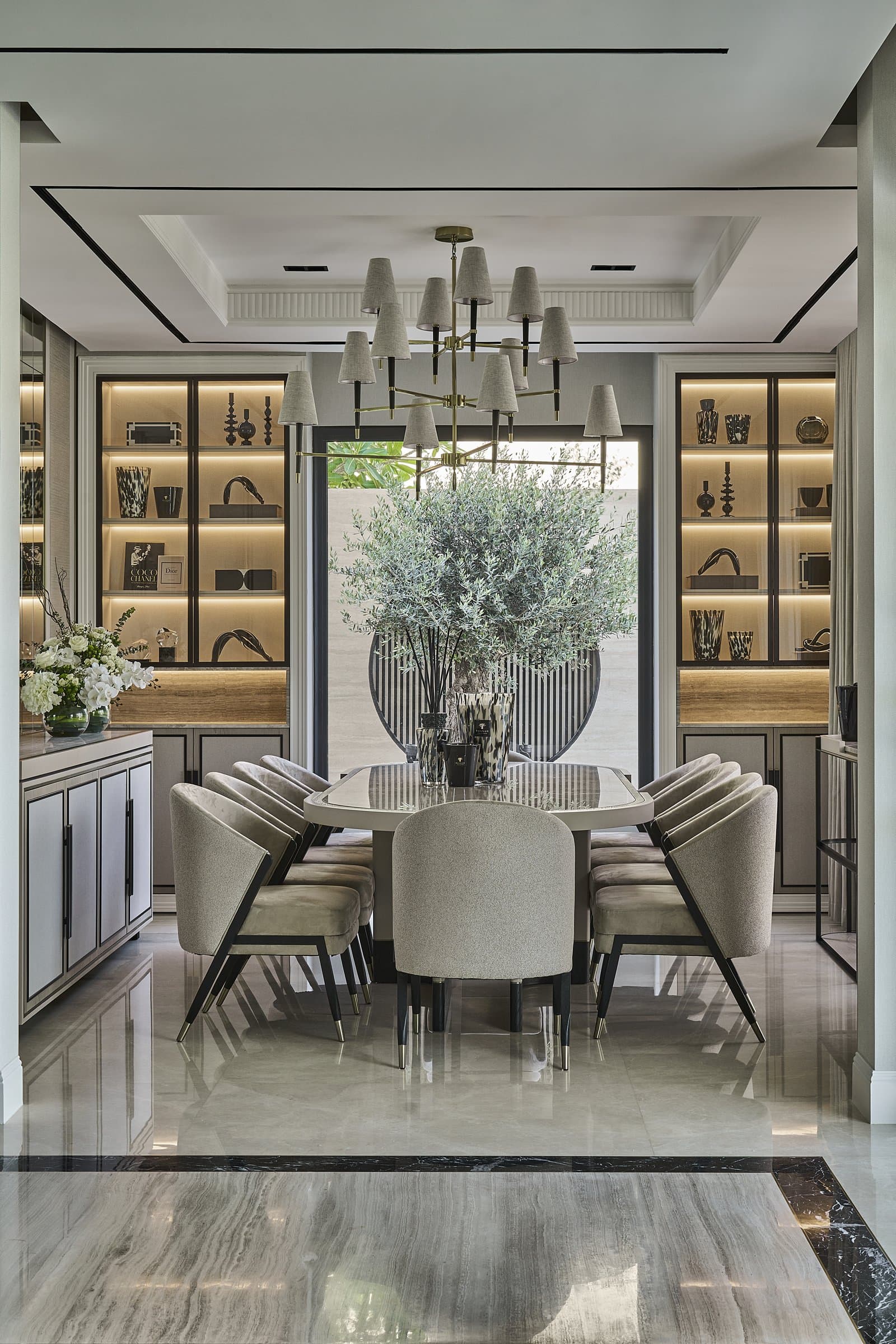
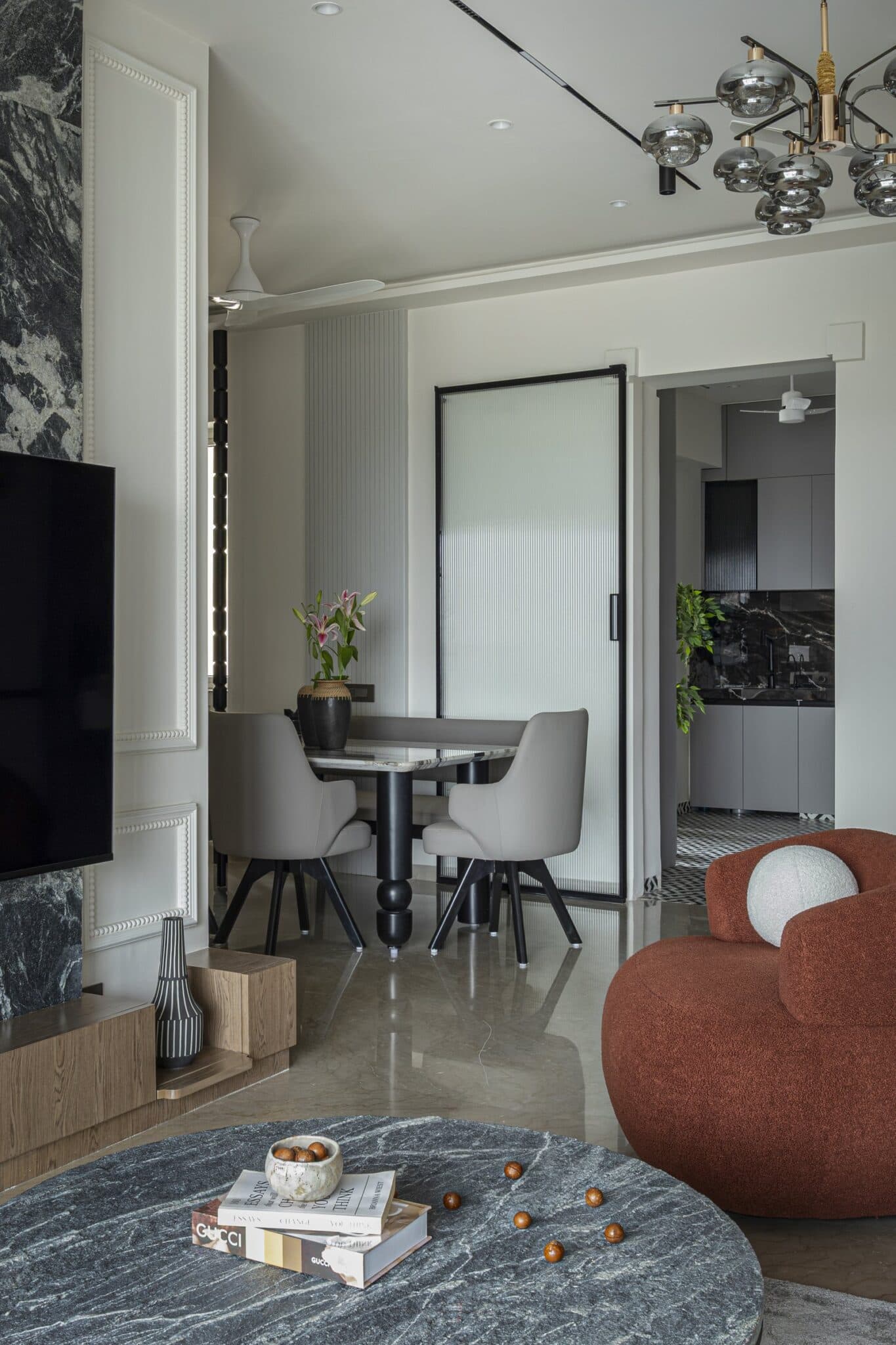
The dining room extends the same logic with a more formal vocabulary. A second olive tree, this one in a vessel placed against a vertical garden screen, sits at the head of the room as if presiding over the table. Marble flooring with a dark inlaid border draws the eye down the axis; backlit display niches on either flank carry the owner’s collection of objets, books and perfumed candles.
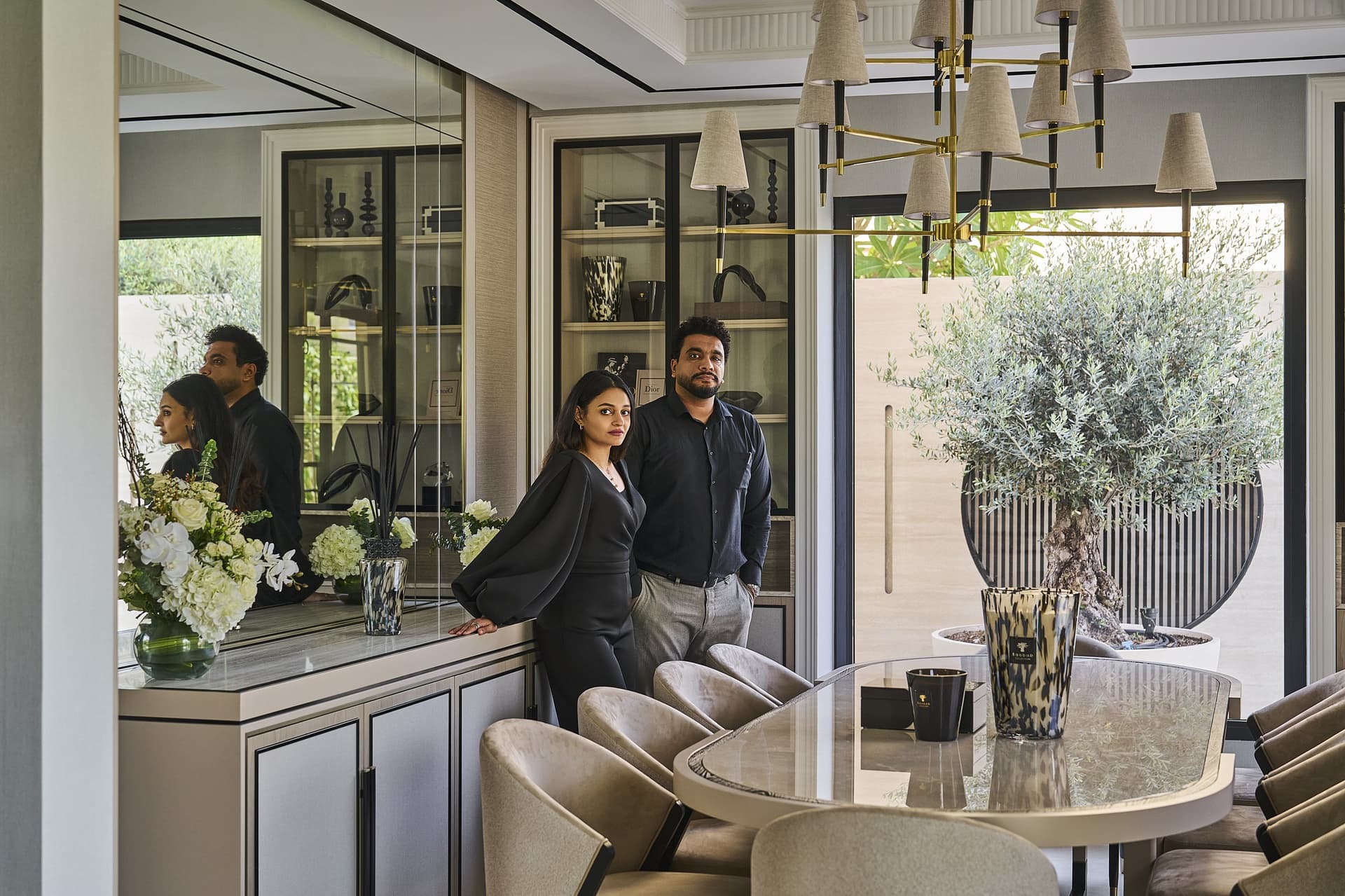
Negm and El Morshedy describe their practice as built around human wellbeing and luxurious simplicity, and the dining room is where that ambition reads most clearly. The brass-armed chandelier hangs lightly above an oval table; mirrored cabinetry expands the room without thickening it. The space is built for hosting, but it is built first for the slower rituals of a family that has chosen to live with beauty close at hand.
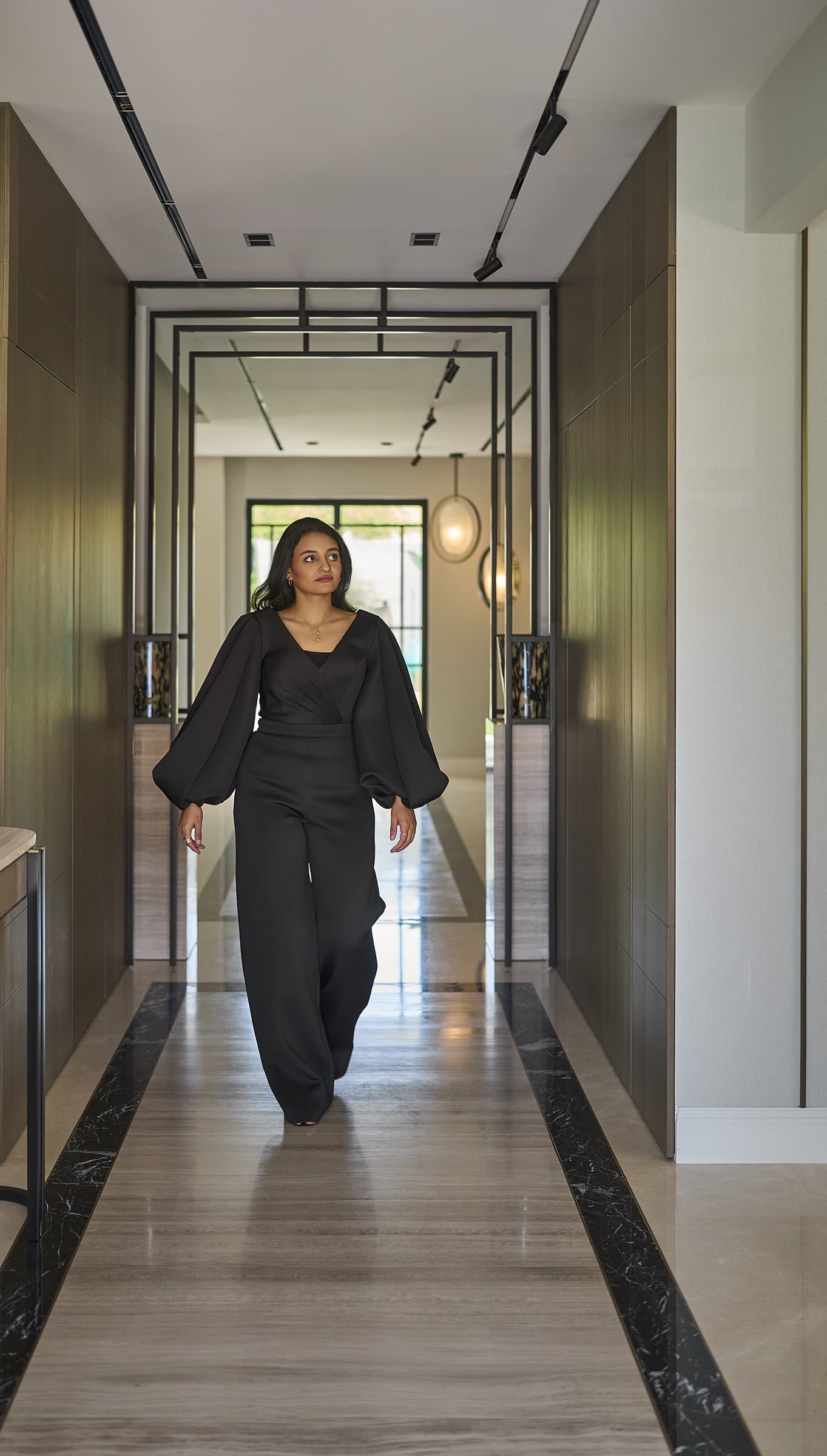
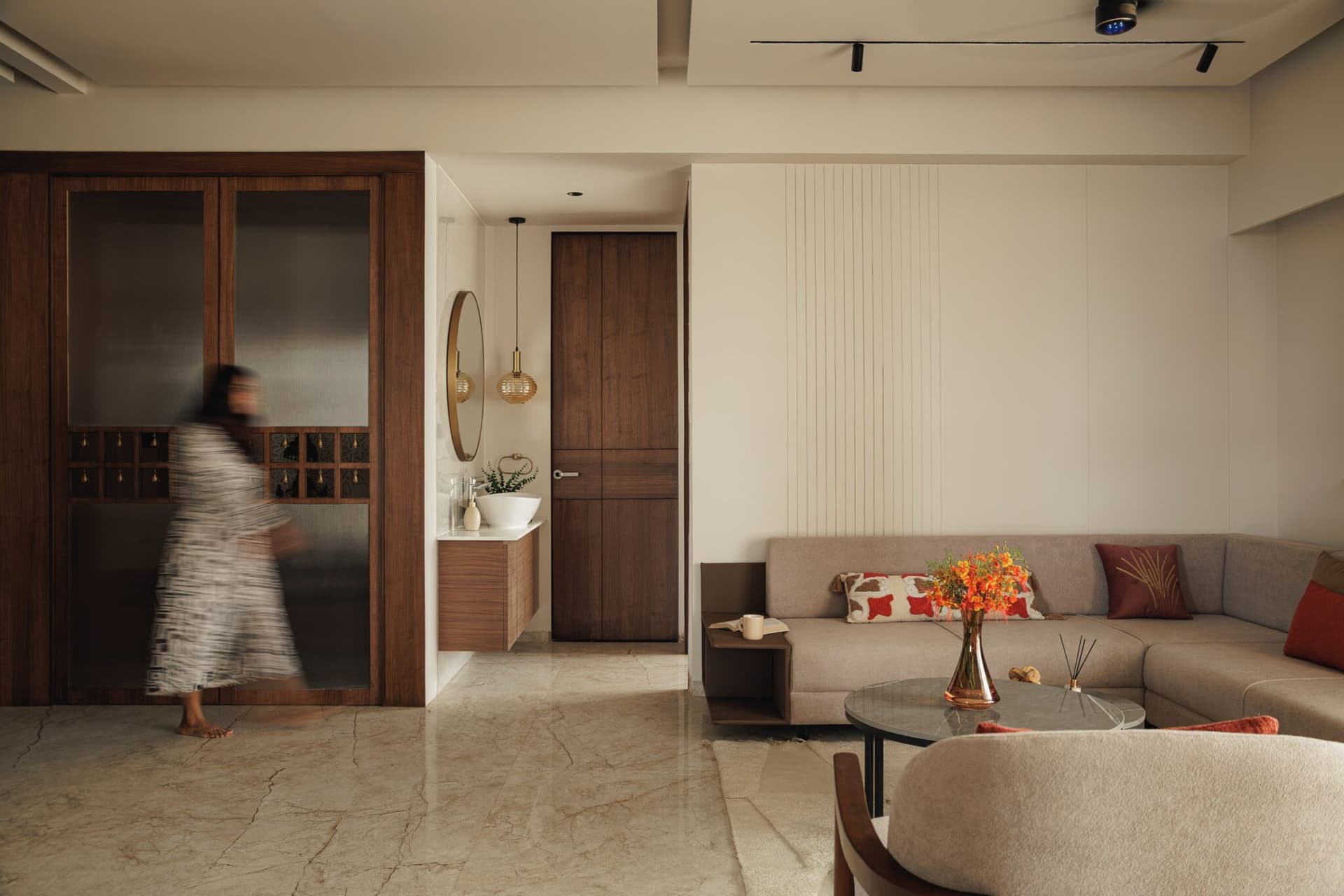
Connecting the volumes is a corridor that the studio has treated as architecture rather than circulation. Slim black metal frames trace the ceiling and walls in a series of rhythmic portals, each opening punctuating the long axis of polished stone with a ribbon of dark marble inlay. The detail recalls the formal language of mid-century European interiors filtered through a Gulf sensibility for proportion and shine.
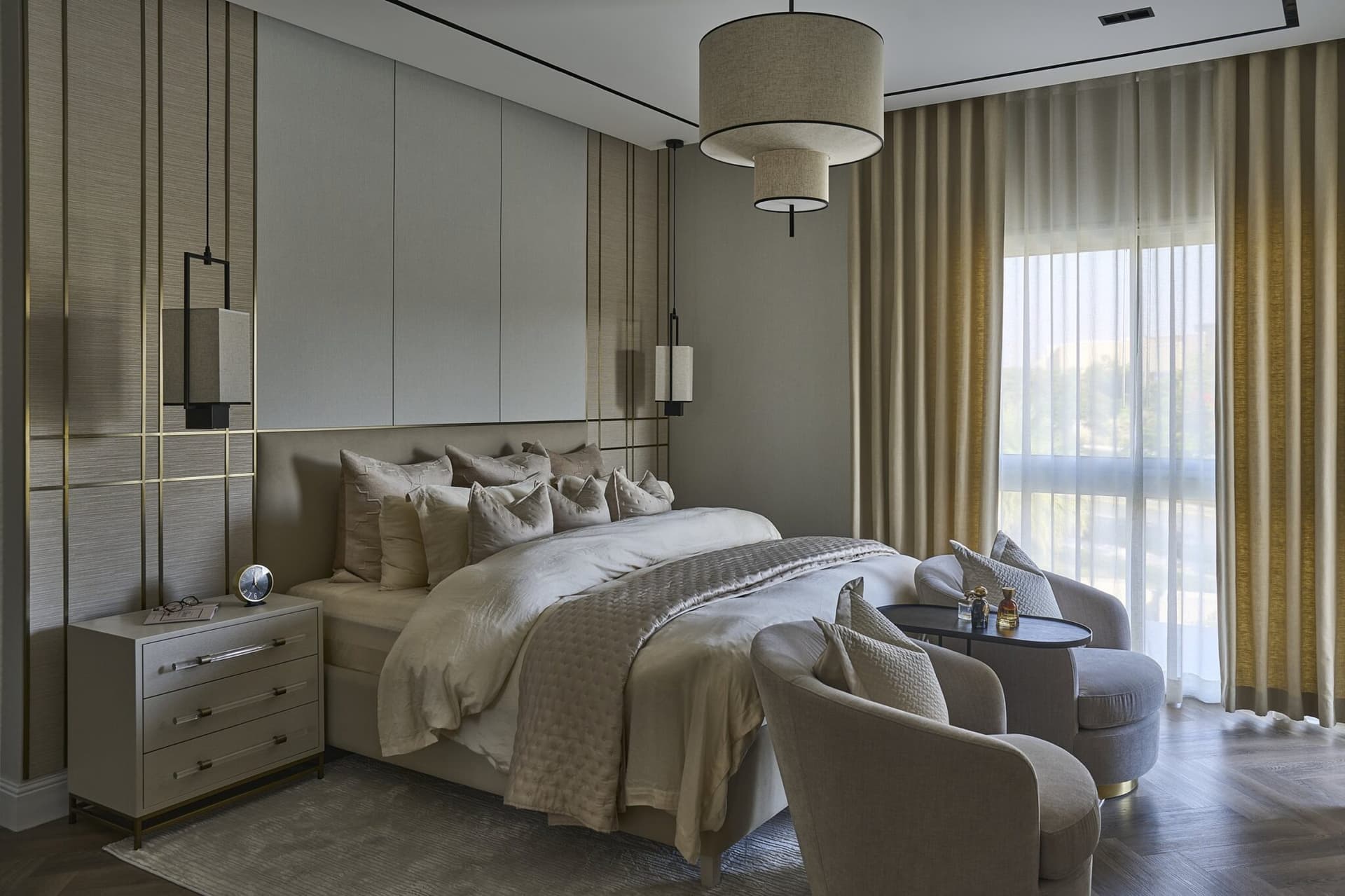
Upstairs, the master bedroom recalibrates the home’s vocabulary into something more intimate. A grasscloth-textured wall is divided into a slim brass-lined grid, the metal so fine it reads almost as drawing rather than ornament. The headboard wall recedes behind upholstered panels, and twin pendant lanterns, suspended rather than table-mounted, free the bedside surfaces for the small daily objects of waking and reading.
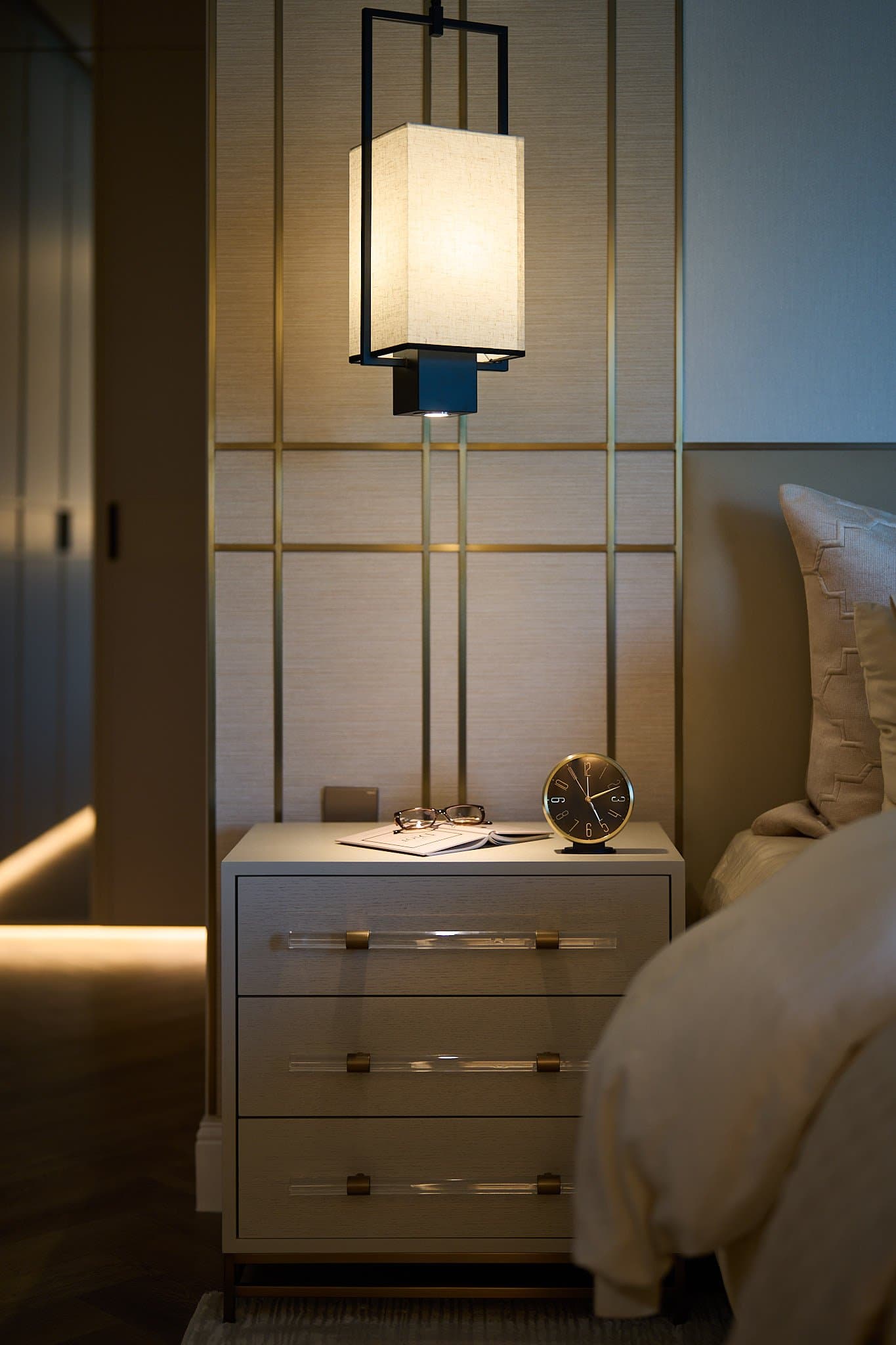
The bedside detail repays the closer look. Acrylic and brass drawer pulls catch the lamplight; the lantern’s linen shade glows against the grasscloth backdrop with the warmth of a hotel suite that has been studied very carefully and then domesticated. This is what Peristylia means when they speak of ergonomic design, the recognition that a bedside table is, at the end of a long day, the most important surface in the room.
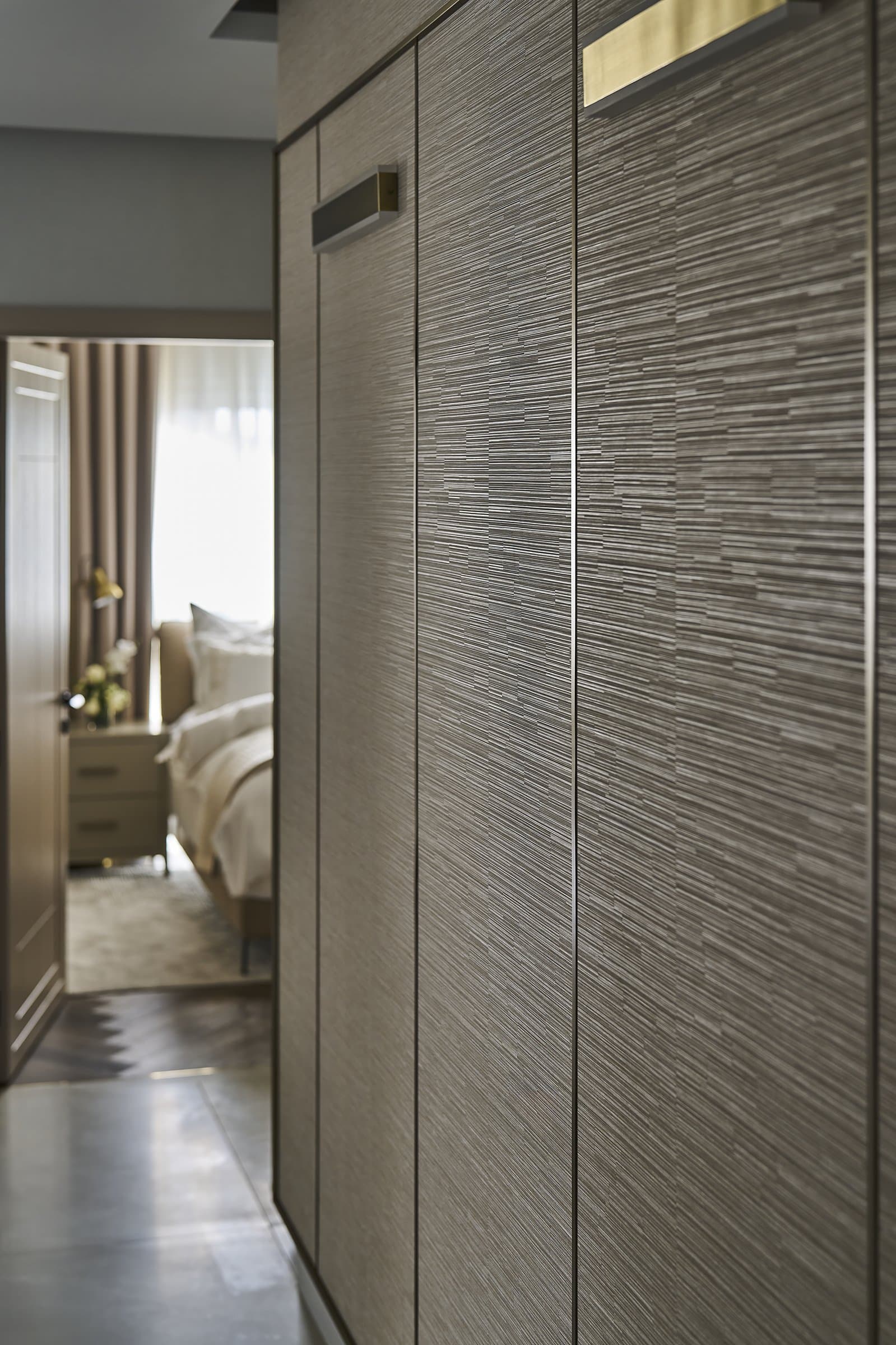
A glimpse from the dressing corridor reveals how the master suite was zoned. Reeded, ribbed wardrobe doors in a soft pewter finish line the passage with brushed brass pulls inset like jewellery; through the open door, the bed is visible at a controlled distance. The threshold is doing real work, separating the public choreography of dressing from the private one of rest.
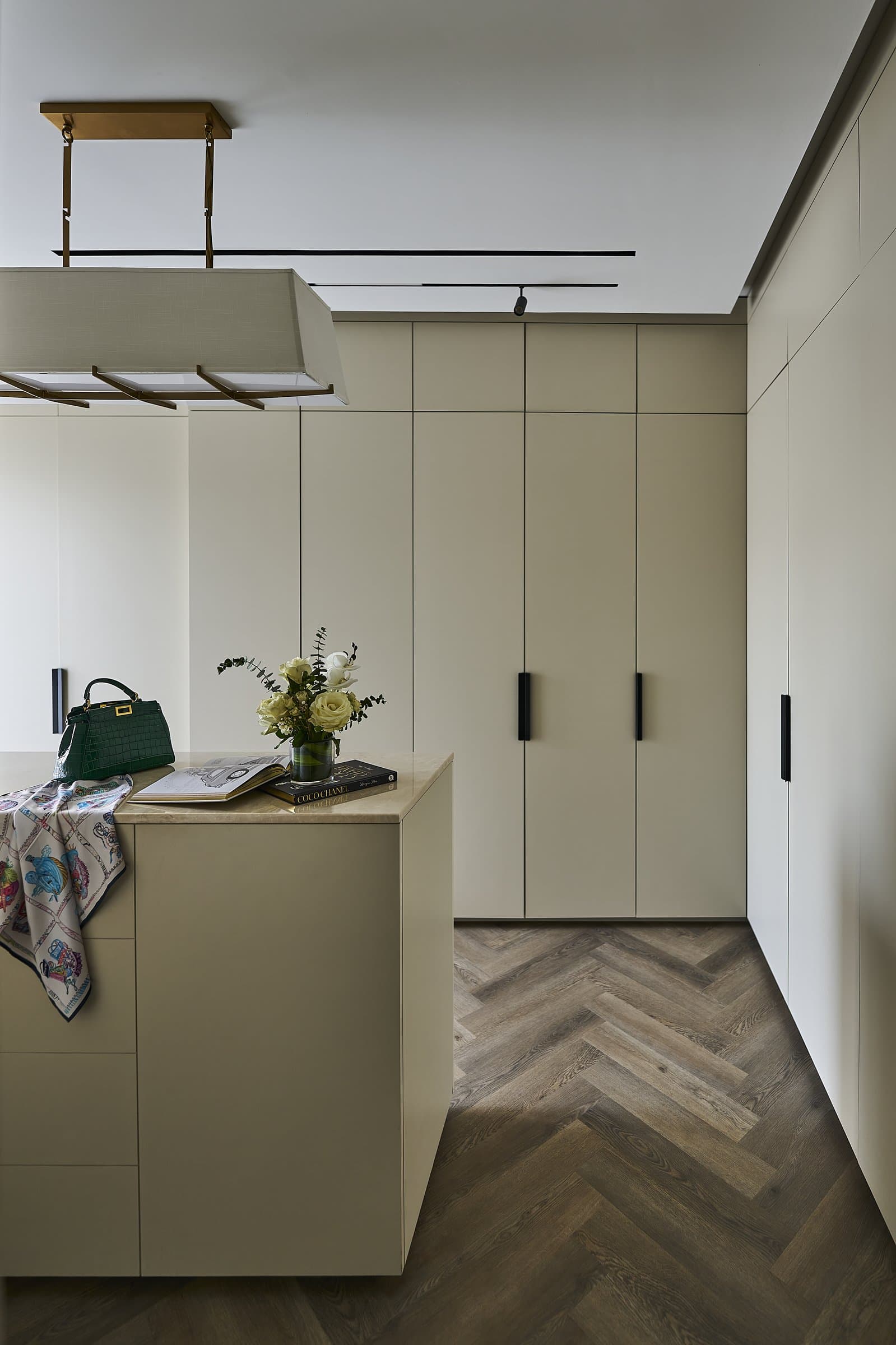
The walk-in closet itself is the project’s most personal room. Designed around the owner’s collection of fashion houses, it favours full-height cabinetry with slim black pull handles over the usual theatre of glass vitrines, with a herringbone wood floor adding warmth underfoot.
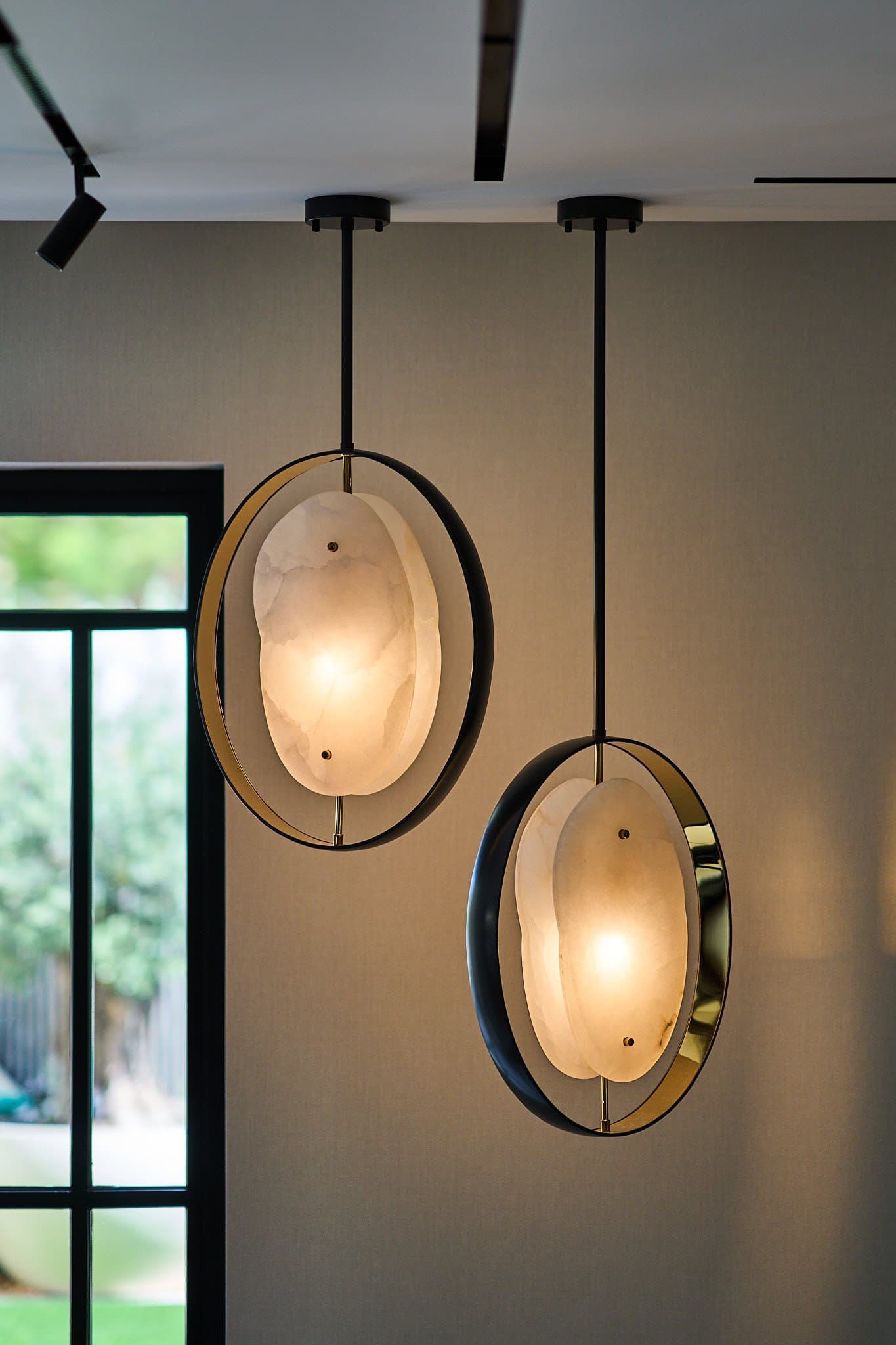
One detail is worth pausing on: a pair of pendant lights composed of alabaster discs cradled within slim brass-and-black metal rings. Lit from within, the stone glows with a translucence that reads almost like moonlight, and the fittings double as sculpture against the grasscloth wall. Lighting, in this villa, is treated as an object discipline first and an illumination one second.
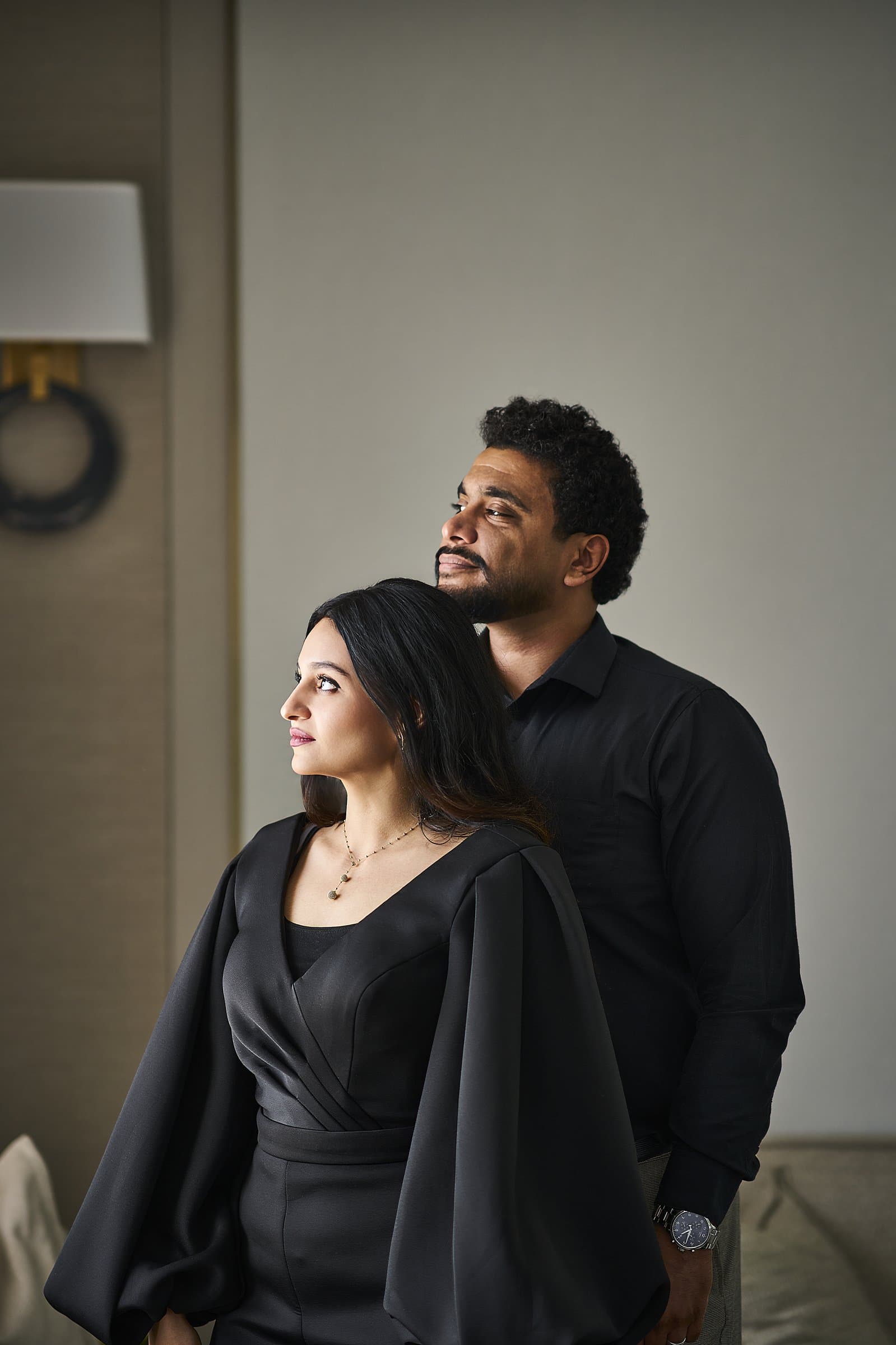
Dubai’s residential design culture has matured, in the past few years, beyond the spectacle that once defined it. The founders behind this project suggest a quieter, more confident register: a practice that holds its luxury rather than performs it, and that allows regional identity to enter through a single rooted gesture rather than through applied ornament. Their sensibility, here, does what an entire studio of arabesque flourish might have done in a previous decade, and does it with more poise.
What Peristylia have built in Al Barsha is a villa that resolves the central tension of contemporary Gulf living: how to be unmistakably modern without being unmoored. The answer, as this project quietly proposes, lies in the disciplined accumulation of detail, in lighting that knows its hierarchy, in materials chosen for how they age, and in a single living thing at the heart of the plan to remind everyone who walks through it where home actually begins.