Light is rarely treated as a building material in Indian residential design, where it is more often filtered, blocked, or politely managed. In the Dune House, it is welcomed in as the project’s first and most important design decision, the element around which everything else is calibrated.
Set within a 1,300 square foot three-bedroom apartment in K Town, Pune, the home was designed by Anmol Waychal Architects in collaboration with Prashant Katkade of Studio Two Bricks for a couple seeking subtlety, warmth, and the spatial logic of Japandi living. The brief was deceptively simple: minimal without being stark, calm without being cold, and quietly confident in the way it holds an everyday life together.

That ambition is held together by the two architects who shaped it. The collaboration is visible everywhere in the apartment, in the way restraint and craft are kept in conversation rather than competition.
The arrival is set by a compact foyer console with cane-fronted shutters and a small upholstered bench tucked to one side. The detailing is unfussy but specific, a wooden disc with a cane insert hung above the unit announces the home’s vocabulary of curves and weave.
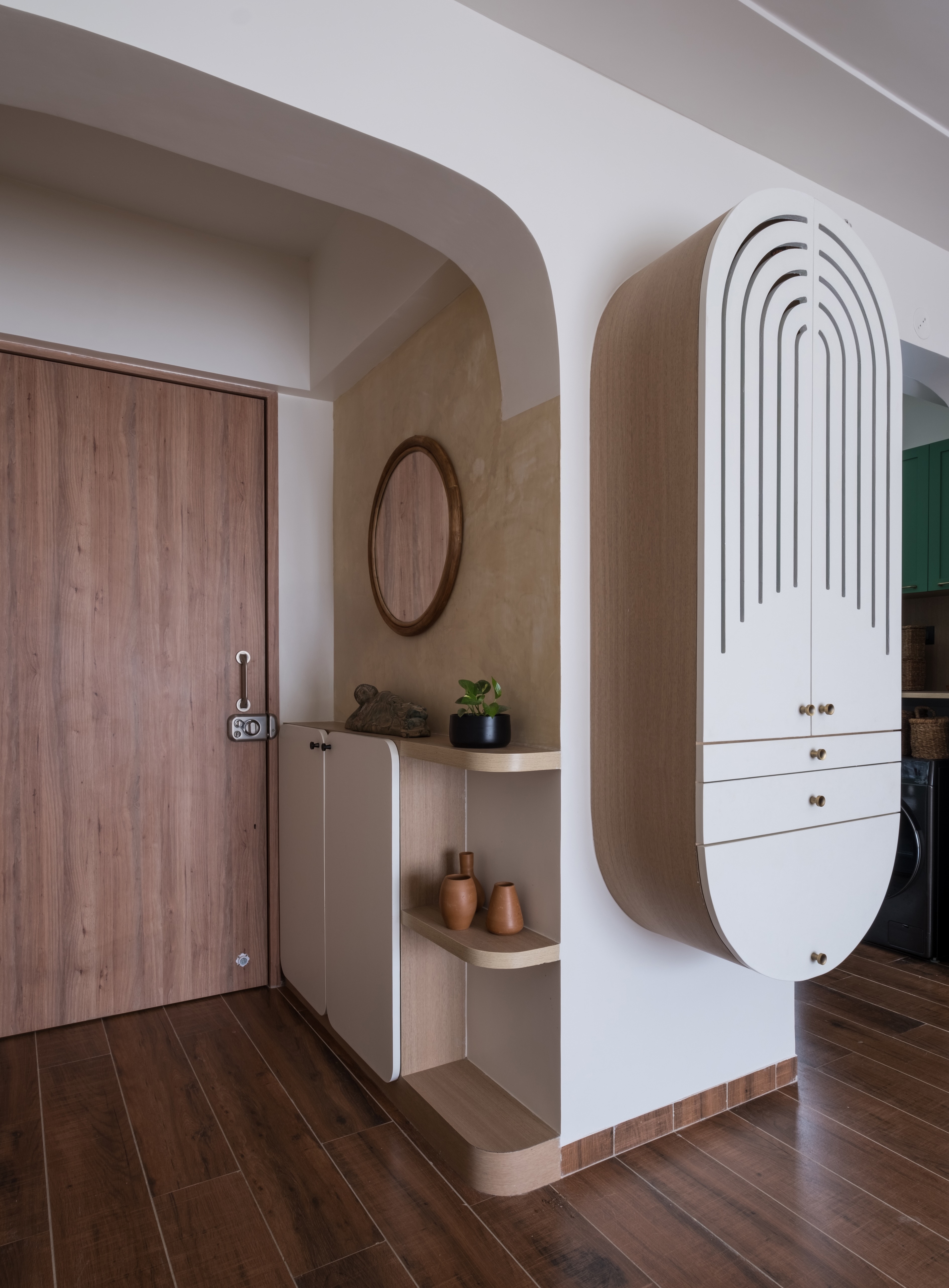
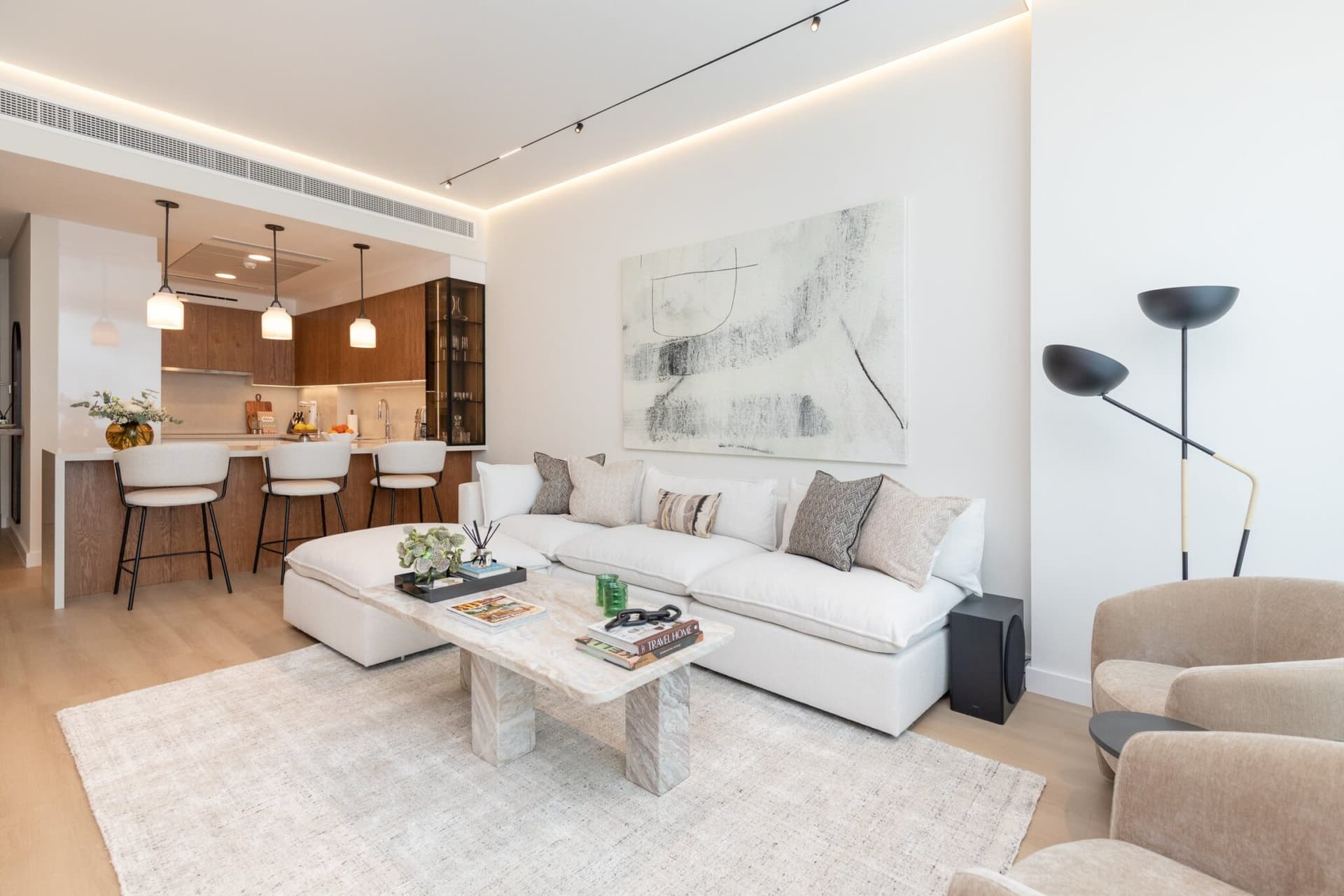
Step inside, and the apartment opens into an L-shaped living and dining volume where light pours through generous openings and settles across textured plaster walls. A round timber-framed mirror, and softly curved cabinetry establish the home’s gentlest argument: that minimalism here is not reduction for aesthetic effect, it is precision thinking.
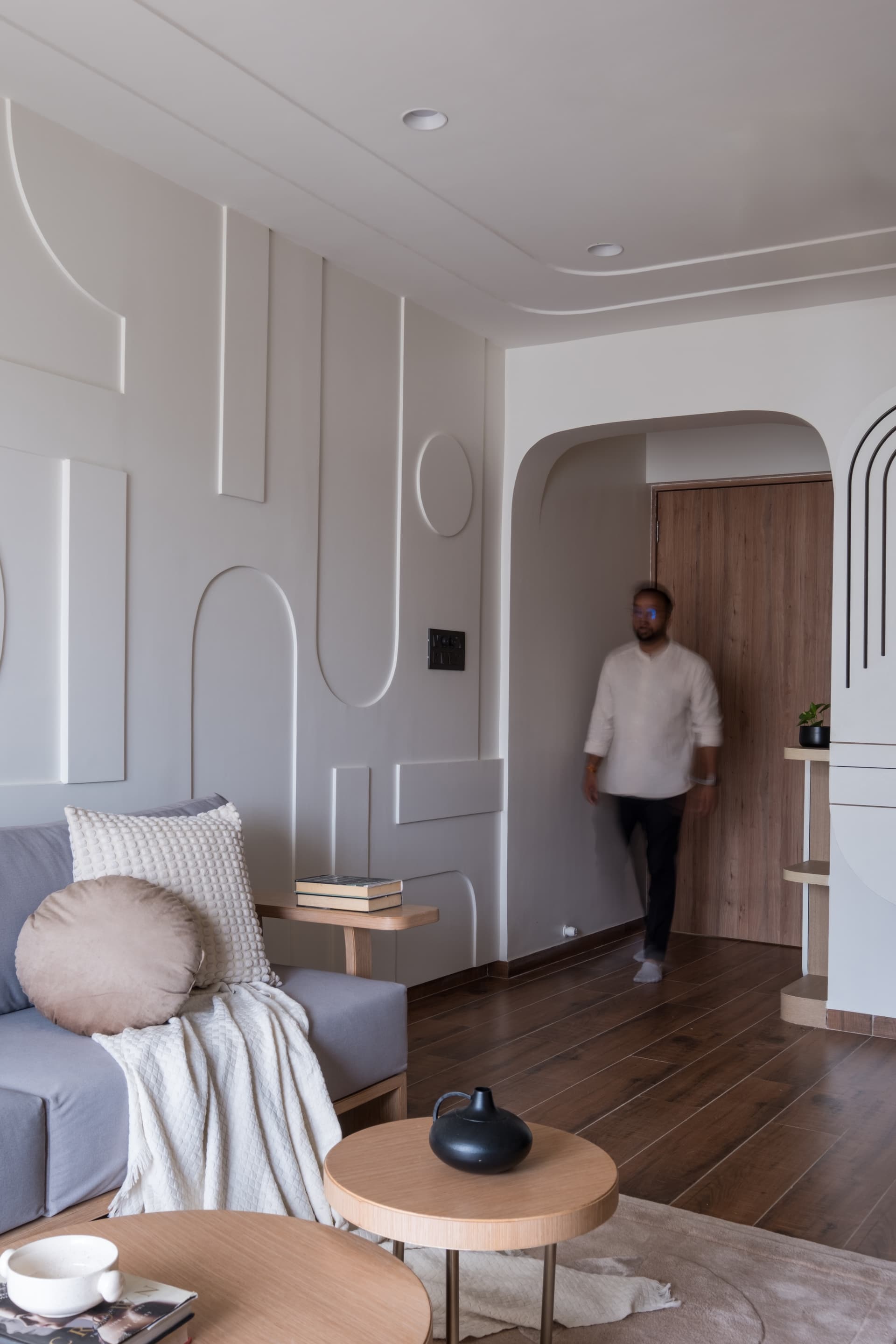
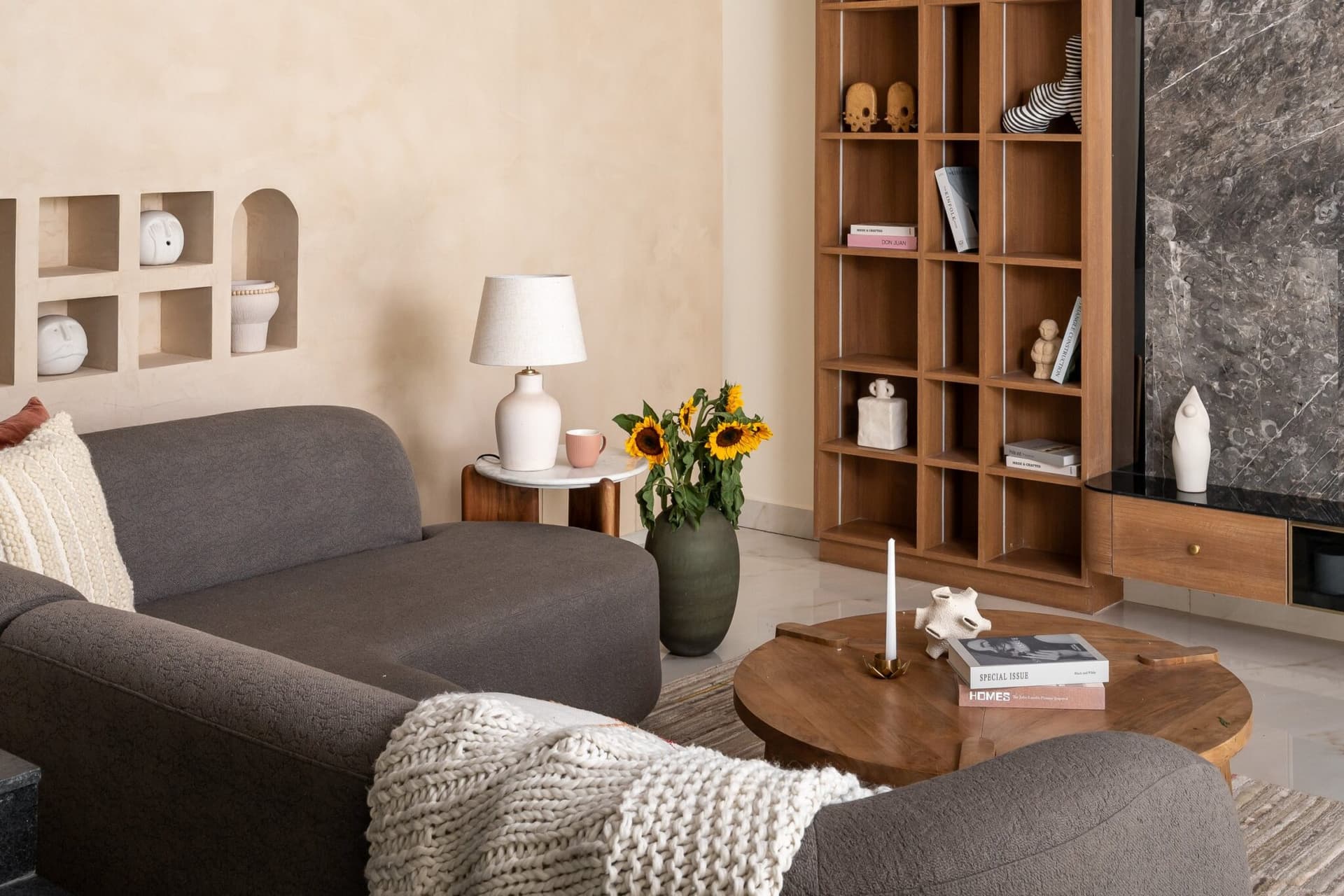
The living room’s defining gesture is a sculpted relief wall, a composition of arches, circles and soft geometries pressed into the surface like a low-relief drawing.
““Most homes need art, but here, the walls themselves had to feel like crafted pieces.””
The wall does the work that paintings might in another home. It is softly textured, sculptural, almost meditative, and it gives the room a focal point without pulling the eye away from the light that animates it.
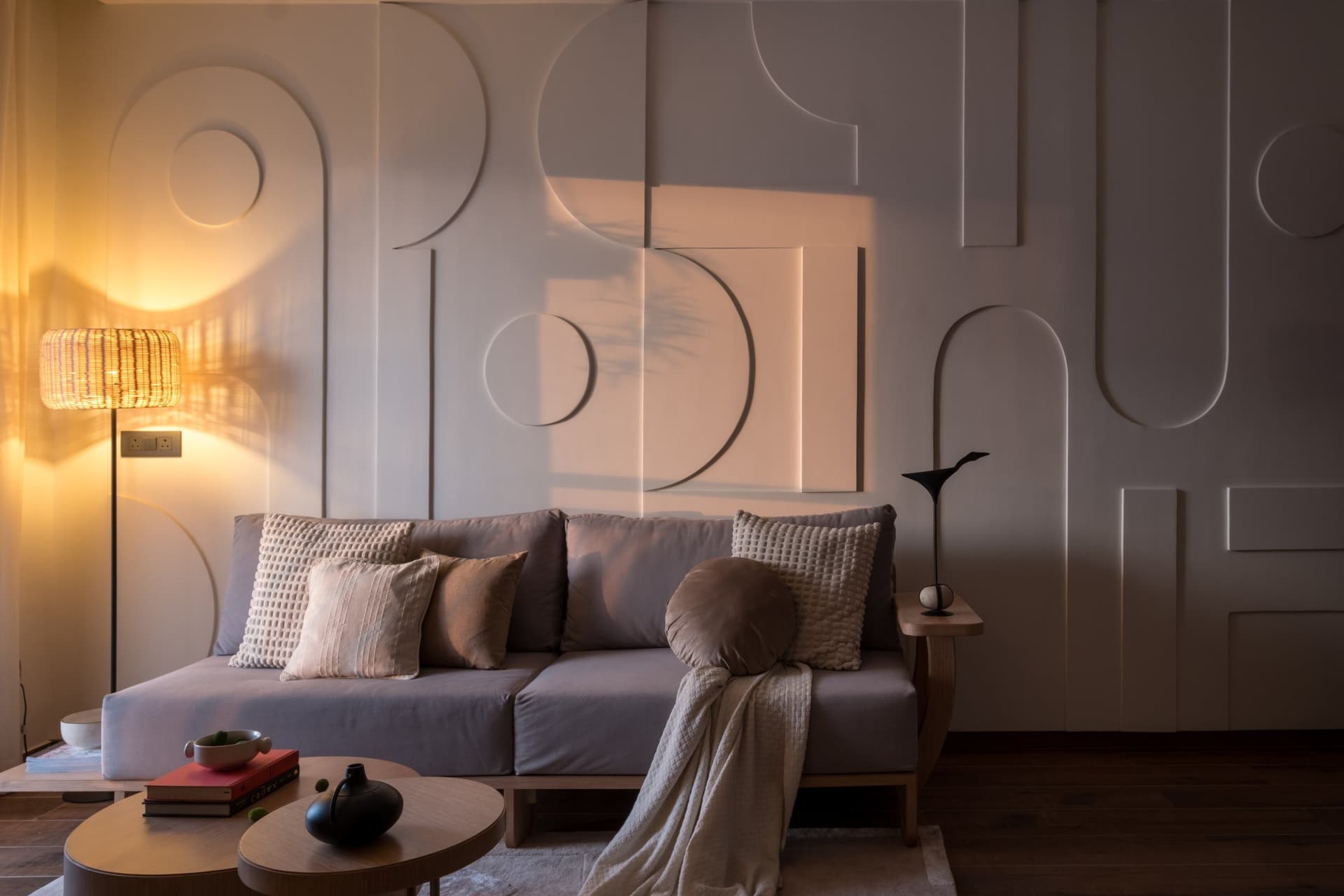
By evening, the same wall reads differently. A rattan floor lamp throws warm shadows across the relief, turning the geometry from graphic to atmospheric, and the grey linen sofa anchors the composition without competing with it.
Up close, the moulding reveals itself as quietly architectural rather than decorative. The arcs and circles are flush with the wall plane, not applied to it, which is what gives the room its meditative stillness.
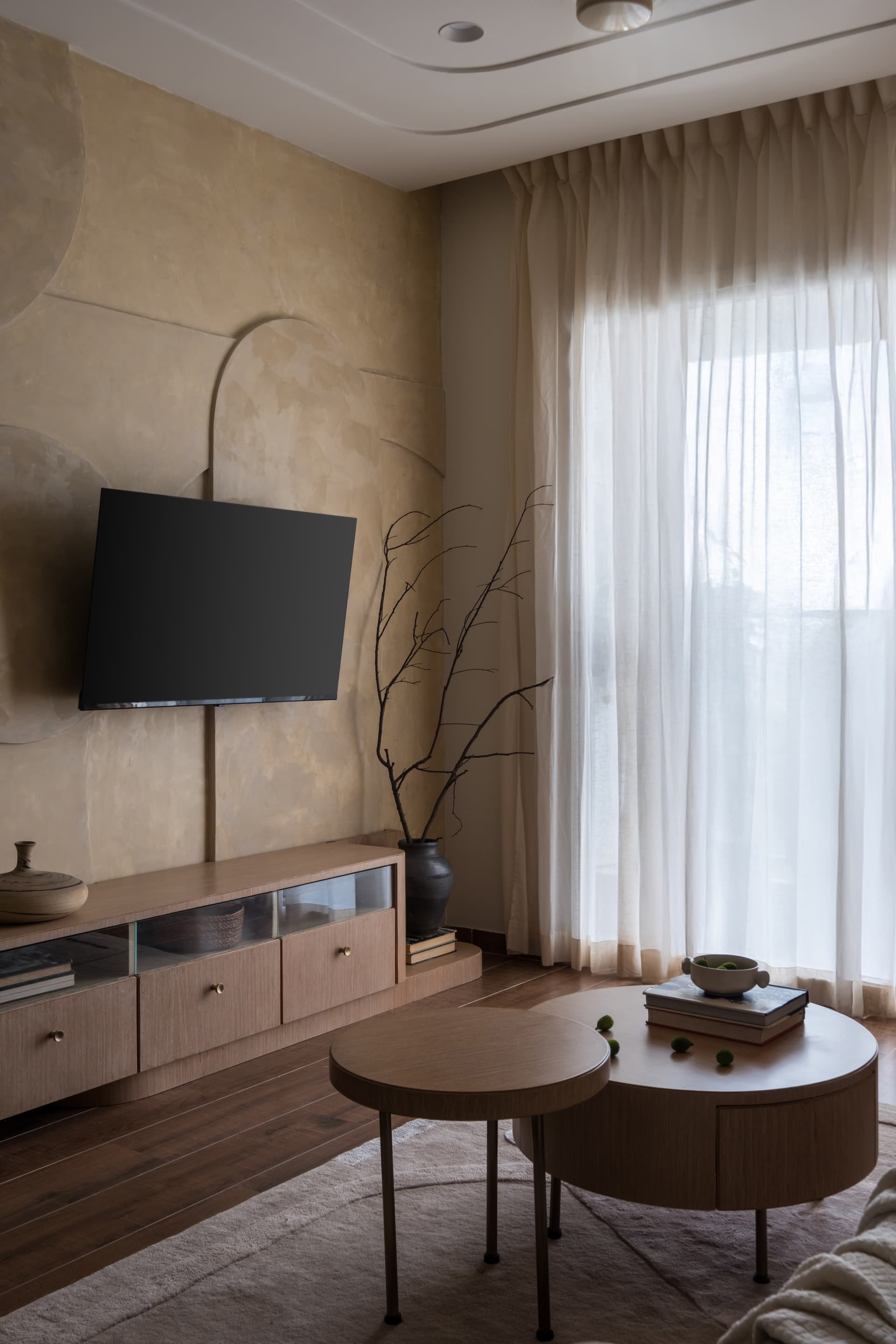
Across the room, the media wall is finished in a hand-troweled lime plaster that catches afternoon light in soft, uneven washes. A slim arched arm extends from the wall to hold the television, a detail that keeps the surface uninterrupted by brackets or boxes.
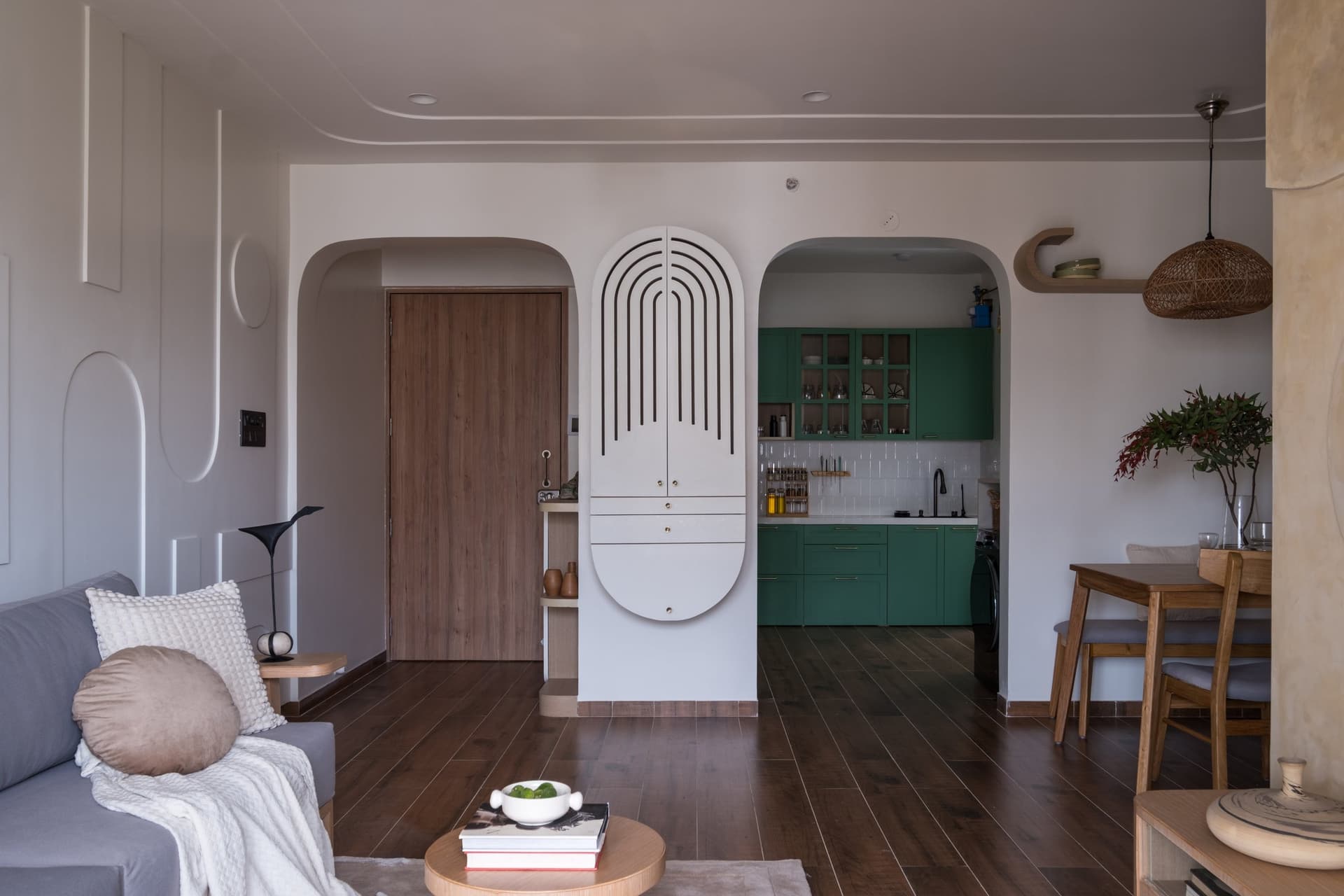
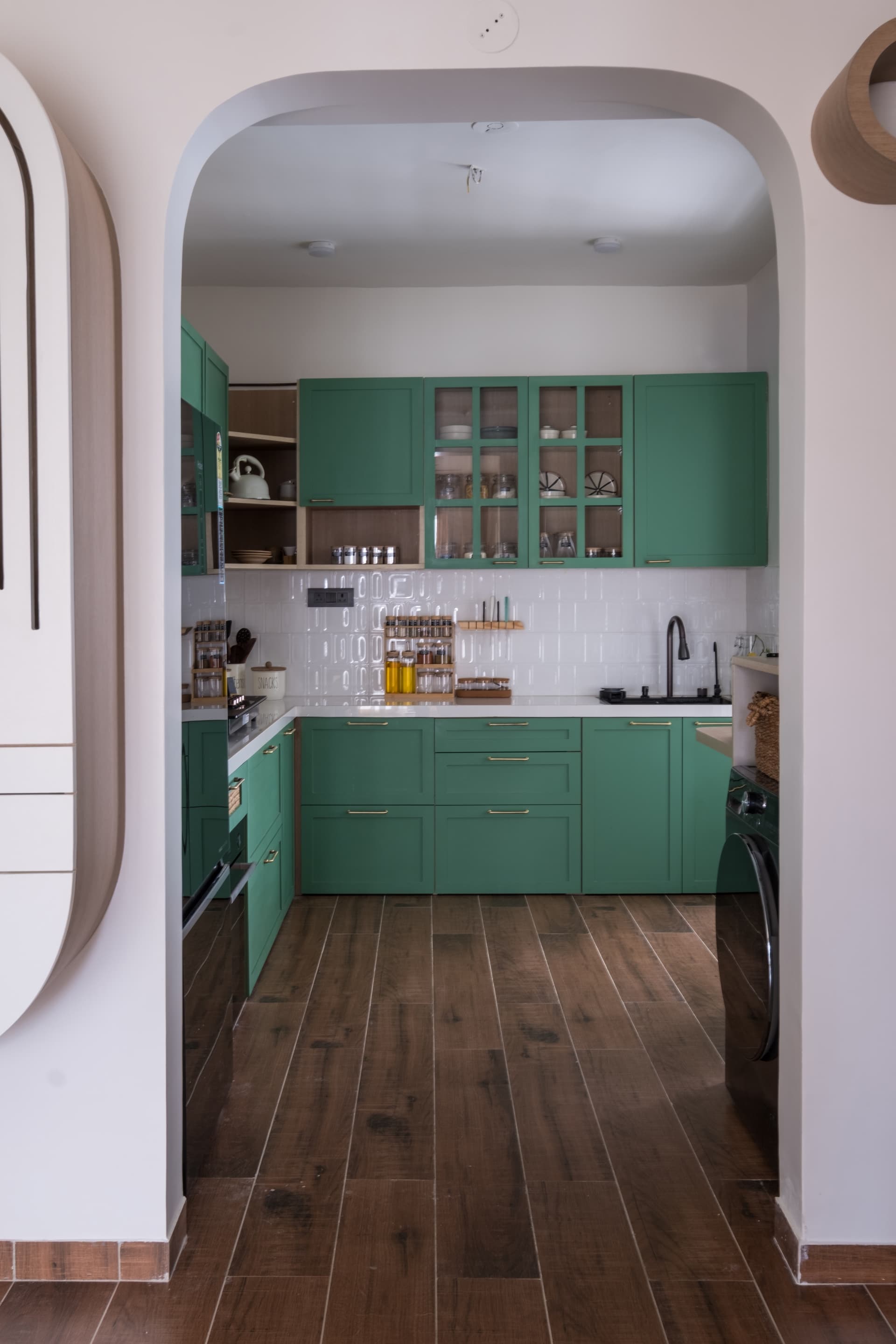
The kitchen introduces a subtle moment of surprise, finished in soft mint green cabinetry that feels both fresh and quietly distinctive. Designed with equal emphasis on function and character, it integrates smart storage solutions, a pull-out work surface, and delicate cane details that lend warmth and texture. Wooden flooring anchors the space, tying its elements together while extending seamlessly into the adjoining dining and living areas. This open, continuous flow reflects the couple’s preference for a home that feels fluid, uncluttered, and intuitively grounded in everyday living.
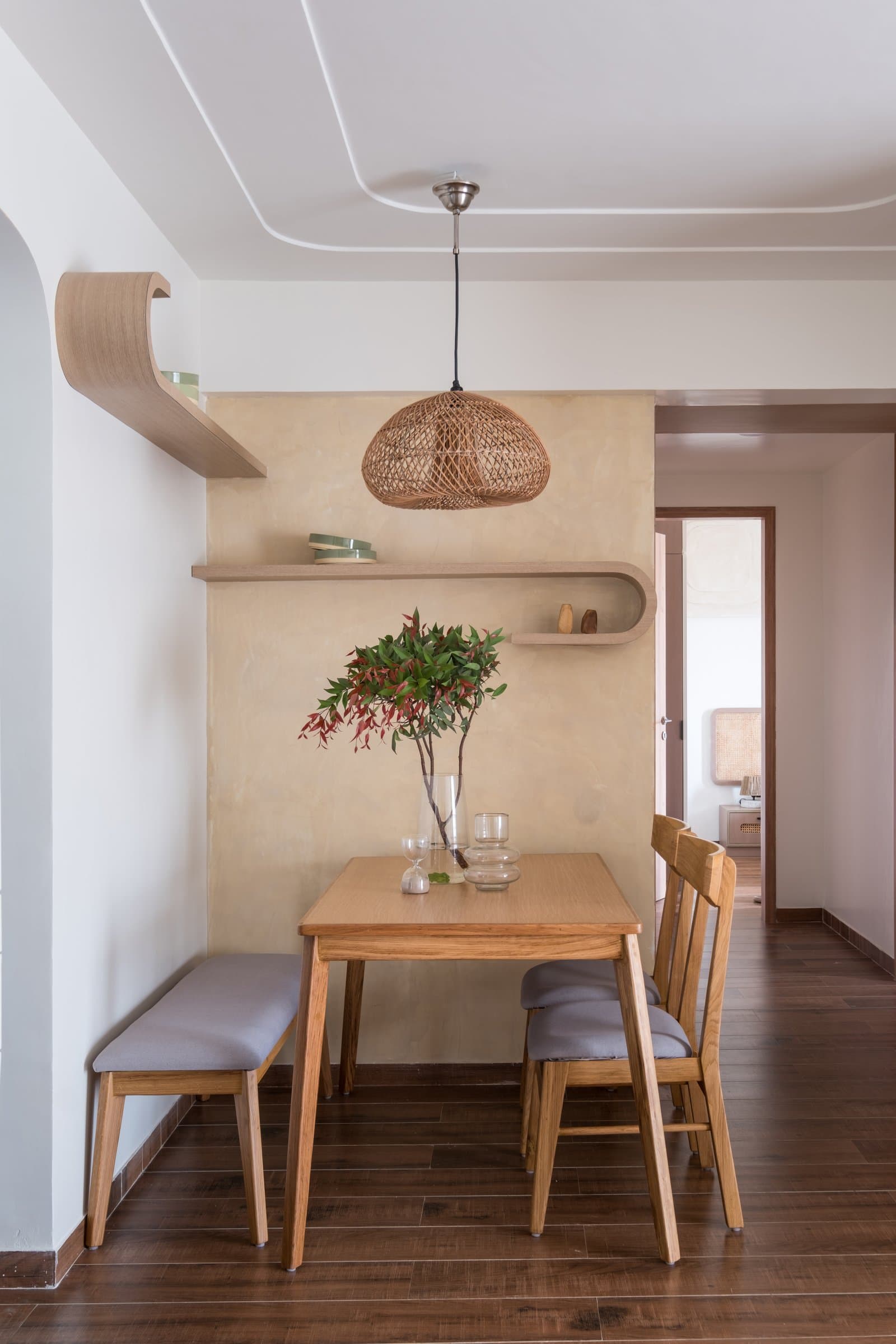
The dining nook is tucked against a warm plaster wall, with wooden shelving that loops and turns like a continuous gesture. A rattan pendant hangs above a compact oak table, and a bench and timber chairs keep the footprint disciplined.
A discreet passage branches into three private rooms, a flexible work or kids’ room, the master bedroom, and a guest room, two of which include attached bathrooms. Each space carries forward a restrained and cohesive palette of light toned walls, earthy textiles, and carefully placed accents, maintaining a sense of visual calm throughout.
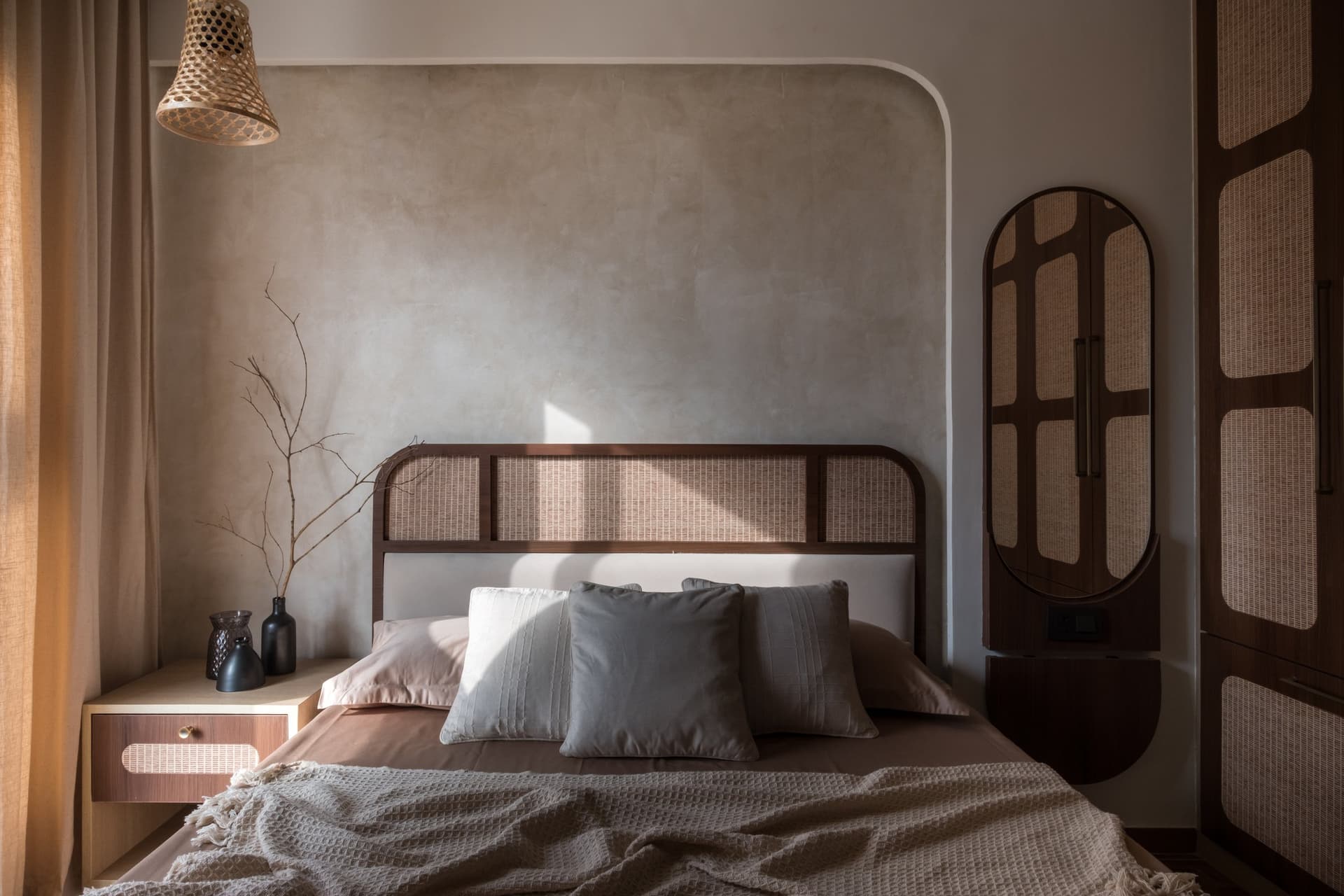
The master bedroom continues the same vocabulary, but at a more intimate register. A cane-and-timber headboard sits against a softly plastered wall, framed by a curved moulding that reads almost like a halo, and a tall arched mirror with a cane insert leans against the adjacent wall.
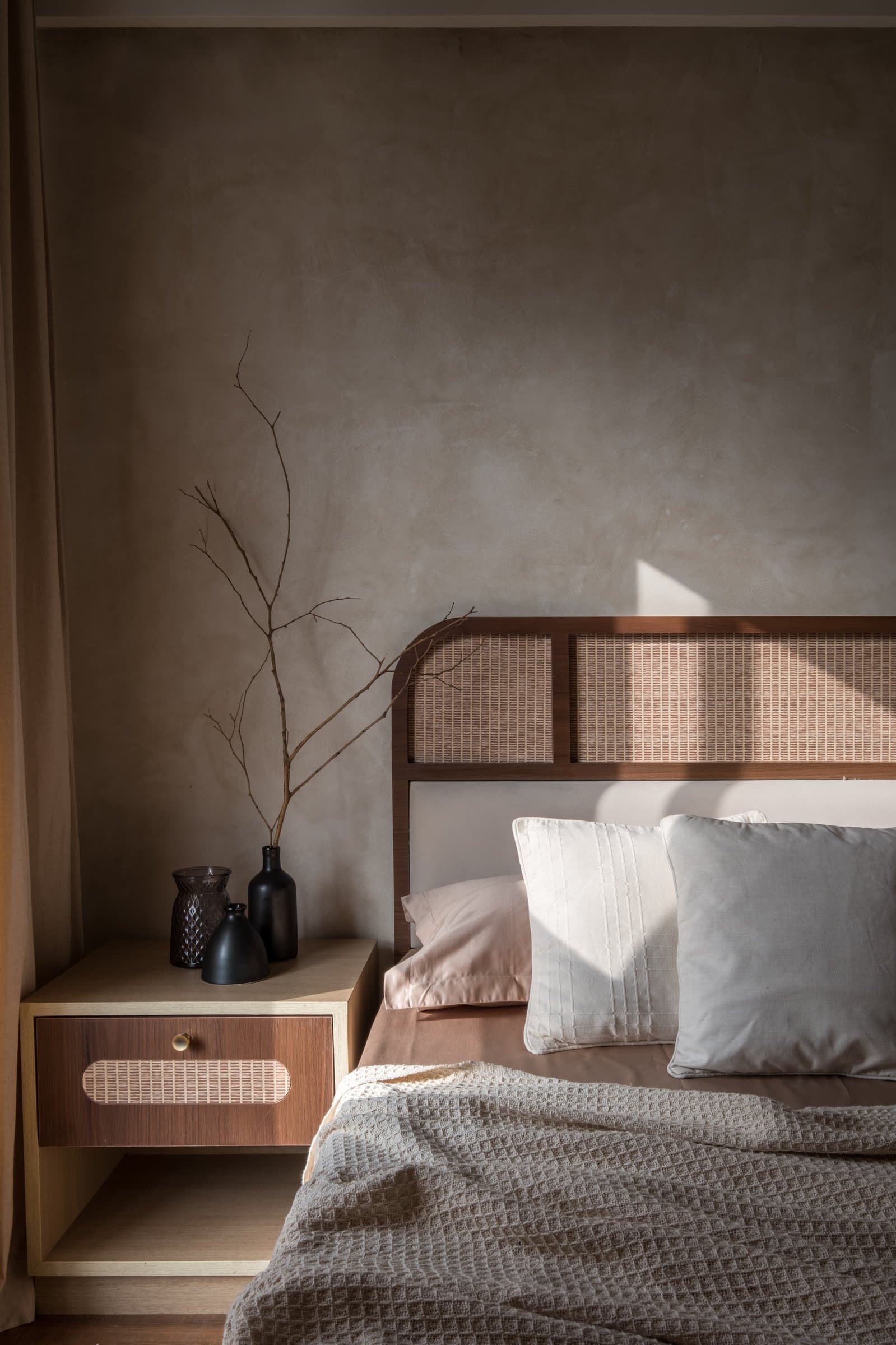
The detail at the bedside is where the craft argument is clearest. The side table carries a cane-front drawer with a small brass pull, and the plaster wall behind it holds the day’s last light in soft, mottled patches.
The dressing alcove beside the bed compresses a vanity into a sliver of wall. An arched cane-and-timber mirror folds out over a small wooden ledge, and the architecture of the headboard wraps around it without a visible seam.
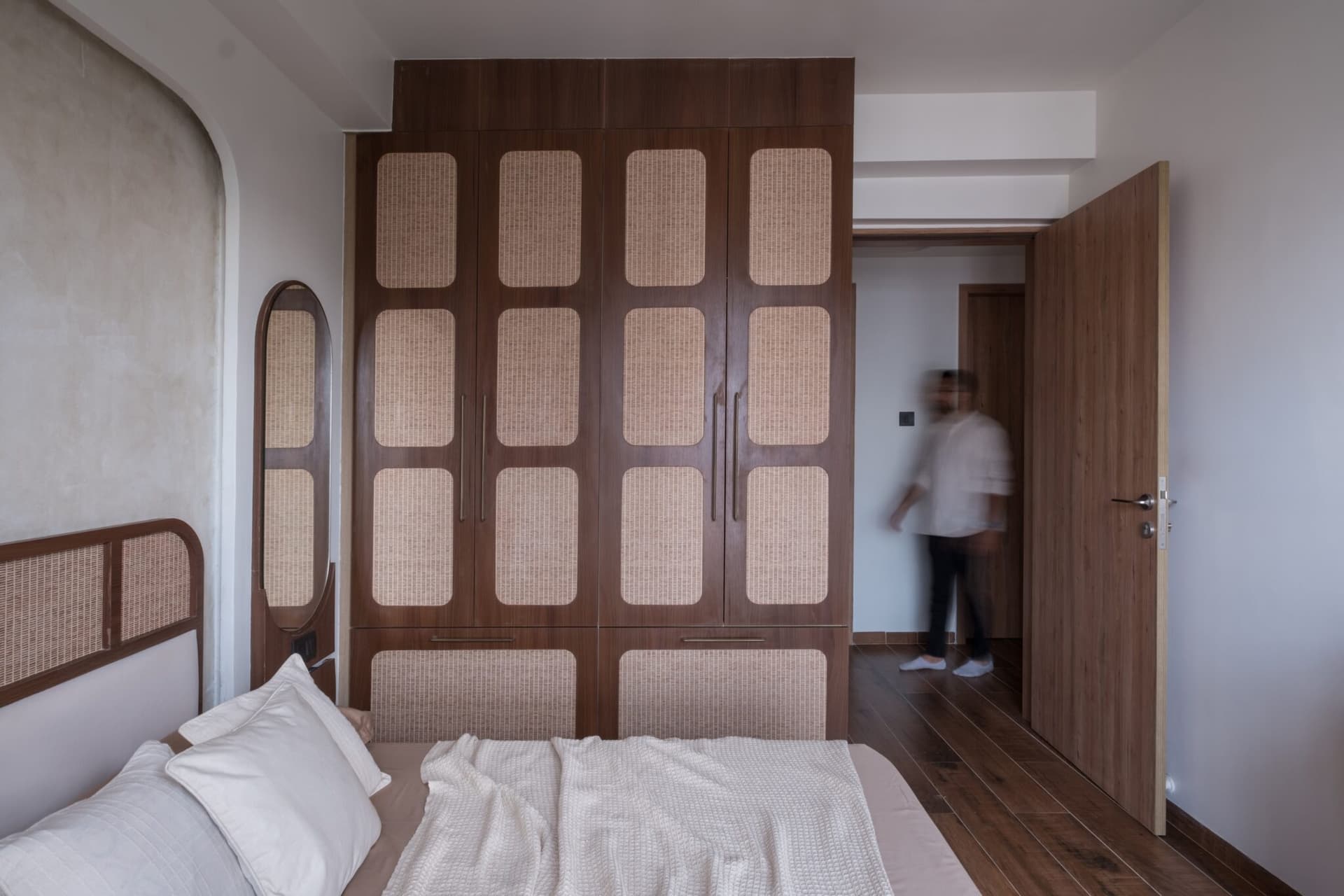
Opposite the bed, the wardrobe wall is built in solid timber with cane-inset doors, and a tall oval mirror in the same material reads almost as the wardrobe’s smaller sibling. The arched plaster niche above the headboard is left intentionally bare, a pause in an otherwise crafted room.
The wardrobe runs nearly the full length of the wall, its rhythm of cane panels softening what would otherwise be a heavy bank of storage.
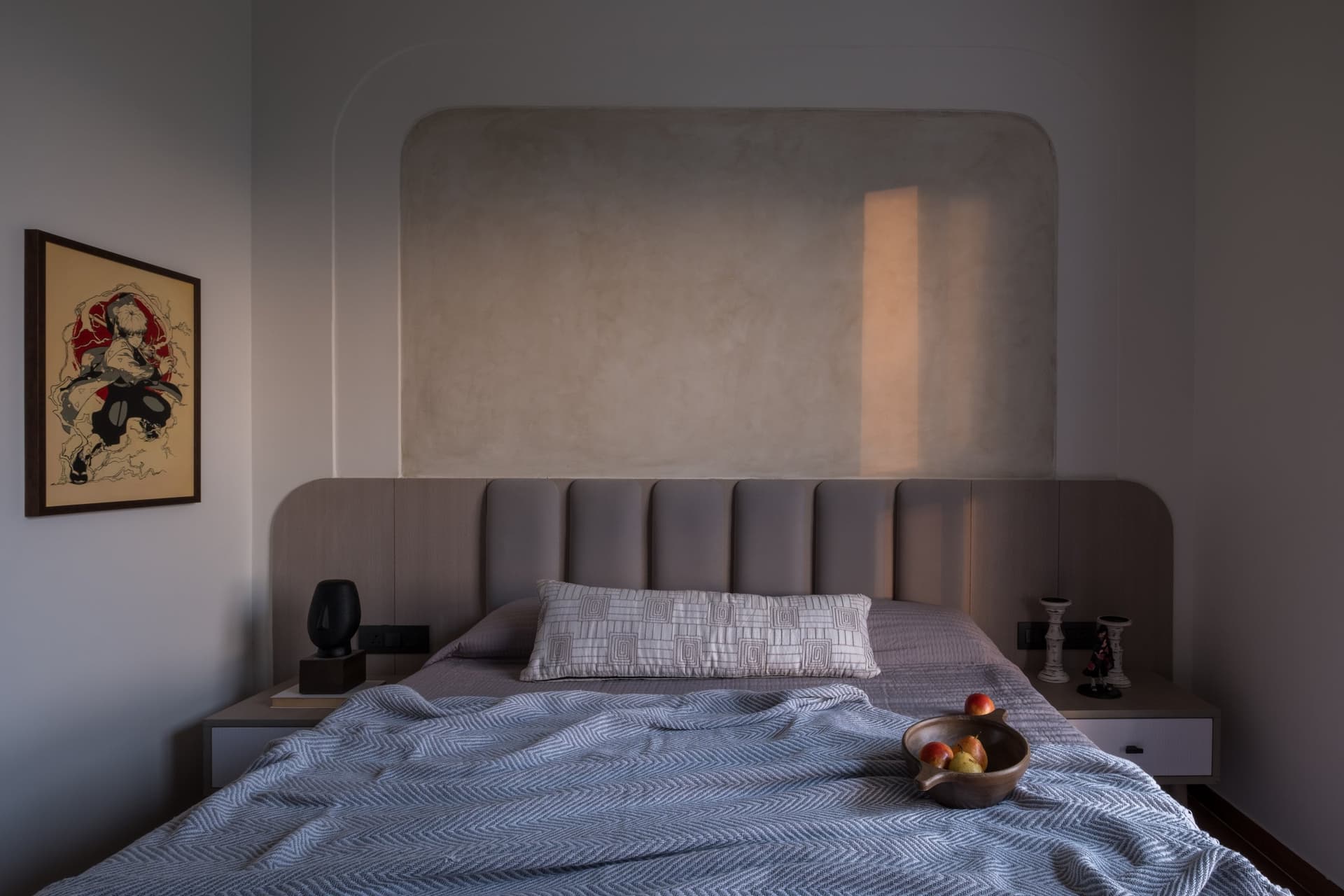
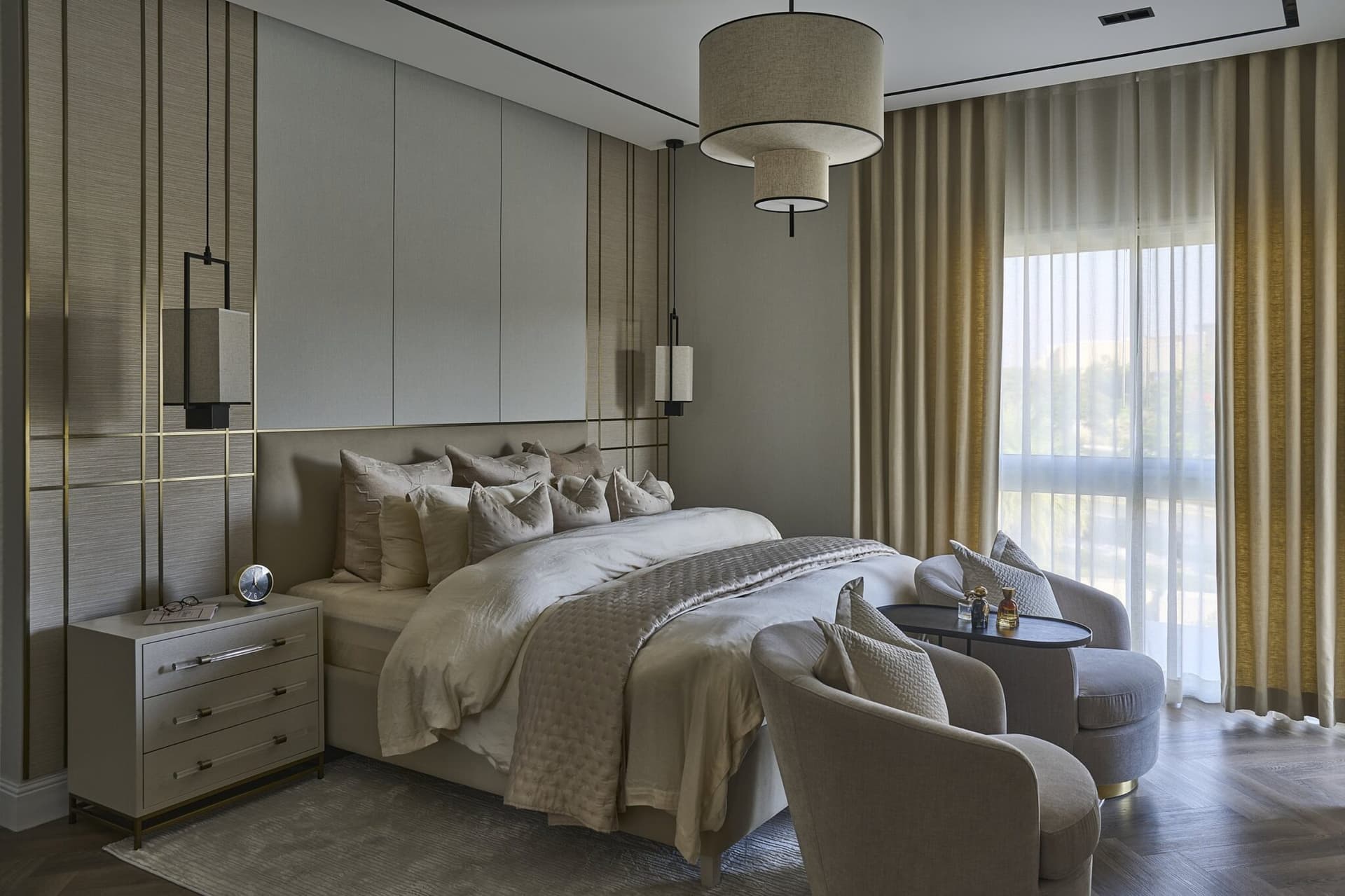
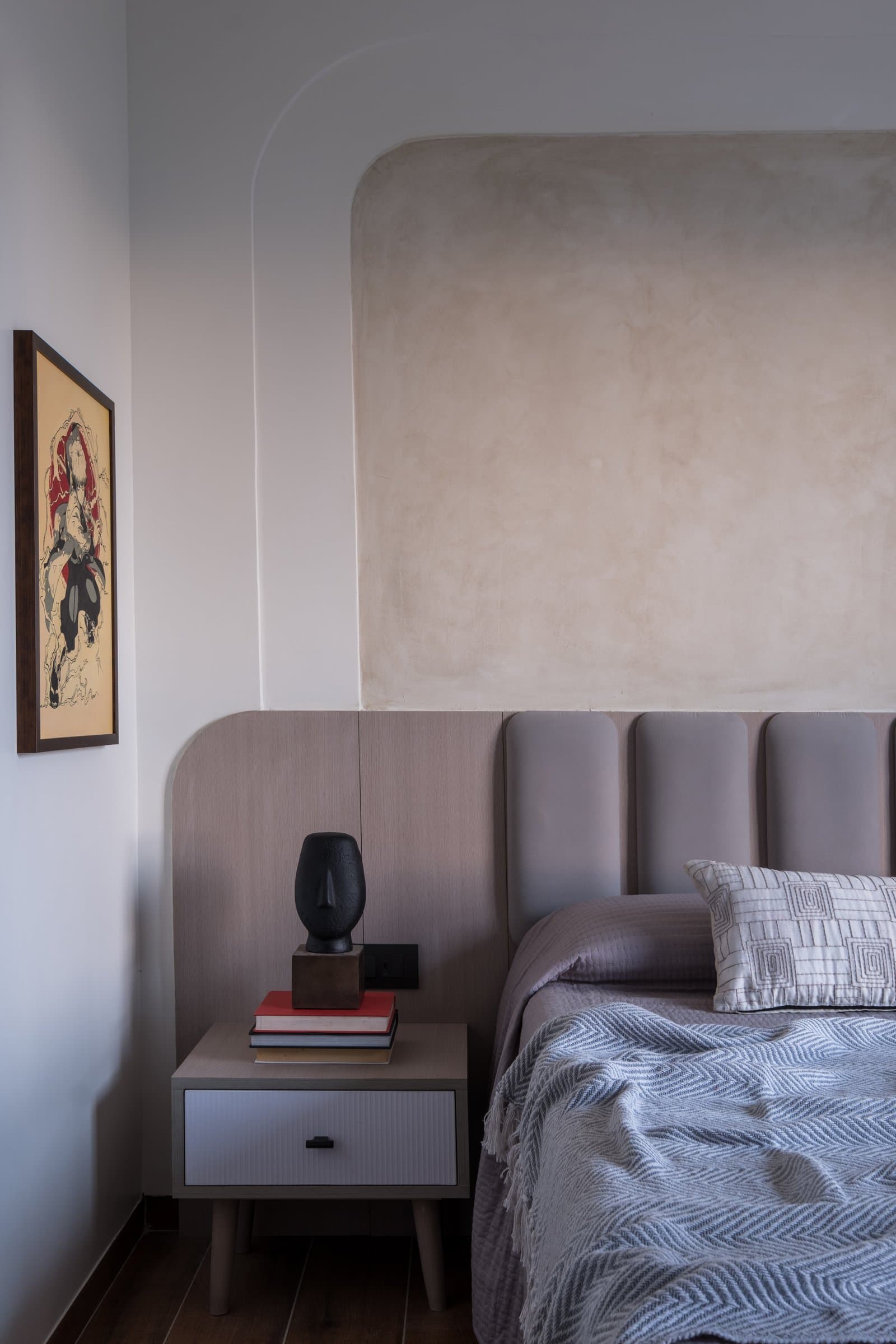
The second bedroom takes a slightly different approach. A channel-tufted upholstered headboard runs the full width of the bed, with a softly plastered arched panel set above it, and the wall is left otherwise uninterrupted save for a single framed anime print.
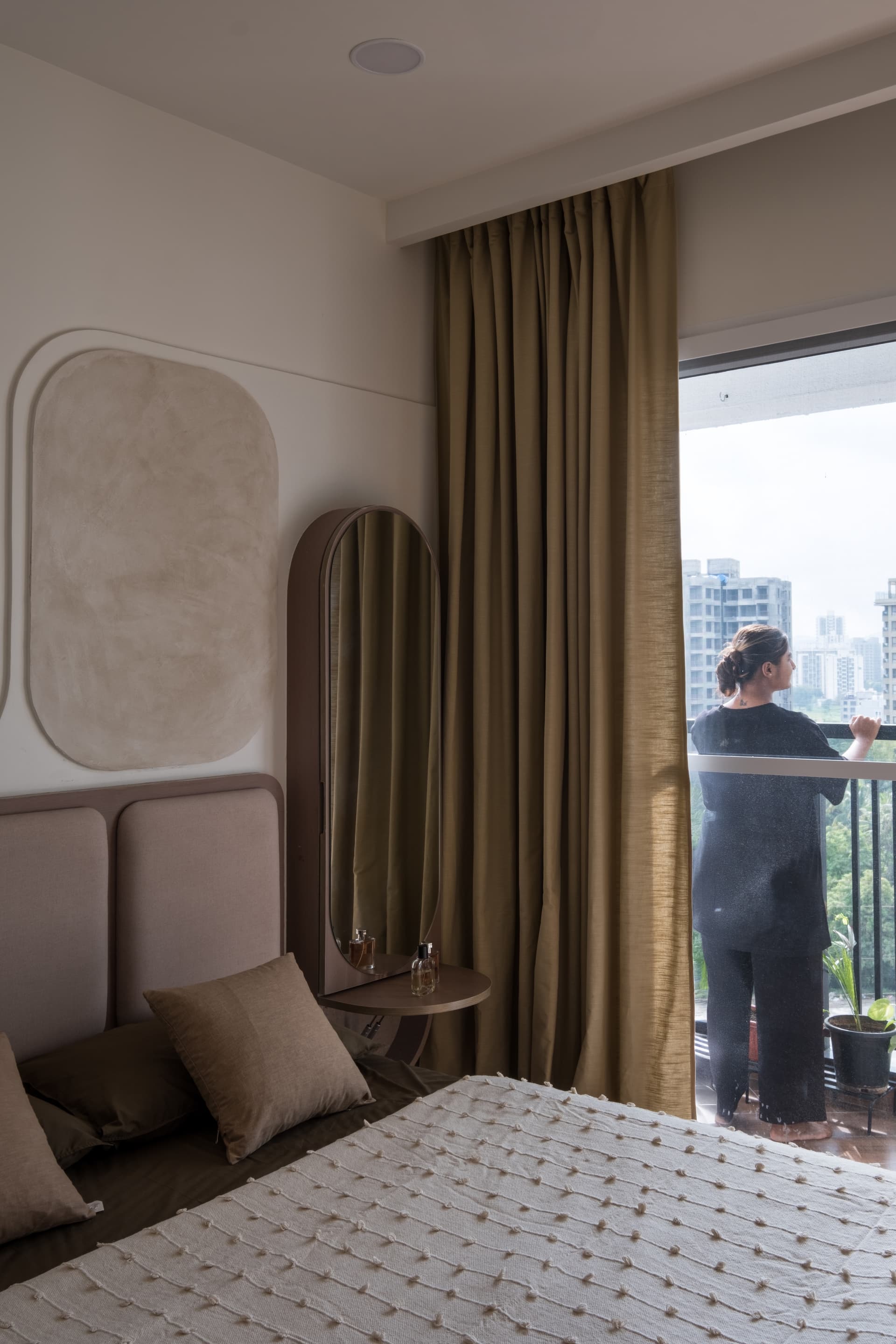
A long arched mirror beside them reflects the curtain light back into the room, doubling the soft glow without doubling the visual noise.
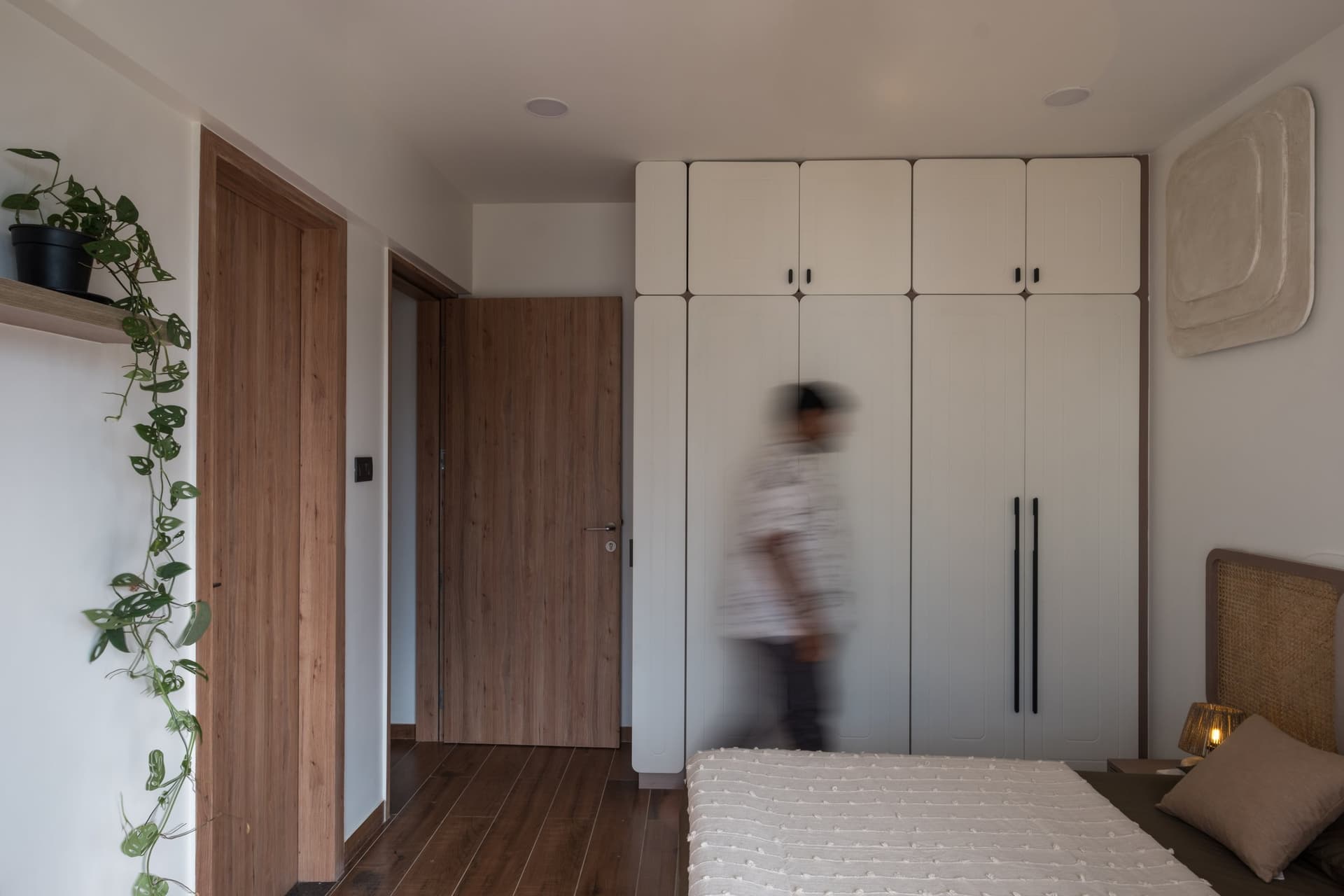
In the third bedroom, a bank of soft-edged white wardrobes with long black pulls lines one wall, and a trailing pothos drapes from a shelf near the timber door, which keeps the corridor from feeling like circulation alone.
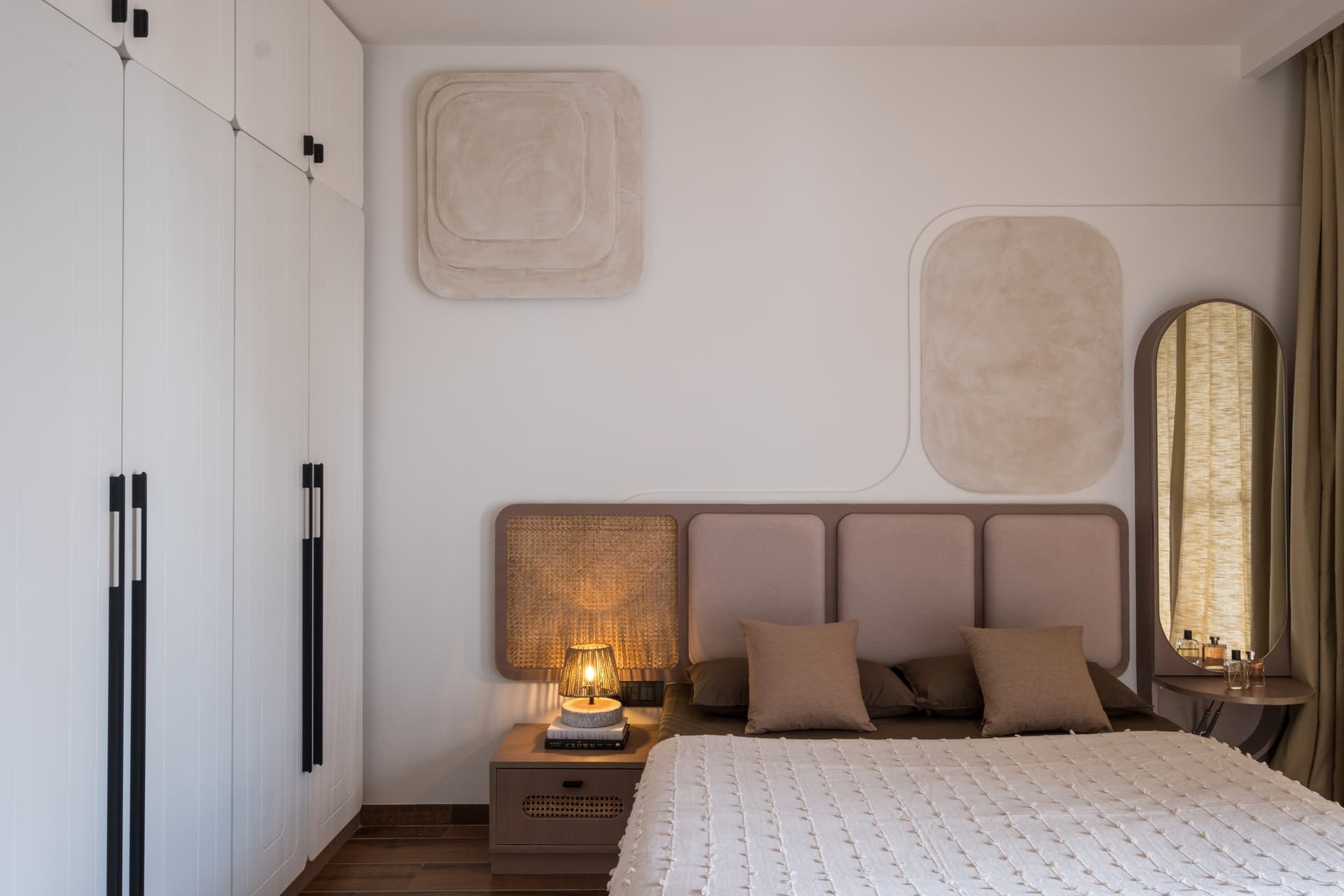
One last detail clarifies the home’s argument. Two soft plaster reliefs, one square, one rounded, are mounted above the headboard wall like sculptural objects, and the white wardrobe beside them carries the same rounded geometry in its routed shutters, so that storage, art and architecture all speak the same language.
Dune House sits comfortably within a growing strain of Indian apartment design that has stopped equating restraint with austerity. Its references are clear, Japanese minimalism and a Middle Eastern-inspired earthy palette, but the craft in the cane-work and the hand-finished plaster keeps the home rooted to the makers who built it.
What the project finally proves is that a compact home can hold a quiet, full life when its constraints are read as instructions rather than limitations. The Dune House does not try to reinvent anything. It simply offers, through good light, considered materials, and details that are felt more than seen, the kind of long, steady exhale that a well-made home is meant to provide.