Shibui, the Japanese word for an unobtrusive beauty that reveals itself slowly, is a difficult quality to design for. It resists spectacle, refuses ornament that announces itself, and asks the room to earn attention through proportion, material, and patience rather than gesture.
Within a 1,250-square-foot apartment in Mumbai, Jayati Design Atelier has built a home around precisely that argument. Project Shibui belongs to a family who wanted warmth without weight, craft without theatre, a residence that could absorb daily life without demanding to be looked at. The result is a layered interior where every surface has been considered, but few of those considerations call out for credit.
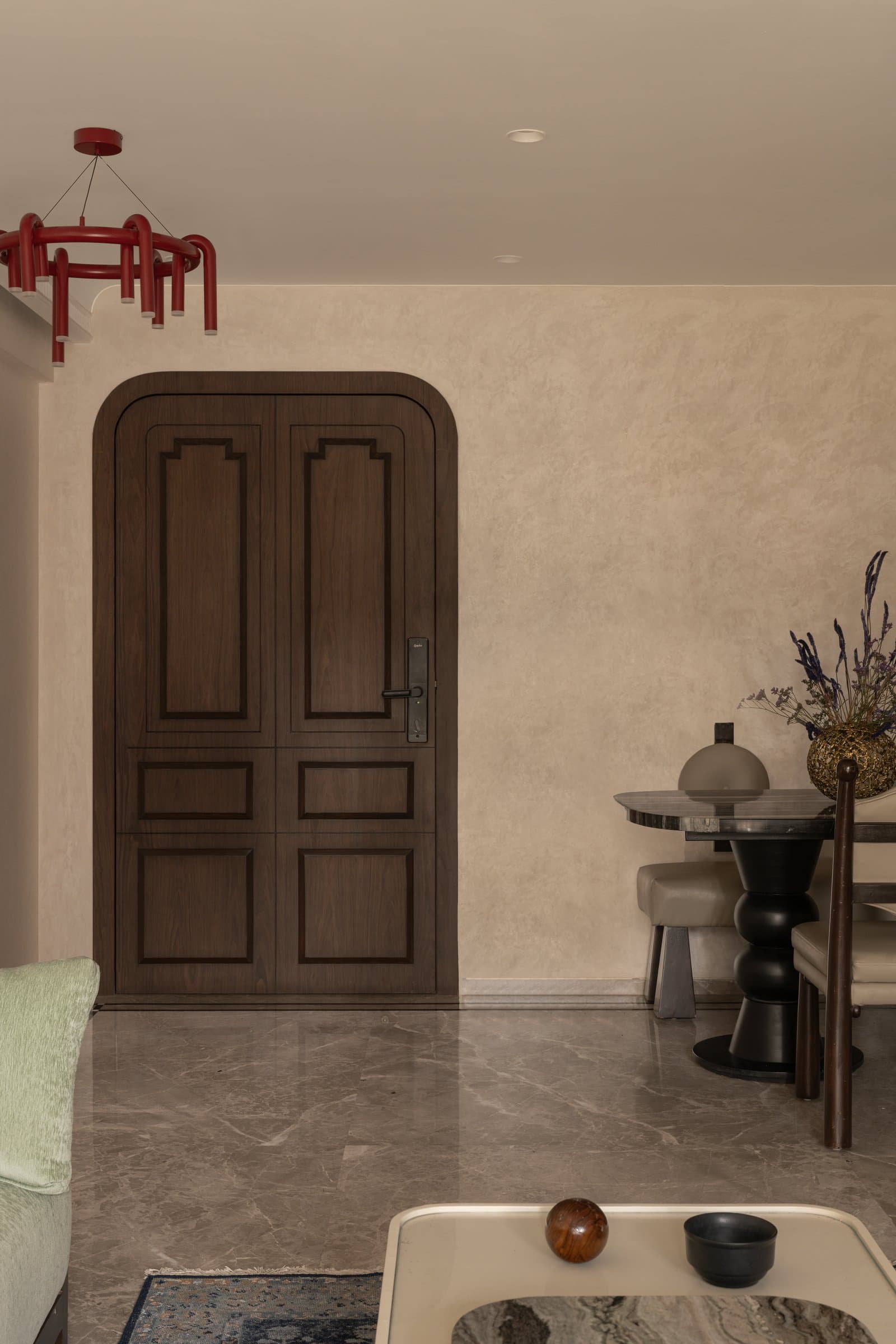
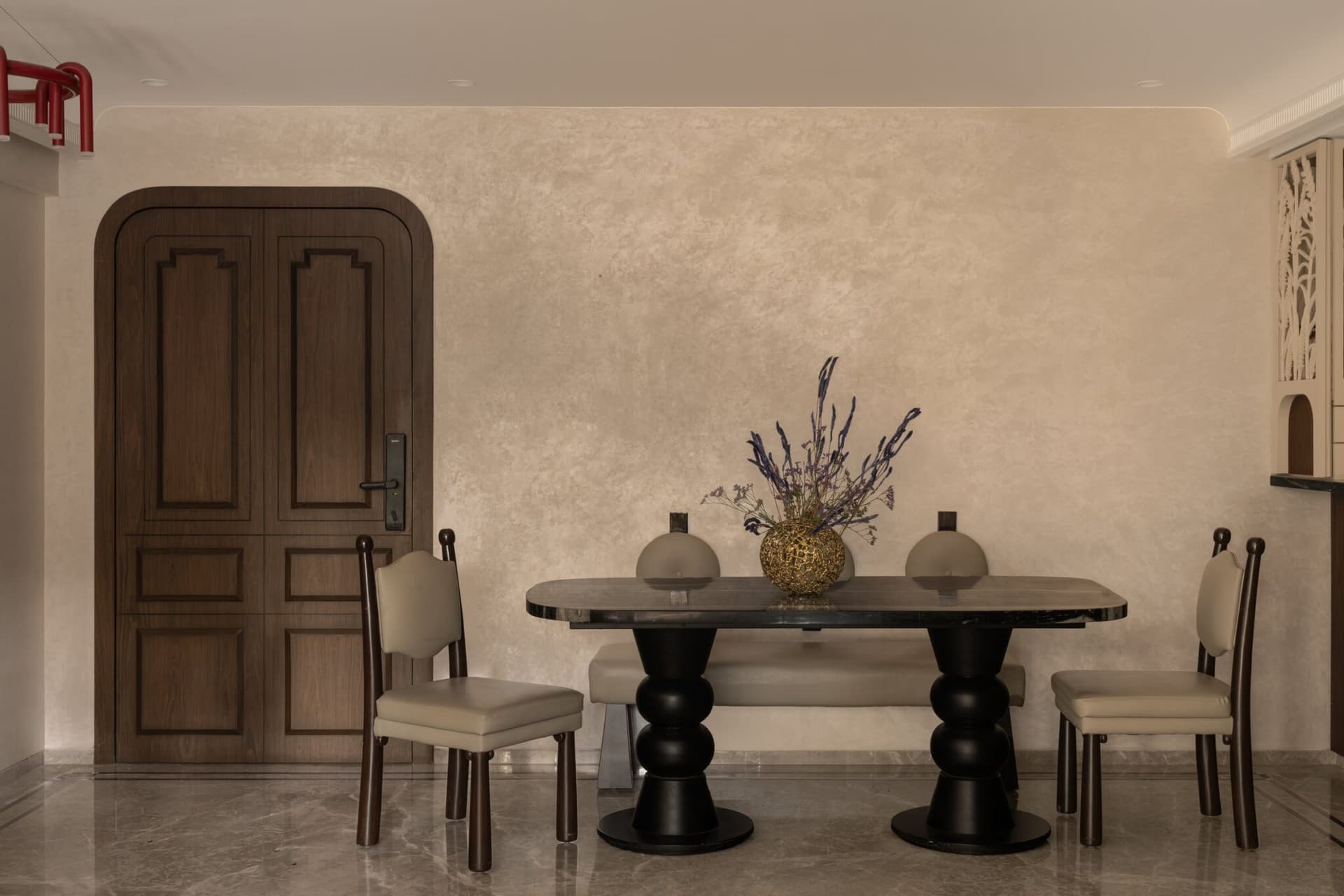
The entry sits in conversation with the dining zone, its arched walnut door panelled in a quiet geometric rhythm against a wall finished in mottled lime plaster. A red tubular pendant overhead is the home’s single permitted flourish, a small piece of mischief that the rest of the apartment is too composed to attempt twice.
The living room is where the home’s restraint becomes most legible.
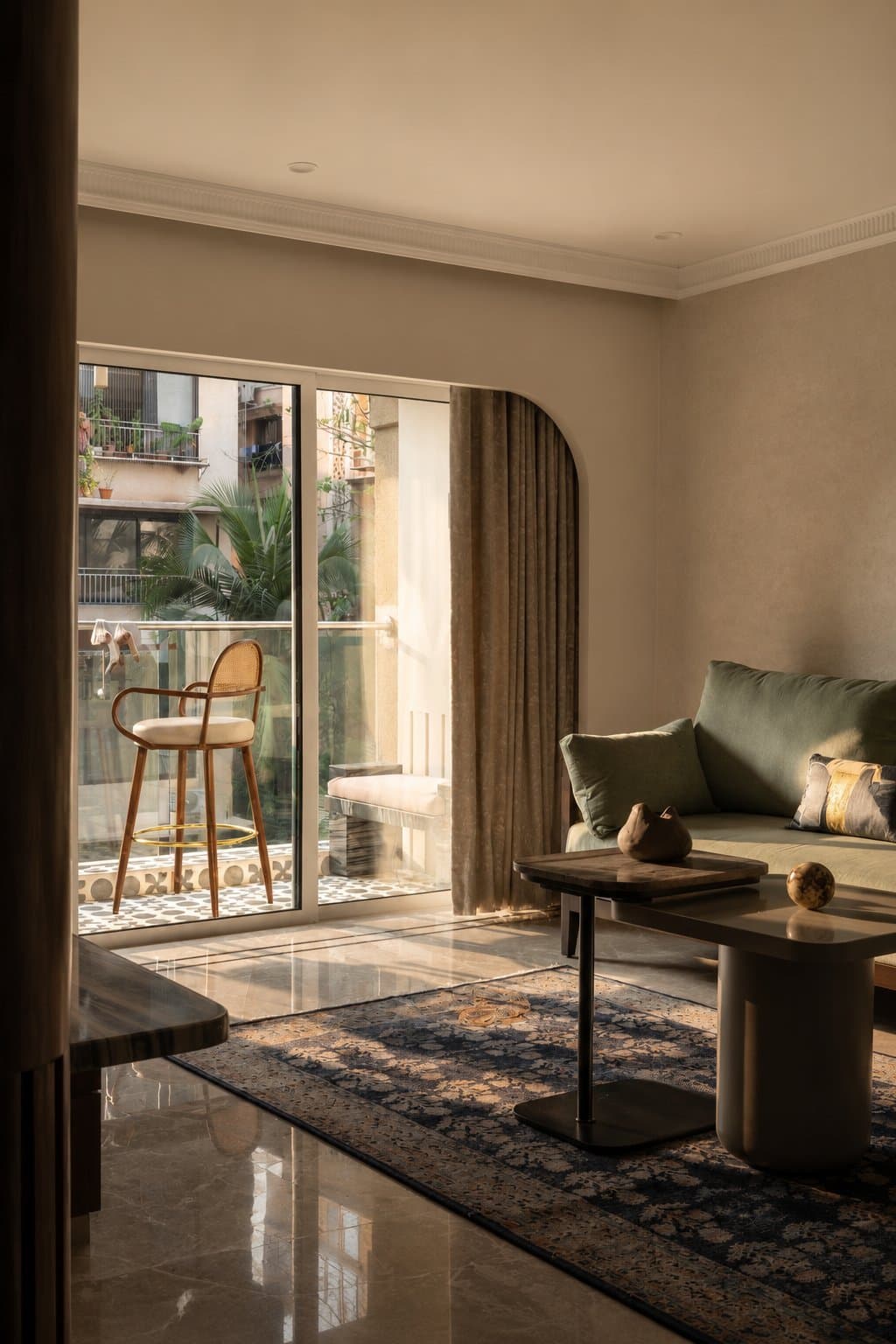
A sage upholstered sofa anchors the seating against a softly plastered wall, with an arched sliding door opening onto a balcony patterned in monochrome encaustic tile. Light arrives obliquely here, raking across the surfaces in a way that flatters the chenille upholstery and the dark patterned rug beneath.
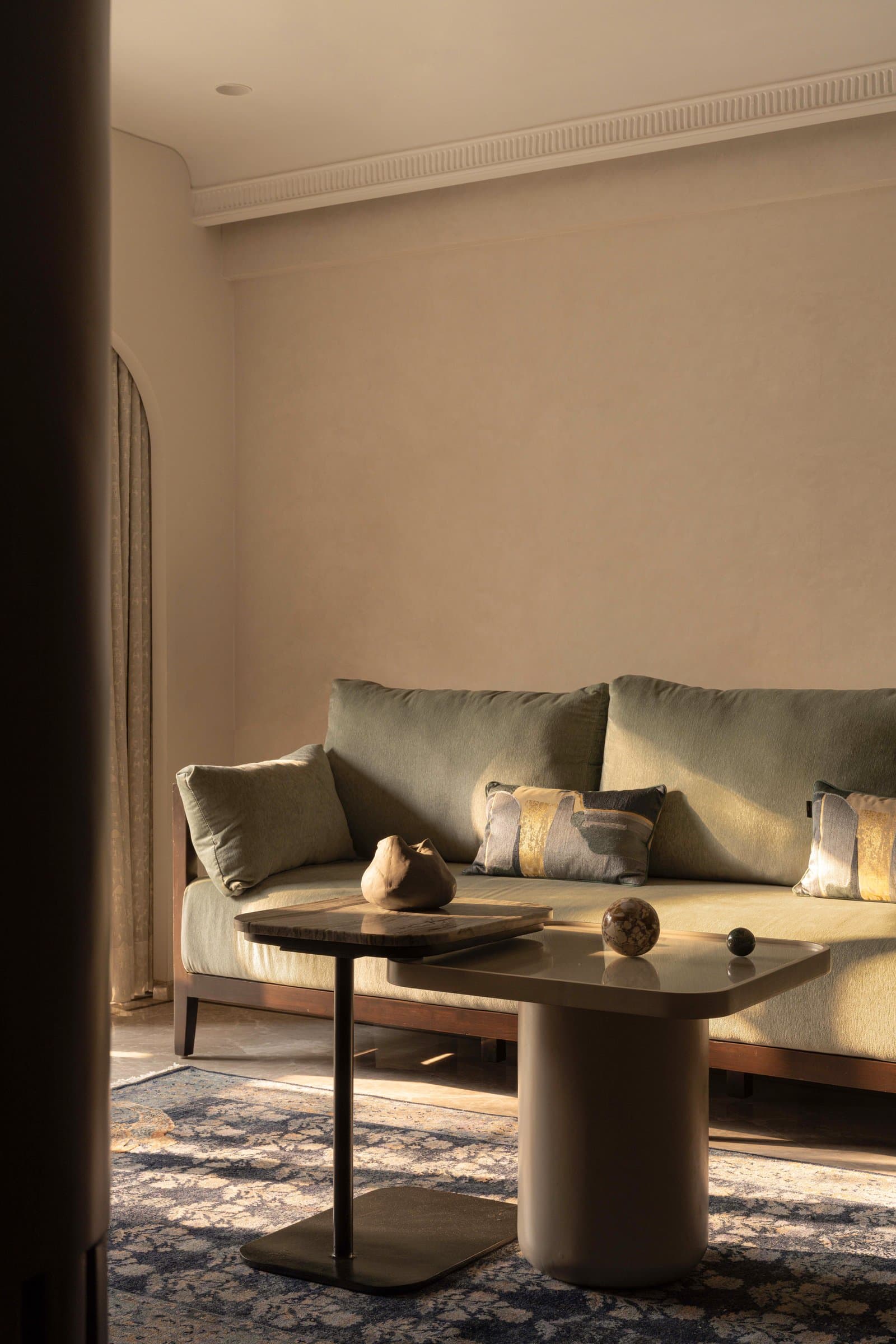
The seating composition refuses the obvious move. Rather than centring on a single statement coffee table, two low forms, one with a stone inlay and one a rounded solid pedestal, sit at different heights, which is the kind of decision that reads as casual but is the result of careful calibration. The room is not arranged for photography; it is arranged for the people who use it.
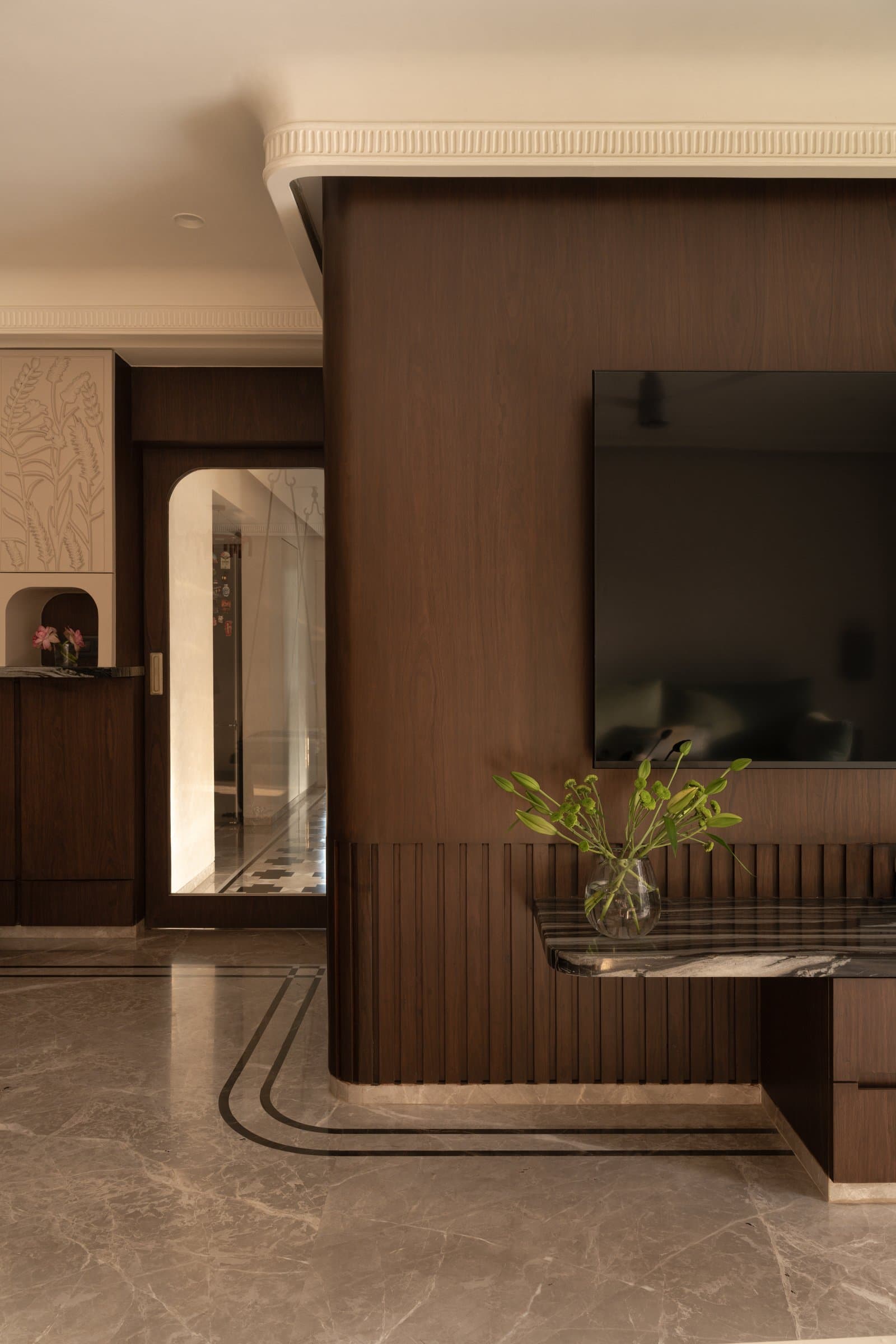
A fluted wood partition holds the television on one side and conceals a passage to the kitchen on the other, with a slim console of patterned stone cantilevered below the screen.
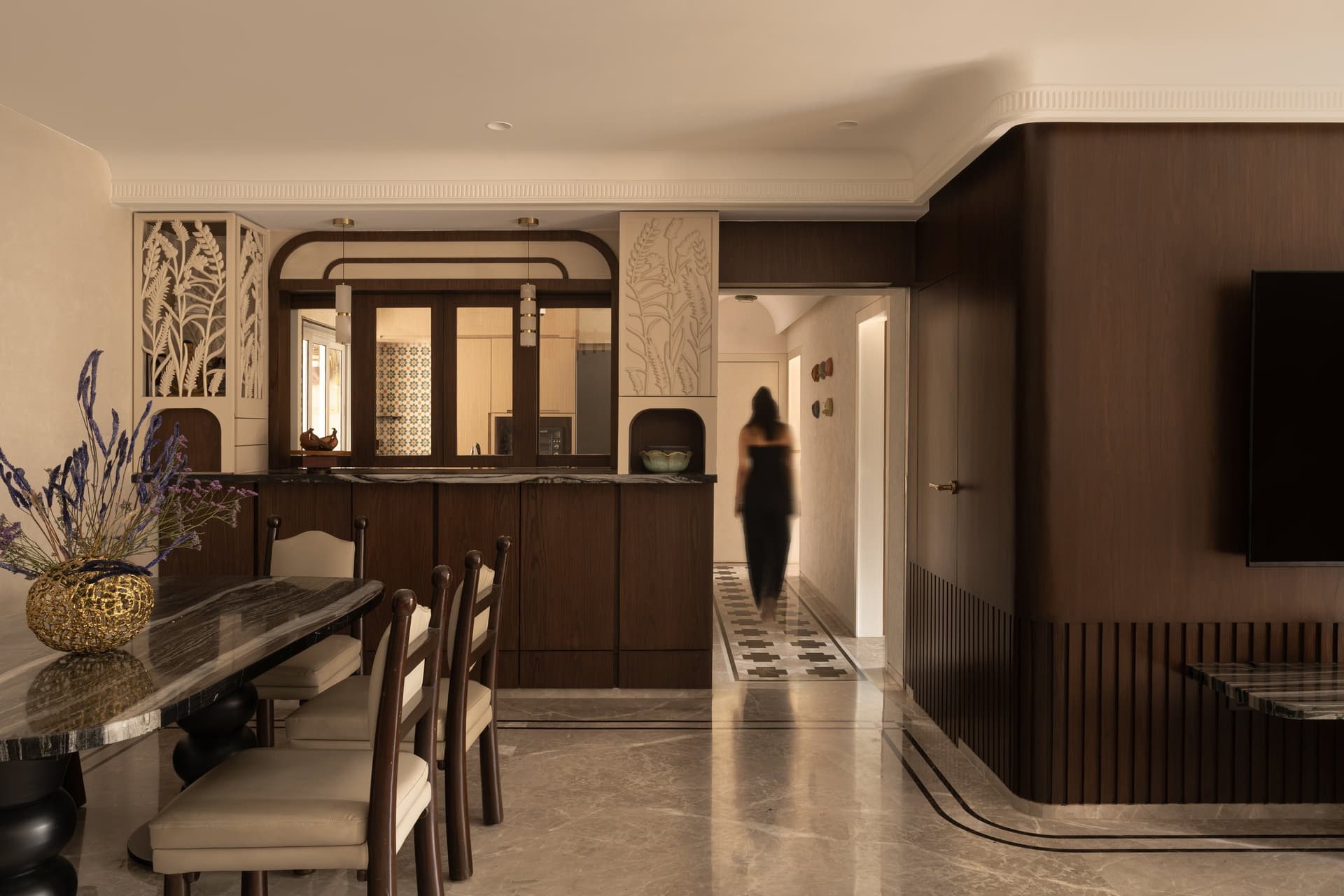
The dining area opens toward the kitchen through a framed pass-through whose flanking panels carry a fern-leaf carving in pale relief, set against the deeper walnut of the cabinetry below. The patterned floor inlay marks the threshold to the private wing of the home, a quiet piece of choreography.
The dining table serves as the clearest expression of the studio’s bespoke furniture language. A richly veined stone top is anchored by two sculptural black pedestals, their stacked-sphere geometry echoing a recurring motif found throughout the apartment. Surrounding it, cream leather dining chairs introduce softness and refinement, their tall, turned-back profiles subtly referencing vernacular craftsmanship while remaining firmly rooted in a contemporary design vocabulary.
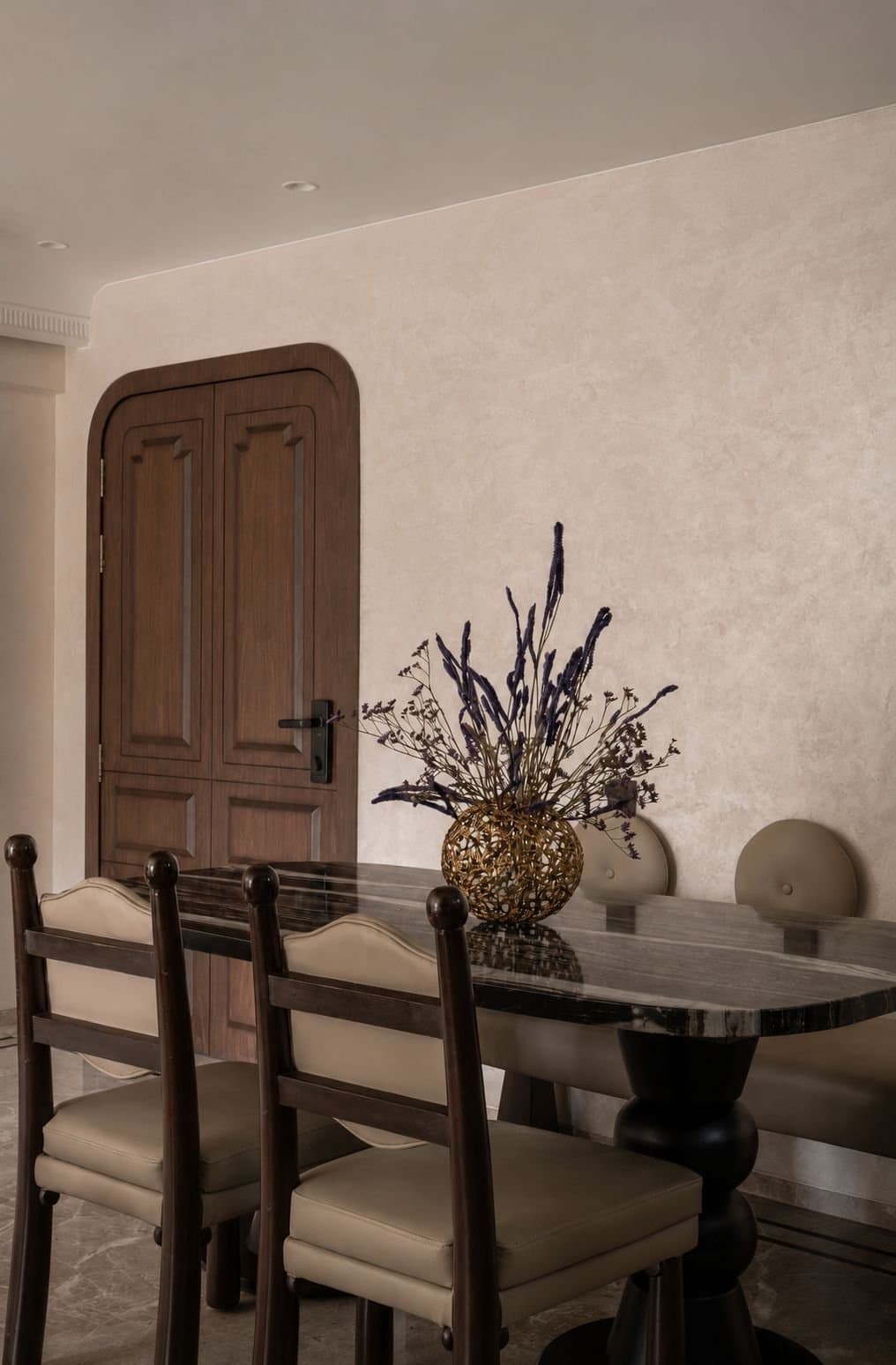
Viewed from the banquette, the dining area highlights the project’s careful balance of materiality and form. A softly textured lime-washed wall provides a muted backdrop to the dark timber arched door, whose panelled detailing introduces depth without demanding attention.
This restrained composition allows the dining table and its sculptural metallic centrepiece to command the space, creating a focal moment that feels both deliberate and understated.
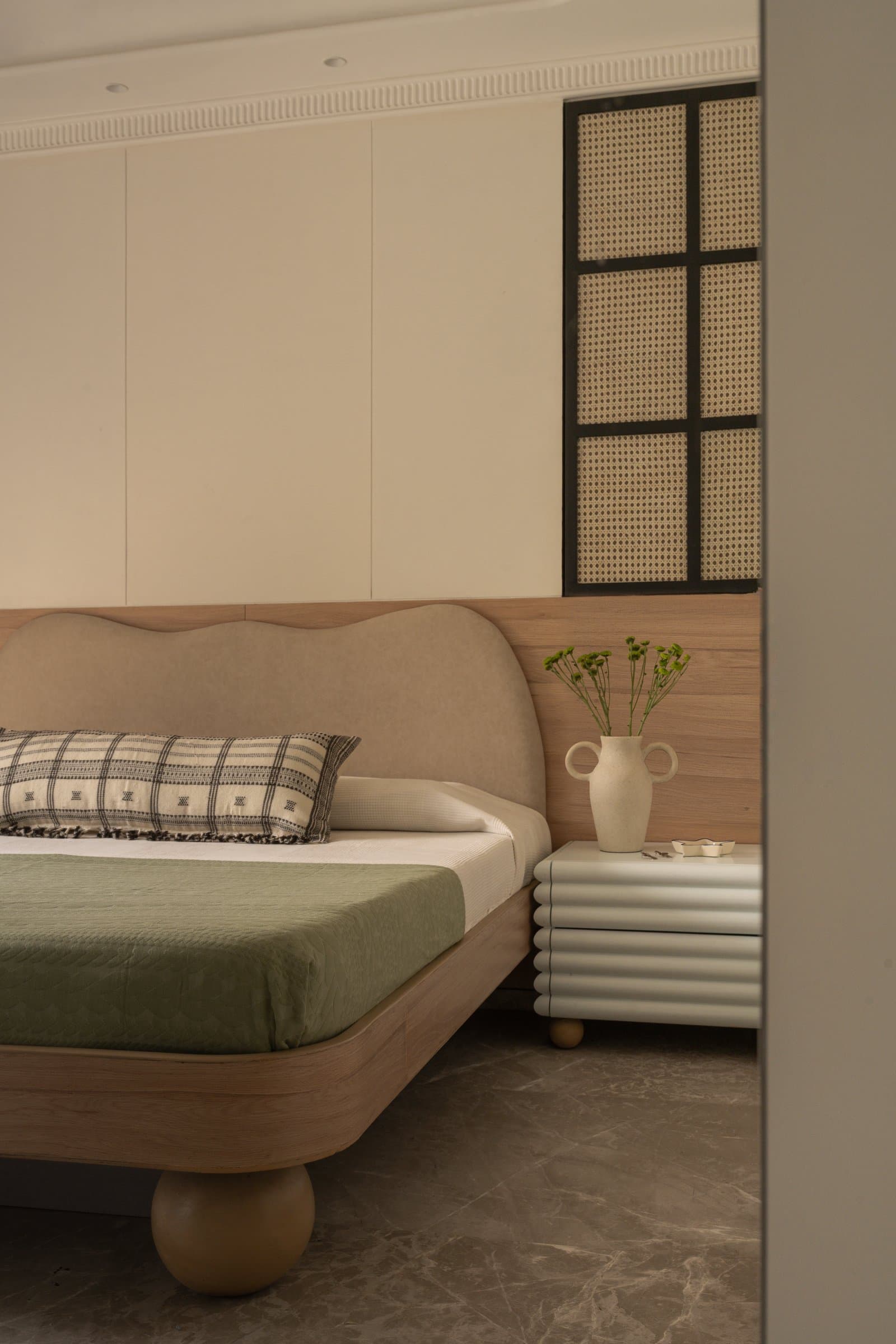
The master bedroom softens the apartment’s material language, embracing a quieter and more tactile atmosphere. The bed, defined by its rounded edges and sculptural spherical feet, introduces a sense of gentle fluidity, while a softly scalloped upholstered headboard rests against a warm timber-clad backdrop. Together, these elements create a composition that feels both inviting and carefully considered.
A woven cane panel framed in black metal is set within the cream-toned wall, adding texture and craftsmanship without disturbing the room’s sense of calm. Restrained in palette yet rich in detail, the space demonstrates how subtle contrasts and thoughtful material layering can create depth, warmth, and a lasting sense of serenity.
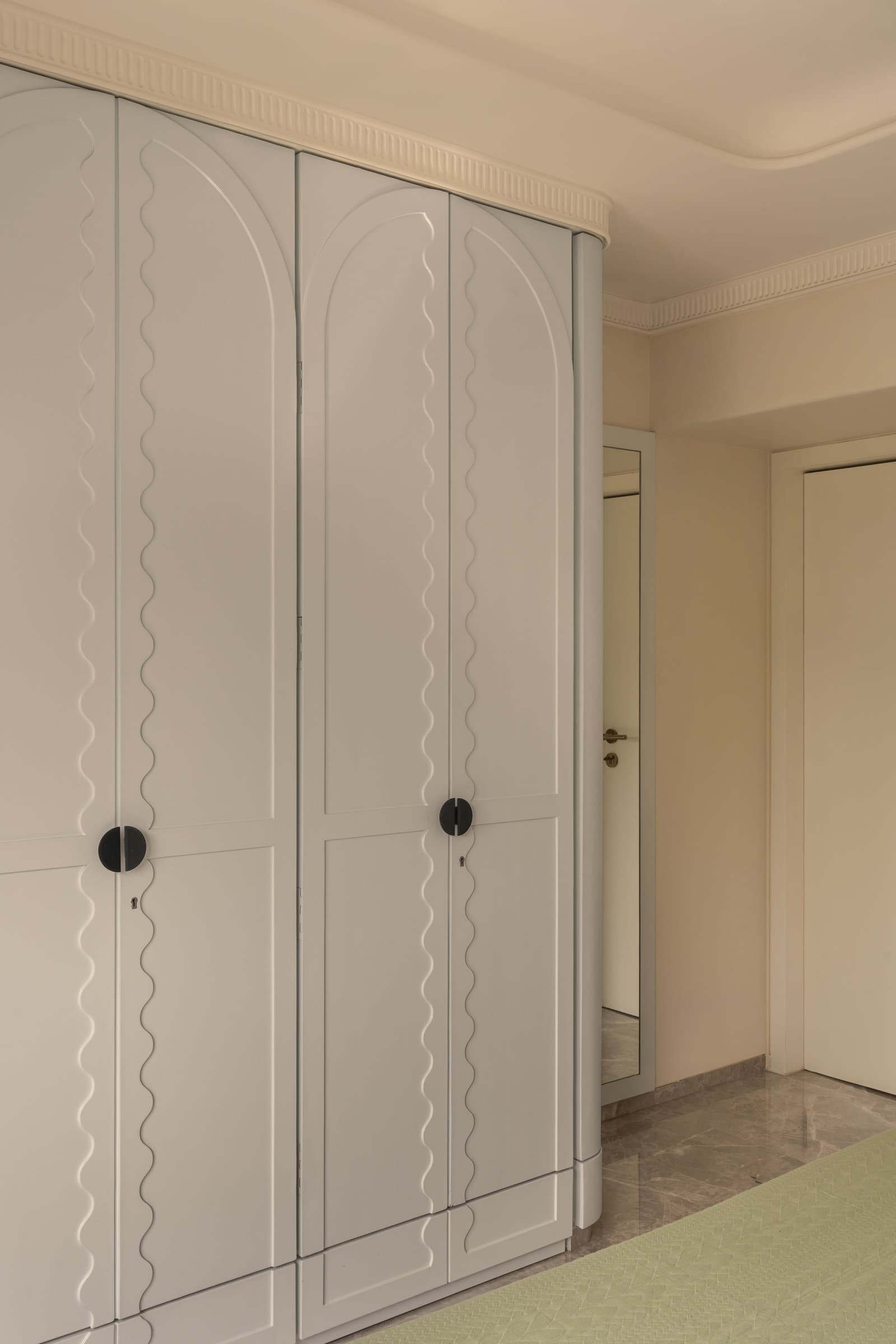
Opposite the bed, a wardrobe wall finished in a chalky off-white demonstrates the project’s restrained approach to ornamentation. Its doors are articulated with a subtle vertical wave pattern in low relief, introducing depth and movement through texture rather than colour or contrast. The result is a surface that feels quietly expressive while remaining firmly within the room’s muted palette.
Above, an arched cornice lends a sense of softness and architectural rhythm, reinforcing the curved forms that recur throughout the apartment. Together, the sculpted detailing and gentle relief transform an otherwise functional element into a refined design feature, proving that texture alone can carry the visual richness often assigned to artwork or decorative accents.
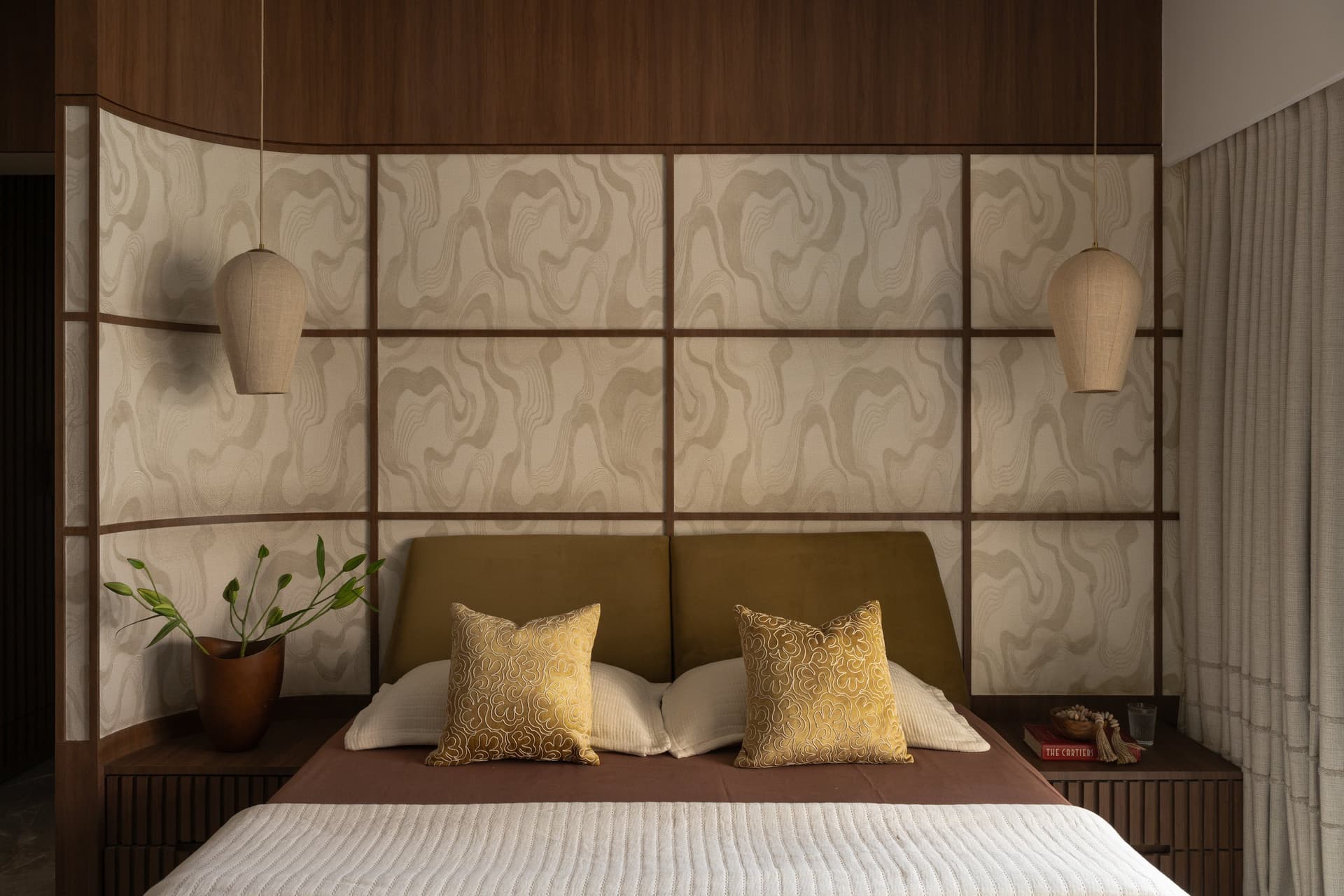
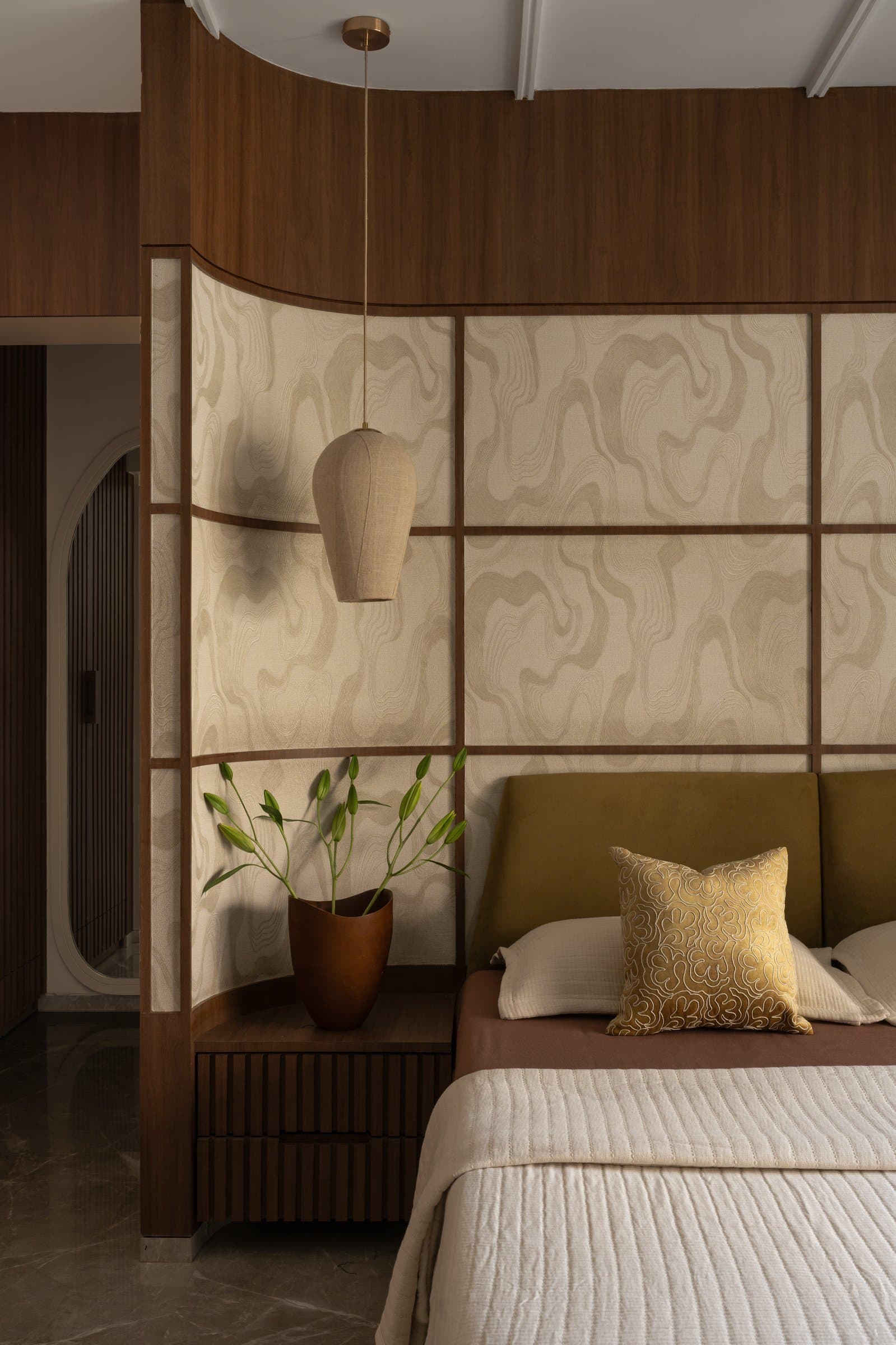
The second bedroom introduces a distinct yet complementary design language, demonstrating the apartment’s ability to vary its character while maintaining overall cohesion. The headboard wall is composed as a series of upholstered panels in a softly marbled cream finish, framed by dark timber elements that lend structure and definition to the composition. The interplay between texture, pattern, and framing creates a backdrop that feels layered without becoming visually heavy.
Replacing conventional bedside lamps, woven jute pendants descend from above, bringing a handcrafted quality and natural warmth to the space. Anchoring the palette is a mustard velvet headboard, whose rich tone introduces a restrained burst of colour, adding depth and personality while preserving the room’s calm and sophisticated atmosphere.
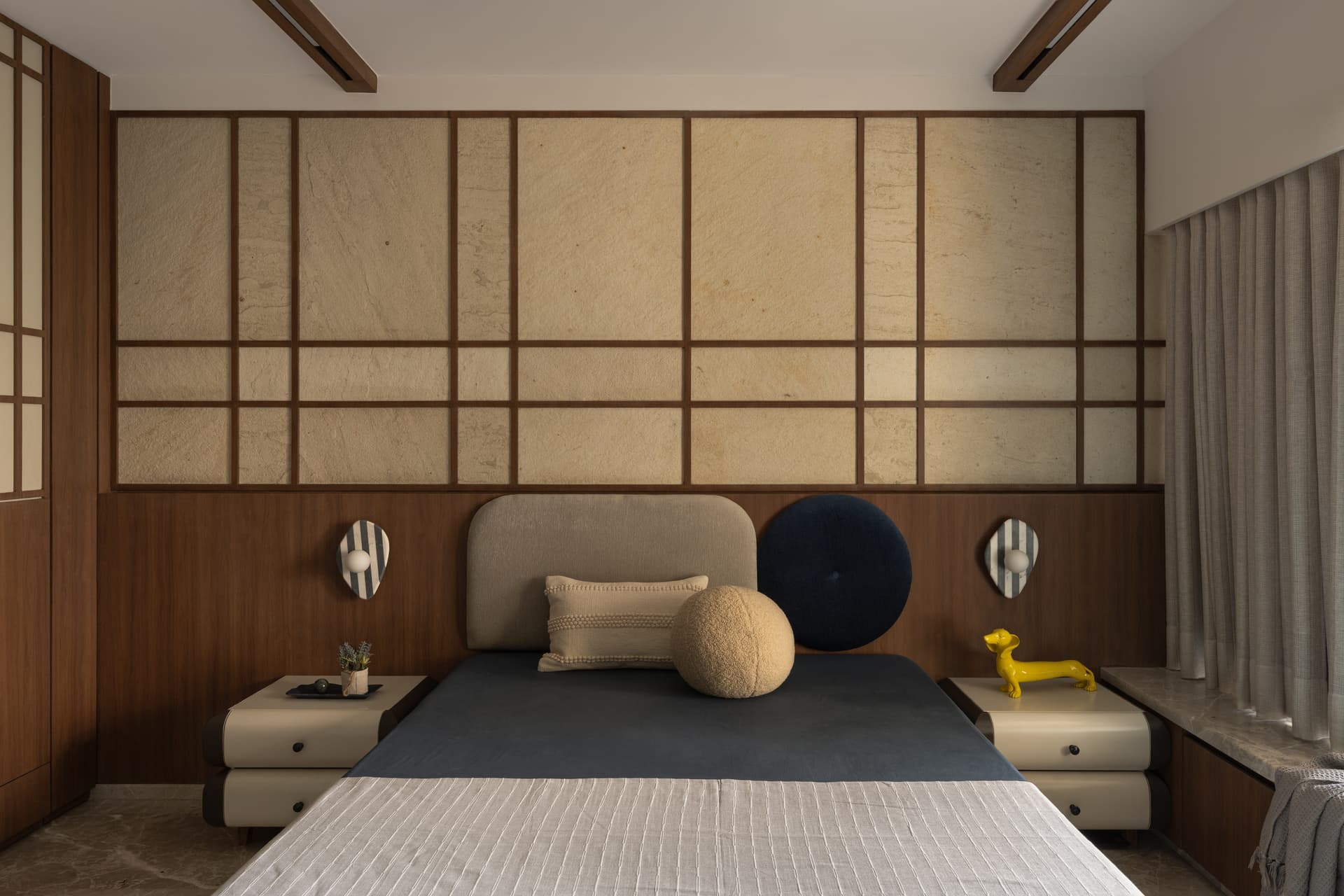
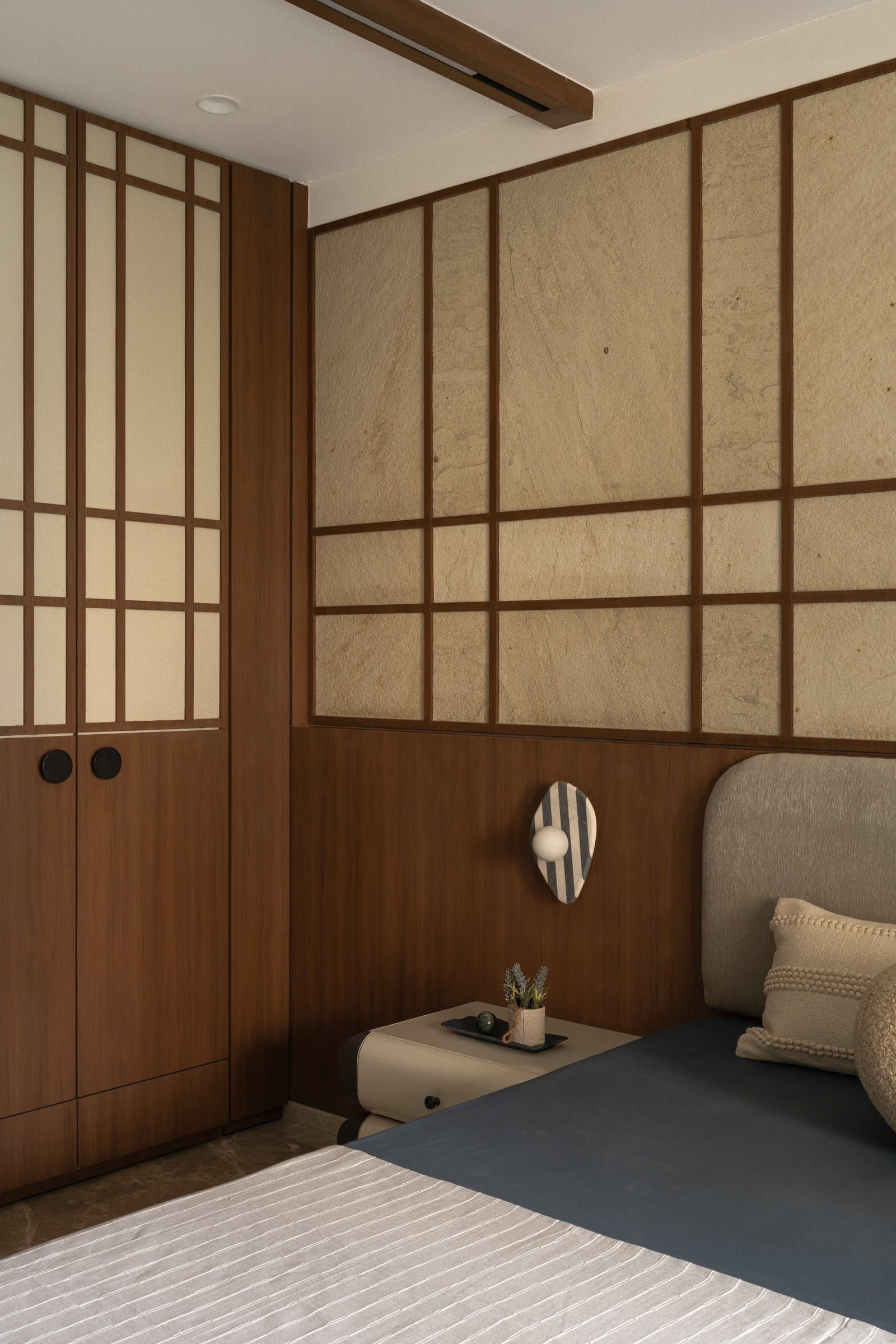
The third bedroom introduces a more playful interpretation of the apartment’s otherwise restrained design language. A carefully composed headboard wall combines pale stone panels framed in walnut, with a softly upholstered cream section below, creating a layered composition that subtly references the order and rhythm of traditional shoji screens without directly replicating them. The result feels graphic yet serene, balancing structure with softness.
Flanking the bed, striped ceramic wall sconces add a touch of whimsy to the space. Their sculptural forms, both abstract and characterful, introduce a lighthearted note that contrasts beautifully with the room’s disciplined geometry. It is a space that demonstrates the project’s confidence in restraint, where visual interest emerges through texture, proportion, and carefully considered details rather than overt gestures.
The philosophy underpinning the home is perhaps best captured in a simple idea: every element has been designed to reveal itself gradually. Rather than relying on immediate impact, the interiors reward closer observation, allowing craftsmanship, materiality, and thoughtful detailing to unfold over time. As the designers describe it, the ambition was to create a home where every detail rewards a second look, but nothing demands the first.
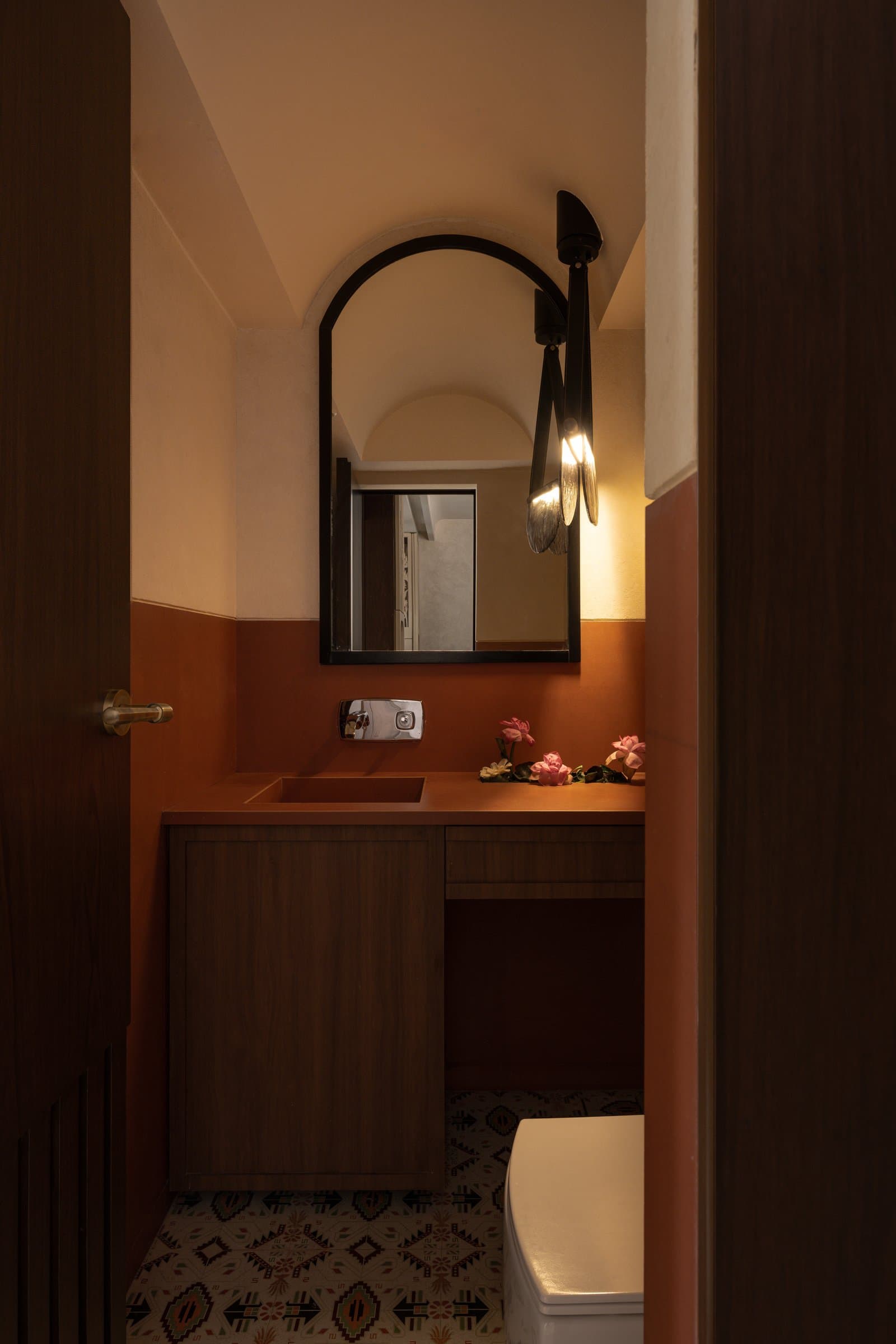
The powder room introduces one of the home’s most expressive moments, embracing a richer and more layered material palette while remaining connected to the overall design narrative. A two-tone treatment pairs soft cream plaster with a deep terracotta base, creating a sense of warmth and visual depth that immediately distinguishes the space from the rest of the apartment. Beneath, a handcrafted timber vanity and patterned encaustic flooring evoke the character and craftsmanship of Mumbai’s historic bungalows, lending the room a subtle sense of nostalgia.
An arched mirror and sculptural black wall sconce bring a contemporary edge to the composition, balancing heritage references with modern detailing. While more dramatic than the apartment’s otherwise restrained interiors, the powder room’s compact scale allows it to function as a distinct spatial experience – a carefully composed moment of character that feels intimate, memorable, and self-contained.
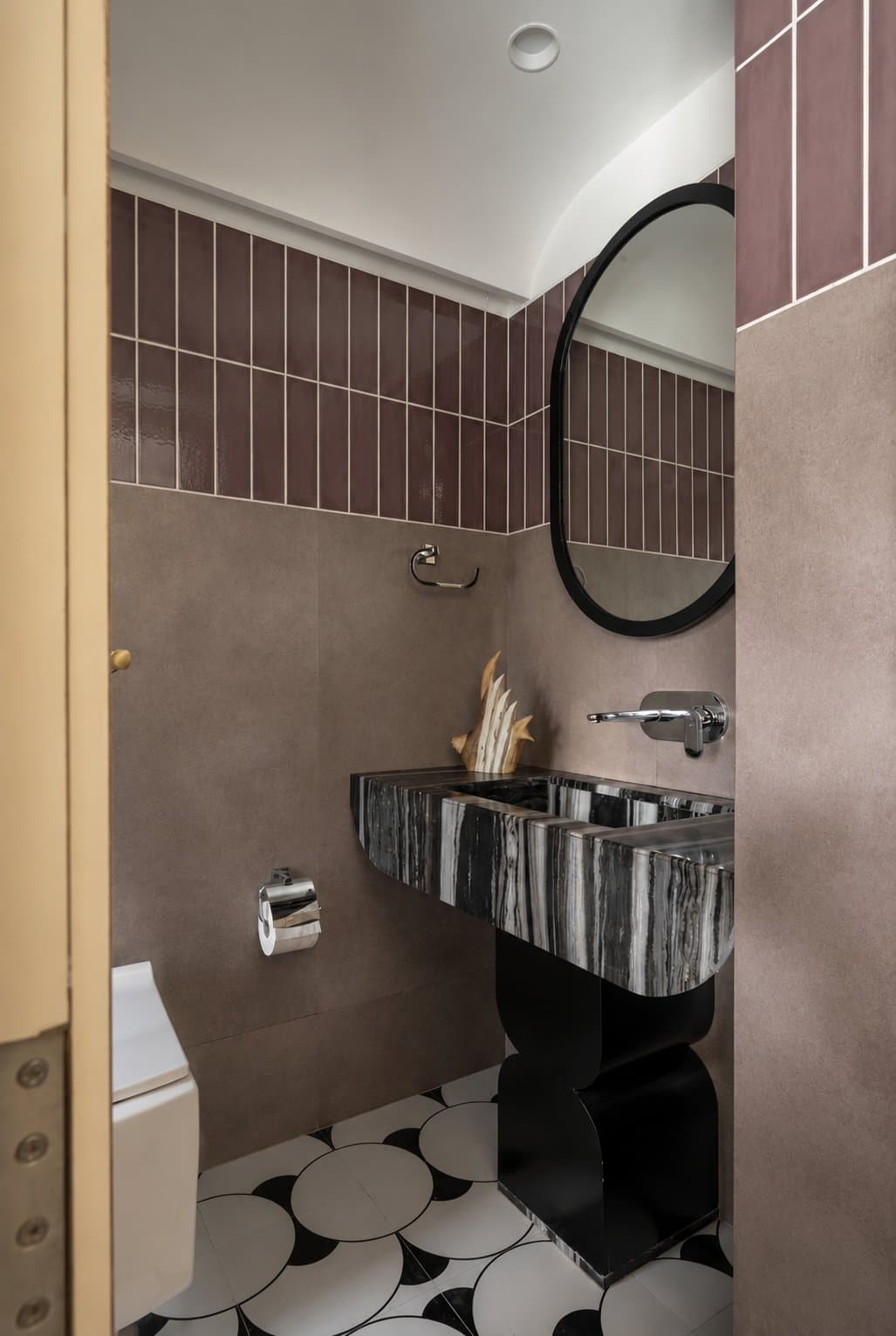
The second bathroom explores a bolder material and colour palette, introducing a distinct identity while remaining aligned with the apartment’s overall attention to detail. Vertical stacks of mauve gloss tiles bring depth and subtle reflectivity to the walls, set against a darker matte backdrop that enhances their richness and creates a layered visual contrast. Underfoot, a graphic black-and-cream circular floor pattern injects rhythm and movement, lending the compact space a strong sense of character.
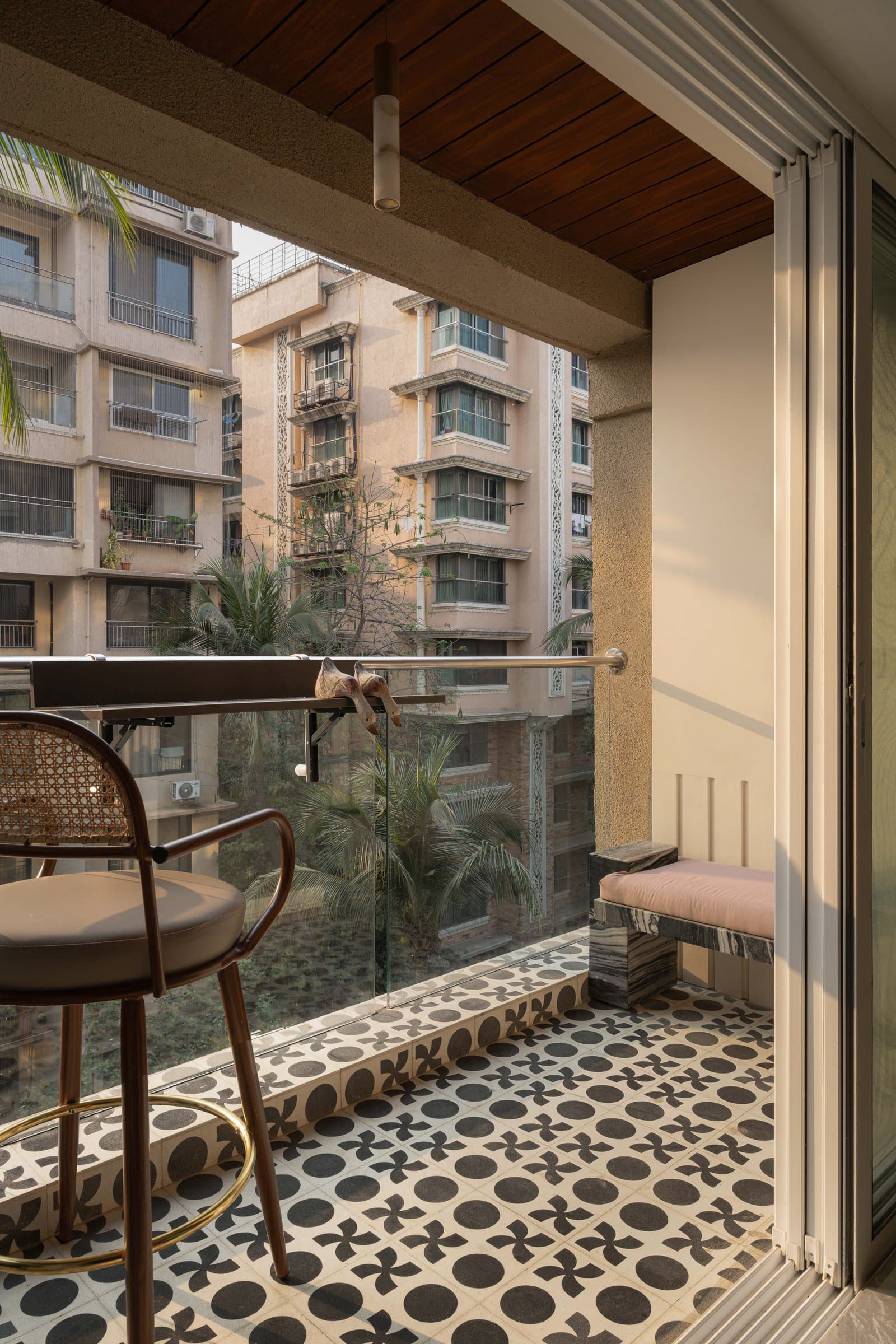
Though modest in scale, the balcony extends the apartment’s carefully considered material language outdoors. The patterned encaustic flooring reappears here, creating continuity with the interior spaces, while a stone-topped ledge and woven cane bar chair establish a quiet corner for pause and reflection. Framed by views of the surrounding residential fabric, the balcony connects the home to the everyday rhythm of suburban Mumbai, grounding the interiors within their urban context.
What makes Project Shibui particularly compelling is not the introduction of dramatic gestures, but the discipline with which every design decision has been made. Within a typology that Mumbai produces in abundance, the project demonstrates how thoughtful planning, refined material choices, and carefully calibrated details can transform a compact apartment into a space of remarkable warmth and character. References to Japanese principles of simplicity and balance are felt rather than stated, while handcrafted elements, textured finishes, and sculptural forms add depth without overwhelming the composition.
The result is a home that feels quietly confident and deeply personal. Rather than relying on a single statement feature, its strength lies in the cumulative effect of many considered decisions, each contributing to an atmosphere of calm, order, and permanence. In Project Shibui, restraint becomes a design tool in itself, proving that a home does not need to be loud to leave a lasting impression.