Some homes are designed to look new. Others are designed to look as though they have already lived a long life by the time the family moves in. Vintage Vibrance, a 6,000-square-foot residence in Chennai, belongs firmly to the second category, and the conviction behind it is what gives the home its unusual emotional weight.
Designed by Studio one by zero, the project was conceived as a quiet negotiation between modern restraint and traditional richness. Stone takes precedence over wood and MDF panelling. False ceilings have been intentionally avoided wherever possible, allowing the architecture to breathe at its natural height. The result is a home that feels less curated than gathered, as if every material has been allowed to settle into its place over time.
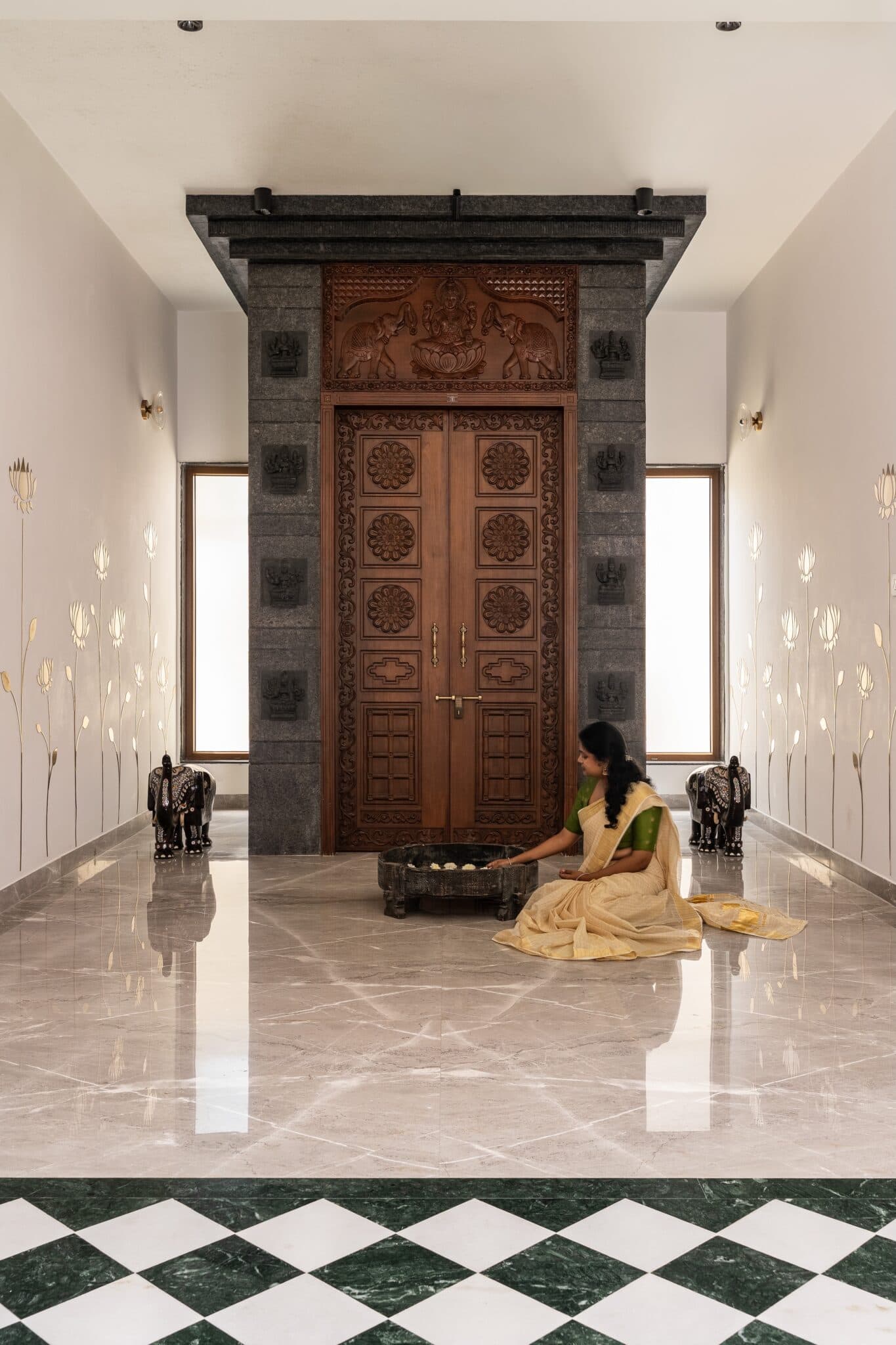
The experience begins at the foyer, where an elegant composition of green and white marble inlay sets a refined tone for the home. From the outset, the design consciously moves away from excessive wood or MDF panelling, allowing stone, texture, and materiality to take precedence. Throughout the residence, false ceilings have been deliberately minimised, preserving the original height and architectural volume of the spaces.
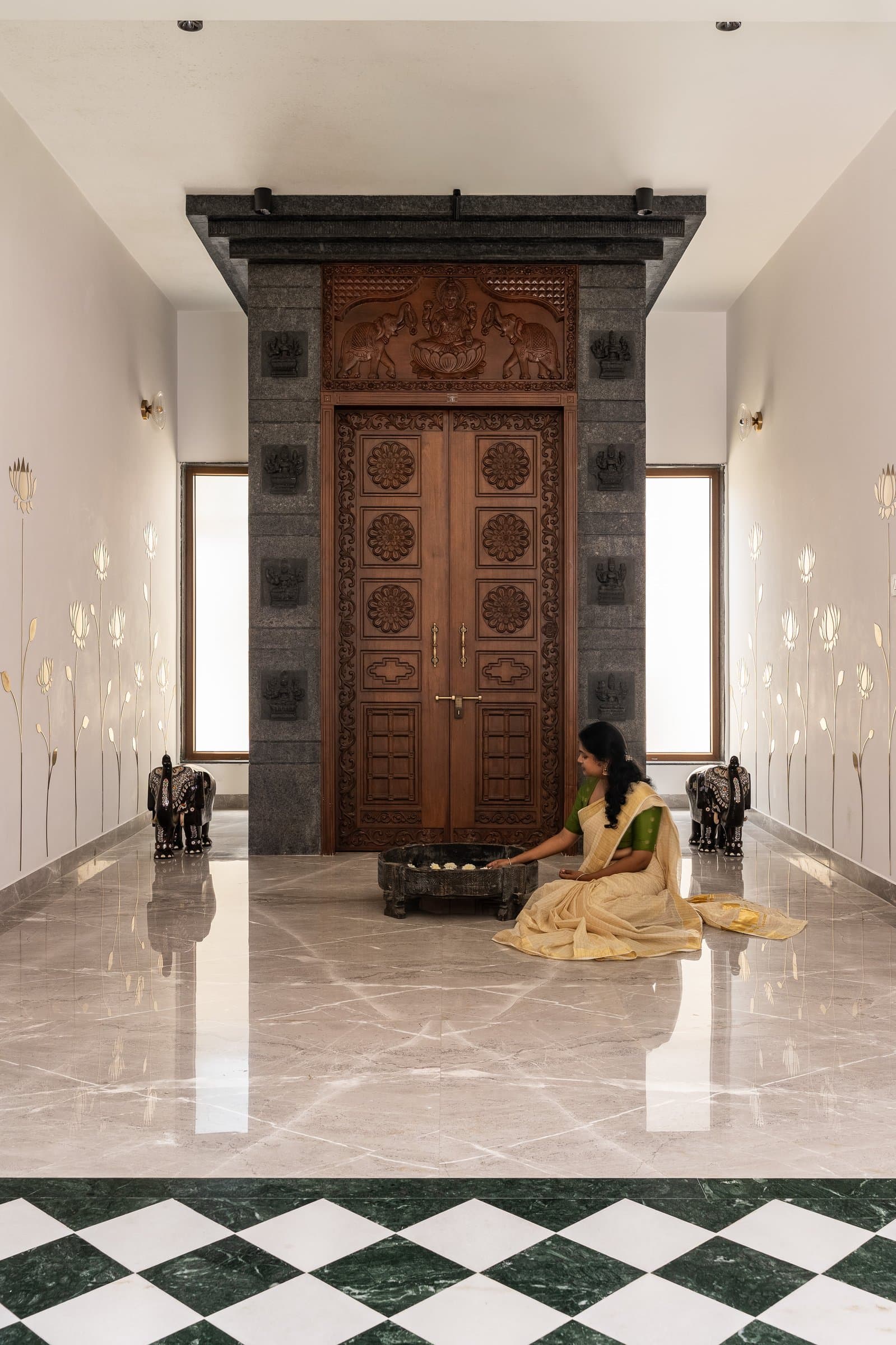
At the home’s spiritual centre, the puja room is treated with the gravity of a small temple. A carved teak door framed in granite, with Ashtalakshmi figures rendered in relief and brass detailing along the threshold, opens onto a polished marble floor. The lotus motifs that climb the flanking walls in pale brass inlay extend the threshold into the surrounding space, and the room reads as architecture, not as ornament.
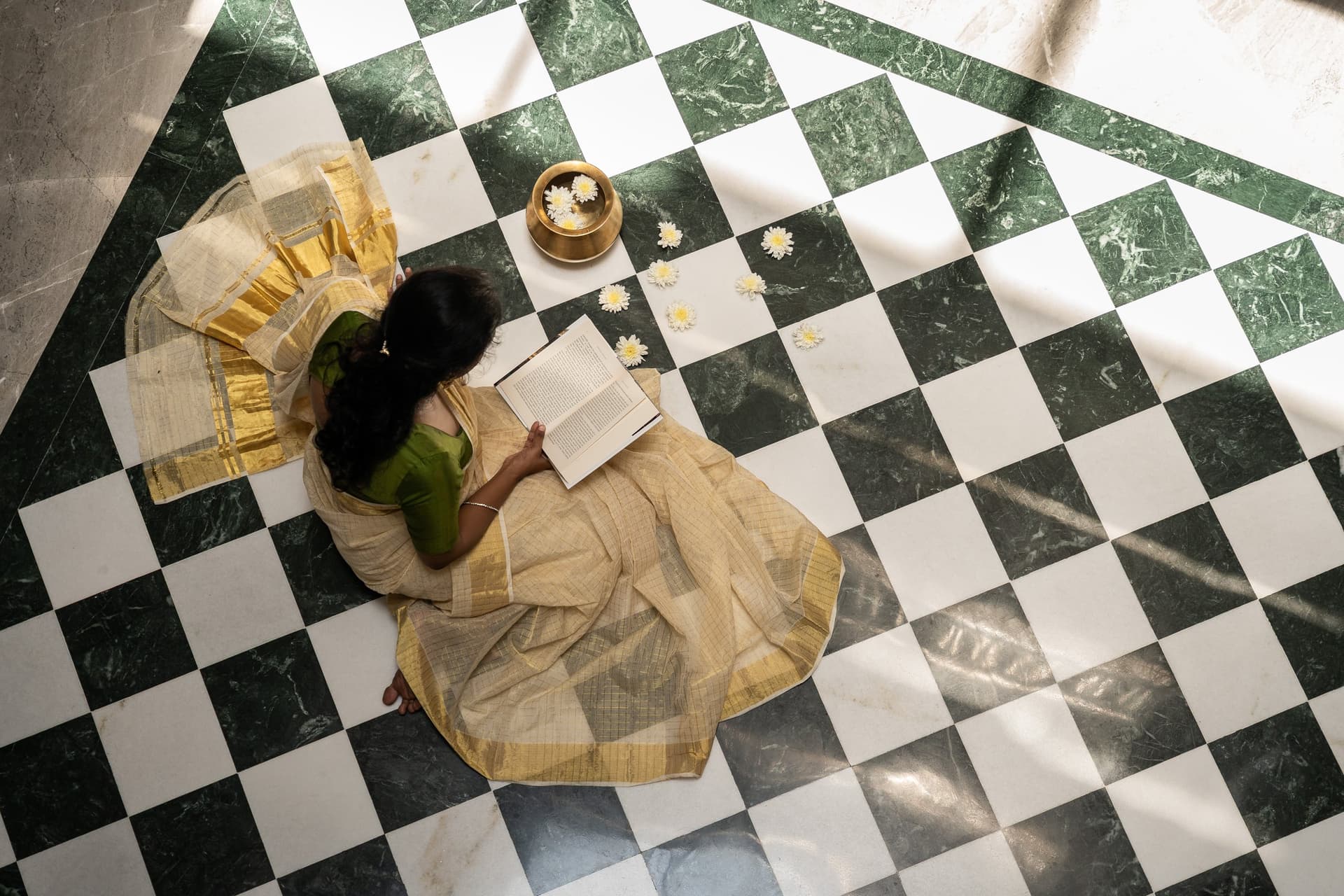
The floor itself is the home’s most unexpected gesture. At the foyer’s edge, the marble breaks into a checkerboard of deep green and white, a pattern more often associated with European entry halls reinterpreted here in stone that feels indigenous. Light moves across it through the day, and the courtyard’s intentional emptiness allows that light to remain the room’s only event.
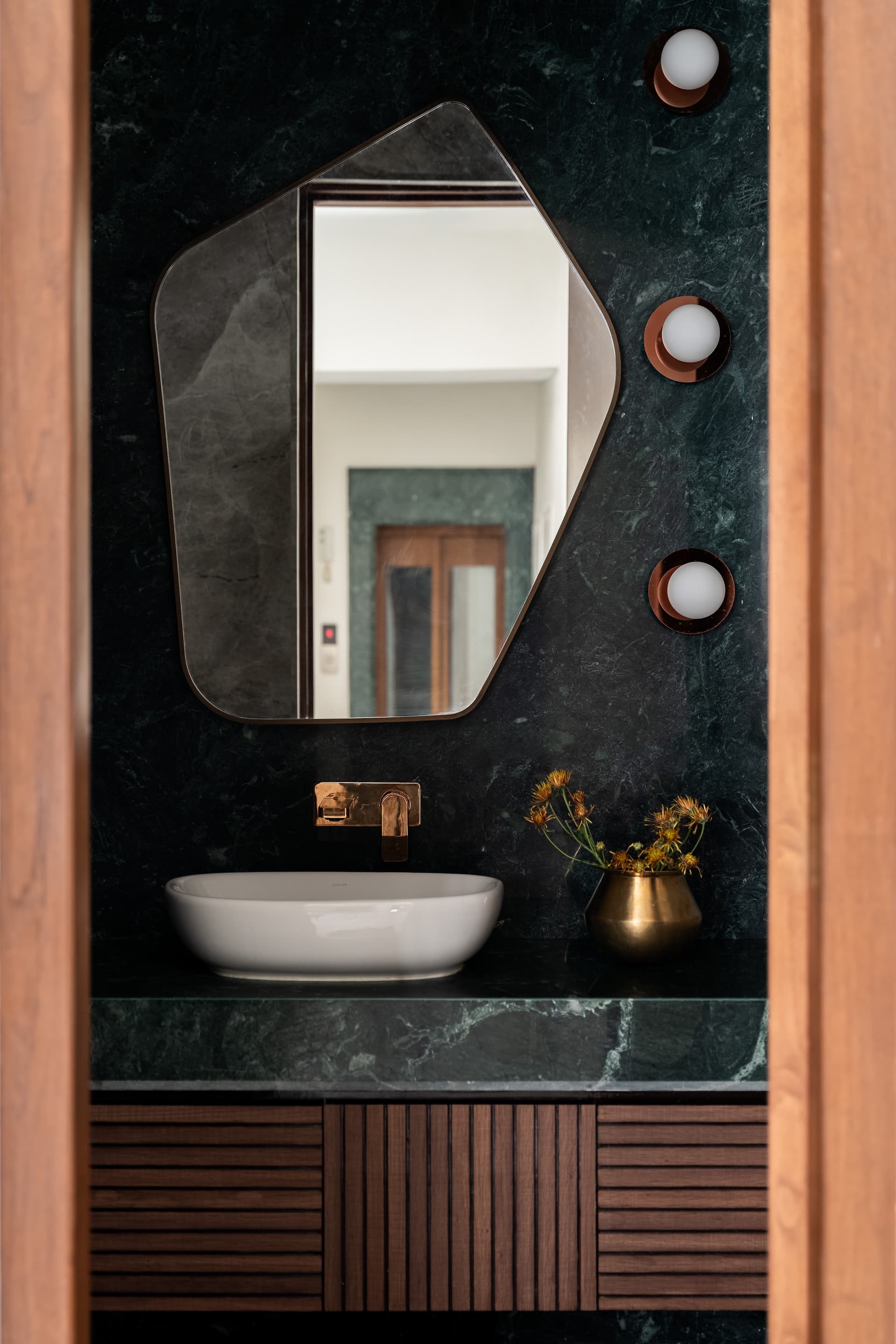
Moving further into the home, the powder room introduces a dramatic shift in mood – dark, intimate, and enveloped in richly veined green marble that lends the compact space a cocoon-like quality.
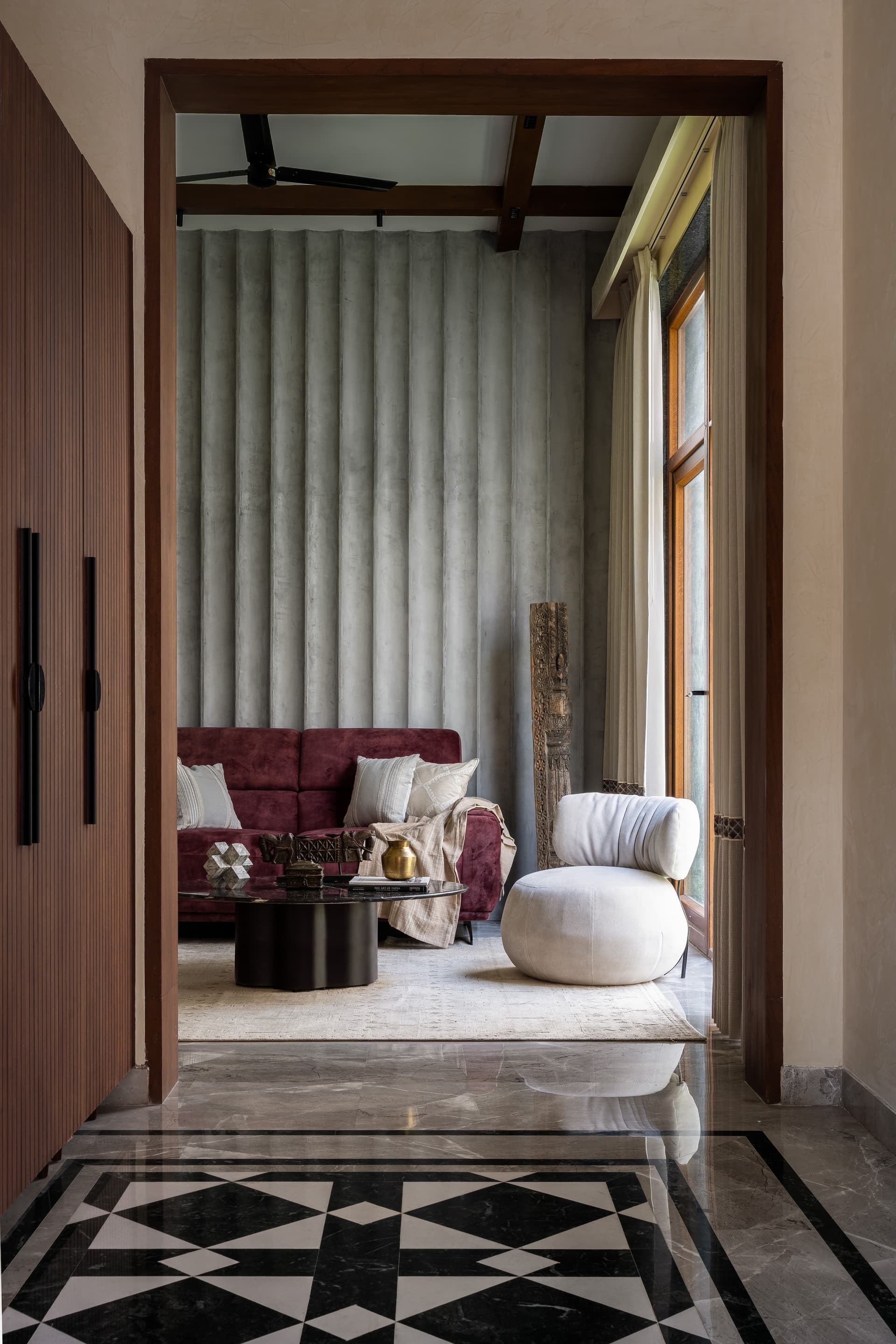
Stepping into the living room, a grey fluted concrete wall panel creates a striking sculptural backdrop, introducing depth and a sense of quiet drama to the space. This raw, contemporary surface is balanced by a bold wine-coloured sofa that brings warmth, richness, and visual contrast into the composition.
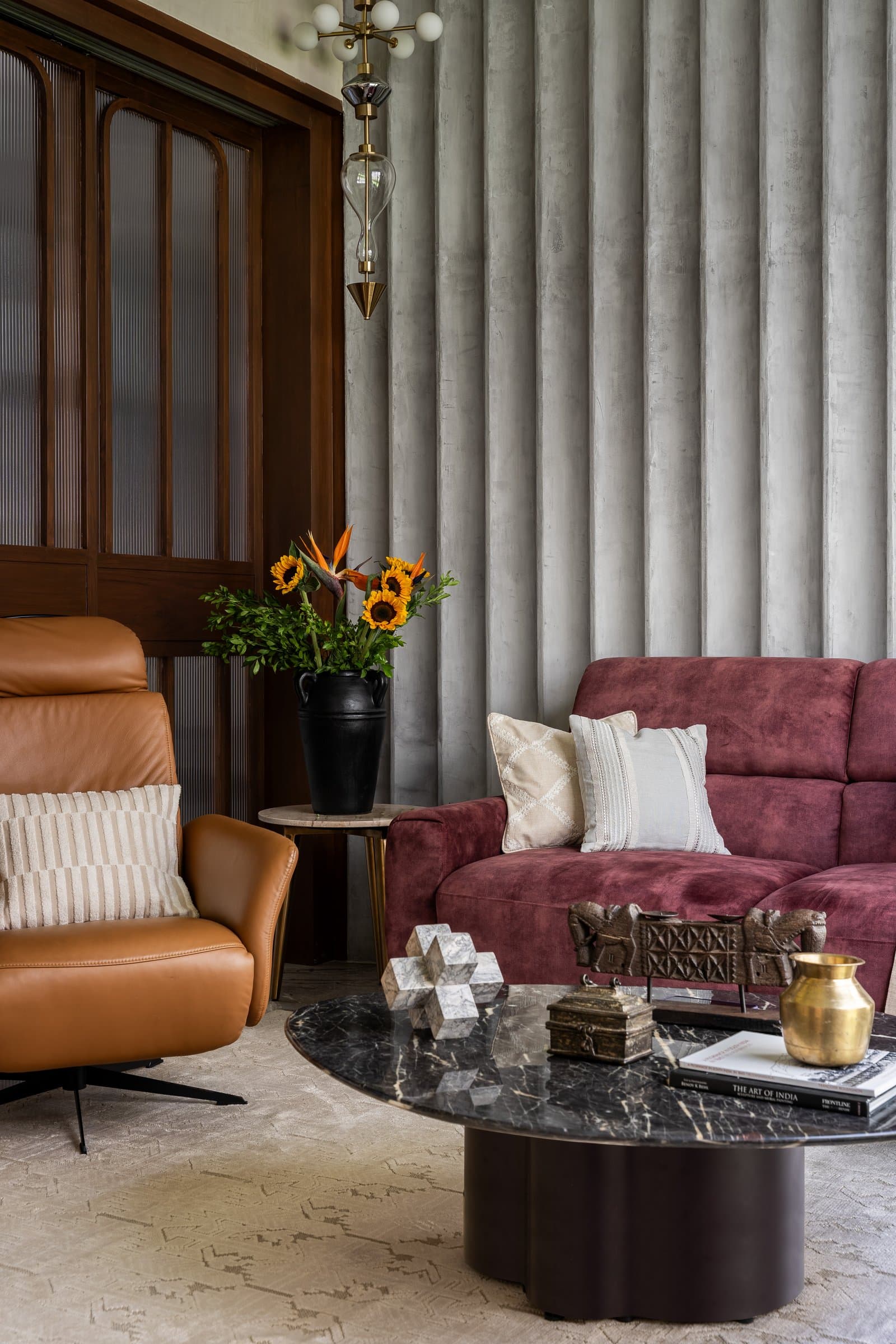
A sliding partition further enhances the flexibility of the space, allowing it to transition seamlessly between openness and privacy depending on the rhythm of daily life.
““There is a conscious move away from excessive wood or MDF panelling, stone and texture take centre stage.””
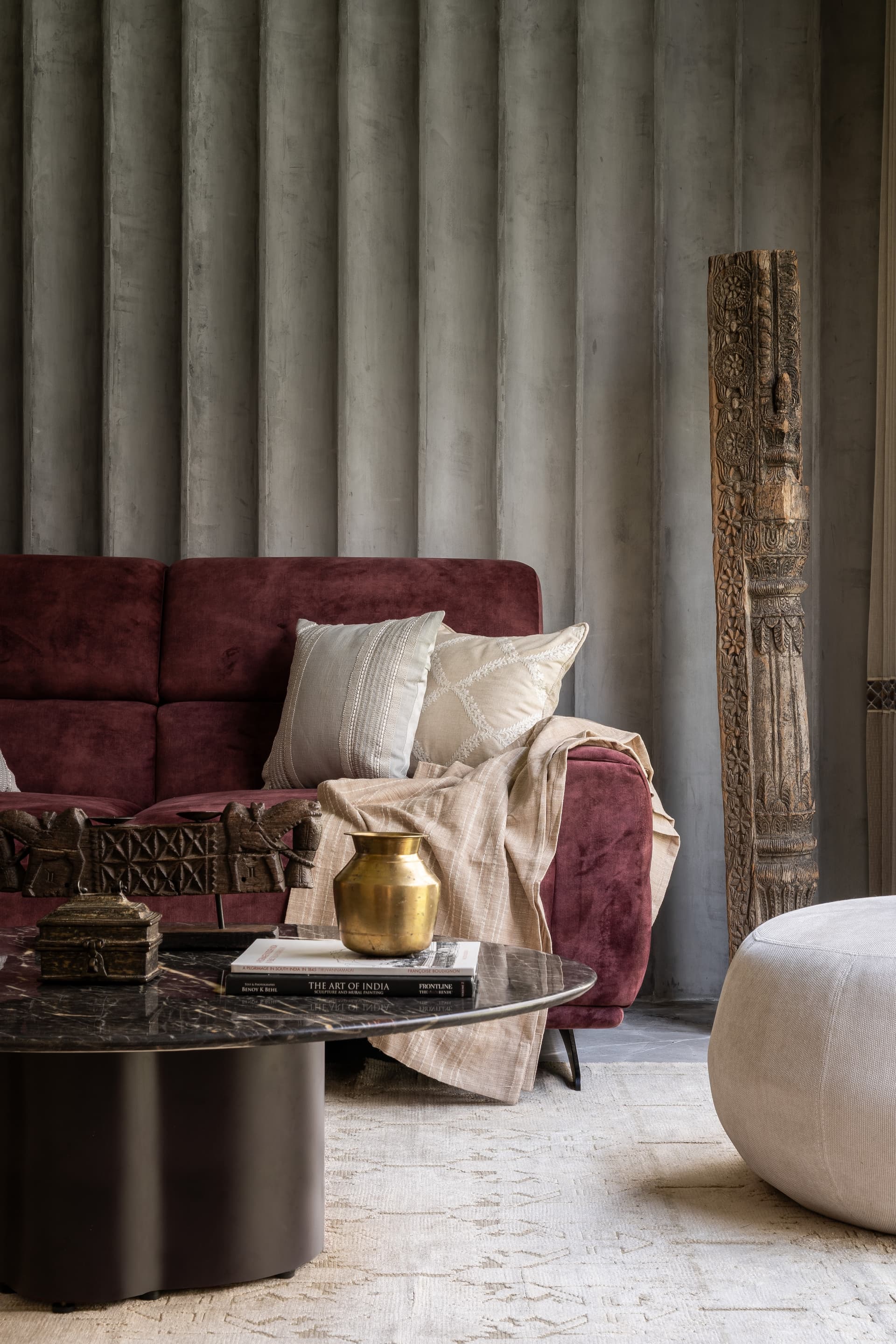
The detail tells the story most clearly. An antique carved column, weathered and full of incident, stands sentinel beside the smooth modern concrete, and the conversation between the two is what the room is actually about. Tradition is not framed here as decoration; it is placed at full height, at full weight, and asked to share the space on equal terms with the contemporary.
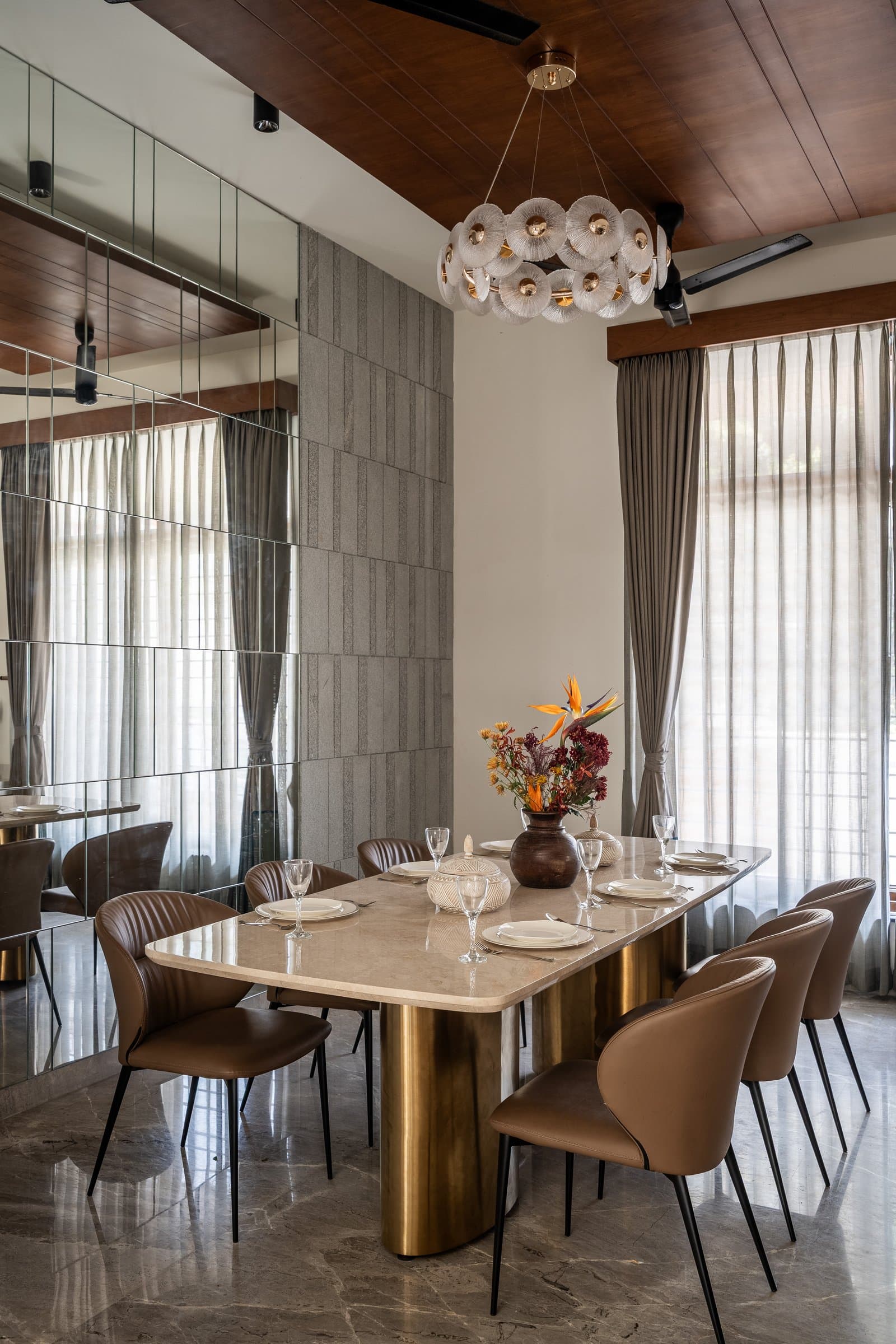
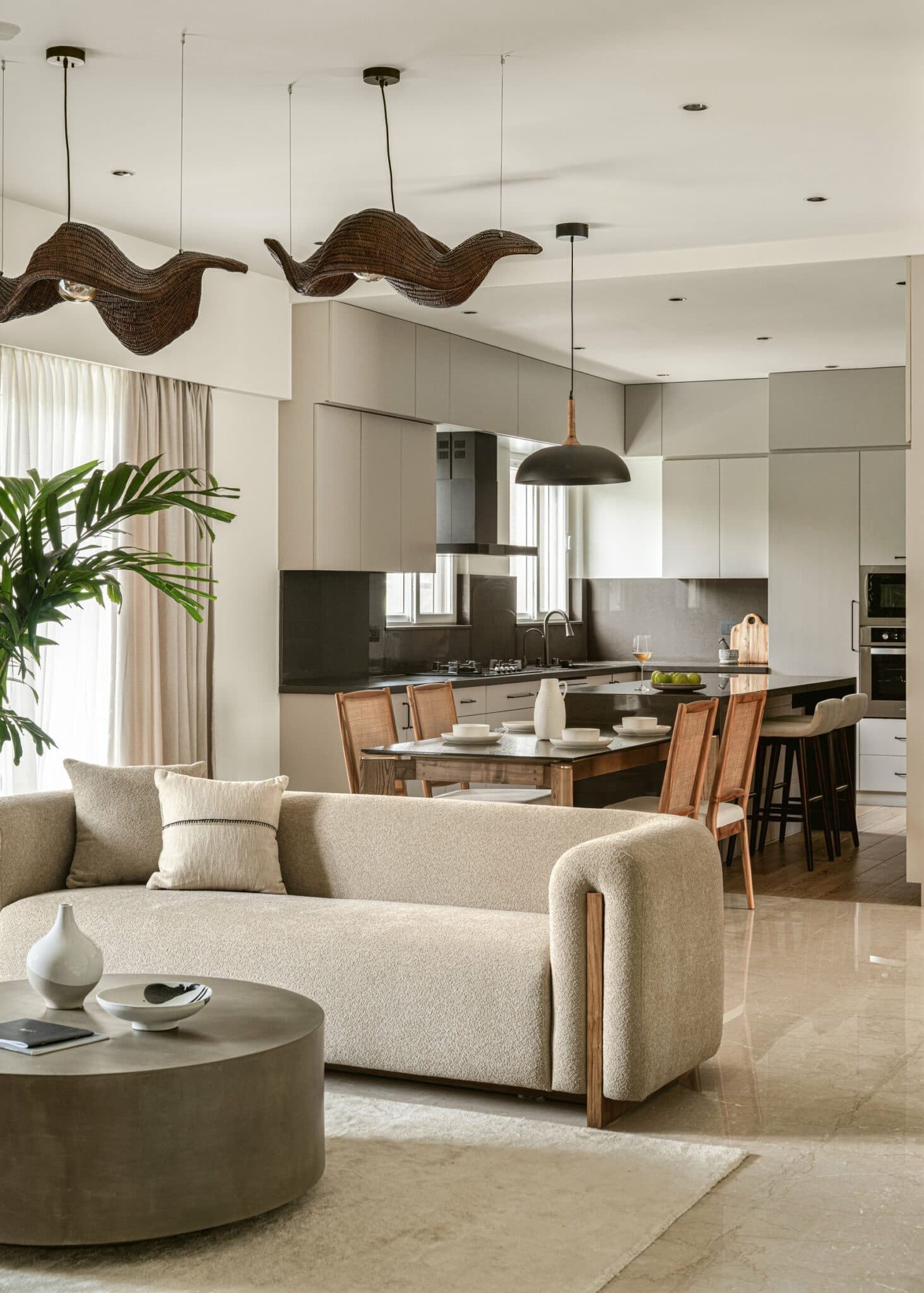
The dining room continues the material logic but plays it differently. A pale travertine table on a brass-clad pedestal anchors the space, surrounded by leather-backed chairs the colour of saddle and tobacco. A floral chandelier of pleated discs hovers above, and a mirrored wall to one side doubles the room’s volume without doubling its visual noise.
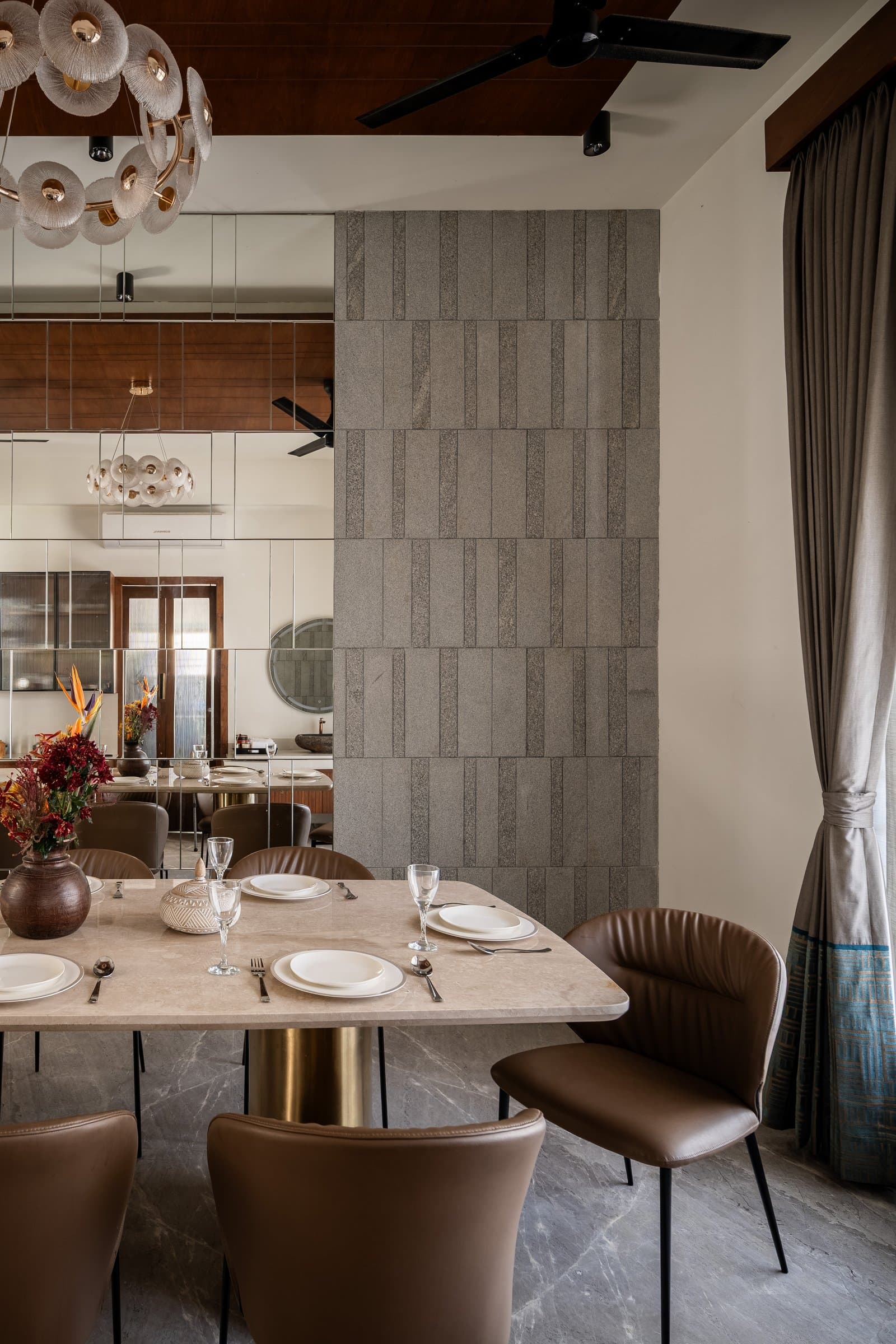
The wall cladding introduces mass exactly where the mirror dissolves it, and the result is a room that holds heaviness and lightness in deliberate tension. A timber-clad ceiling above completes the gesture, pressing warmth down onto the cool grey floor.
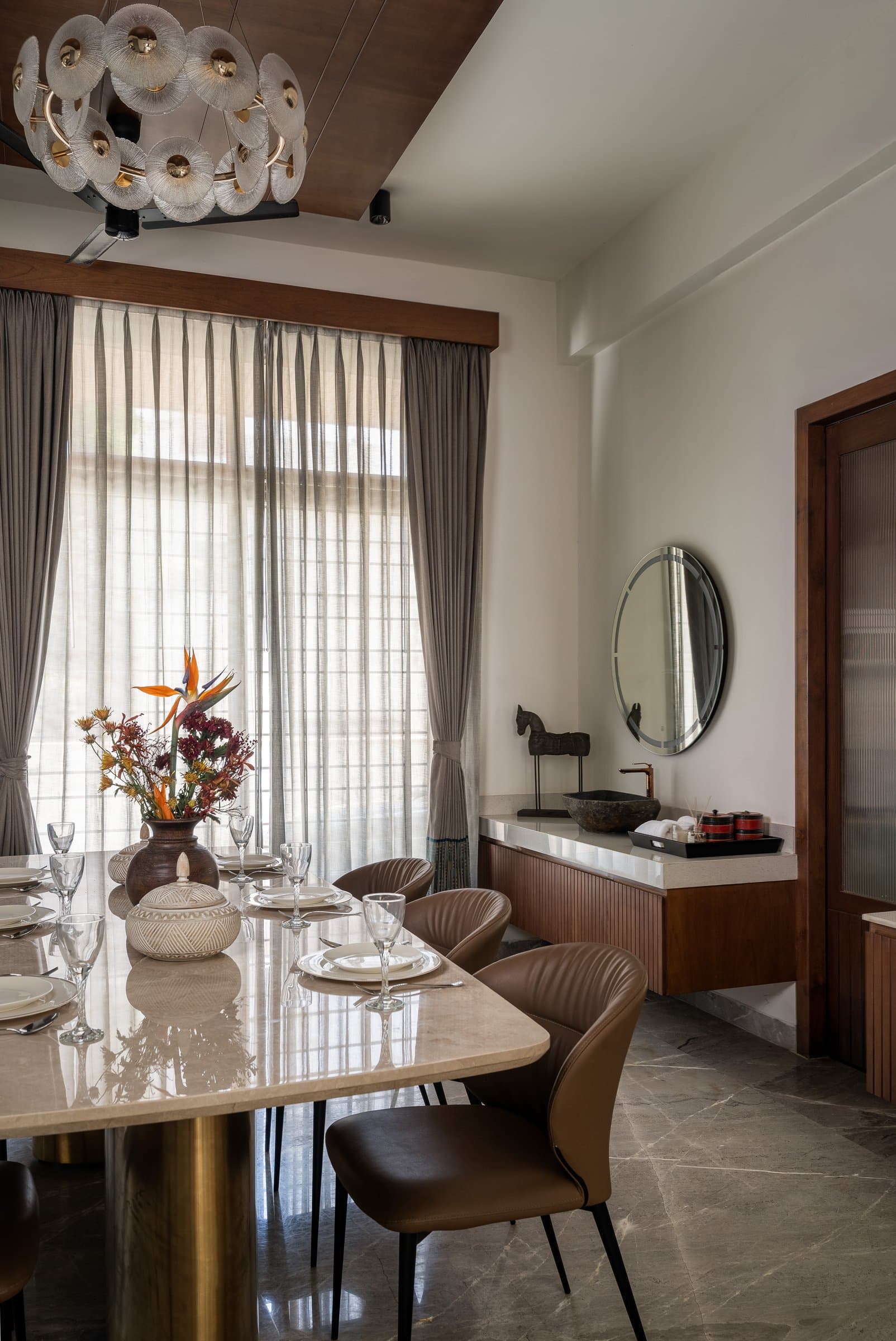
A floating console with a stone-bowl basin sits against the wall, framed by a circular mirror and a small carved horse on a plinth. Sheer curtains soften the daylight without filtering it out, and the room settles into a register of unhurried hospitality.
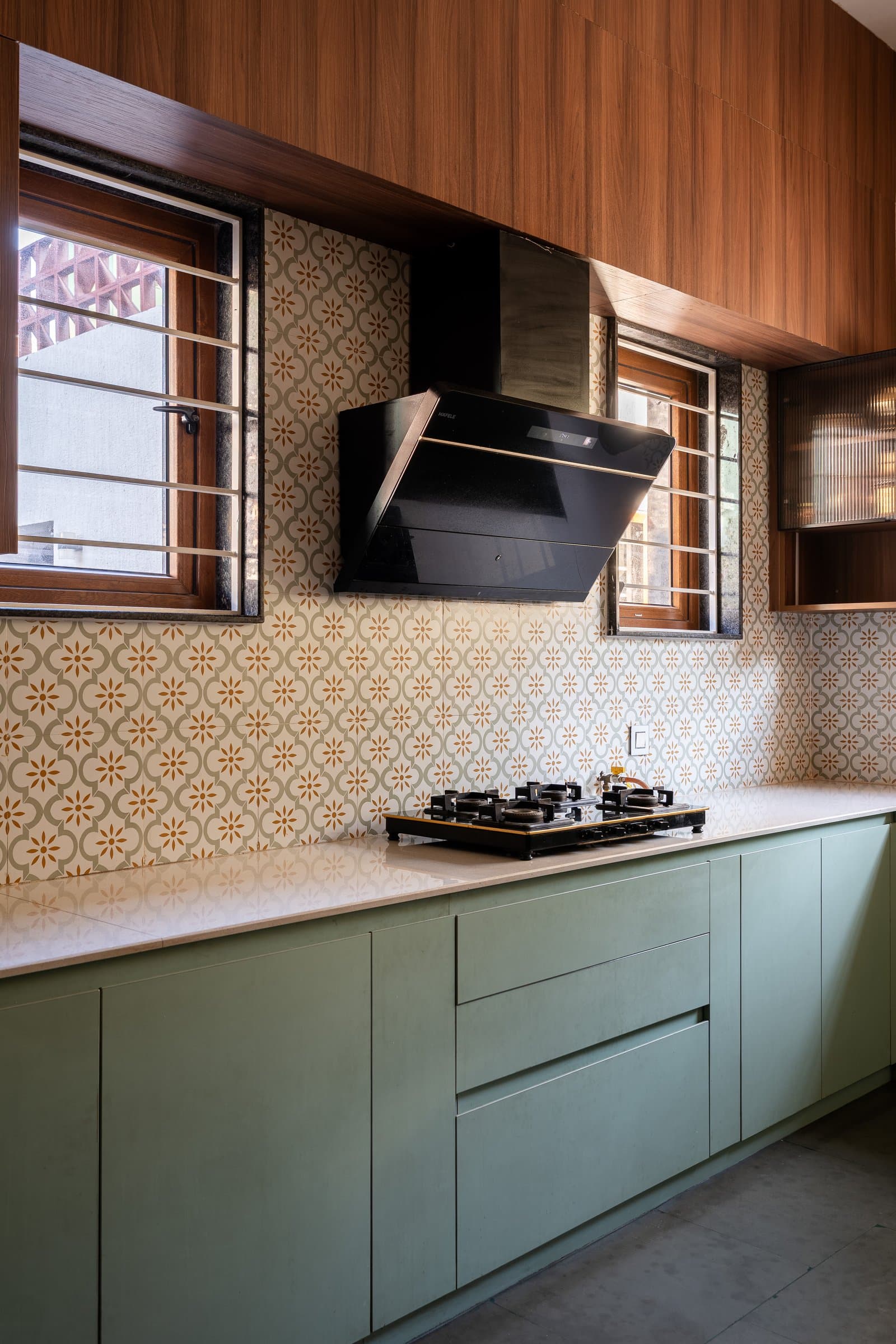
The kitchen takes the home’s restraint and pushes it gently toward play. Sage-green cabinetry runs in a clean linear band beneath a backsplash of patterned encaustic tile, the small ochre florals lending the room a rhythm without crowding it. Wooden upper panelling closes the composition, and the result feels less like a service kitchen and more like a working room with a clear point of view.
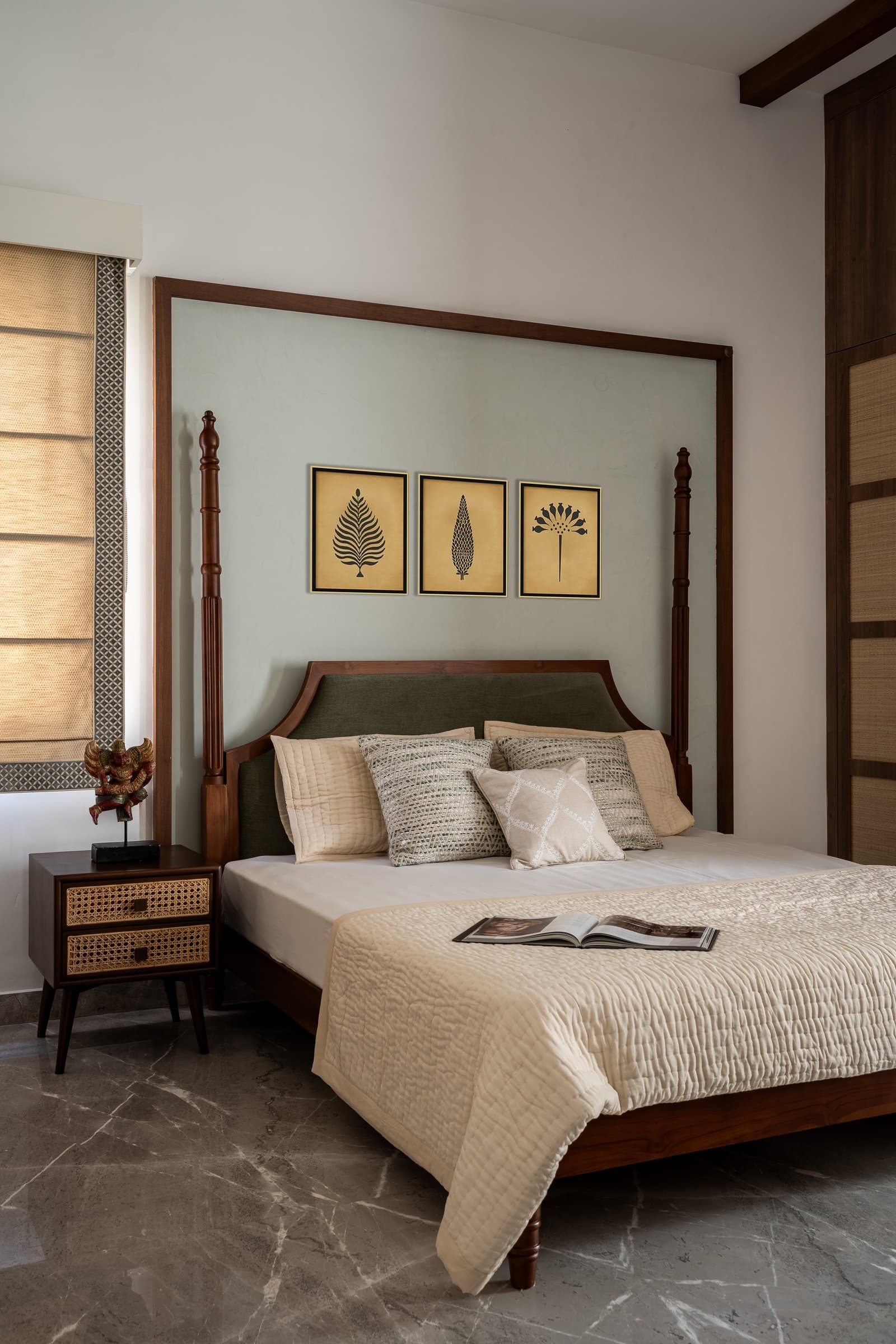
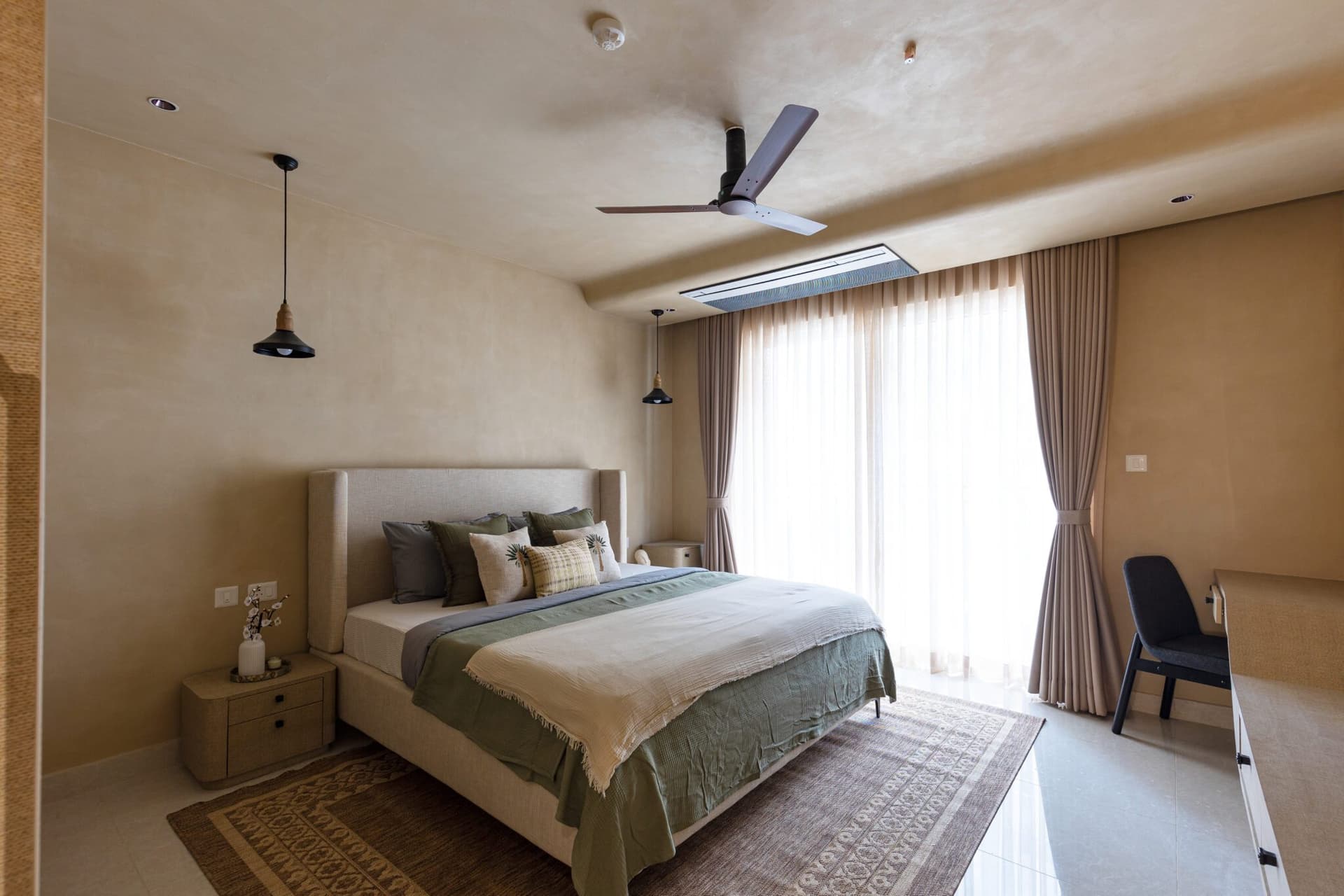
Upstairs, the home becomes quieter and more personal. The master bedroom is built around a tall two-poster bed in dark wood, its turned posts and gently arched headboard set against a sage-tinted plaster panel framed in timber. Three botanical prints in gold sit at the centre of the composition, their ochre grounds catching what light the room allows.
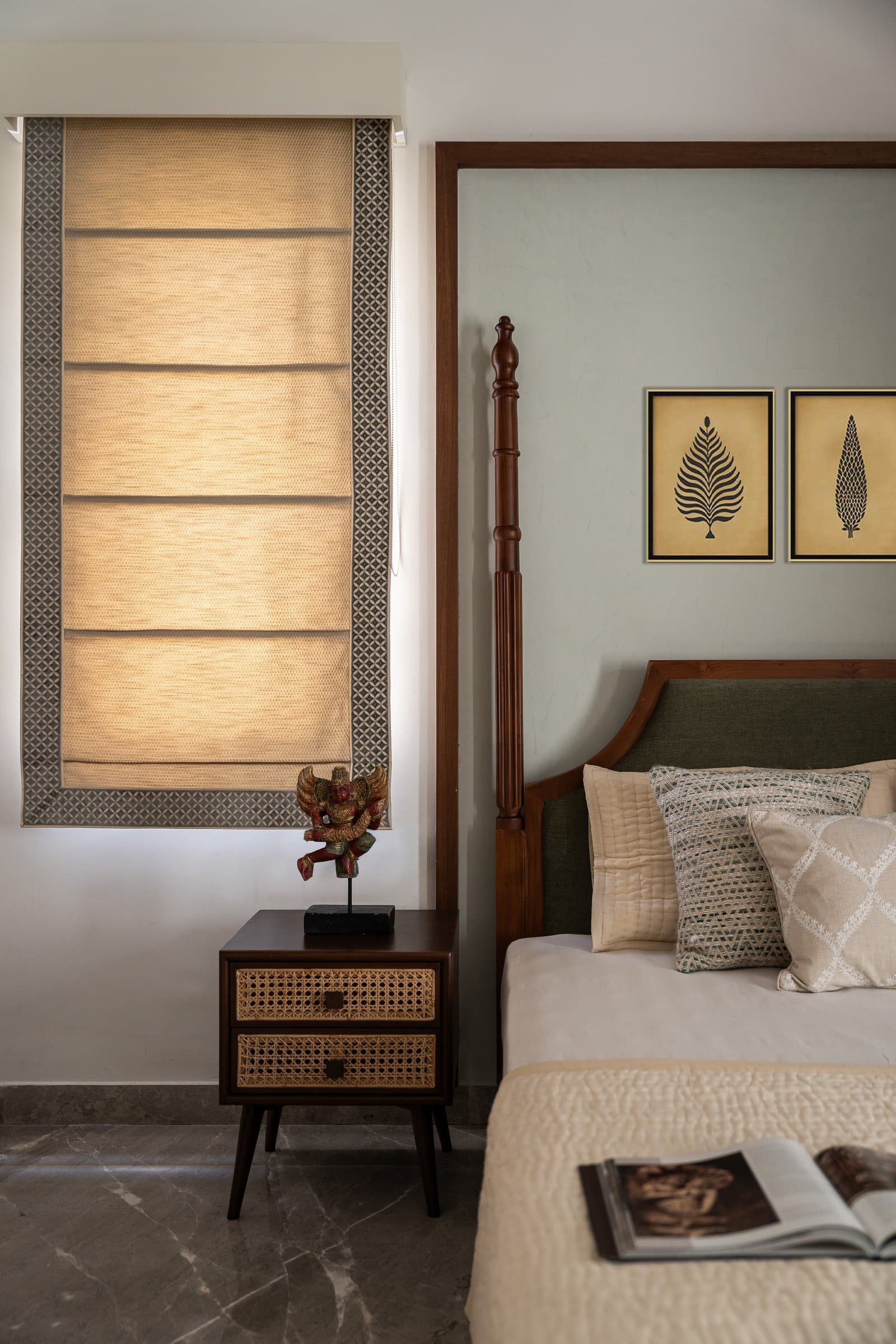
Beside the bed, a cane-fronted nightstand and a fabric Roman blind with patterned trim soften the room’s geometry, and a small painted figurine on a plinth introduces a flicker of colour. The room does not insist on its mood; it simply holds one.
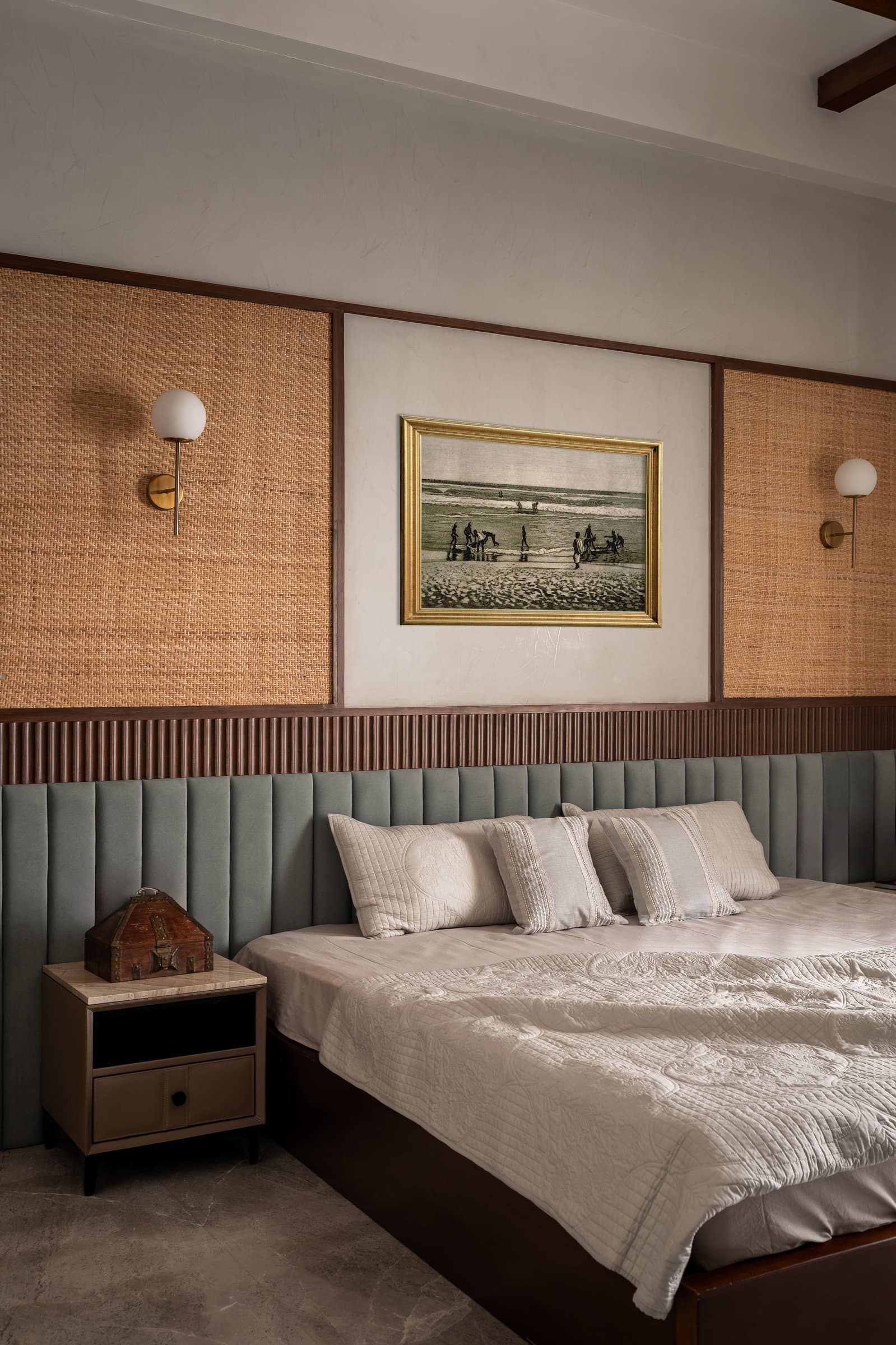
A second bedroom takes a different approach to the same calm. Here, woven cane panels frame a central artwork on either side, set above a band of fluted dark wood and a channel-tufted upholstered headboard in muted sage. Two brass wall sconces with milk-glass globes complete the composition, and the layered horizontal bands give the room a sense of architectural order rare in a sleeping space.
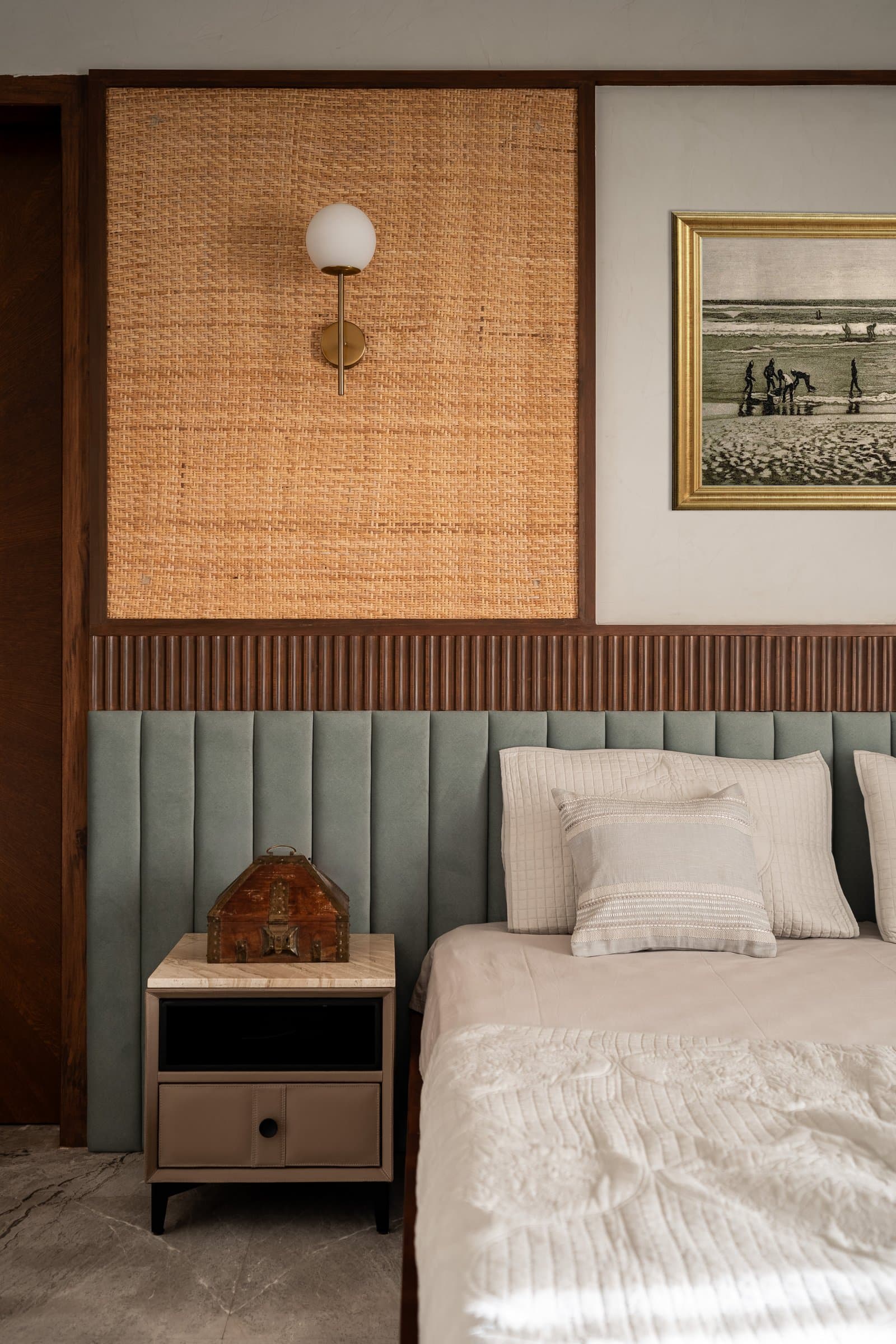
The detail of the same room shows how carefully it has been resolved. The cane panel, the fluted wood ribbon, the upholstered fluting, and the small bedside table with a stone top arrange themselves in successive layers, each material distinct and none of them shouting.
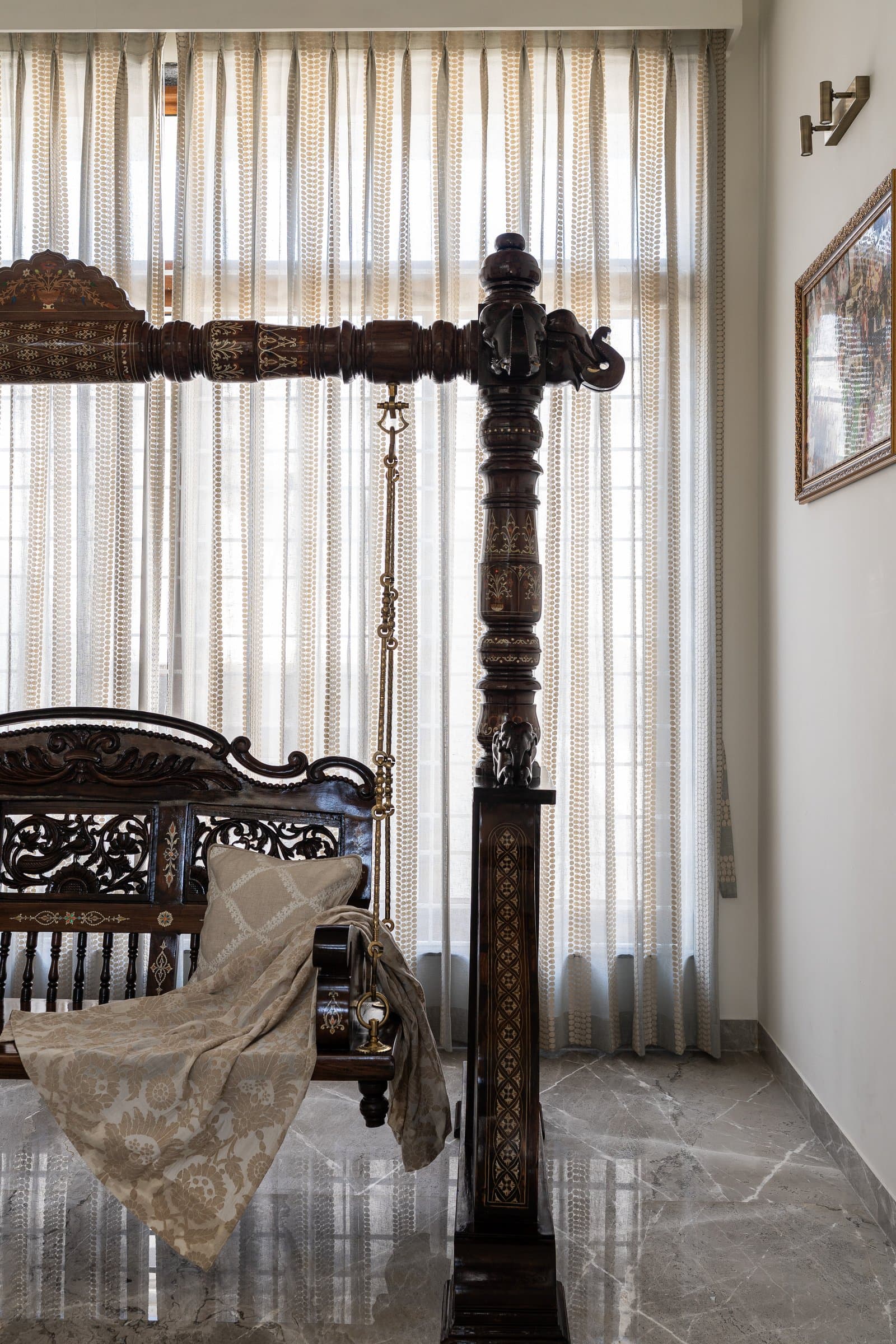
The most resonant object in the home is also its oldest. An ancestral swing in carved teak with bone inlay, hung from heavy brass chains and resting on turned posts crowned with miniature elephants, has been in the family for decades. It is not staged here, it is simply placed, and the home’s entire material logic, the granite, the concrete, the cane, the marble, ultimately exists to give this single inherited object a setting it deserves.
The family lounge upstairs allows the home its only moment of unguarded play. A fluted blue console in deep cobalt sits beneath a wall-mounted television, its ribbed face catching light against textured plaster.
What Vintage Vibrance proposes, finally, is a way of living in Chennai that neither retreats into nostalgia nor erases it. The ancestral swing, the carved teak puja door, the lotus inlays, the antique columns, all enter the home as full participants rather than as references, and the modern surfaces, granite, concrete, travertine, mirror, are confident enough to make room for them.
It is a home assembled with the patience of someone who understands that richness is not a question of how much you put in, but of how willing you are to let inherited and contemporary objects share the same rooms without resolving their differences. Studio one by zero has built a residence that feels lived-in on the day the family moves in, and that is the rarer achievement.