Homes along the Chennai coastline occupy a unique position. With the Bay of Bengal stretching endlessly beyond their windows, the architecture is often challenged to find its own presence without competing with the view. The most successful interiors understand this balance, knowing when to recede into quiet restraint and when to introduce moments of character and depth.
It is this delicate equilibrium that Tall Storeys Collaborative sought to achieve in Sunrise over Sea, a residence overlooking an uninterrupted expanse of the shoreline. Conceived for a family that wanted neither the informality of a beach retreat nor the predictability of an urban apartment, the home navigates a nuanced middle ground. Here, the serenity of the sea coexists with the layered cultural identity of Chennai, creating spaces that feel at once relaxed, rooted, and deeply connected to their setting.
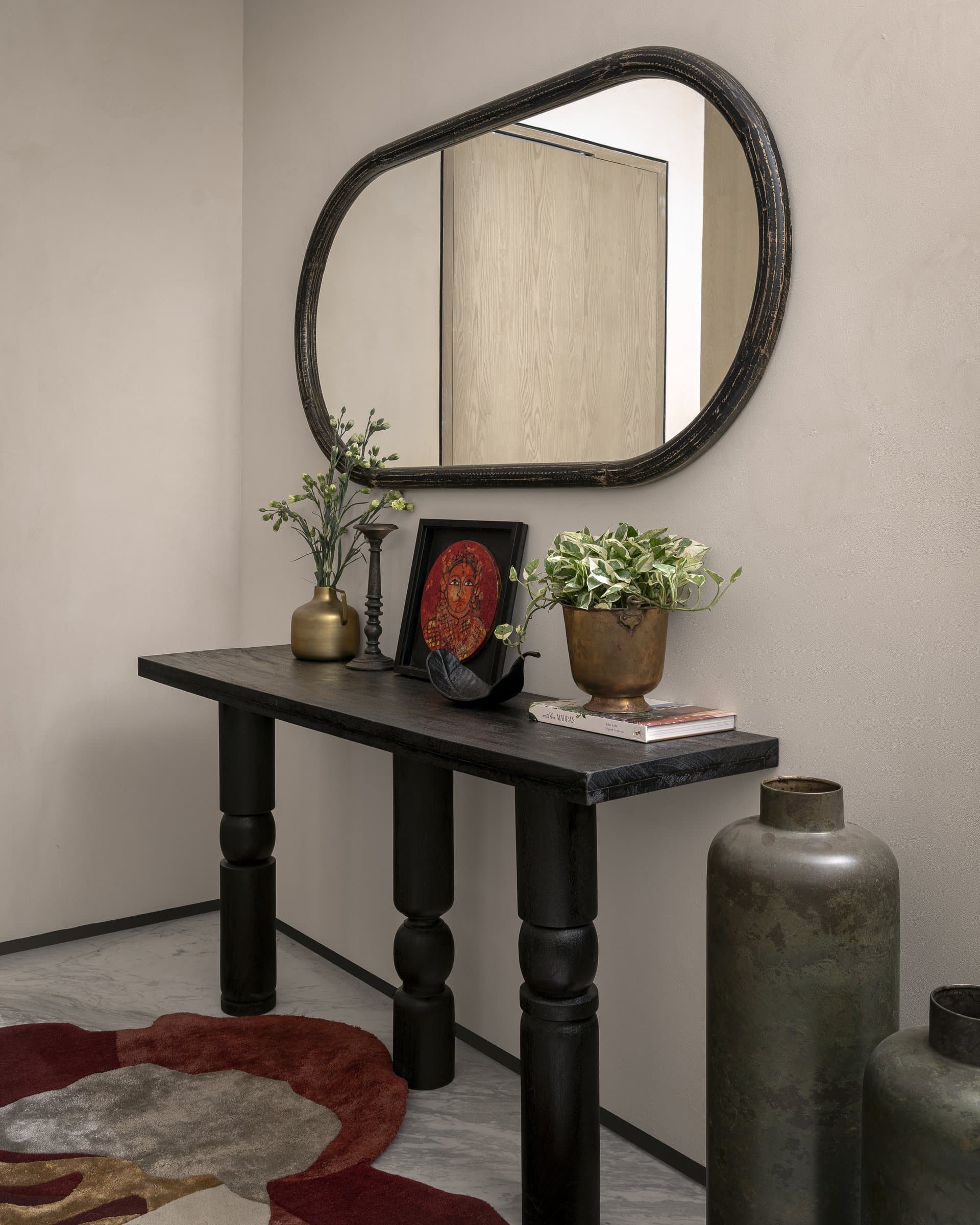
The foyer sets the tone with quiet confidence before the home fully unfolds. A turned-leg console in dark stained wood rests against a softly textured plaster wall, styled with brass vessels, a traditional Tanjore-inspired artwork, and an organically shaped mirror framed in distressed black. Beneath, a richly patterned rug in deep rusts and muted reds introduces a warmth that immediately softens the marble flooring, hinting at the layered material and colour story that continues throughout the home.
What distinguishes the space is its careful balance of restraint and richness. Decorative elements are deliberately sparing, yet each object feels considered and meaningful, lending the interiors a sense of authenticity rather than artifice. It is an approach that allows the home to feel collected over time, where craftsmanship, memory, and materiality take precedence over decoration for its own sake.
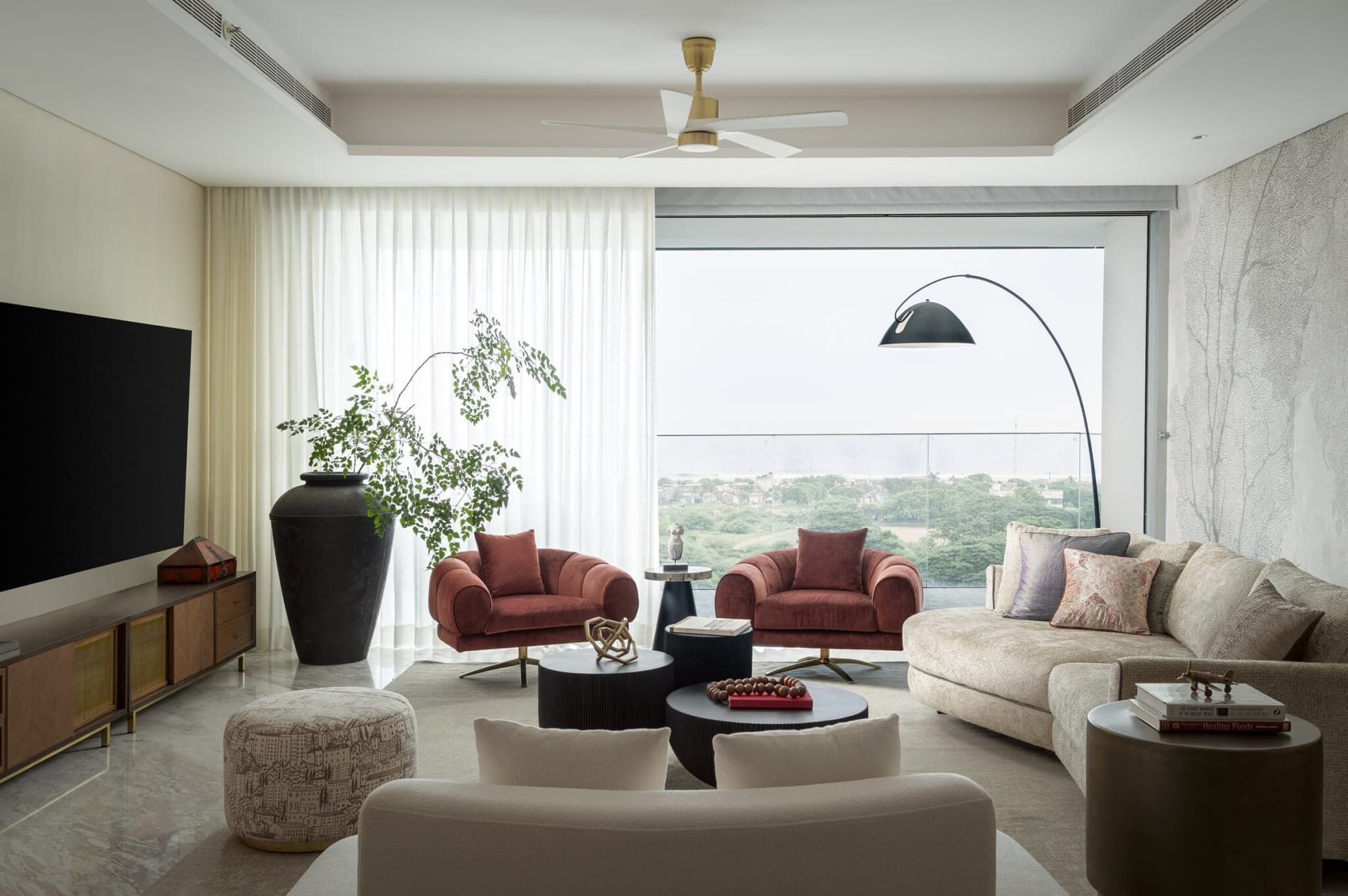
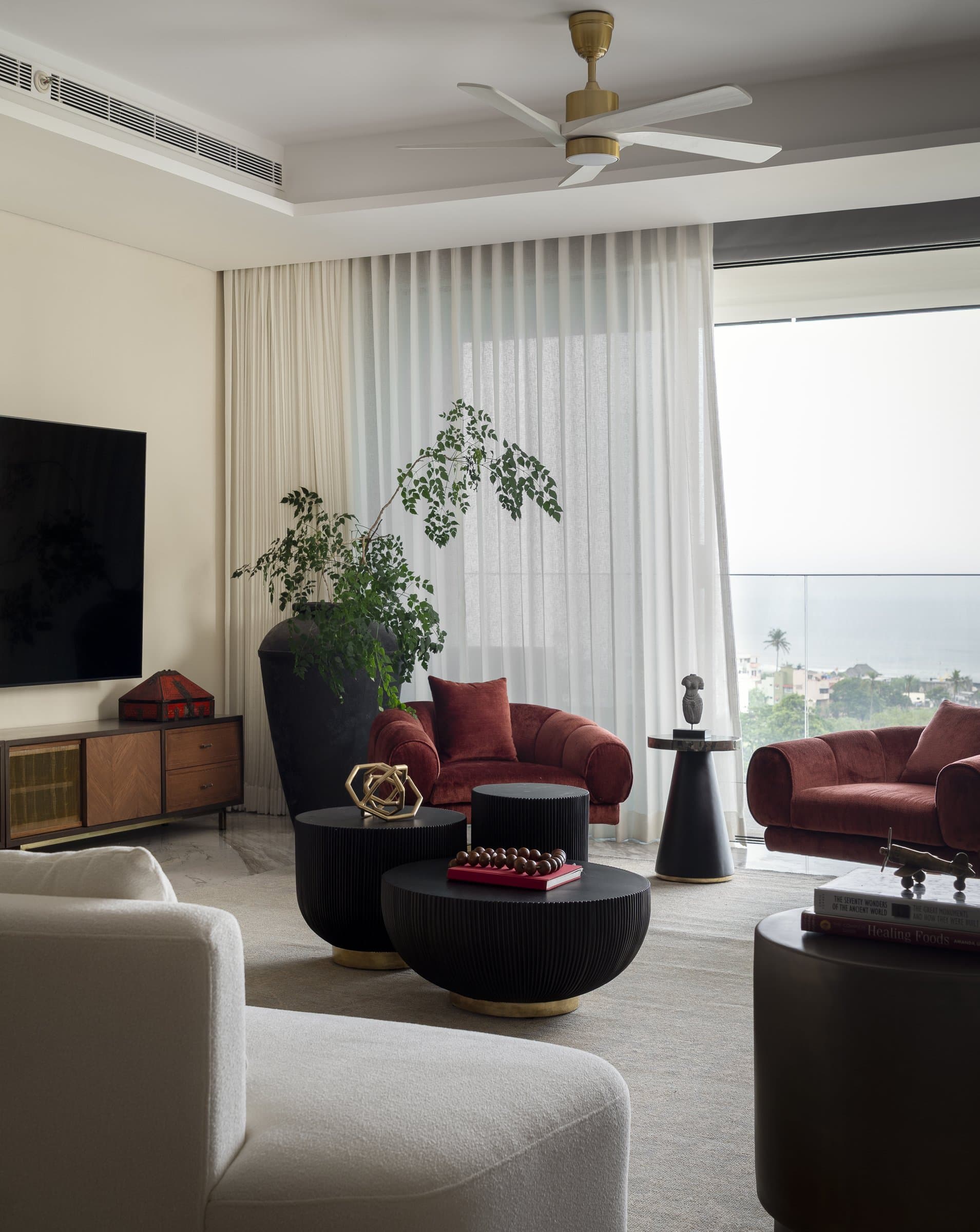
Beyond the foyer, the living room unfolds toward its most compelling feature: an uninterrupted view of the Bay of Bengal. Expansive glazing frames the shifting horizon, while sheer curtains temper the sunlight without diminishing the connection to the sea. Within this backdrop, the furnishings are arranged with a sense of ease and balance. Terracotta velvet armchairs introduce warmth and colour, paired with a generous oatmeal-toned sofa and sculptural black fluted tables that lend the composition a subtle sense of structure.
Rather than centring the room around a television, the design prioritises conversation, connection, and the landscape beyond. Seating is arranged to encourage interaction while maintaining a constant dialogue with the view, allowing the horizon to become an integral part of daily life. The result is a living space that feels both intimate and expansive, where the rituals of family life unfold against the ever-changing backdrop of the sea.
““The brief was for a home that could hold the sea without imitating it, and that could speak of Madras without performing it.””
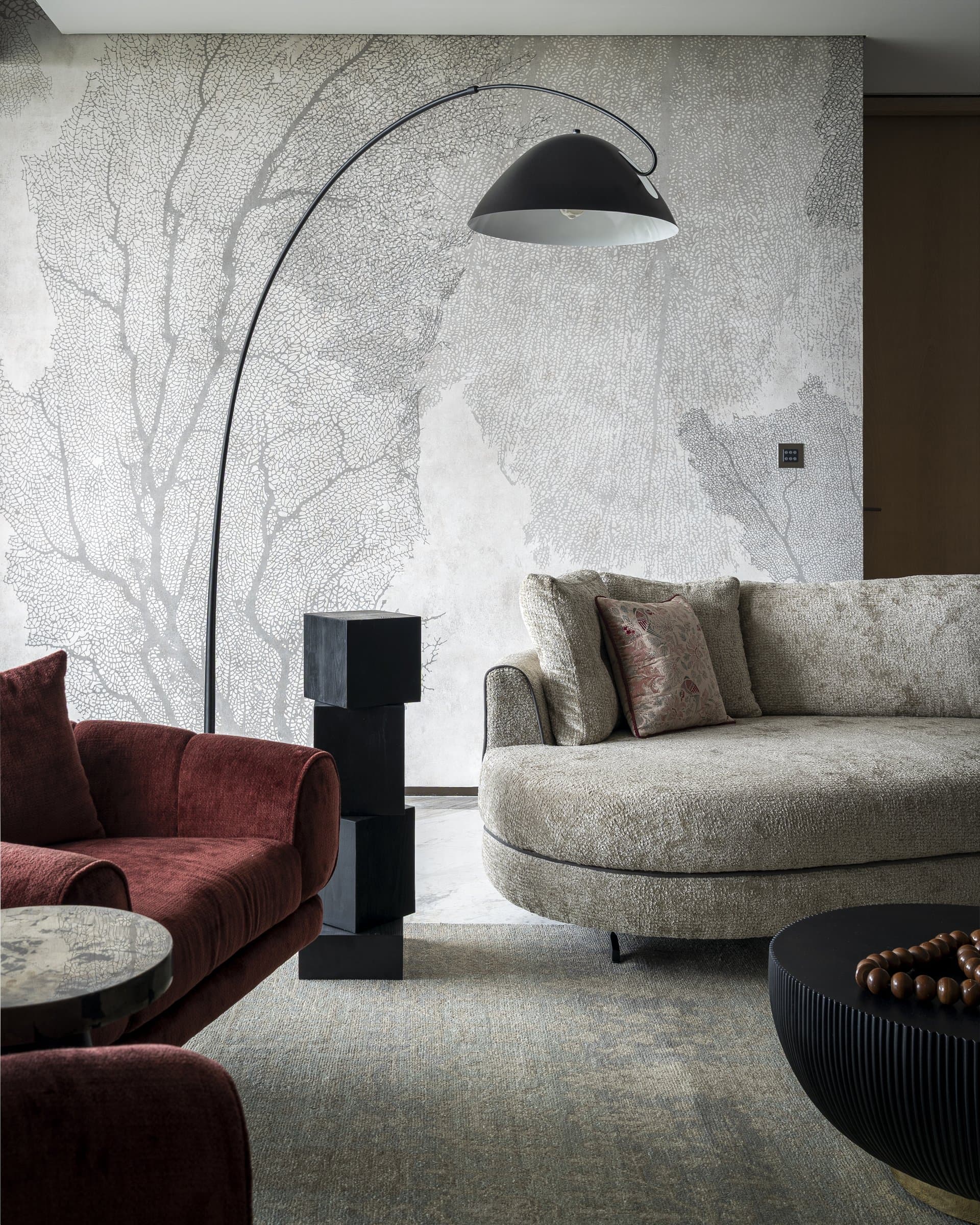
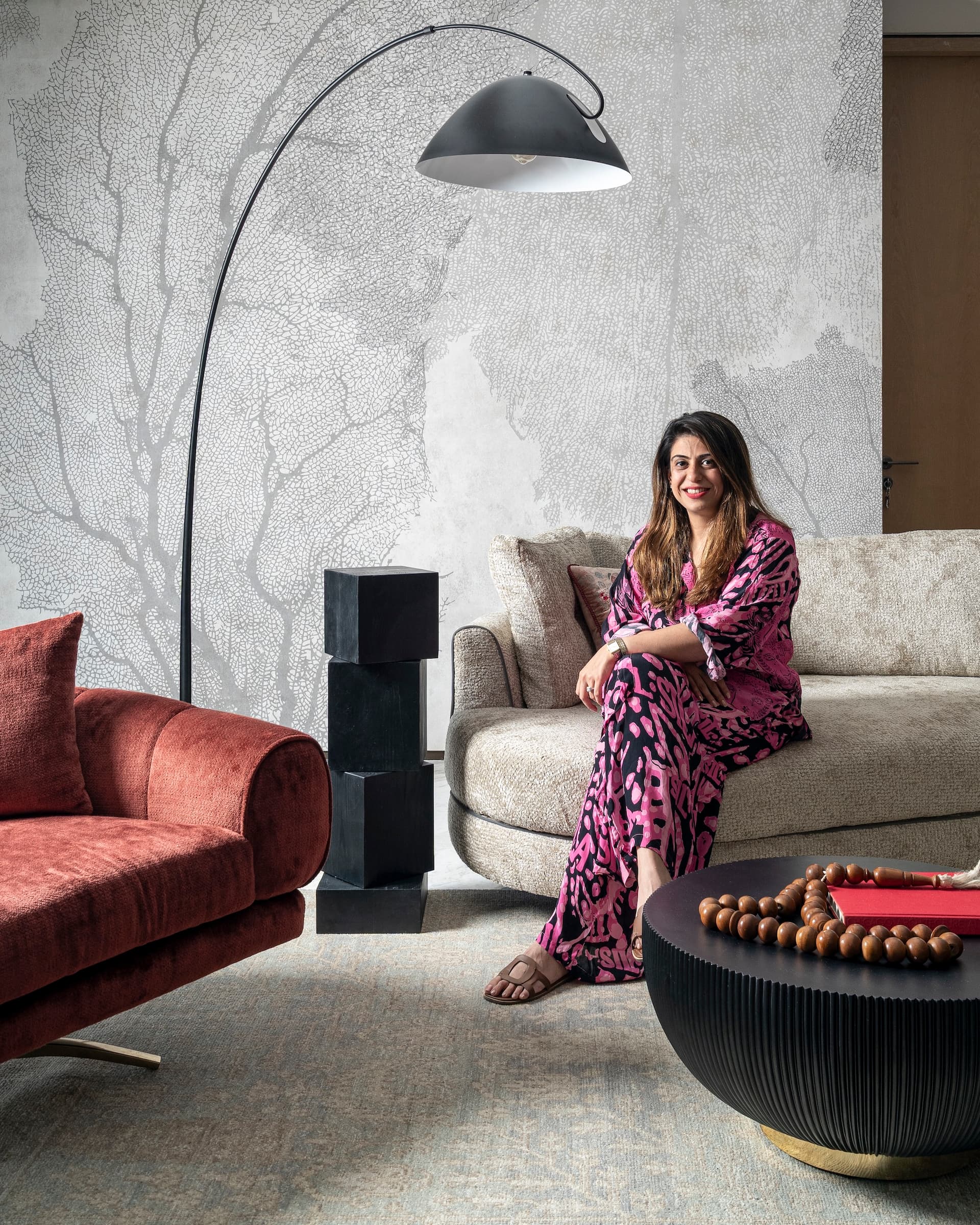
The room’s most distinctive gesture is the mural that stretches across the wall behind the curved bouclé sofa. Delicately rendered coral and sea-fan motifs emerge across a textured backdrop, their pale forms appearing almost sketched into the surface rather than applied onto it. The artwork introduces a subtle reference to the coastal setting, capturing the essence of the shoreline without resorting to literal imagery or decorative clichés.
Against this softness, darker sculptural elements provide a deliberate counterpoint. A stacked geometric totem in black and the sweeping arc of a floor lamp introduce a sharper visual language, creating a measured tension between organic forms and architectural precision. It is in this balance that the room finds its character, where the presence of the sea is felt through atmosphere and abstraction rather than direct representation.
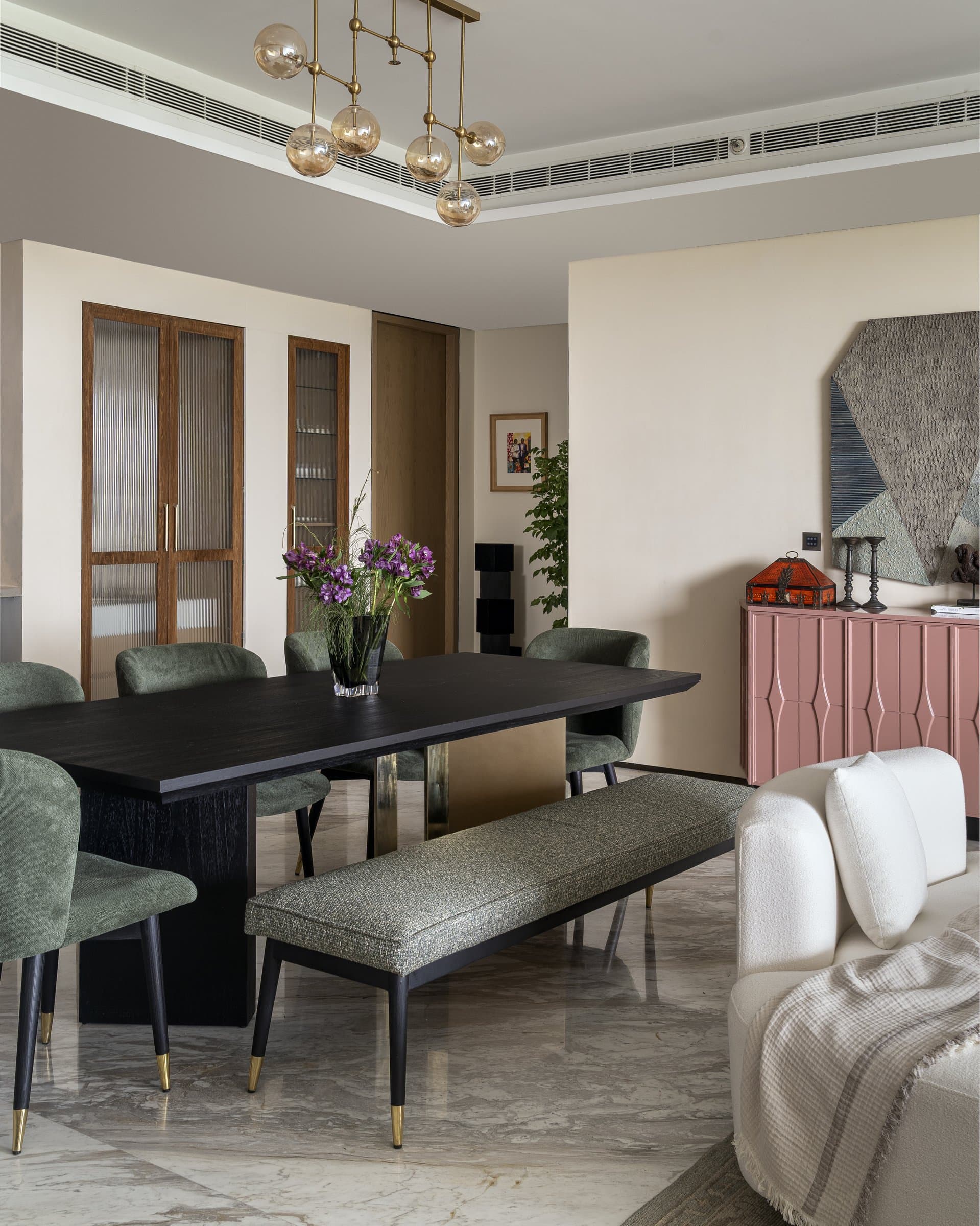
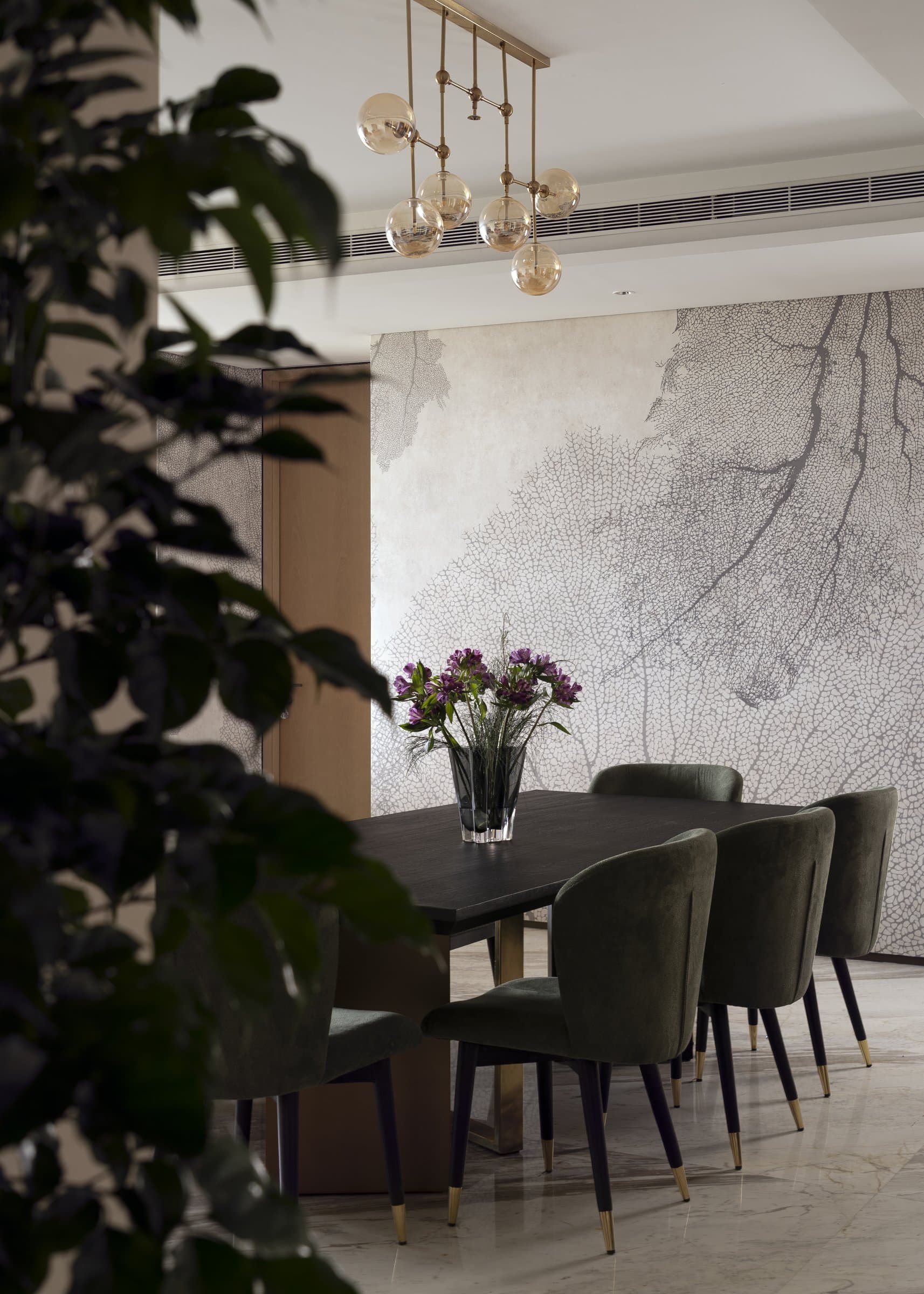
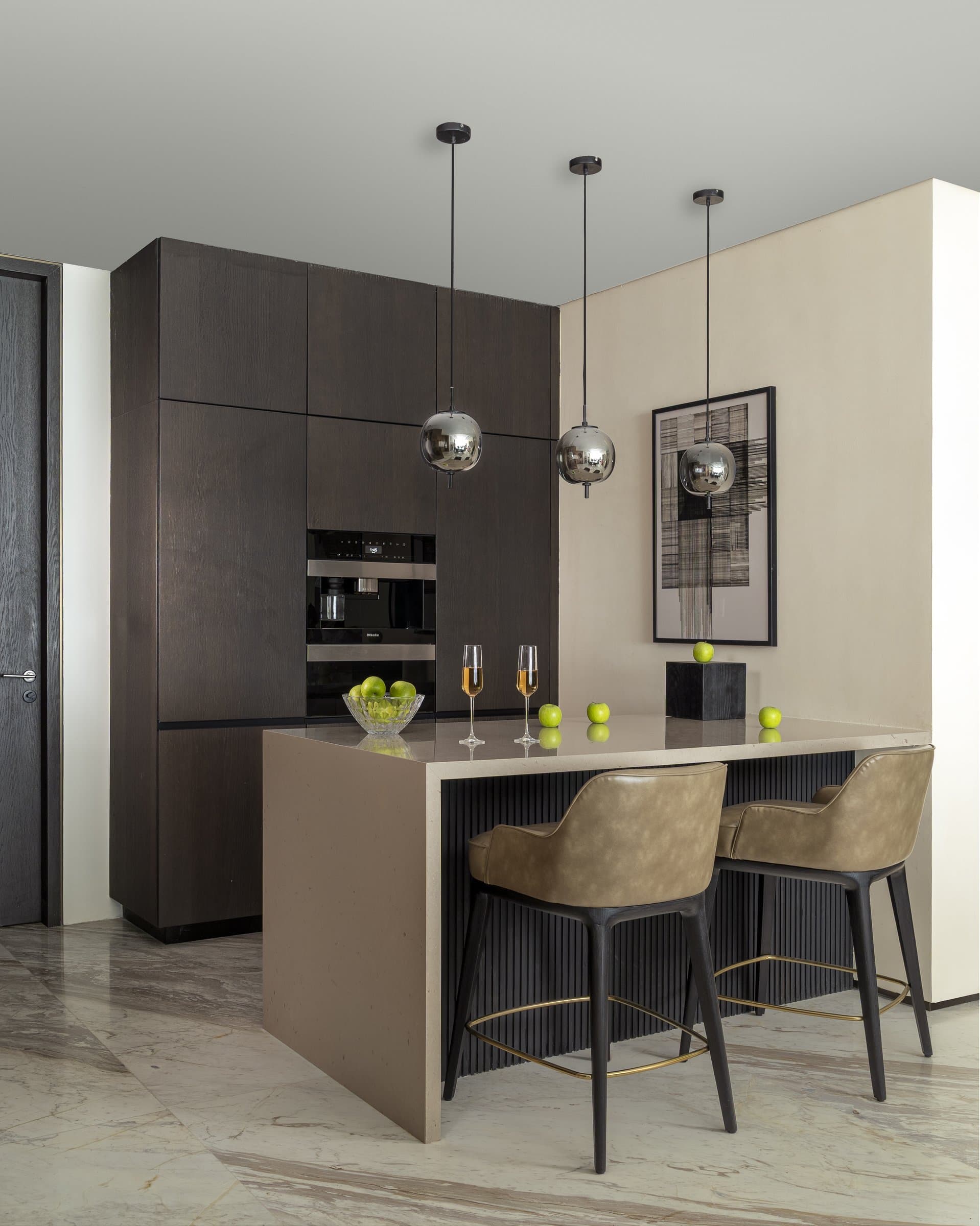
The dining area builds upon the home’s layered material narrative with a greater sense of colour and presence. A dark timber dining table, anchored by a brushed metal base, is surrounded by olive-toned velvet chairs and a tailored upholstered bench, creating a composition that feels both sophisticated and inviting. Overhead, a sculptural chandelier composed of amber glass globes suspended from a brass framework casts a warm glow, introducing an element of understated drama to the space.
A dusty rose sideboard adds another layer of richness, its geometric panelled detailing lending depth and texture without overwhelming the room. Positioned alongside a large-scale artwork in muted slate and stone hues, it creates a carefully balanced vignette where colour, materiality, and form work in harmony.
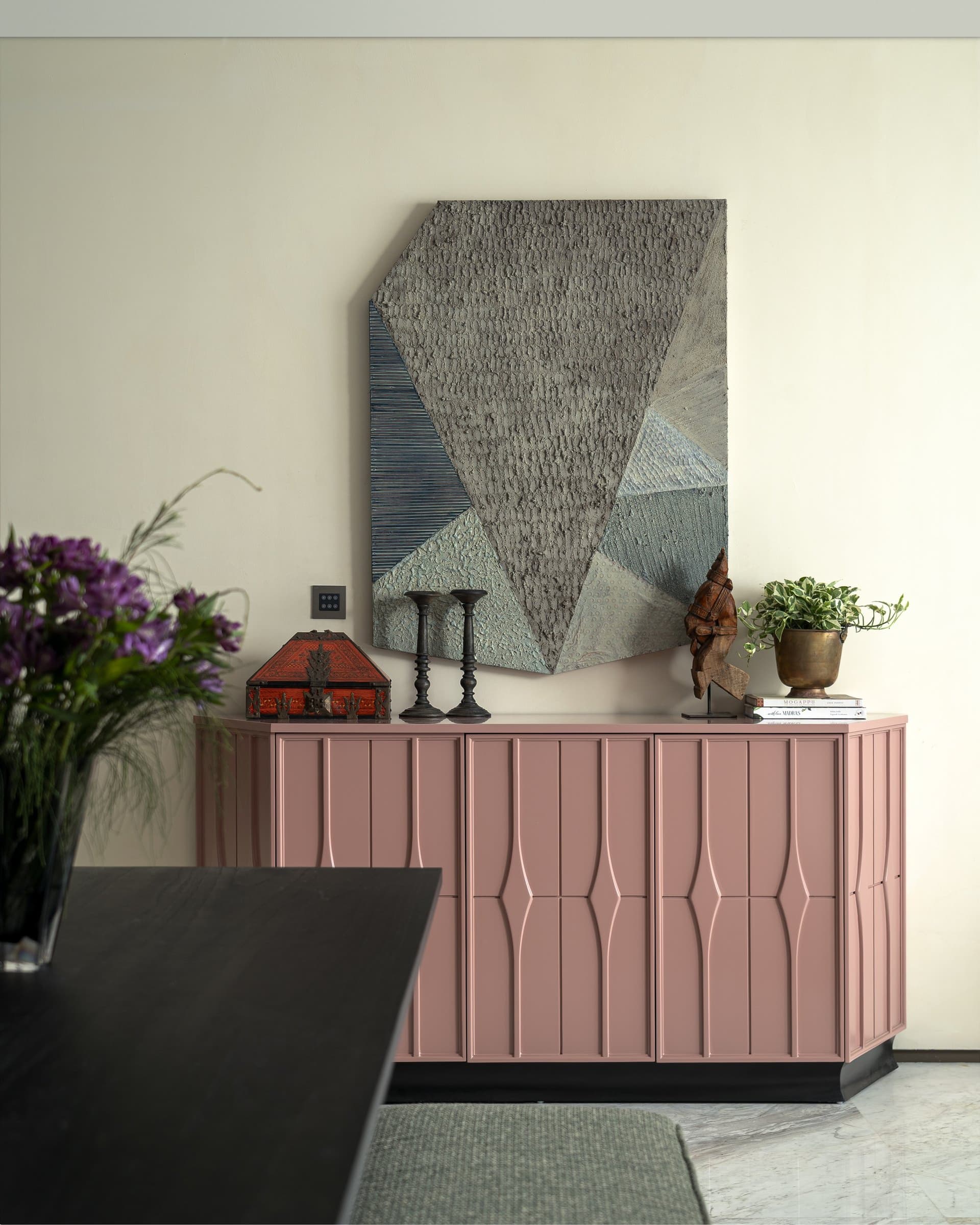
The rose sideboard deserves its own paragraph, if only because it is the kind of object most apartments would not risk. Its panelled doors carry a quietly architectural rhythm, and the geometric artwork hung above, all slate and stone-blue facets, picks up the same impulse in a different material register. This is the home willing to be specific, to make a colour choice that someone, somewhere, will remember.
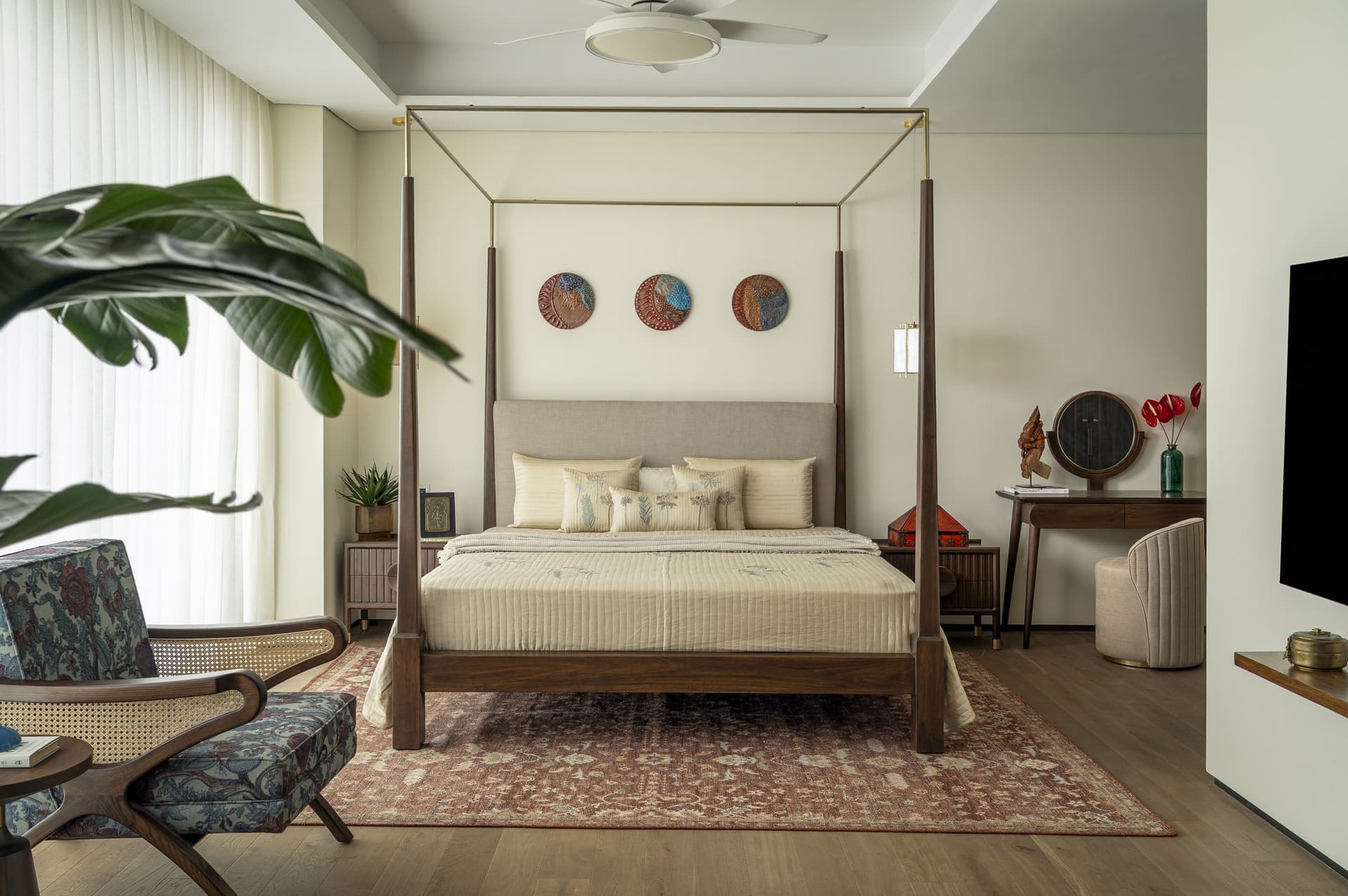
The master bedroom adopts a noticeably quieter tone, exchanging the social energy of the living spaces for a sense of calm and composure. At its centre, a four-poster bed in dark wood with slender brass detailing establishes a strong yet understated focal point. Above, a trio of circular ceramic artworks in muted terracotta and indigo hues introduces colour and texture with restraint, creating a layered composition that feels considered rather than decorative.
The room’s character emerges through a carefully curated collection of individual pieces rather than a coordinated furniture scheme. A cane-and-wood lounge chair upholstered in a delicate floral fabric lends softness and personality, while a slim console paired with a vanity mirror adds both function and visual lightness. Together, these elements create a space that feels collected and deeply personal, where craftsmanship, comfort, and subtle contrasts take precedence over formal symmetry.
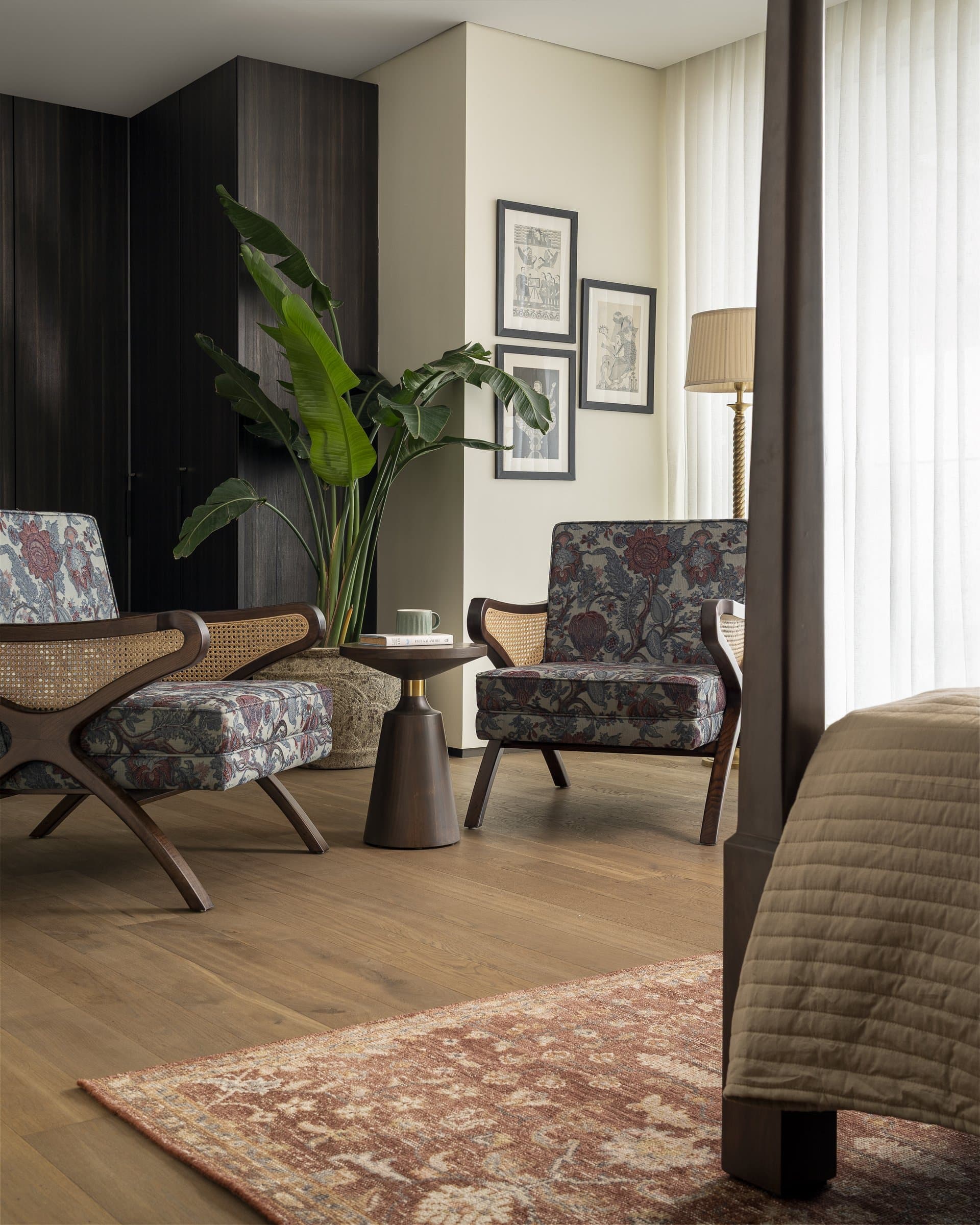
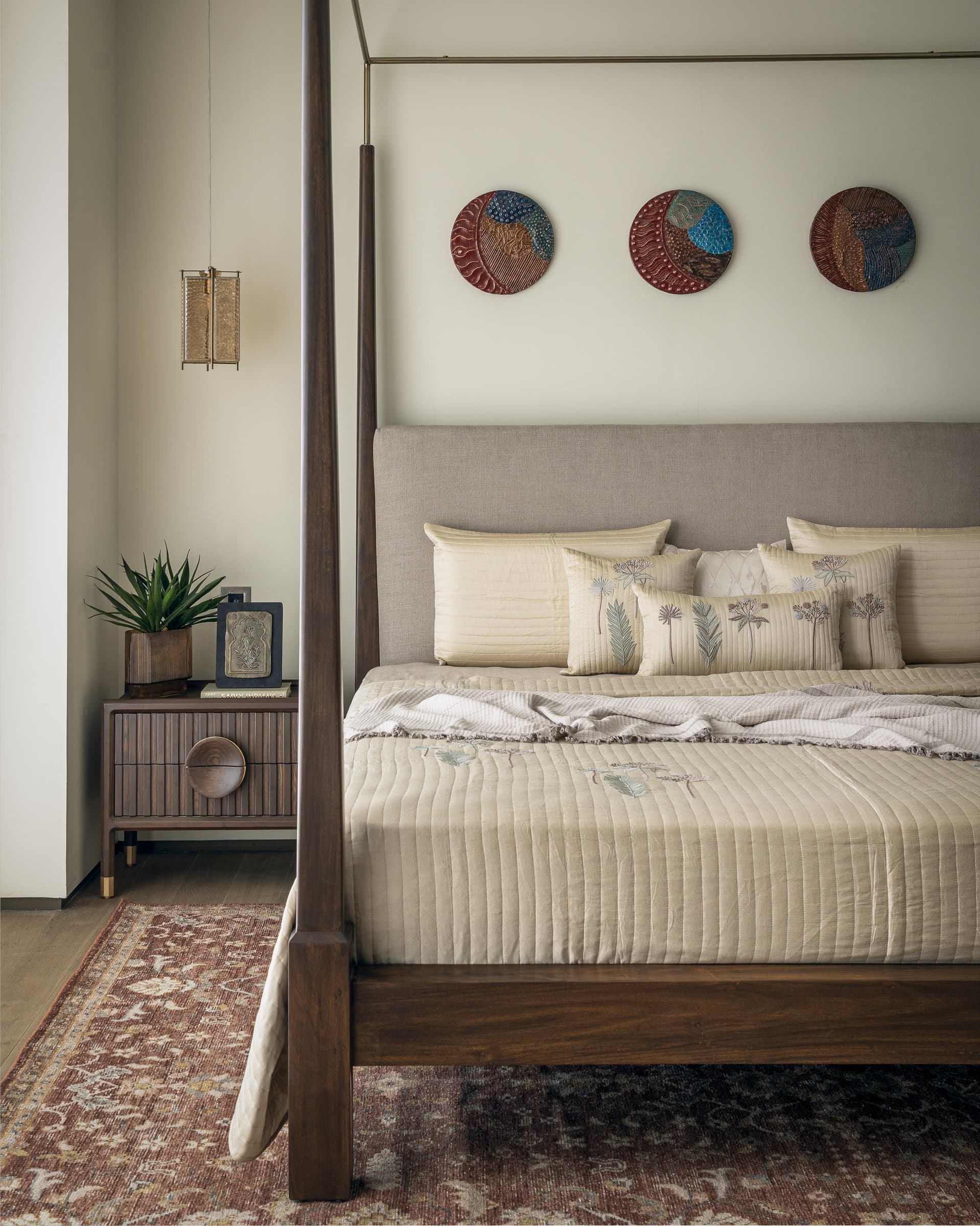
The slatted wood bedside table and a slim brass-and-paper pendant light, hung low beside the bed, are small notes that add up to a particular kind of warmth.
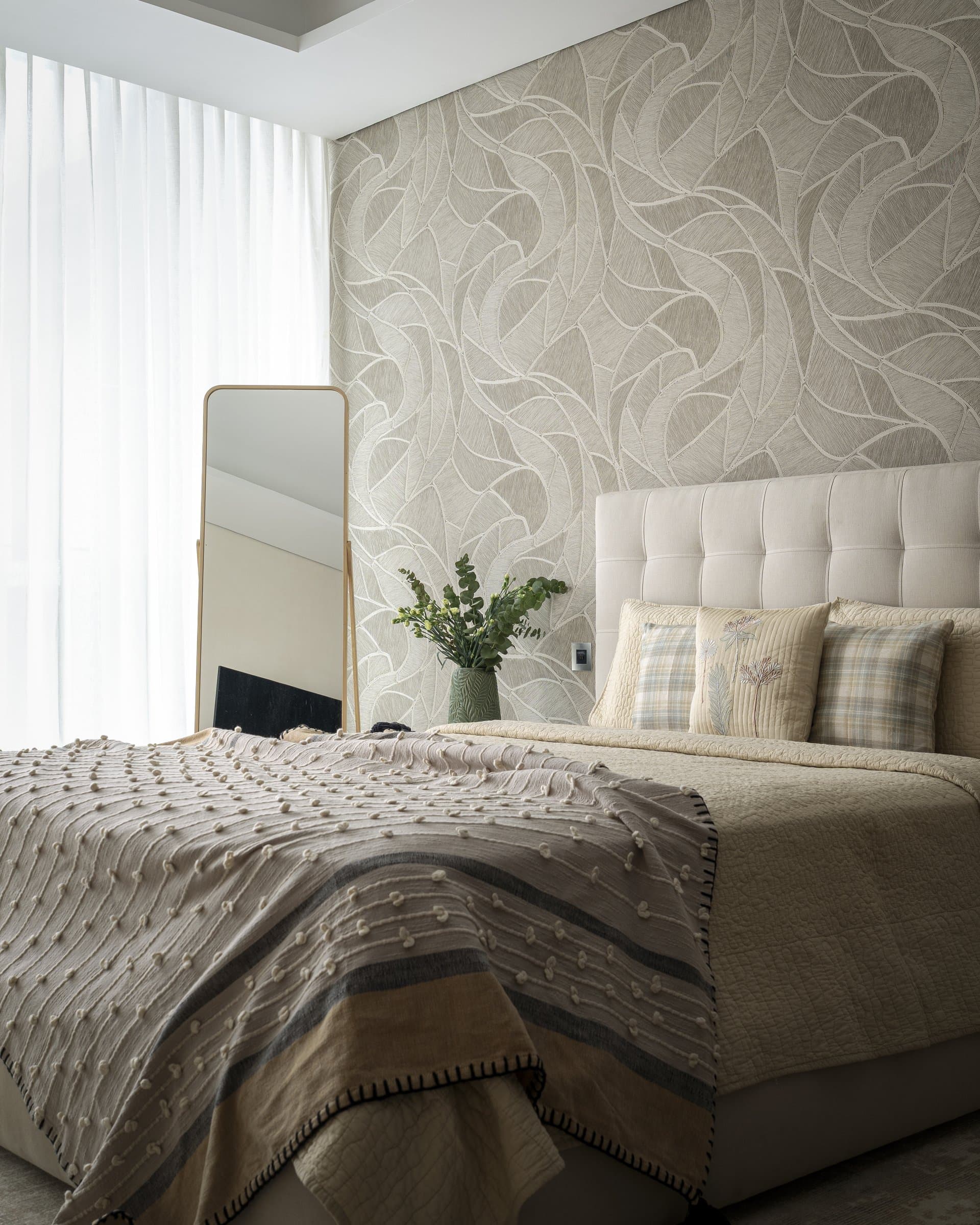
The second bedroom embraces a gentler, more tactile sensibility. A softly textured wallpaper featuring flowing, ribbon-like motifs in muted wheat tones forms a subtle backdrop to the upholstered headboard, introducing movement and depth without overwhelming the space. A full-height floor mirror with a slender frame leans casually against the wall, adding a sense of lightness and informality to the composition.
What distinguishes the room is its confident handling of pattern and texture. Striped linens, understated plaids, and delicately embroidered florals are layered with remarkable restraint, creating visual richness without disrupting the room’s calm atmosphere.
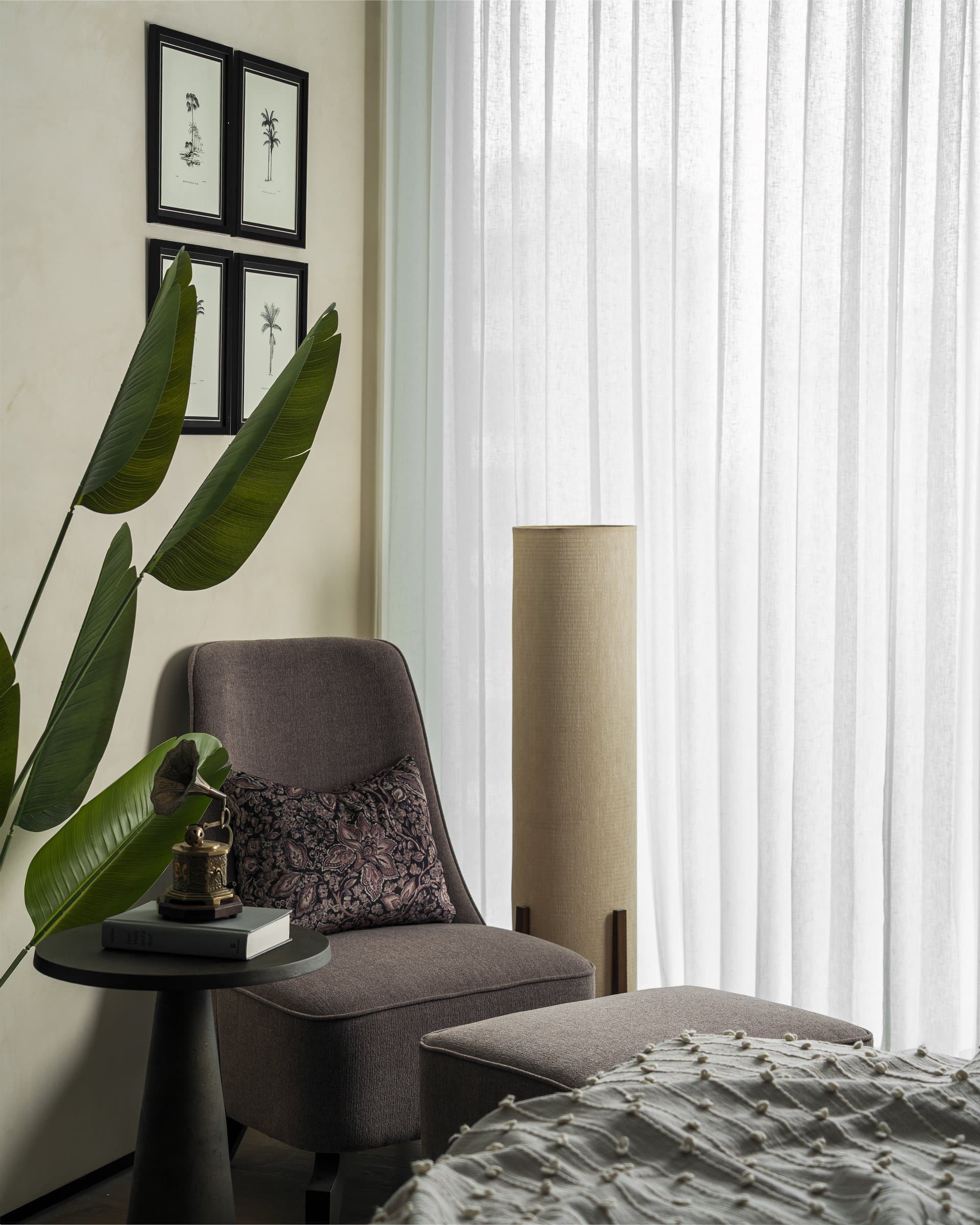
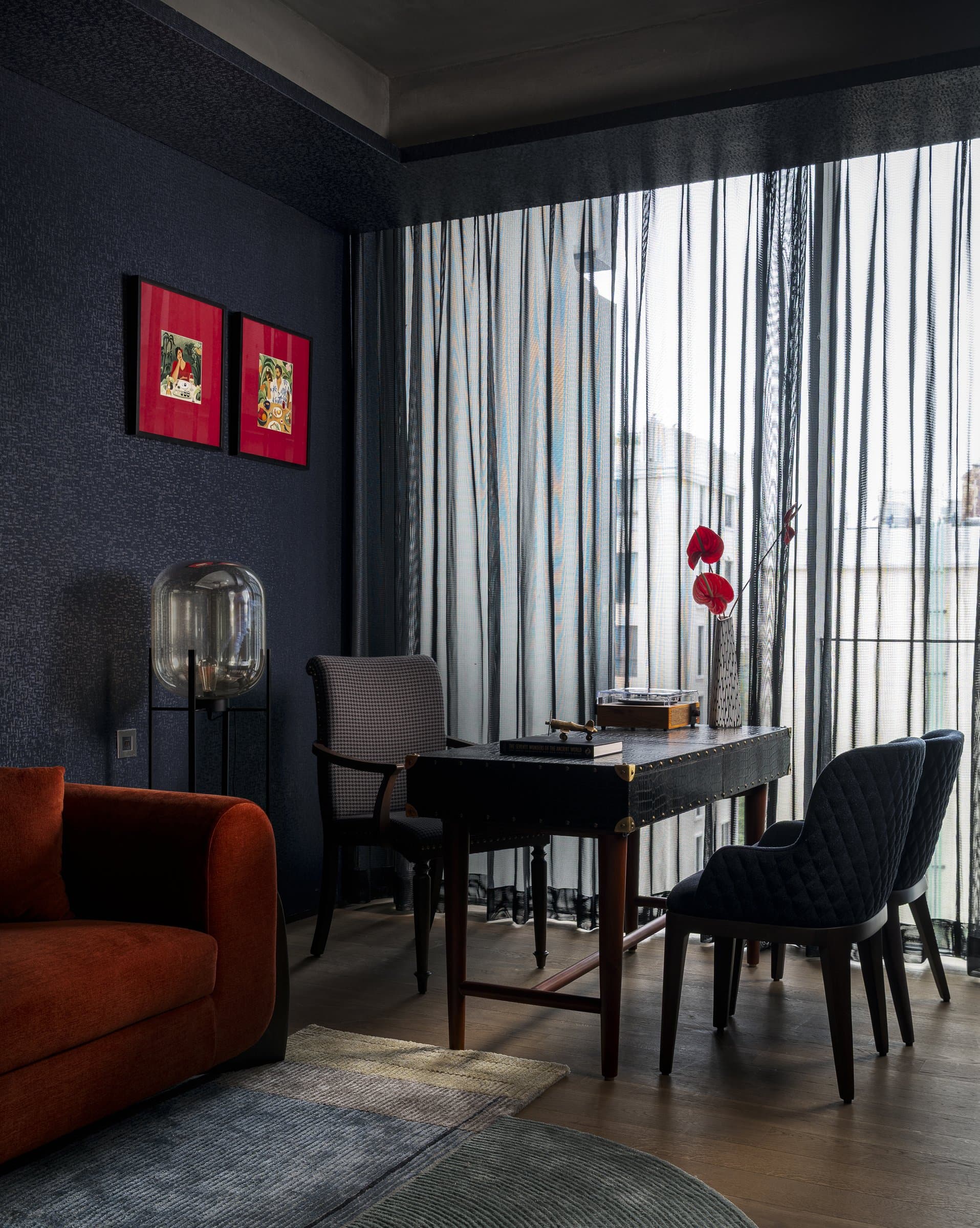
The study departs from the lighter palette of the rest of the home, embracing a richer and more atmospheric character. Walls finished in a deep ink-blue texture envelop the room, creating a sense of intimacy and focus, while sheer charcoal drapery softens the daylight and filters views of the city beyond. At the centre sits a leather-clad writing desk detailed with brass corner accents, its tailored presence lending the space a quiet sense of gravitas.
Yet the room avoids becoming overly formal. A terracotta-toned sofa introduces warmth against the darker backdrop, while a pair of framed artworks with deep crimson mounts provide measured moments of colour and personality. These carefully placed accents bring balance to the composition, allowing the study to feel both disciplined and expressive – a retreat designed as much for contemplation as it is for work.
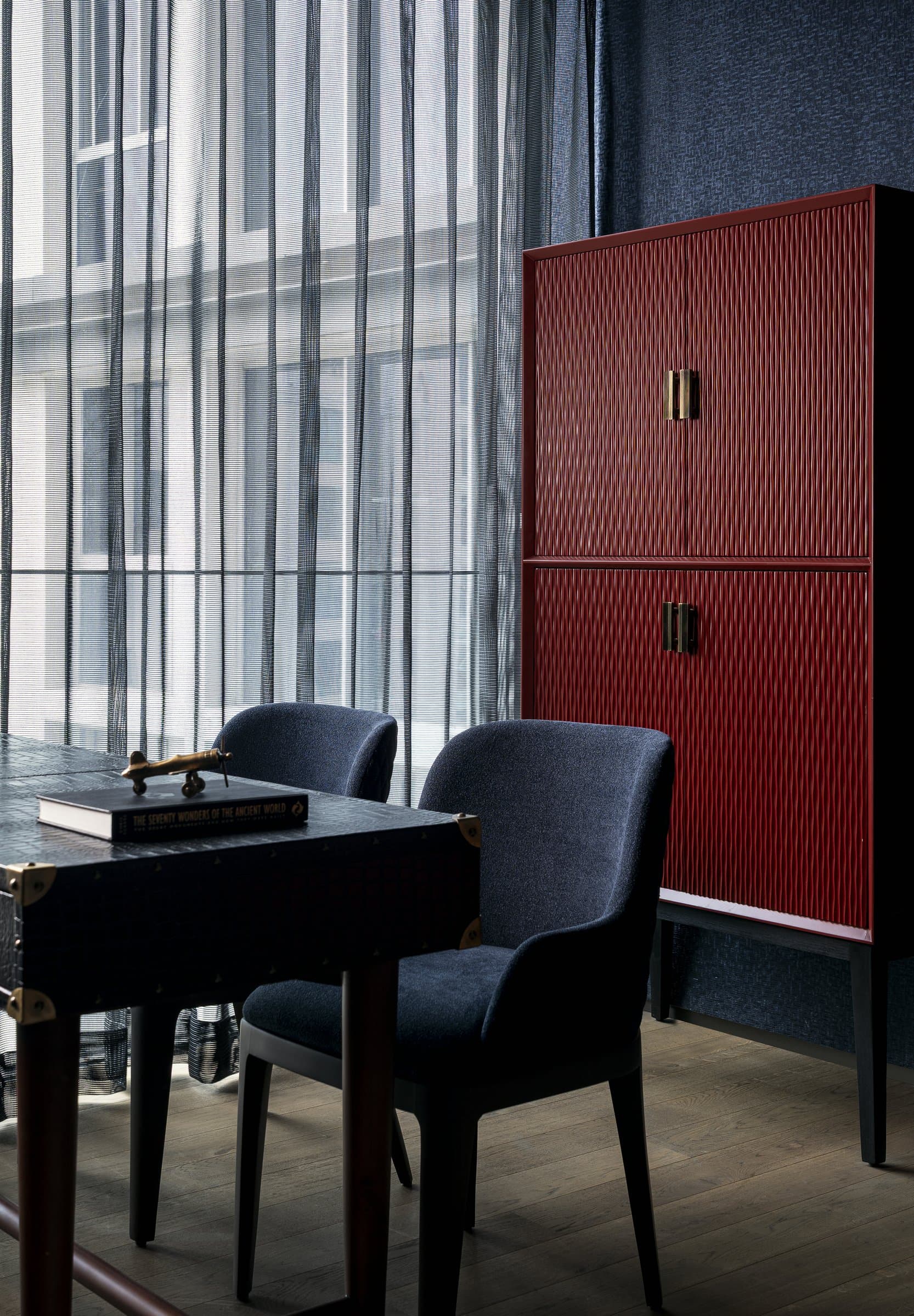
Viewed from another angle, the study reveals its most commanding element: a tall storage cabinet finished in a deep oxblood red, its finely fluted doors and slender brass pulls lending it the presence of a carefully crafted architectural feature rather than a conventional piece of furniture. Set against the ink-blue walls, it introduces a rich layer of contrast and becomes an unmistakable focal point within the room’s darker palette.
What distinguishes Sunrise over Sea within Chennai’s contemporary residential landscape is its nuanced approach to place. Rather than relying on the familiar language of coastal interiors or the visual cues of conventional luxury, the home draws its identity from a more layered interpretation of its context. The presence of the sea is felt through atmosphere, light, and materiality rather than overt symbolism, while carefully chosen cultural references are woven into the interiors with quiet confidence. From traditional artworks and handcrafted objects to subtle textile details, these elements enrich the home without interrupting its contemporary sensibility.
The project succeeds because it resists easy categorisation. It is neither a seaside retreat nor an urban apartment in the conventional sense, but a thoughtful synthesis of both. Designed for a family seeking to balance the tranquillity of the coastline with the cultural richness of Chennai, the residence allows these influences to coexist naturally. The result is a home that feels deeply rooted yet unmistakably modern, where the sea, the city, and the memory of Madras are given equal presence within a carefully considered architectural narrative.