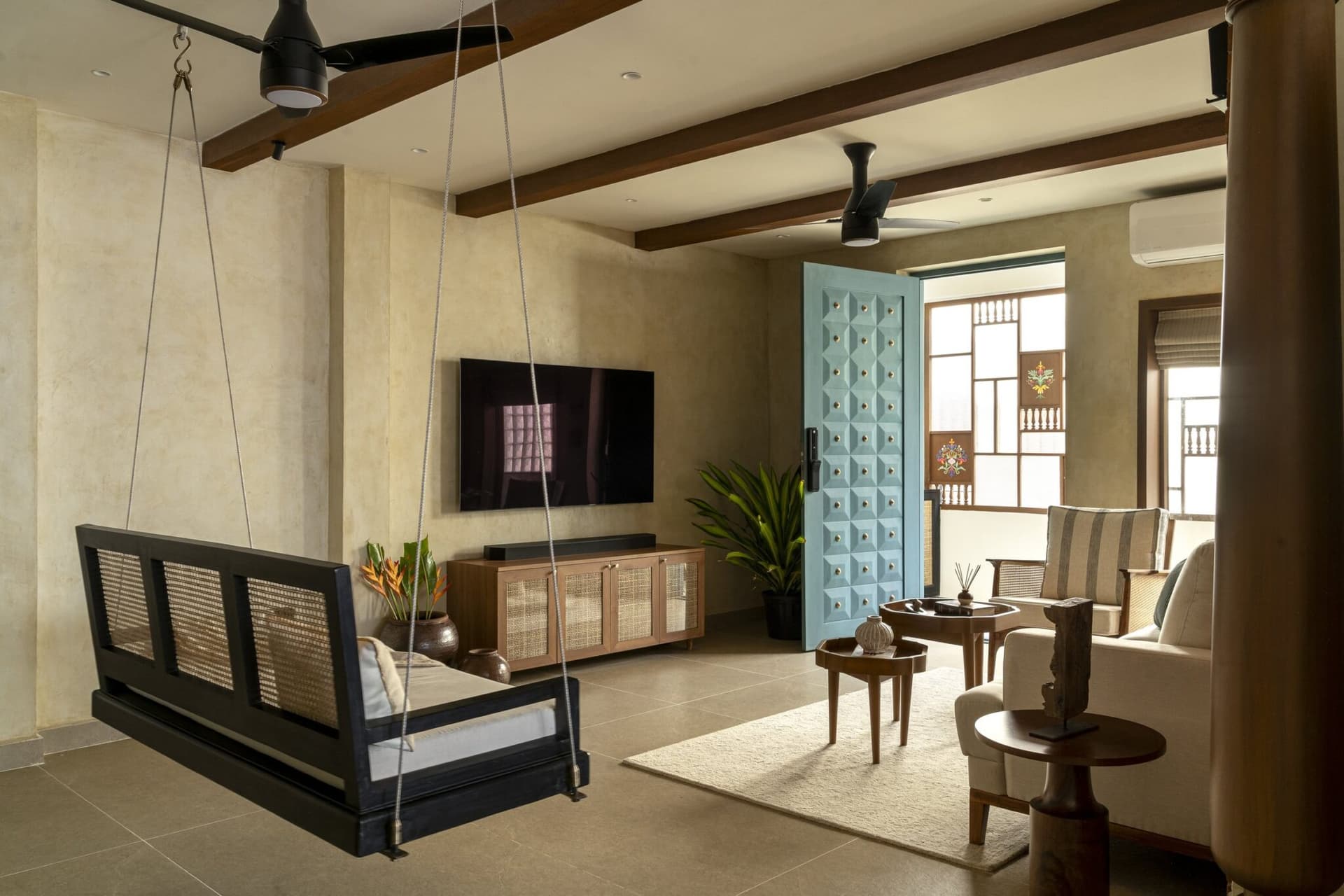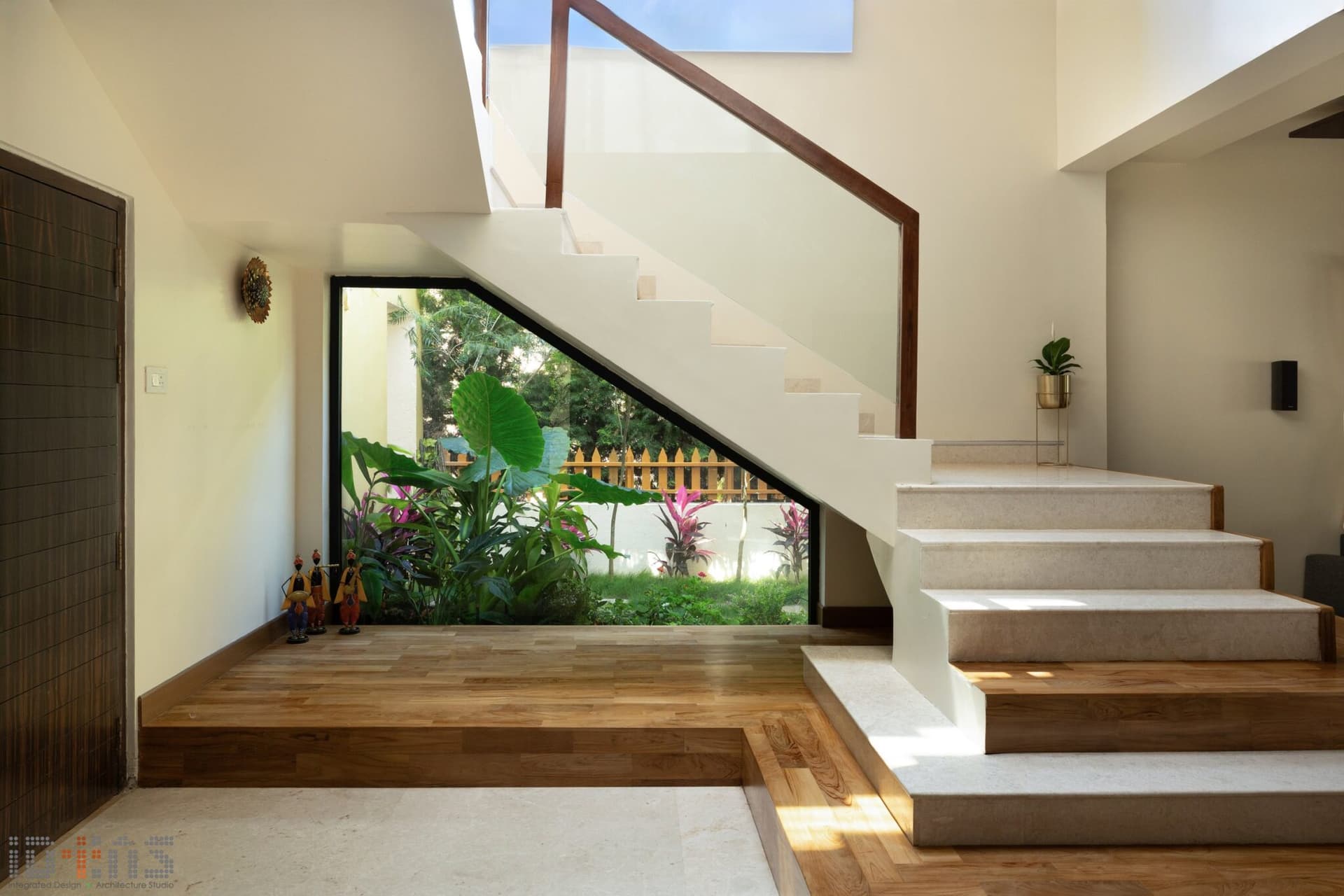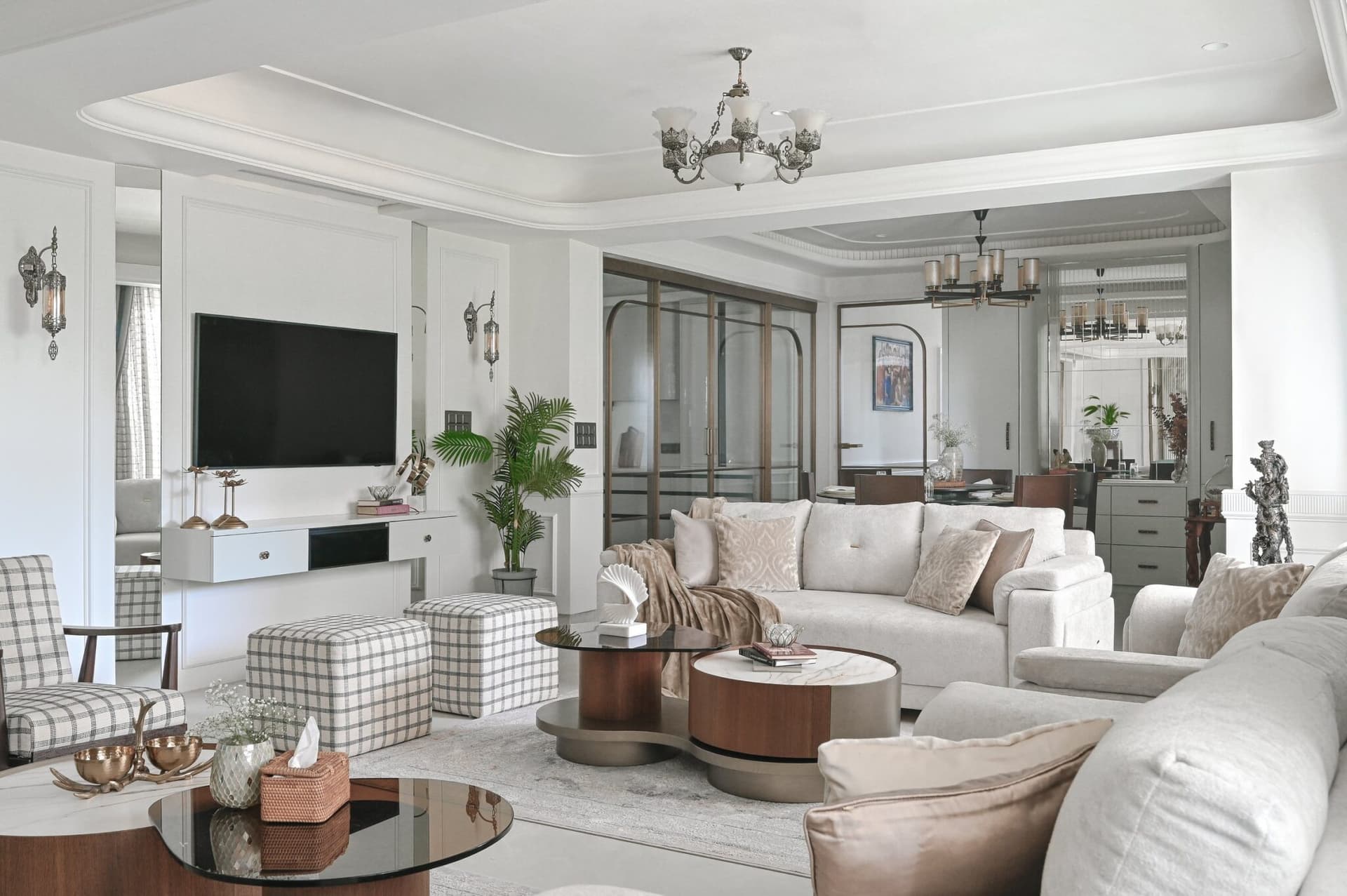
Luxury, when it stops performing, becomes something else entirely. It becomes the way a shadow lengthens across an oak panel at five in the afternoon, the way a wood grain meets its own reflection at a perfectly mitred joint, the way silence holds a room together when nothing in it is asking for attention. This is the territory the Jindal Residence chooses to occupy, and it does so with a discipline that is almost architectural in its reserve.
Set within Pune’s Verde Residence collection, this 4 BHK apartment was conceived by Khushali Bhalgat Designs as a study in what its architects call stealth wealth, a philosophy that prioritises the quiet beauty of craftsmanship over the louder vocabulary of luxury. Architects Suraj Wankhede and Khushali Bhalgat work with a disciplined palette of oak, cane, and stone, allowing material truth and joinery precision to carry the home’s emotional weight. The result is a sanctuary where the architecture deliberately retreats so that domestic life can step forward.
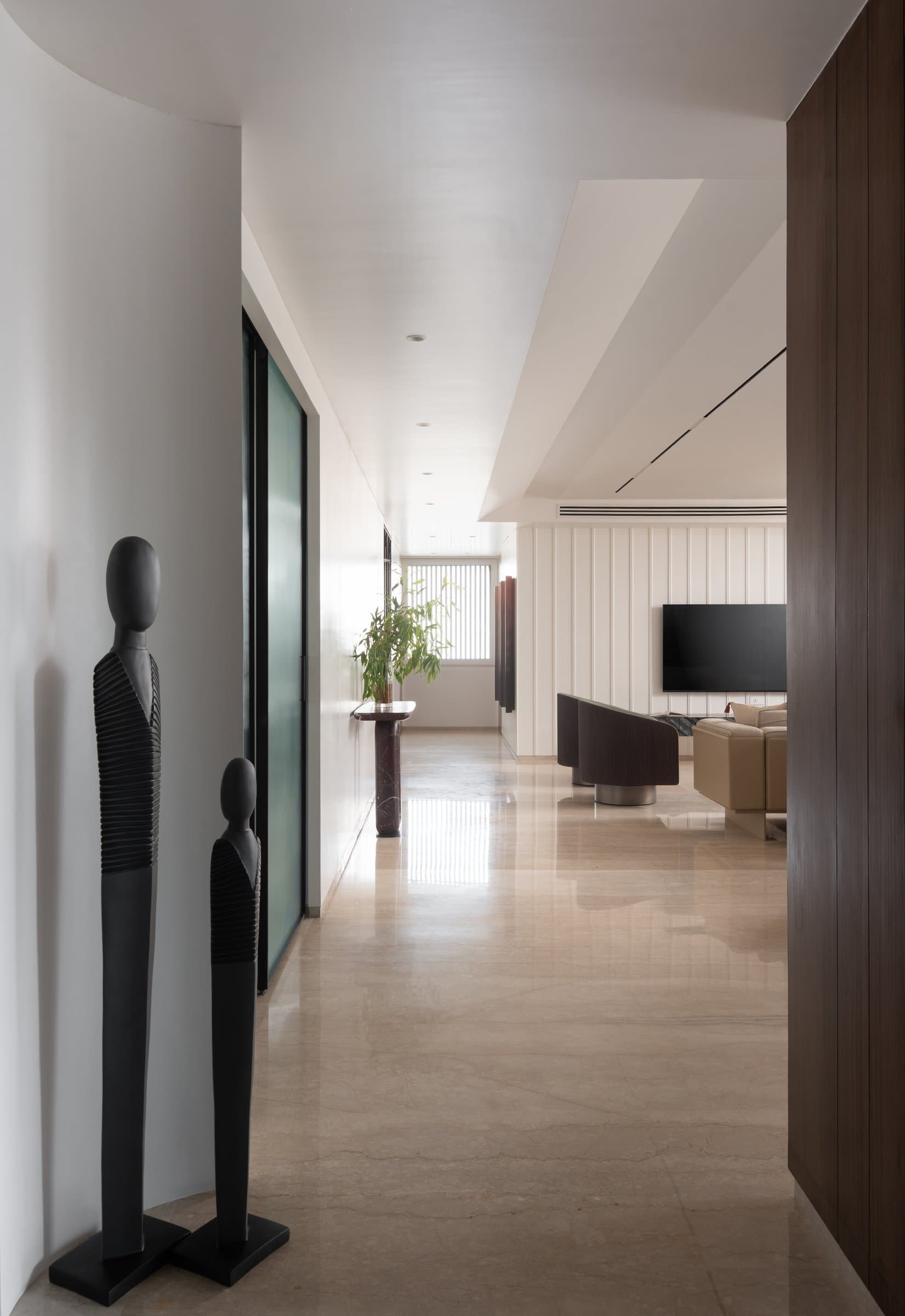
Inside, the entry passage runs along polished stone flooring towards the social wing, two slim figurative sculptures standing sentinel against an otherwise unadorned wall. There is no foyer in the conventional sense. The architecture itself performs the act of welcome, with proportion and polish doing the work that ornament might have been asked to do elsewhere.
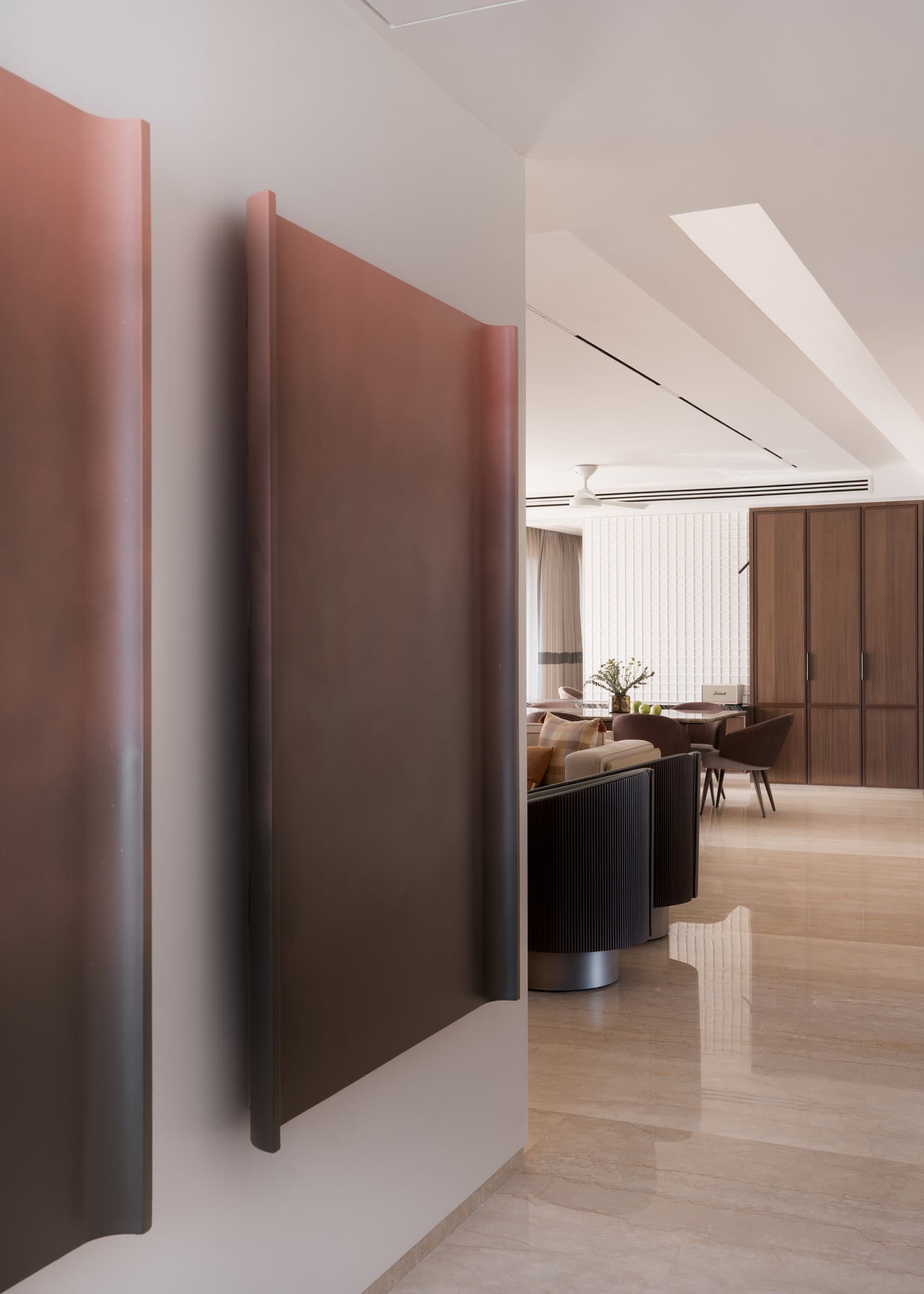
A leather-clad pivoting panel marks the threshold to the living room, its oxblood tone the single most assertive colour in the public realm. Beyond it, the long sightline towards the dining and kitchen reveals the home’s underlying logic: a sequence of restrained surfaces broken, at carefully chosen moments, by a single act of warmth.
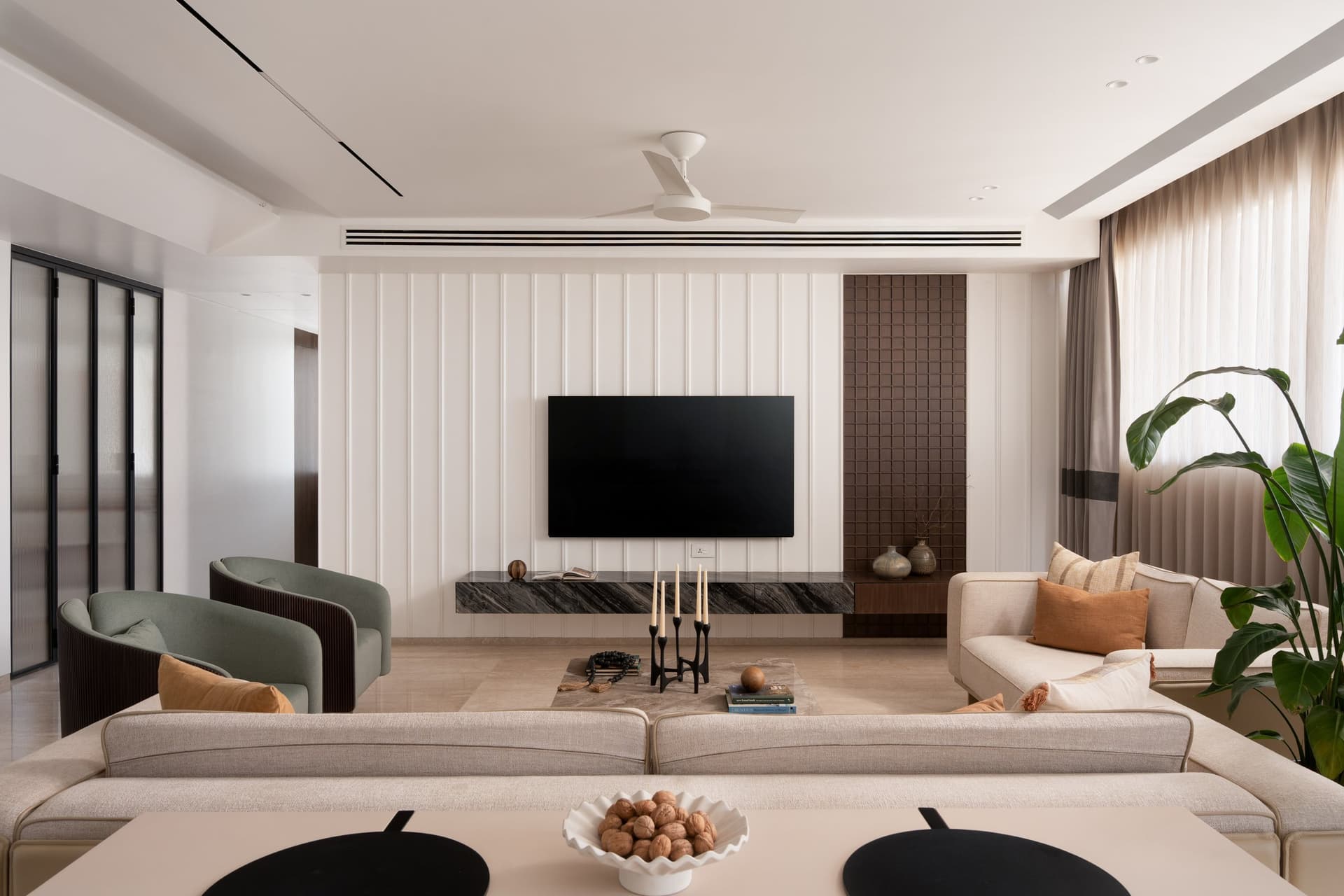
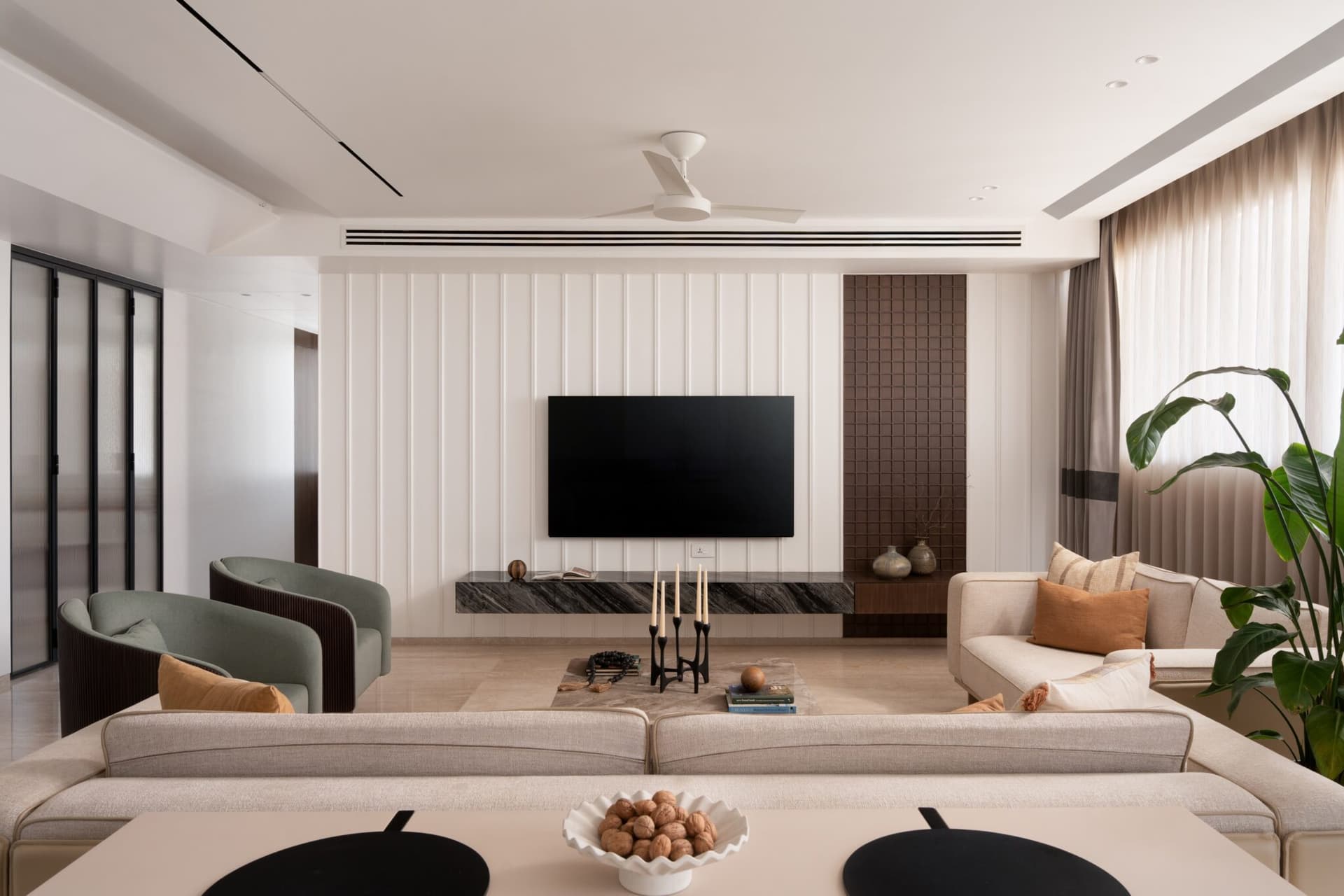
The living room is organised around a fluted media wall in soft cream, punctuated by a slim inset of dark walnut grid that functions almost as a textile within the architecture. Twin armchairs in sage upholstery with fluted dark wood backs face a beige sectional, and the room’s geometry is entirely about conversation rather than display.
““When a space stops trying to be loud, a much deeper kind of beauty is found in the quiet. This is the luxury that shows up in the way a shadow falls or the way the wood grain matches up exactly.””
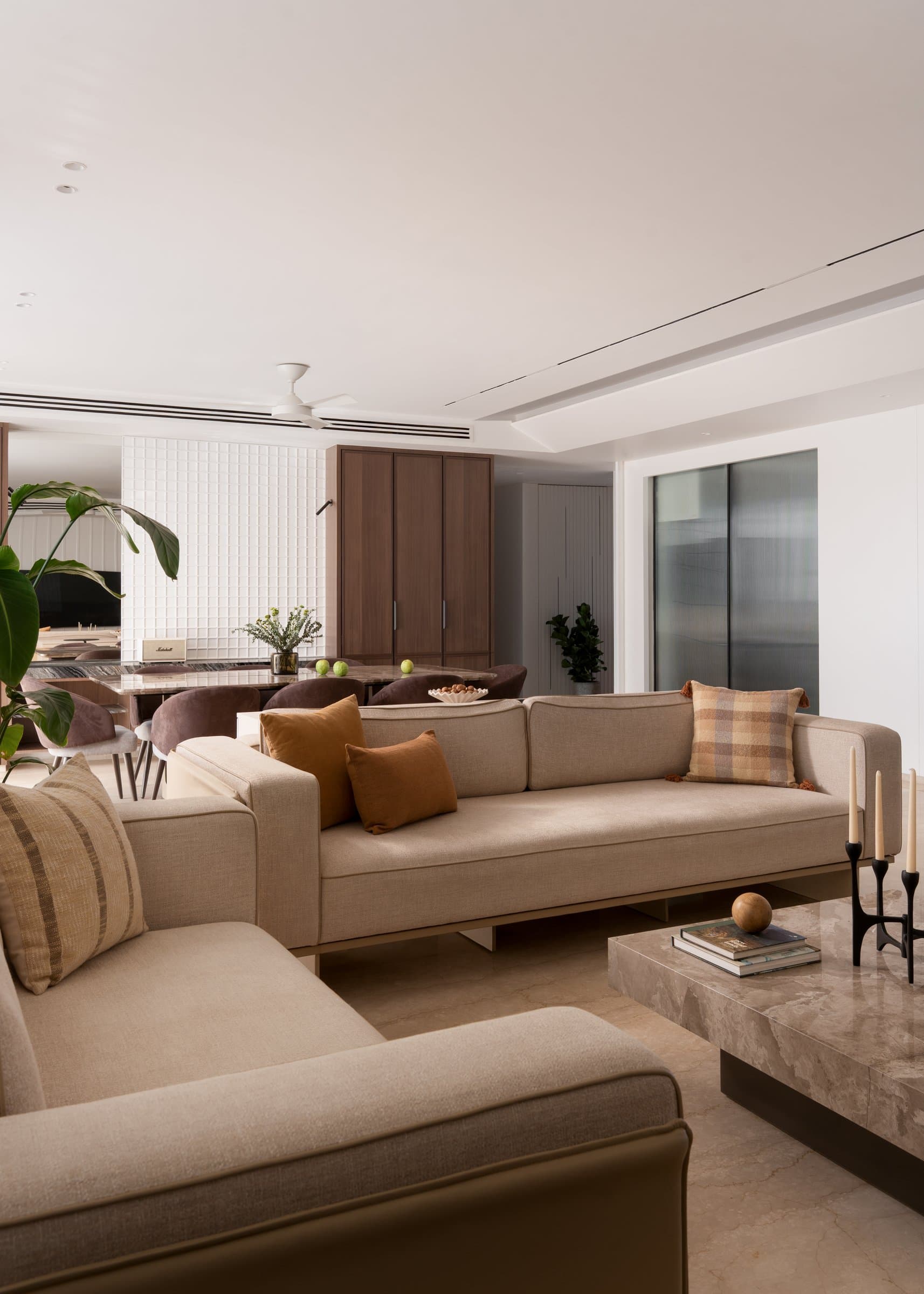
Seen from the opposite end, the living room reveals its dialogue with the dining beyond: a low-slung linen sofa, a stone coffee table, a sculptural candelabra in blackened metal. The room is generous without being grand, a distinction the architects seem particularly concerned with maintaining.
A burgundy marble console anchors a quieter corner, paired with a sage-toned curved tub chair. The pairing is deliberate: a single saturated stone, a single soft form, and a wall left almost entirely empty. Restraint, here, is not absence but composition.
The television wall reveals its detail at closer range, a run of fluted cream panelling rising vertically alongside a dark wood lattice screen, with a band of dark, veined stone forming the console below. Nothing on this wall competes with anything else, and the cumulative effect is one of steady, low-frequency luxury.
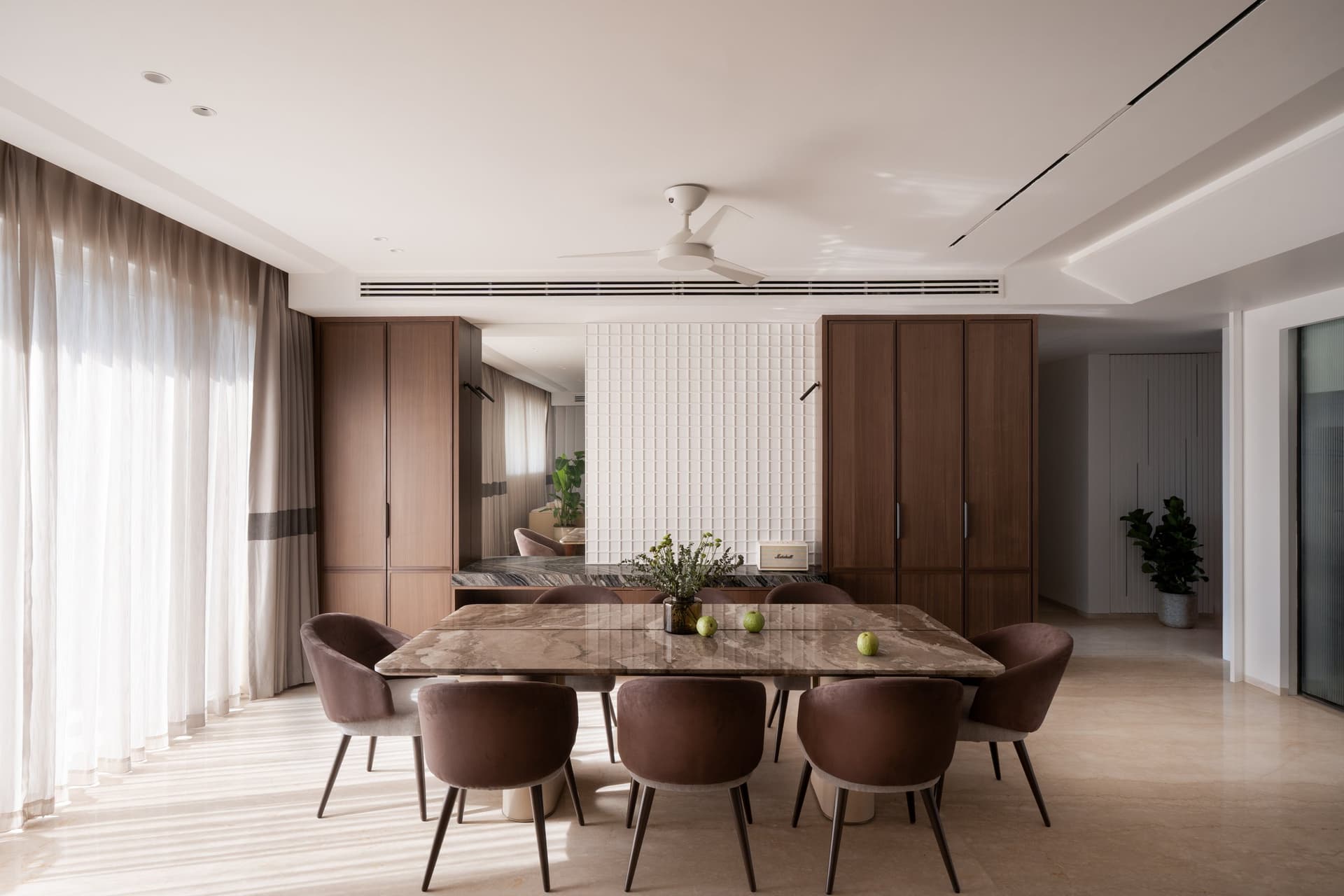
The dining room is where the home’s most singular gesture lives: a tall white grid wall, sculpted from small square tiles, set between two flanking cabinets in deep walnut. The grid is at once a backdrop, a sound diffuser, and a piece of architecture pretending to be a piece of art.
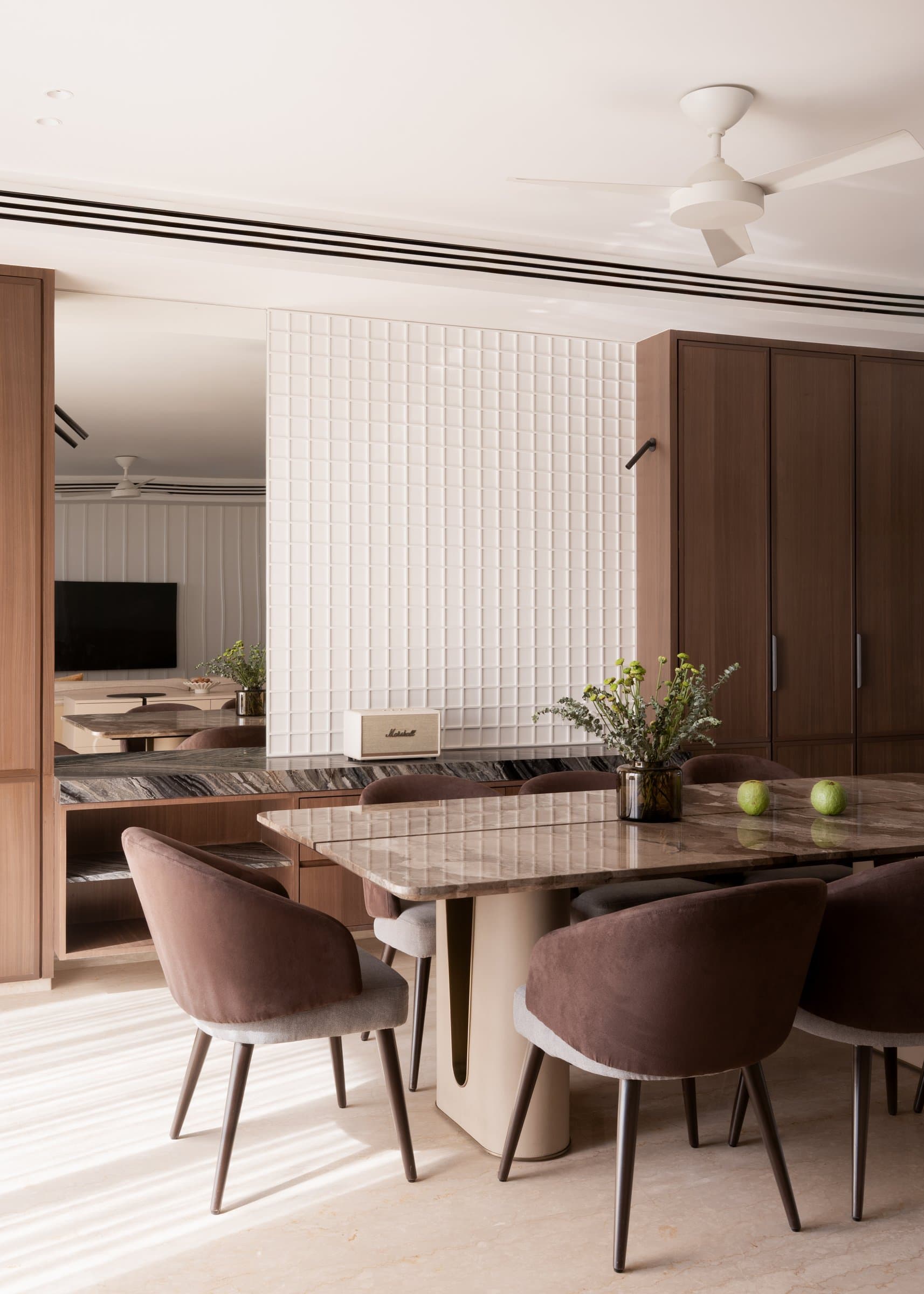
A rectangular marble-topped dining table on a sculpted pedestal sits at the centre, ringed by upholstered chairs in cocoa velvet and grey linen. The chairs are deliberately mismatched in tone but identical in form, a quiet reminder that a family is a collection of individuals who agree on the shape of an evening.
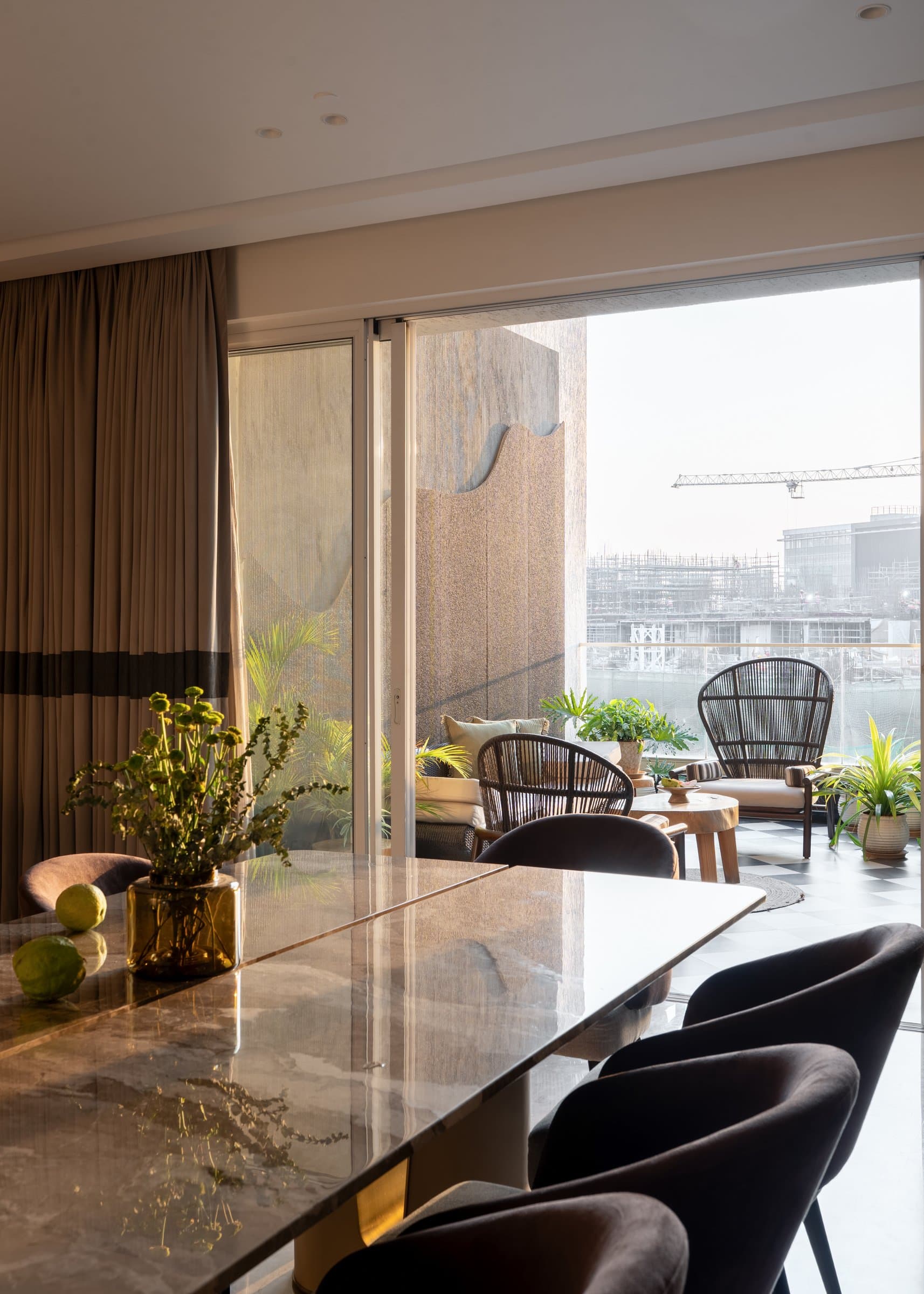
From the dining table, the apartment opens generously towards the balcony through a wide sliding glazed wall, the textured outdoor feature visible as a continuation of the indoor material conversation.
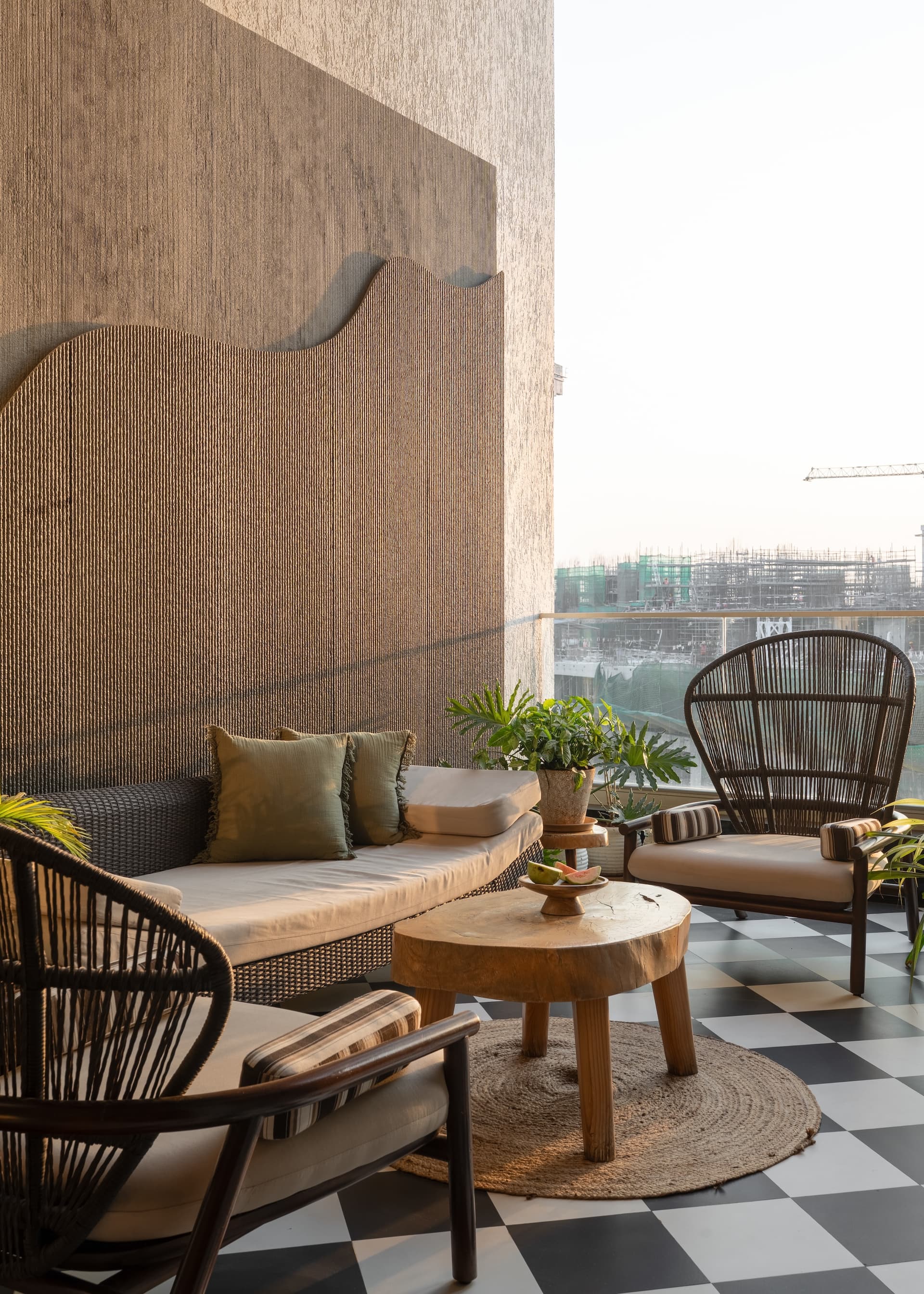
The balcony, treated as a fully realised room rather than a residual edge, opens onto a checkerboard of monochrome tiles and a textured feature wall whose soft, undulating cut introduces the home’s first visual idea: a hard geometry softened by a single curving gesture. Cane-back lounge chairs and a low, hand-hewn wooden stool sit beside a built-in daybed in deep wicker, an arrangement that reads as outdoor room rather than overflow space.
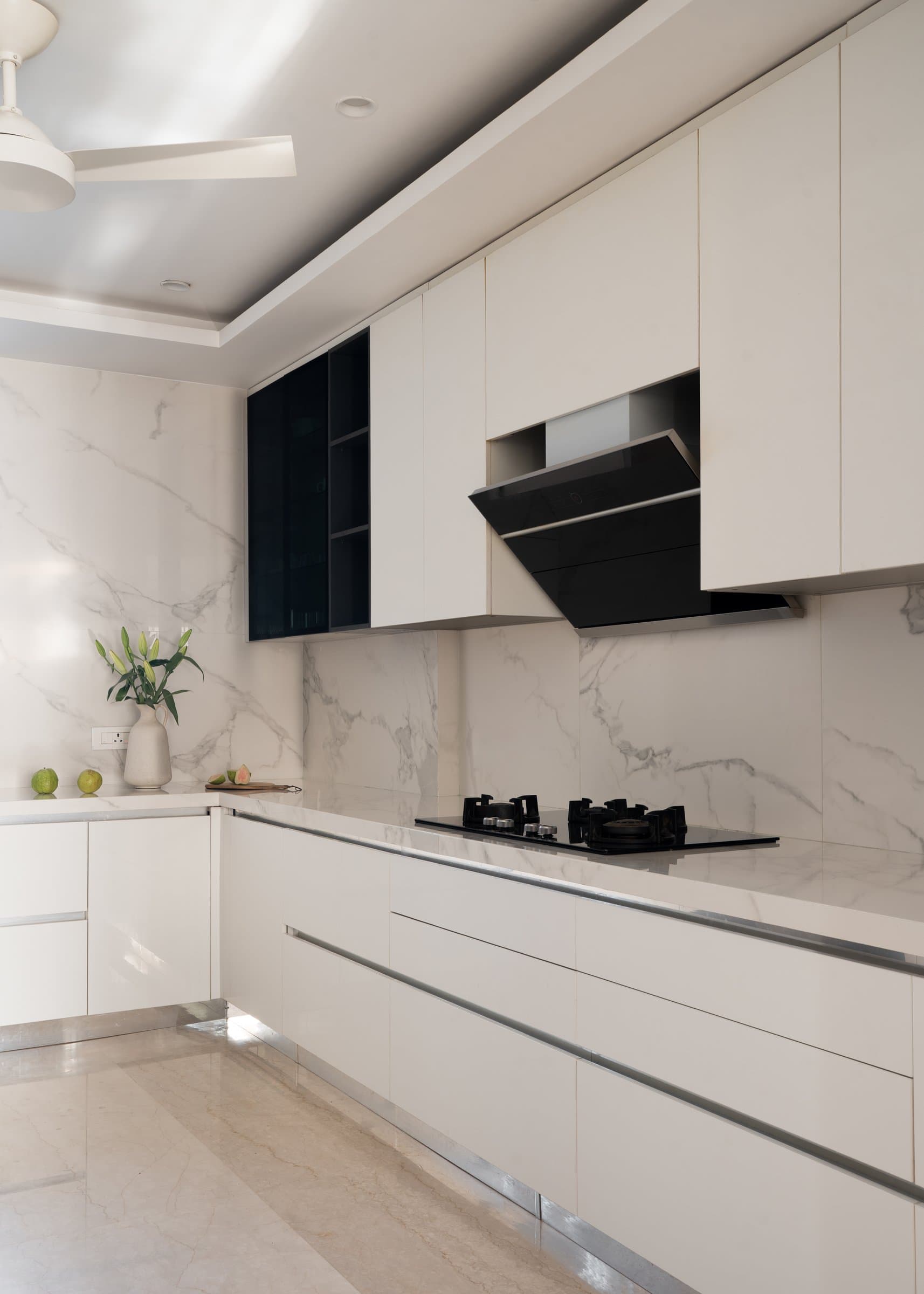
The kitchen carries the home’s quietest argument. A long L-shape in matte ivory cabinetry runs against book-matched marble walls, the only deliberate flourish a single graphite-glass cabinet floating above the counter.
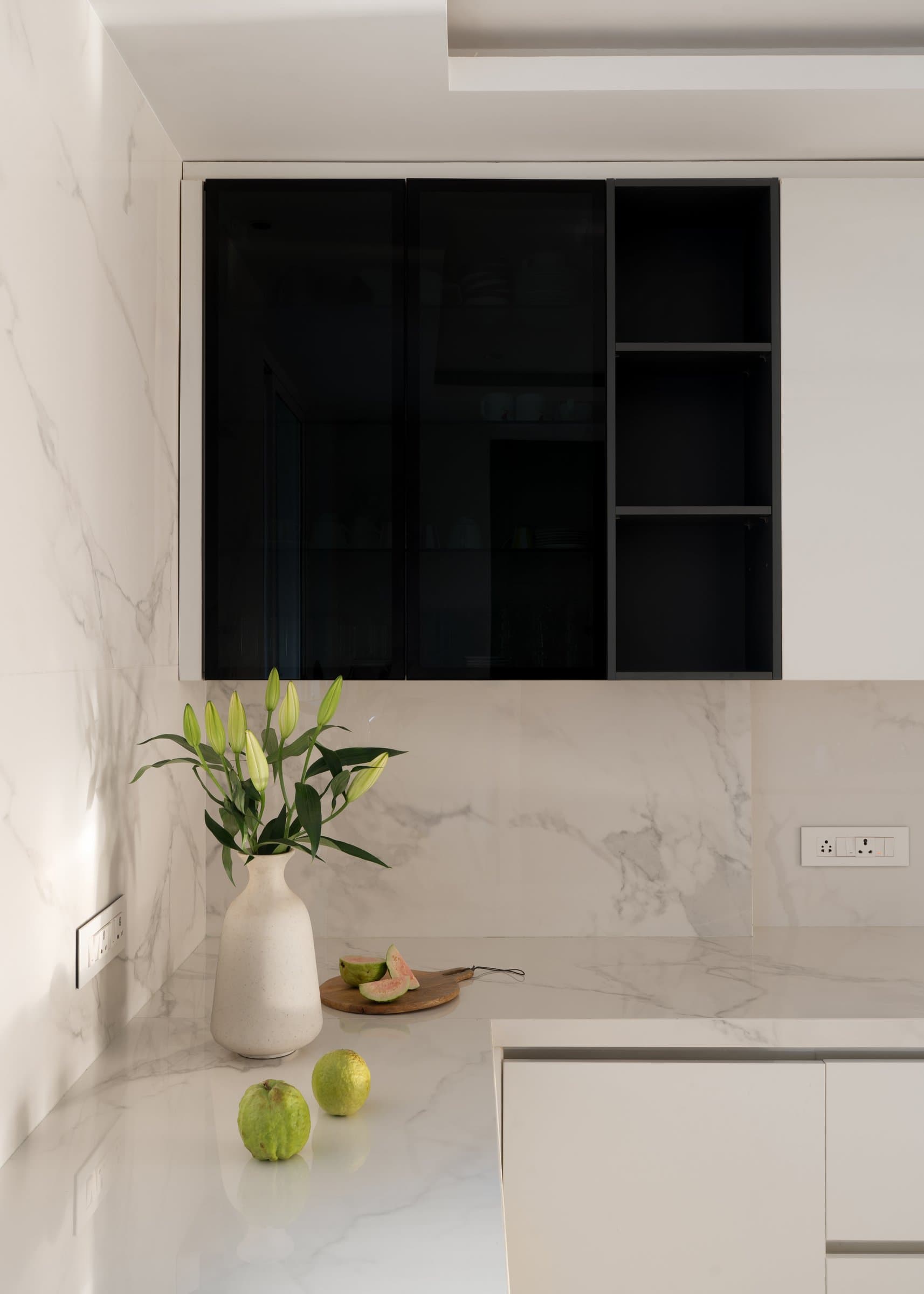
The home’s conviction that craft and care are the same thing is most evident in moments like these, where nothing is happening and yet everything is in place.
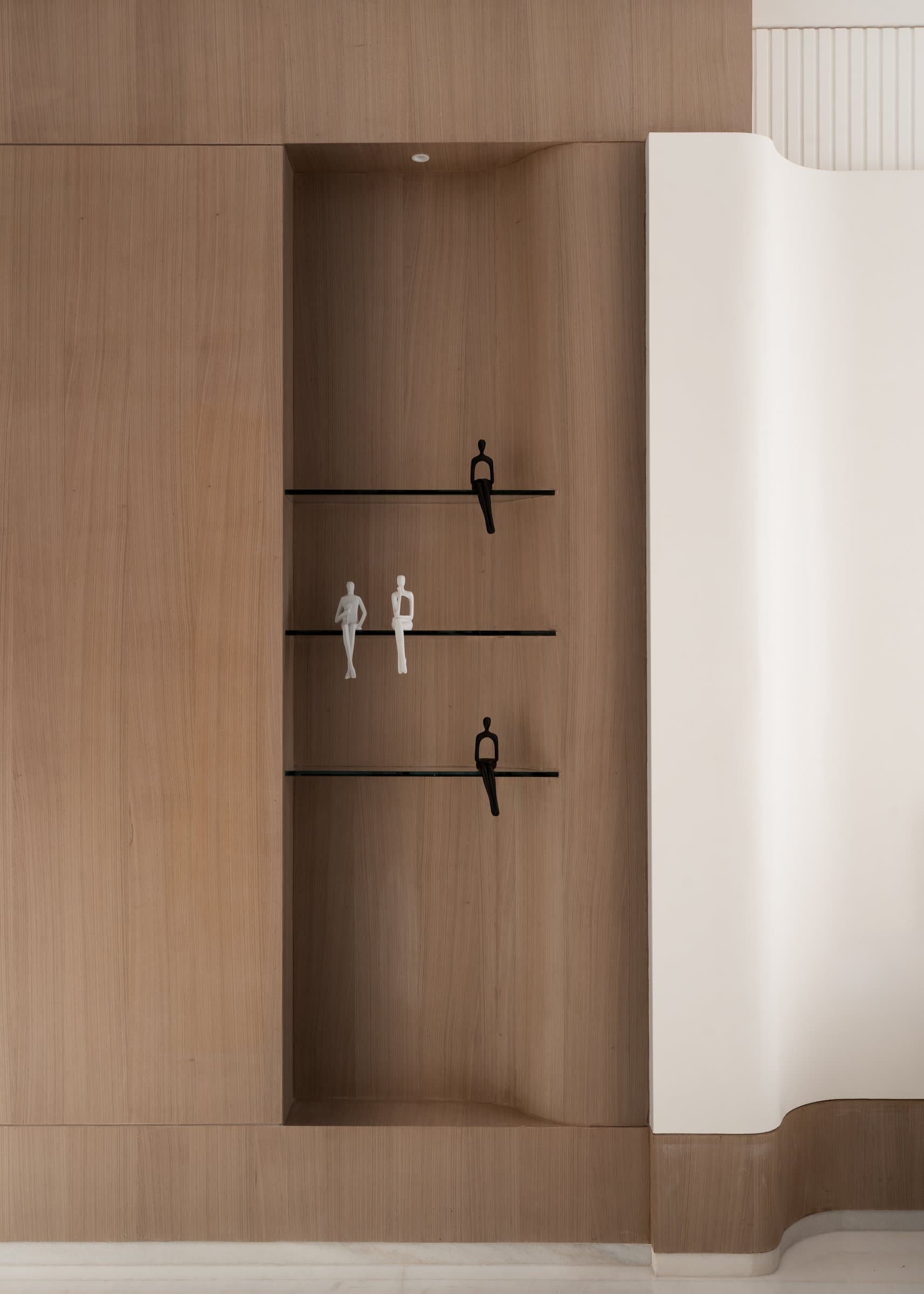
A vertical niche carved into a timber-panelled wall holds four slender figurines on slim glass shelves, the curve of an adjacent plastered partition softening the geometry. It is the kind of detail that rewards a second look, the kind a casual visitor might never notice.
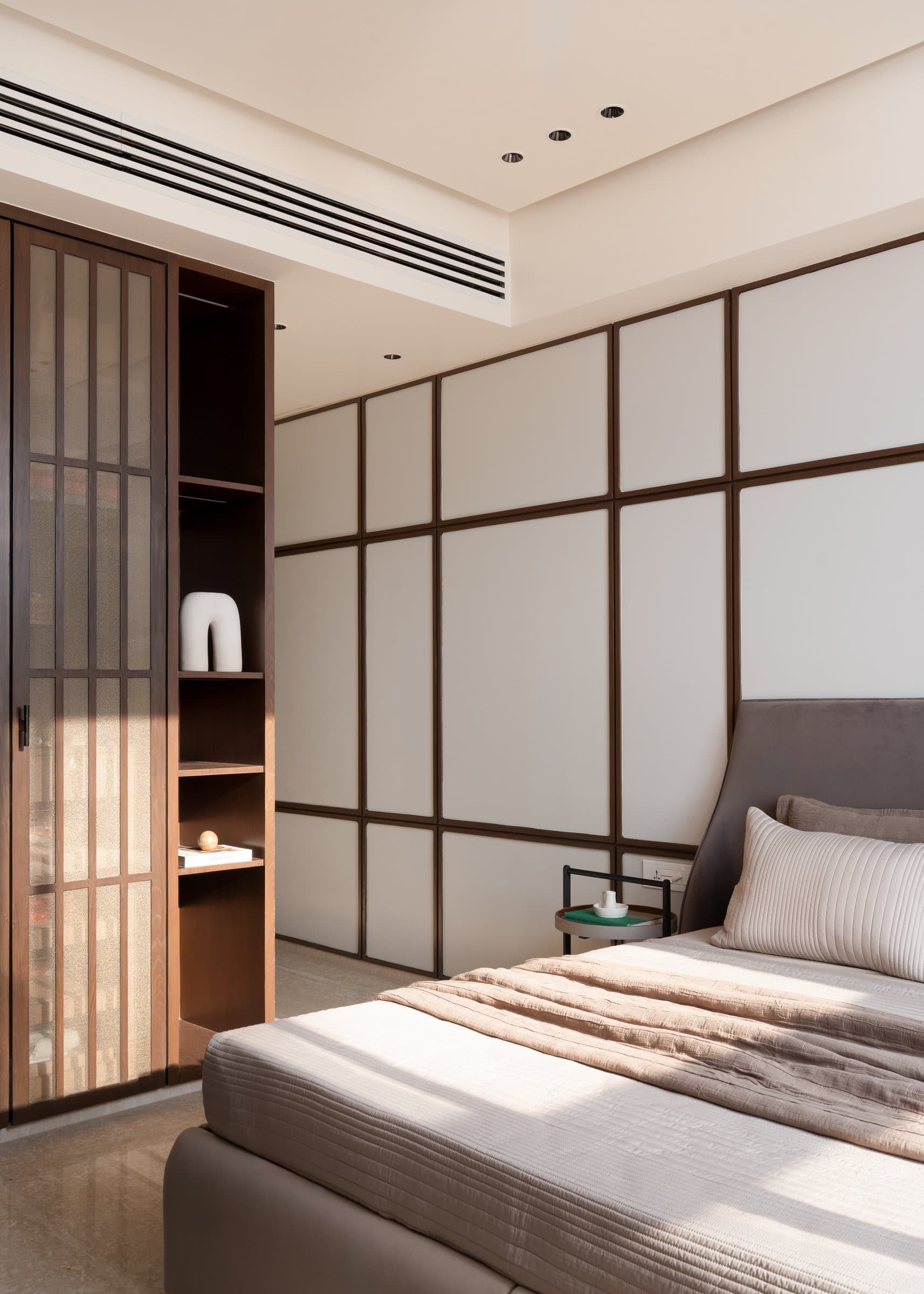
This bedroom turns, deliberately, towards a darker register. A grid of white linen panels framed in dark walnut runs the length of the bed wall, the geometry referencing shoji screens without quoting them directly. A glazed walnut wardrobe to one side functions as both storage and quiet display.
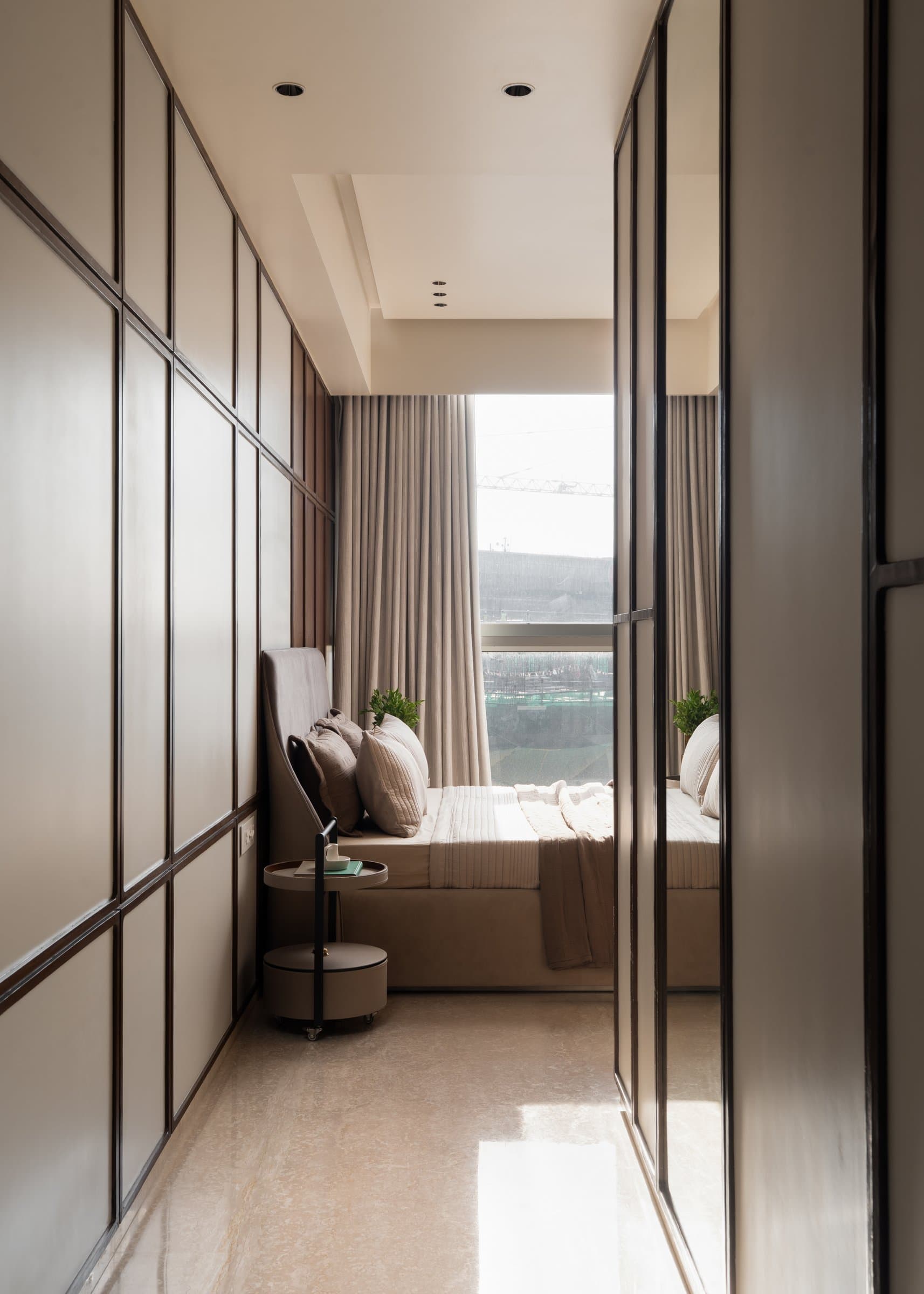
The walk-in dressing alcove extends from the bedroom as a slim corridor of cream panels with slim dark frames, terminating in a window-seat daybed in soft taupe upholstery. It is a daily ritual rendered architectural, the act of dressing turned into a small spatial event.
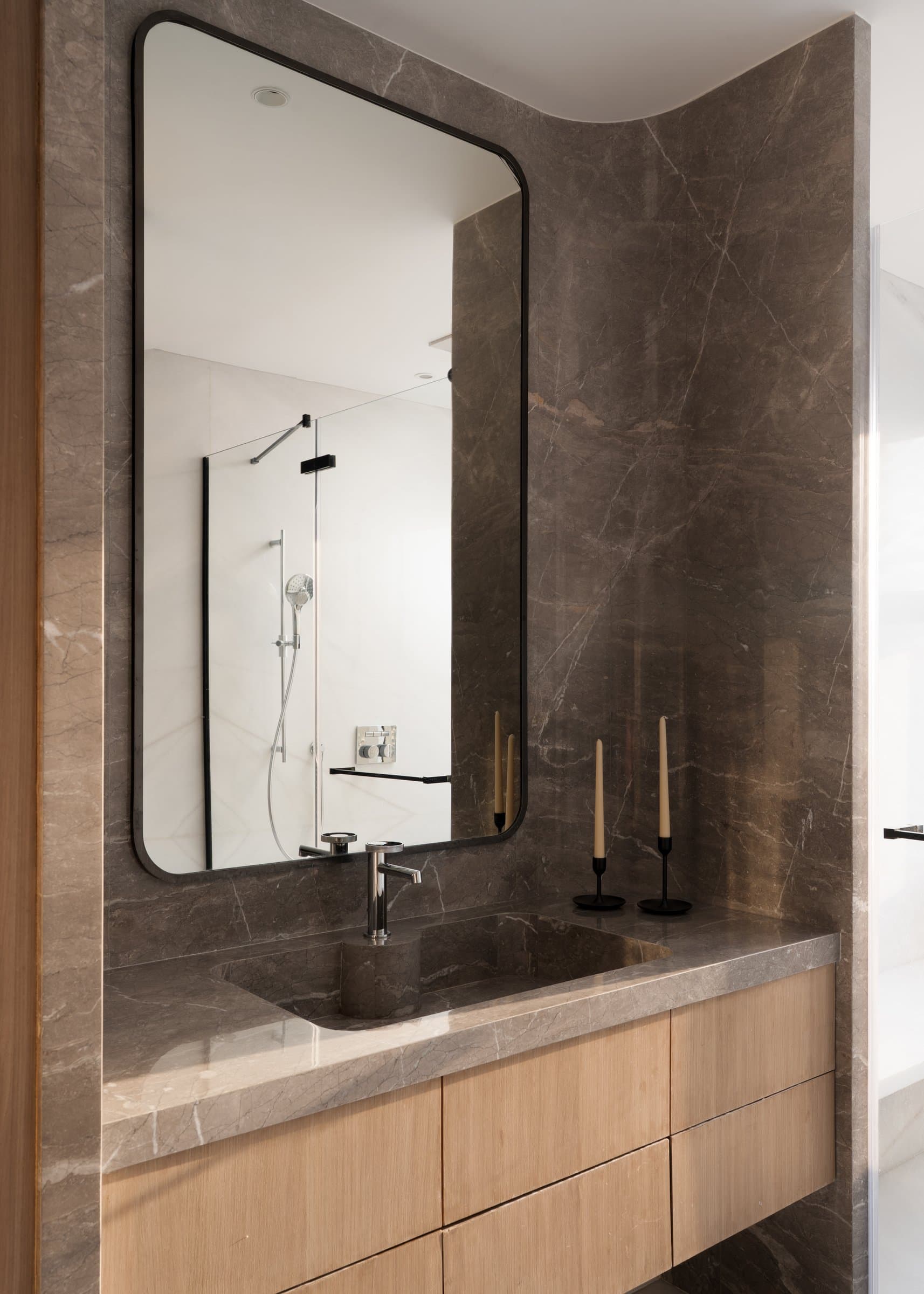
The bathroom continues the suite’s restraint with a single sweeping wall of veined brown stone curving gently into the ceiling, paired with a vanity in light oak. The black-framed mirror is the only graphic gesture, a thin geometric outline against the soft theatre of the marble.
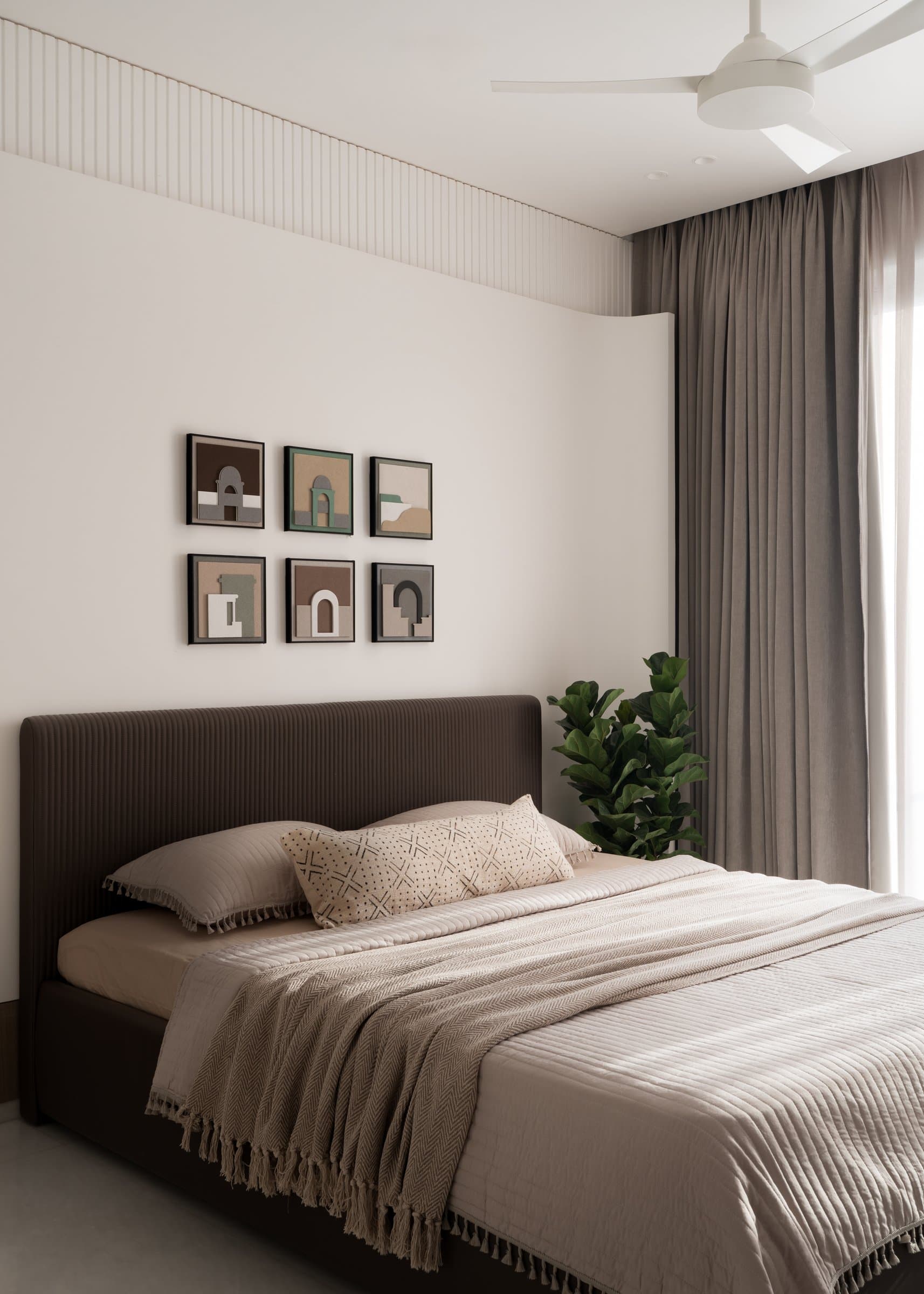
A second bedroom, , dials the palette down to powder and putty. A ribbed chocolate-brown headboard sits below a grid of six small framed artworks, their abstracted architectural motifs the room’s only decorative declaration.
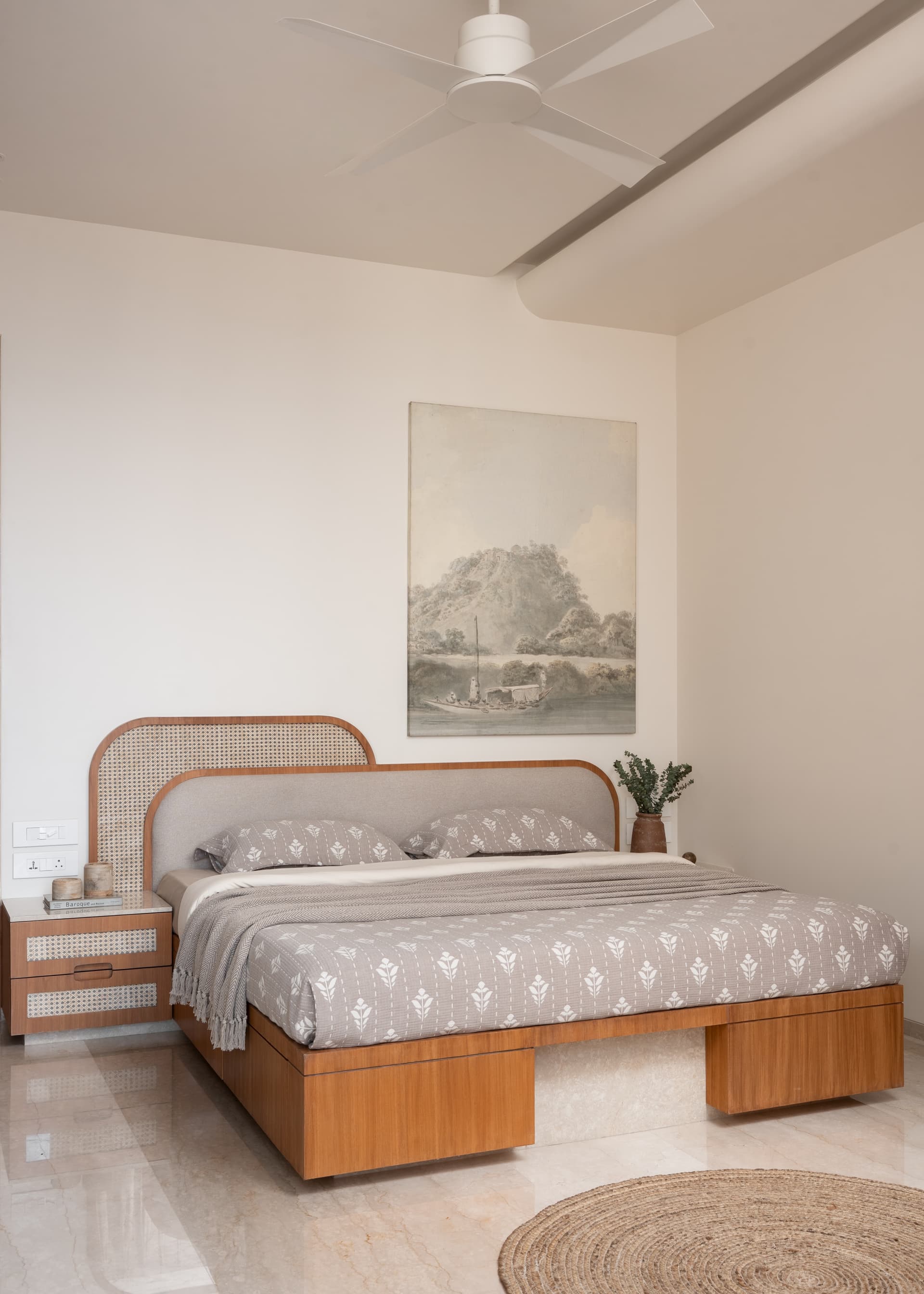
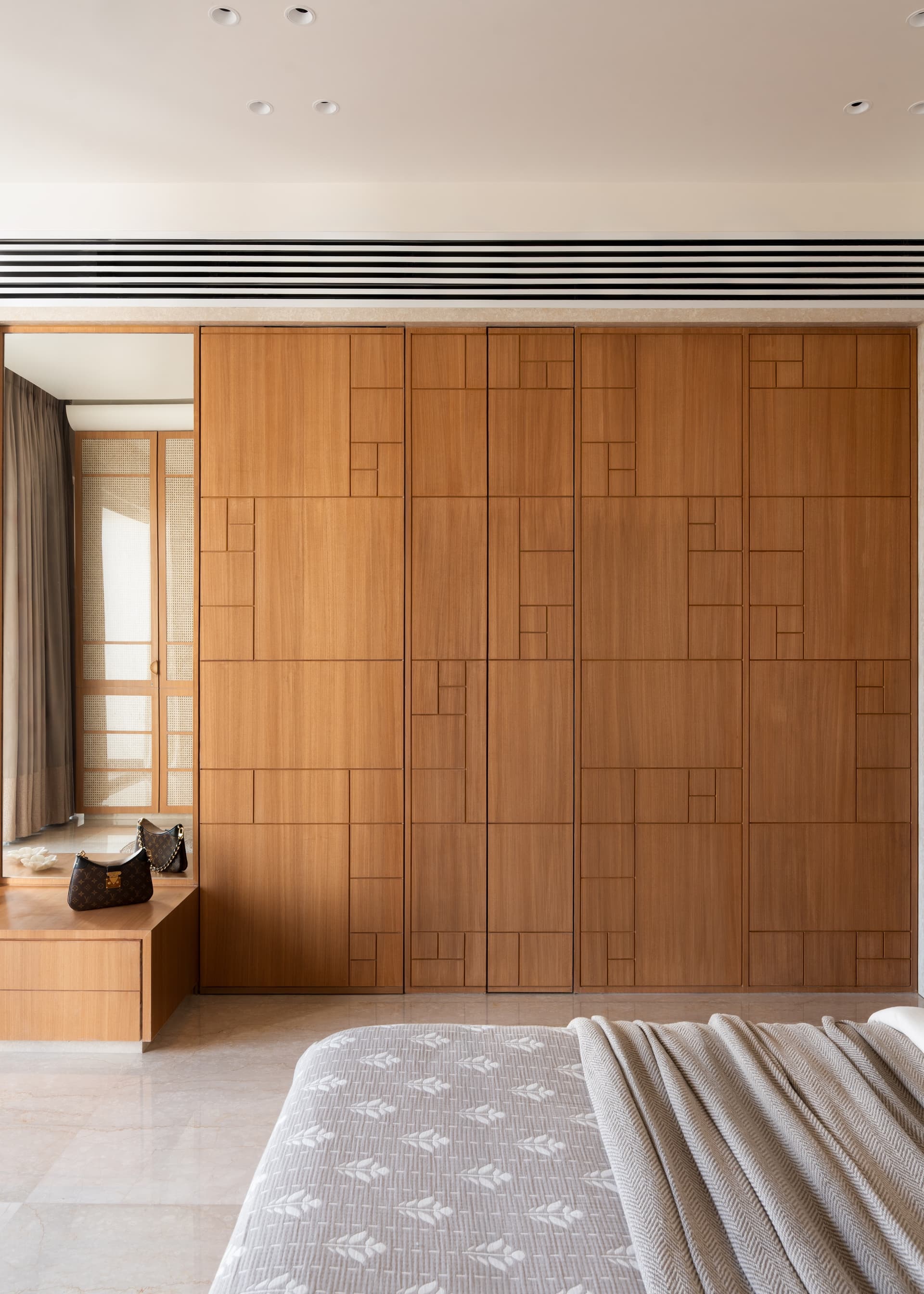
Wrapped in a warm palette of natural wood, cane detailing, and muted neutrals, the third bedroom embraces a quiet sense of comfort and restraint. The clean-lined furniture, textured fabrics, and softly filtered light create a space that feels both grounded and airy, while the custom wardrobe detailing and fluted stone vanity introduce subtle layers of craftsmanship. Every element is thoughtfully understated, allowing the room to feel calm, timeless, and deeply restful.
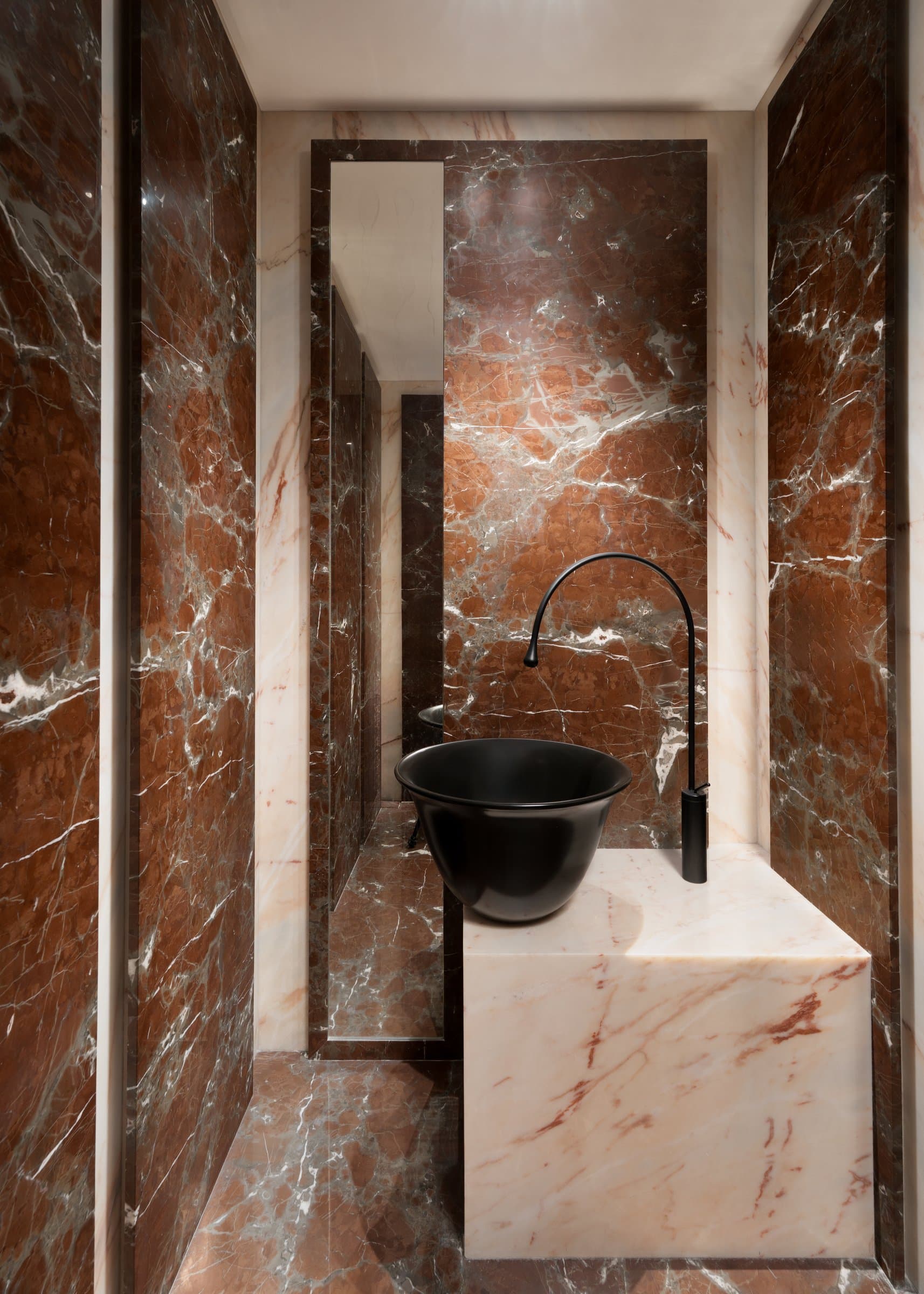
The guest powder room is the home’s single permitted indulgence: walls and floor in saturated rojo marble, a pale onyx vanity block, and a matte black basin and tap that read almost as sculpture. Within the discipline of stealth wealth, this is the moment where the architects let one room sing.
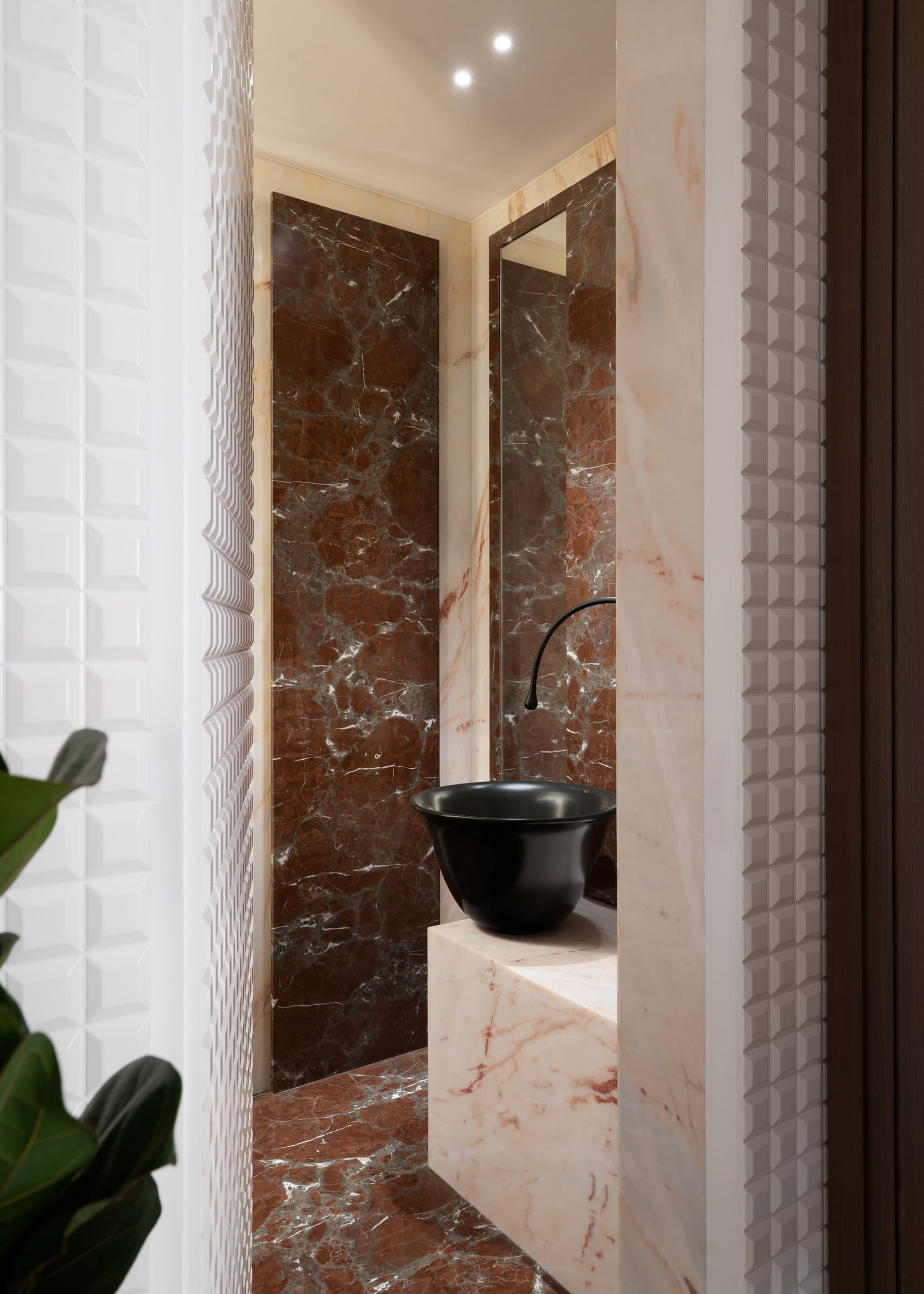
From the threshold, the powder room reveals its full composition: a doorway flanked by white sculpted whose dimensional pattern catches the light, framing the warm marble interior beyond. The contrast between cool, geometric exterior and warm, painterly interior is the project’s compositional logic in a single frame.
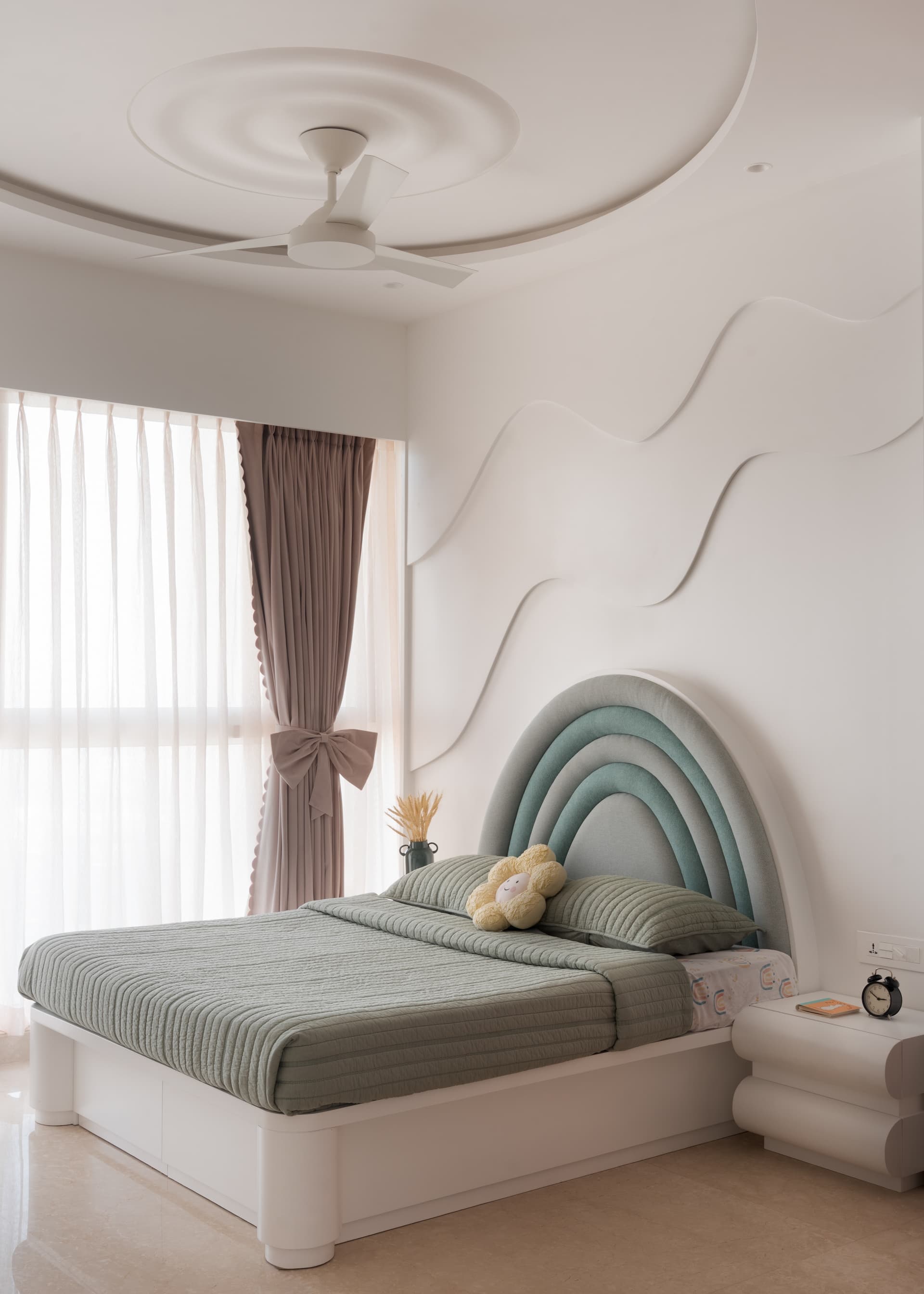
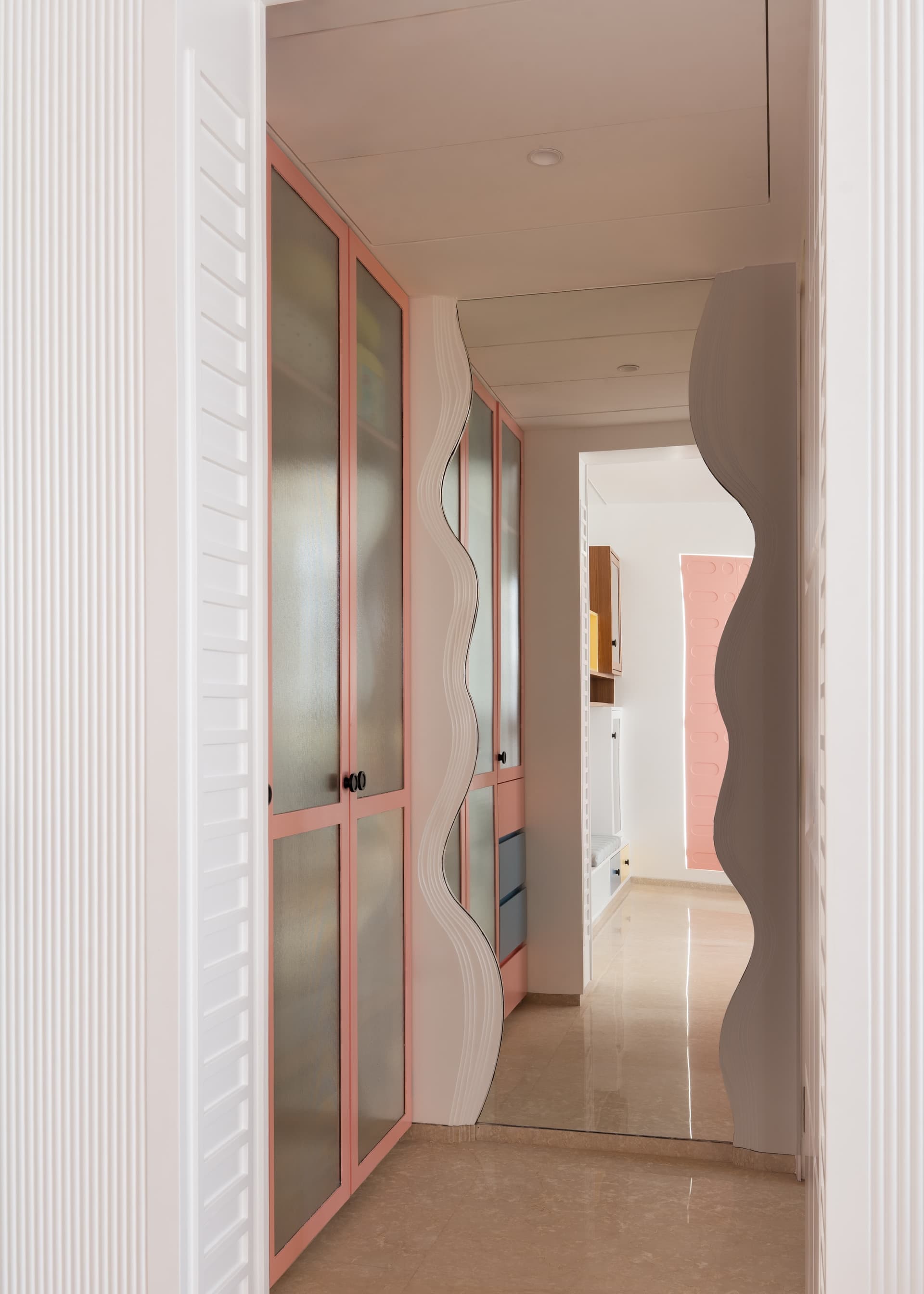
The daughter’s room is where the home’s geometry finally lets go. A circular ceiling sculpture floats above an arched, rainbow-pleated headboard in seafoam and sage, the wall behind incised with soft, organic waves. It is unmistakably a child’s room, but composed with the same material seriousness as the rest of the home.
Within the broader arc of Pune’s residential design, where surface drama and statement materials often dominate the new-build apartment market, the Jindal Residence makes a different argument. It proposes that a family home, especially one across generations, is better served by a vocabulary of restraint than by a vocabulary of flourish, and that craftsmanship, properly observed, is its own form of grandeur.
What the project ultimately offers is a quiet rebuttal to the idea that luxury must announce itself. In the careful matching of grain, the precision of a mitred joint, the willingness to leave a wall almost empty, the home demonstrates that the most enduring kind of design is the kind a family eventually stops noticing, because it has become, simply, where they live.